Asbestos Testing Kits: A 2026 Buyer’s Guide for Homeowners
Asbestos testing kits are mail-in lab products that let homeowners get a yes-or-no answer on suspect materials in pre-1990 homes — popcorn ceilings, vinyl floor tile, pipe wrap, vermiculite, and joint compound. The kits vary in lab accreditation, sample count, turnaround time, and price, and the differences matter for both accuracy and downstream usability of the result. This guide summarizes EPA, OSHA, and Colorado public-health guidance current as of 2026, walks through what to look for in a kit, and explains when DIY collection is reasonable and when a homeowner should hire a licensed asbestos professional instead. Nothing here is medical advice or a substitute for professional risk assessment.
Part of our Asbestos in the Home guide — start there for the full picture →
Is this mold, asbestos, or water damage? Get a free instant screen
Upload a clear photo of the suspect area. You'll get an instant AI screening opinion and what to do next. This is screening guidance, not a professional determination.
Screening guidance only. AI can be wrong. Confirm asbestos, mold type, or lead with lab testing or a licensed professional before acting.
What Asbestos Testing Kits Actually Are
An asbestos testing kit is a packaging and shipping product. The kit contains a sample bag, instructions, a chain-of-custody form, and a prepaid shipping envelope addressed to an accredited laboratory. The homeowner collects a small piece of suspect material — typically a pea-sized chip — seals it, and ships it. The lab uses polarized light microscopy (PLM) to identify asbestos fibers and reports the asbestos type (chrysotile, amosite, crocidolite, or others) and percentage by volume.
The “kit” is not a test device. The actual analysis happens at the lab. The retail product is essentially a pre-paid sample-shipment package. That distinction matters because the kit’s accuracy is entirely a function of two things the homeowner controls: how carefully the sample is collected and which lab the kit ships to. A poorly collected sample from a non-representative spot can return a false negative even when the surrounding material contains asbestos.
Costs run $30 to $75 for a single-sample kit and $80 to $200 for multi-sample kits with three to five sample packets. Multi-sample kits are usually a better per-sample value for homeowners testing multiple materials in the same home. The asbestos and lead in pre-1978 housing pillar covers the broader context of where asbestos shows up in older homes and how testing fits into a remediation plan.
Lab Accreditation Is the Single Most Important Variable
Use only kits whose lab is accredited by the National Voluntary Laboratory Accreditation Program (NVLAP) for bulk asbestos analysis. NVLAP accreditation is the U.S. federal standard. Some kits also list American Industrial Hygiene Association (AIHA) accreditation, which covers environmental analysis. Both are credible. Skip any kit that does not list NVLAP or AIHA accreditation on the box — results from non-accredited labs may not be accepted by abatement contractors, real-estate disclosures, or insurance carriers, which makes the test essentially worthless if the result comes back positive.
Reputable retail kits list the lab name and NVLAP number on the kit packaging. Common accredited labs that distribute through retail and direct-to-consumer channels include Pro-Lab, EMSL Analytical, and Schneider Laboratories. Each is a real, NVLAP-accredited operation with thousands of analyses per year. Some retailers private-label kits and ship samples to one of these labs under a different brand name. Verify the lab name and NVLAP number; the kit brand name is secondary.
Standard processing runs three to seven business days from the lab’s receipt of the sample. Rush processing of one to three days typically adds $25 to $75 per sample. Real-estate buyers under a contingency window almost always pay the rush fee. Reports come back as PDFs by email or printed letters by mail.
Best Asbestos Test Kit: our top 3 picks
| Product | Best for | Key features | Price | Buy |
|---|---|---|---|---|
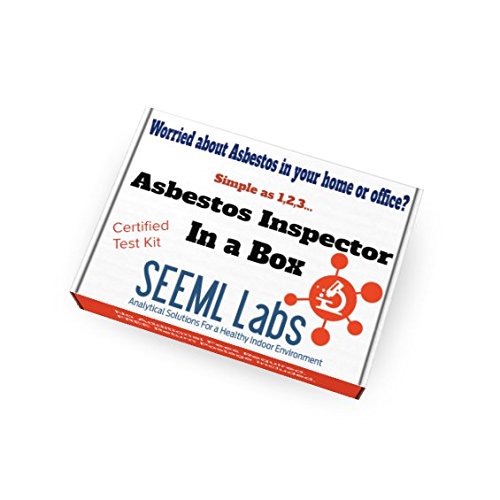
| Seeml Labs Asbestos Inspector in a Box | Verifiable lab accreditation |
| $22.00as of Nov 24, 2026 8:00 pm GMT+0000 | Buy now →Check current price |
| SLGi 1-Pack (5 Day) | Single sample with return postage |
| $26.60as of Nov 24, 2026 8:42 pm GMT+0000 | Buy now →Check current price |
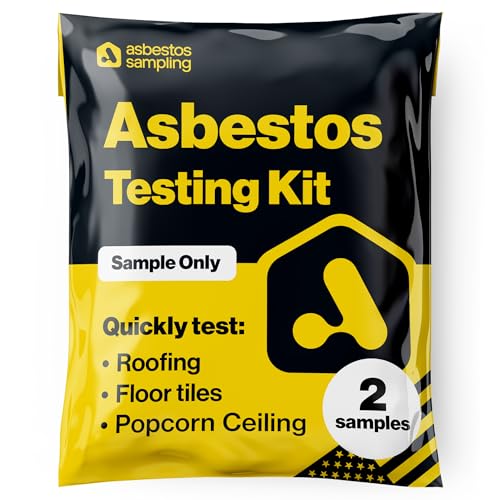
| Asbestos-Sampling.com 2-Sample | Type and percentage in the result |
| $59.95as of Nov 24, 2026 8:42 pm GMT+0000 | Buy now →Check current price |

Prices are Amazon’s listed prices as of the time shown and change often; check Amazon for today’s price. As an Amazon Associate we earn from qualifying purchases.
Single Sample vs Multi-Sample Kits
Single-sample kits are appropriate when a homeowner has one well-defined suspect material and wants the cheapest possible answer. The cost runs $30 to $75 including the lab fee. For multiple materials, multi-sample kits are dramatically more cost-effective. A four-sample kit at $130 is cheaper than four single-sample kits at $40 to $50 each, and ships in one envelope rather than four.
The accuracy case for multi-sample kits is also strong. Asbestos content varies across a single material — a popcorn ceiling sprayed in three batches by three different crews may have different asbestos percentages in different rooms. EPA bulk-sampling guidance recommends three samples per homogeneous material area for representative results. A single sample from a single spot can miss the variation. Homeowners testing whole-house popcorn ceiling, for example, should sample from at least three rooms.
Multi-sample kits also help when the home has more than one suspect material. A 1972 home in Lakewood might have popcorn ceiling, vinyl floor tile, pipe wrap, and joint compound that all warrant testing. A six-sample kit covers all four with sample replicates and runs roughly $150 to $200. The how to choose an asbestos testing kit guide walks through the kit-selection decision in more depth.
What to Look for on the Kit Box
Five things to verify on the kit packaging before buying. First, the lab name and NVLAP accreditation number. Second, whether the lab fee is included in the retail price or billed separately. Third, the standard turnaround time and the rush option. Fourth, the number of sample packets included. Fifth, whether the kit includes instructions specific to the material the homeowner is sampling (popcorn ceiling, vinyl tile, pipe insulation each have slightly different best-practice collection methods). Kits without these basics on the box are usually marginal products.
What the Kit Doesn’t Include
Most retail kits include the sample bag, chain-of-custody form, and shipping envelope, plus sometimes a pair of nitrile gloves. What the kit does not include is the personal protective equipment a homeowner actually needs to collect the sample safely. EPA and OSHA guidance both call for an N95 respirator at minimum (P100 is better for friable materials), disposable coveralls or clothing the homeowner will discard, plastic sheeting to catch debris, a spray bottle for wet-sampling, and a sealable bag for waste disposal.
None of this is in a typical retail kit. A homeowner buying only the kit without PPE is buying a packaging product, not a complete testing solution. Front Range homeowners can pick up the additional PPE at any home improvement store for $20 to $40. The full kit-plus-PPE budget for a single-sample test runs $50 to $100. That is still well below the cost of professional sample collection ($150 to $300 per sample), which is why DIY sampling is widely used for non-friable materials in good condition.
For friable materials, the kit-plus-PPE approach is not appropriate regardless of how good the PPE is. Pipe insulation in older Denver basements, deteriorating popcorn ceilings, vermiculite attic insulation, and any material releasing visible dust should be sampled by a licensed professional. The risk of fiber release during DIY collection is too high. The vermiculite insulation guide covers the friable-material decision specifically for attic insulation.
How to Use a Kit Safely
Six steps. Step one: ventilate the room (open windows) but turn off the HVAC and cover supply and return registers with plastic sheeting and tape. This prevents fiber spread to other rooms. Step two: protect — wear an N95 or P100 respirator, disposable gloves, disposable coveralls, and lay plastic sheeting beneath the sample area to catch debris.
Step three: wet — mist the sample area with water from a spray bottle. The water suppresses fiber release during cutting. Step four: cut — use a clean knife or coring tool to remove a pea-sized piece of the material. Avoid power tools, sanding, or scraping, all of which release fibers. Step five: bag — place the sample in the lab-supplied bag, seal it, and label it with the sample location and date. Step six: clean — wet-wipe the surrounding area, dispose of the plastic sheeting and disposable PPE in a sealed bag, and seal the sample location with paint, tape, or encapsulant.
The sample bag and chain-of-custody form go into the prepaid shipping envelope. Samples can be shipped the same day or stored in a sealed container until shipped. Most accredited labs accept samples by mail; some require special handling for friable materials. Homeowners with friable material should call the lab before shipping or hire a professional sampler.
Reading the Lab Report
The lab report identifies the type and percentage of asbestos fibers in the bulk sample. Common results: “no asbestos detected,” “chrysotile 5%,” “chrysotile 10%, amosite 2%.” The report is binary in regulatory terms: any sample with greater than 1 percent asbestos by volume is regulated as asbestos-containing material (ACM) under EPA NESHAP rules. Below 1 percent is not regulated as ACM but may still warrant precaution for friable materials.
What the report does not tell you is whether the material is currently releasing fibers, whether the air contains airborne asbestos, or what the right management response is for a specific home. Those questions require a licensed asbestos consultant, an industrial hygienist, or in some cases an environmental engineer. The lab report is one input into that decision, not the whole decision.
Homeowners often treat a positive bulk sample as a remediation order. In many cases the right response to ACM in good condition is encapsulation and a long-term management plan — not removal. The EPA’s “manage in place” approach is widely accepted for intact ACM that is not in a high-disturbance area. The asbestos abatement cost guide walks through when removal is the right call.
When to Skip the Kit and Hire a Pro
Three situations call for professional sampling and assessment. First, friable materials. Pipe insulation, vermiculite attic insulation, deteriorating popcorn ceilings, and any material releasing visible dust should not be sampled by homeowners. Second, materials in the path of immediate renovation. A homeowner about to demolish a wall, sand a floor, or remove a ceiling needs a professional risk assessment, not just a sample result, because the work itself will release fibers if asbestos is present. Third, real-estate transactions where the test result will inform a contract negotiation.
Some buyers and lenders prefer professional collection because the chain of custody is more defensible if the test result becomes a contract dispute. A homeowner-collected sample is technically valid but can be challenged on collection method. Professional sampling costs $150 to $300 per sample and includes documented collection, photographs, and a written assessment.
Colorado homeowners should also know that any actual abatement work — removal, demolition disturbance, or encapsulation of regulated ACM — must comply with Colorado Department of Public Health and Environment (CDPHE) Air Pollution Control Division rules. Homeowners doing primary-residence work are exempt from many licensing rules but the air-handling, disposal, and notification requirements still apply. CDPHE maintains a list of state-licensed asbestos abatement contractors. Hiring an unlicensed operator transfers regulatory and health risk back to the homeowner.
Common Mistakes Homeowners Make with Testing Kits
Five mistakes show up repeatedly. First, sampling without PPE. The kit’s sample bag protects the lab from contamination during shipping; it does not protect the homeowner during collection. Second, sampling friable materials without realizing the material is friable. If the material crumbles under hand pressure, hire a professional. Third, taking only one sample of a large material area. EPA guidance recommends three samples per homogeneous area for representative results.
Fourth, not following up on a positive result with a management plan. A positive result without a decision — manage in place, encapsulate, or remove — is just a worry. Fifth, assuming a negative result on one material clears the whole house. A negative popcorn ceiling test does not mean the vinyl floor tile or pipe wrap is also negative. Each suspect material in a pre-1990 home needs its own sample.
Front Range homeowners testing pre-1980 homes should consider a multi-sample kit and sample several materials at once. The marginal cost is small, and the comprehensive picture is much more useful than a series of one-off tests done over months. Real-estate buyers under a contingency window should also factor in lab turnaround when planning the testing budget.
More Questions About Asbestos Testing Kits
How long do asbestos test kit results take?
Asbestos test kit results usually arrive within three to seven business days after the lab receives the sample, so total time including shipping is often one to two weeks. Many kit labs offer rush analysis for an extra fee, sometimes with results in 24 to 48 hours of arrival.
Results normally come by email as a PDF report listing each sample, the asbestos type if found, and the estimated percentage. Choosing a kit whose lab posts its turnaround time on the box, and paying for faster shipping, is the simplest way to avoid stalling a project.
Can an asbestos test kit check the air in a home?
No, standard asbestos test kits analyze a piece of solid material, not the air. A bulk kit tells a homeowner whether a floor tile or ceiling texture contains asbestos; it cannot show whether fibers are currently floating in a room.
Air testing requires a calibrated pump that draws a measured volume of air through a filter, followed by lab analysis, and it is normally done by a trained professional. Air sampling is most useful after a suspected disturbance or as clearance testing after abatement. For a renovation decision, testing the material itself is the right first step.
Do asbestos test kits work on vermiculite insulation?
Asbestos test kits are a poor fit for vermiculite attic insulation, and EPA guidance advises treating vermiculite as if it contains asbestos instead of relying on a test. Most U.S. vermiculite sold before 1990 came from a mine near Libby, Montana, that was contaminated with asbestos.
Contamination in vermiculite is uneven, so a small kit sample can come back negative even when other parts of the attic contain fibers, and standard methods can miss low levels. Scooping vermiculite also stirs dust in a confined space. Leaving it undisturbed and consulting a certified professional before attic work is the safer path.
Is a home asbestos kit cheaper than hiring an inspector?
A home asbestos kit is cheaper for one or two materials, but a professional inspection often costs less per answer once a project involves several materials. Kit fees typically run in the tens of dollars per sample, while a professional inspection usually costs a few hundred dollars including sampling and lab analysis.
The inspector also identifies materials a homeowner might miss, such as mastic under flooring or joint compound behind paint, and produces a report contractors and permit offices accept. For a quick yes-or-no on a single intact tile, a kit makes sense. For a remodel, the inspection is usually better value.
Can you use a home kit to test a popcorn ceiling?
Yes, a home kit can test a popcorn ceiling if the texture is intact and the homeowner follows the kit’s wet-sampling steps with proper protection. The sample must go through the full depth of the texture, since a surface scrape alone can miss asbestos in lower layers.
Mist the spot with water, cut a small piece over a plastic sheet, seal it, and cover the sampled area with tape or a dab of paint. A ceiling that is crumbling, water-damaged, or flaking should be sampled by a licensed professional instead, because loose texture releases fibers easily.
References
- EPA asbestos program guidance — U.S. Environmental Protection Agency
- OSHA asbestos exposure standards — Occupational Safety and Health Administration
- CDPHE asbestos compliance program — Colorado Department of Public Health and Environment
- CDC NIOSH asbestos exposure information — Centers for Disease Control and Prevention
Frequently asked questions
Which asbestos testing kits are most accurate?
Any kit whose lab is NVLAP-accredited produces reliable results when the sample is collected correctly. Pro-Lab, EMSL Analytical, and Schneider Laboratories are commonly cited NVLAP-accredited labs that distribute through retail and direct-to-consumer channels.
How many samples should I take?
EPA guidance recommends three samples per homogeneous material area. For a single suspect material in a single room, one sample is the minimum. For whole-house popcorn ceiling or wall material, sample from at least three rooms.
Are testing kits safe to use?
For intact, non-friable materials with proper PPE (N95 respirator, disposable coveralls, plastic sheeting, wet-sampling), yes. For friable materials, the EPA and CDPHE recommend hiring a licensed professional rather than attempting DIY collection.
What if the result comes back positive?
A positive result calls for a management decision: leave the material undisturbed if it is intact, encapsulate it, or hire a licensed Colorado abatement contractor for removal. Not every positive result requires removal.
Where can you buy an asbestos test kit?
Asbestos test kits are sold at home improvement stores, hardware stores, and online, and some accredited labs sell them directly. The kit itself matters less than the lab it ships to, so check the box for the lab's name and NVLAP or AIHA accreditation before buying.
What does "none detected" mean on an asbestos kit result?
"None detected" on an asbestos kit result means the lab found no asbestos in the specific sample sent. It applies only to that sample, so the result is reliable for the whole material only if the piece was taken through all layers from a representative spot. Layered or patched materials may need more samples.
Will a contractor accept results from an asbestos test kit?
Some contractors accept asbestos test kit results when the report comes from an accredited lab and clearly identifies the material sampled, but many require a certified inspector's report for regulated renovation work. Ask the contractor before testing, since a result they will not use means paying for testing twice.
Can one asbestos test kit be used for several rooms?
One asbestos test kit covers only as many materials as it has sample slots, and each distinct material needs its own sample. A kitchen floor tile and a hallway ceiling texture are different materials even in the same house. Multi-sample kits cost less per sample when several rooms are involved.
Front Range homeowners weighing whether to use a DIY kit, hire a professional sampler, or move directly to abatement can connect with a vetted local inspector through our contact page for property-specific guidance.