Mold Test Kits: What Homeowners Should Know
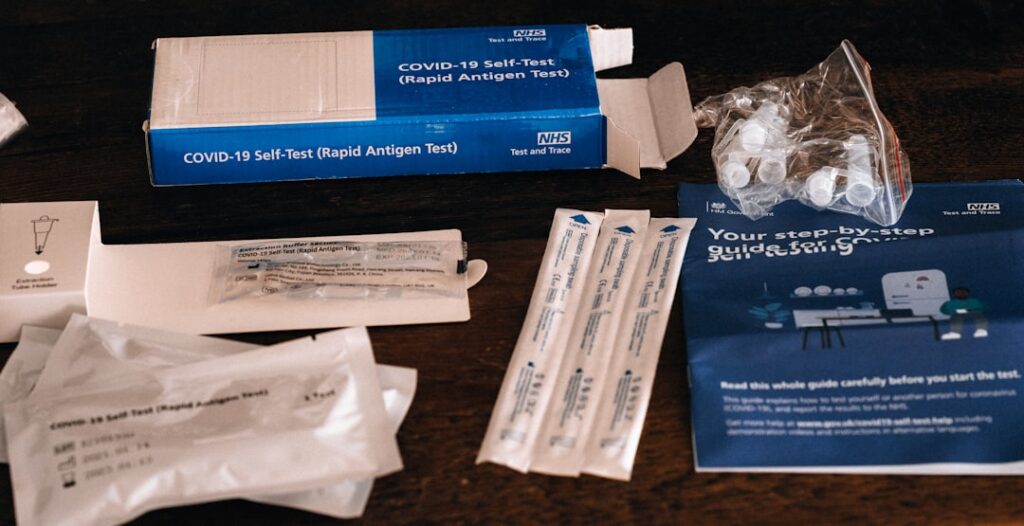
Mold test kits fill an entire shelf of choices, and the differences between them are larger than the similar packaging suggests. One kit traps airborne spores, another samples a single stain, and a third profiles months of household dust. Choosing well starts with understanding what each category measures and where each falls short. This guide summarizes EPA and CDC guidance current as of 2026 — consult your physician for symptoms and a certified professional for testing decisions tied to a purchase or a remediation budget.
Is this mold, asbestos, or water damage? Get a free instant screen
Upload a clear photo of the suspect area. You'll get an instant AI screening opinion and what to do next. This is screening guidance, not a professional determination.
Screening guidance only. AI can be wrong. Confirm asbestos, mold type, or lead with lab testing or a licensed professional before acting.
The three families of kits
Most kits fall into three groups: air-sampling, surface-sampling, and dust or ERMI kits. Each is built for a different question. Buying the wrong family is the most common — and most expensive — mistake homeowners make.
Air-sampling kits
An air kit pulls a measured volume of air through a spore-trap cassette, which a lab reads under a microscope. It is the right pick when a room smells musty but shows no visible growth. Its accuracy depends on a same-day outdoor control, because outdoor air always carries background spores.
Settle plates versus pumped cassettes
Cheaper air kits use a settle plate that relies on gravity, which cannot produce a real concentration. Pumped cassettes measure a defined air volume and give a defensible count. The price difference reflects a real difference in rigor.
Surface-sampling kits
When you can see a stain, a swab or tape-lift collects material directly off it for lab identification. These kits are inexpensive and answer “what is this patch” precisely, but they say nothing about airborne levels elsewhere in the home.
Dust and ERMI kits
An ERMI-style kit profiles a home’s cumulative mold species from settled dust using DNA analysis. Because dust accumulates over months, it captures a longer history than a momentary air grab. It is more research-oriented and can be harder to interpret without help.
What every kit shares: the lab dependency
With few exceptions, the kit is a collection device and the lab is where the answer is made. A useful report names the genera, estimates a concentration, and — for air samples — compares indoor to outdoor. Color-change strips that skip the lab confirm growth exists but cannot identify a species.
Cost across the categories
Industry estimates put a basic kit at roughly ten to fifty dollars, with a separate lab fee near twenty-five to fifty dollars per sample. ERMI dust analysis tends to cost more. A professional inspection with sampling generally runs three hundred to seven hundred dollars and adds calibrated tools and hidden-area access.
What no kit reaches
No consumer kit reliably samples mold sealed inside a wall cavity. If a musty smell persists while kits come back clean, the colony may be hidden, and finding it requires a moisture meter, infrared scan, or borescope. Our guide on how to check for mold in the walls covers those tools.
Matching a kit to your situation
For an invisible musty smell, choose a pumped air kit with an outdoor control. For a visible stain, choose a surface kit. For a long-term or recurring concern, an ERMI dust kit captures more history. Our overview of testing for mold in your house maps these choices in more detail.
The Front Range angle
Colorado’s dry climate does not remove the need for kits. Finished basements, unvented bathrooms, swamp-cooler condensation, and spring snowmelt against foundations create damp pockets across Denver, Arapahoe, and Boulder County homes. Whatever kit you choose, the rule holds: find the water, not just the spores.
Color-change strips versus lab kits
The cheapest kits use a reagent that changes color in the presence of organic growth. They confirm that something is growing but cannot name a species or give a count. Lab-based kits cost more and take longer but deliver an actual identification. For a quick reassurance check a strip may suffice; for any decision that matters, a lab kit is the better value despite the higher price.
How a lab processes each kit type
The analysis differs by kit. An air cassette is read under a microscope, with spores counted and scaled to the sampled air volume. A culture plate is incubated until colonies appear, then identified. A swab or tape-lift is examined directly for genus-distinguishing structures. An ERMI dust sample undergoes DNA analysis to profile many species at once. Accreditation of the lab affects the reliability of all four.
What the genera in a report mean
Reports list familiar molds — Cladosporium, Penicillium, Aspergillus, sometimes Stachybotrys. Their presence indoors is normal to a degree, since these spores ride in from outdoor air. The kit result that matters is a genus dominant indoors but scarce outdoors, or an indoor count well above the outdoor baseline. The names characterize the problem; the comparison defines it.
Matching the kit to the room
Different rooms call for different kits. A bathroom with surface mildew suits a swab or tape-lift. A finished basement with a musty smell but no visible growth suits an air cassette with an outdoor control. A whole home with recurring issues suits an ERMI dust profile. Buying a single kit type for every situation is the most common and costliest mistake.
Avoiding sampling errors
Across all kit types, the same errors recur: skipping the outdoor control, over-running a settle plate, touching the collection surface, sampling with windows open, and mailing samples slowly. Each quietly corrupts the result. A kit used carelessly can produce a confident number that does not mean what the homeowner thinks it does.
When no kit is the right answer
If growth already covers a large area, the EPA’s guidance to fix the moisture and remove the mold applies no matter what a kit would report. Spending on a test then only delays the cleanup the visible evidence already justifies. Kits resolve uncertainty; they are not a required step before obvious remediation.
What separates a good kit from a poor one
Beyond the collection format, several factors distinguish a worthwhile kit. Accredited lab analysis matters more than any marketing claim, because the lab does the interpretive work. Inclusion of an outdoor control sampler matters for air kits, since the comparison is the whole point. Clear instructions, a prepaid mailer, and transparent per-sample pricing round out a kit worth buying. A cheap kit that omits the outdoor control or relies on an unaccredited lab is a poor value at any price.
Reading the report against the outdoor baseline
Whichever kit you choose, the report’s meaning lives in the comparison. List each genus and set the indoor figure beside the outdoor one. A genus dominant indoors but scarce outdoors signals an indoor source. A genus elevated in both is more likely seasonal background drifting in from outside. This genus-by-genus reading, rather than a glance at a single total, is what turns a page of numbers into an actionable conclusion.
The health context behind the purchase
Kits are usually bought because someone is worried about health, and that worry deserves an honest frame. The CDC ties damp, moldy environments to respiratory irritation, congestion, and worsened asthma, with higher risk for people who have weakened immune systems. A kit measures the building, not the person. Persistent symptoms call for a physician, while the kit and a moisture investigation handle the home side of the question on a parallel track.
Common errors that undermine any kit
Whatever family of kit you choose, the same mistakes recur. Skipping the outdoor control on an air test leaves the indoor number uninterpretable. Leaving a settle plate exposed too long over-collects and inflates the count. Sampling with windows open floods the result with outdoor spores. Touching the collection surface adds stray contamination. Mailing samples slowly lets growth advance in transit. Each error quietly corrupts the result, producing a confident-looking number that does not mean what the homeowner assumes.
The Front Range angle on kit selection
Colorado’s dry climate does not remove the value of a kit, because indoor moisture follows local conditions rather than the regional dew point. Finished basements, unvented bathrooms, swamp-cooler condensation, and spring snowmelt against a foundation create damp pockets across Denver, Arapahoe, and Boulder County homes. Whichever kit a homeowner picks, the rule holds everywhere: the kit reports whether spores are elevated, but finding and correcting the water source is what actually solves the underlying problem.
From kit result to next step
A positive result does not change the first move: stop the moisture source. Clean small hard-surface growth per CDC guidance, and call a professional for widespread or recurring growth. The broader mold inspection and testing hub ties a kit result to a remediation plan.
Key points to remember about kits
A few ideas guide a smart kit choice. The three families — air, surface, and dust — each answer a different question, so match the kit to your concern. A pumped air cassette with a same-day outdoor control beats a passive settle plate for an air-quality question. Color-change strips confirm growth but identify nothing. Accredited lab analysis and a proper outdoor control are what make a result trustworthy. No kit reaches mold inside a wall. And whatever the kit reports, the EPA’s principle holds: testing flags a likely problem, while fixing the moisture source is what actually solves it.
Where kits fit in a home purchase
Buyers often wonder whether a kit belongs in their due diligence. A general home inspection may note visible mold or moisture but rarely includes laboratory sampling, leaving a gap a kit can partially fill. For a musty basement or a suspiciously repainted ceiling, a focused kit or a professional assessment provides evidence a standard inspection does not. Against the cost of a home, the modest price of testing is a reasonable hedge, though high-stakes purchases warrant a professional whose documented report carries more weight than a DIY result.
Keeping kit results in perspective
Mold test kits are screening tools, and judging them on that basis prevents both over-reaction and false comfort. The right kit for your question, run with proper technique and read against an outdoor baseline, produces genuinely useful evidence. The wrong kit, or a kit run carelessly, produces a number that can mislead. None of them substitutes for the core task. The EPA’s principle holds across every kit family: testing identifies a likely problem, but locating and correcting the moisture source is what actually solves it.
Chosen to match the question and read with that perspective, a mold test kit becomes a dependable first step rather than a source of either false alarm or false reassurance.
References
- EPA on mold testing and sampling — U.S. Environmental Protection Agency
- CDC facts on mold and dampness — Centers for Disease Control and Prevention
- EPA Brief Guide to Mold, Moisture and Your Home — U.S. Environmental Protection Agency
Front Range homeowners weighing which kit to buy, or whether to hire a pro, can connect with a vetted inspector through our contact page.