Roof Underlayment: Felt vs Synthetic and Ice Barrier
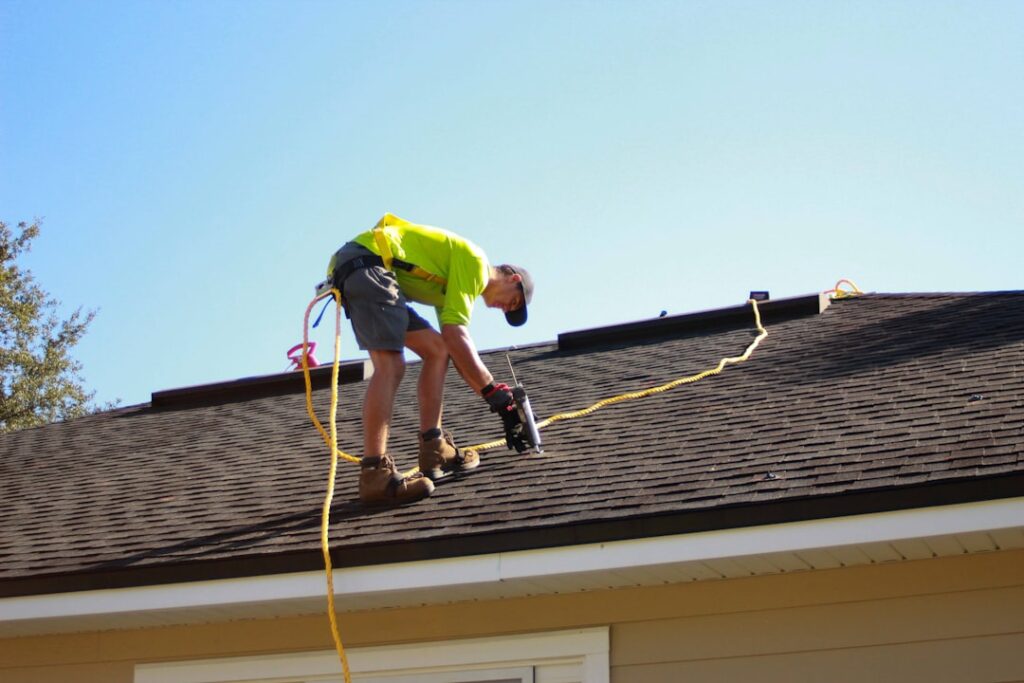
Most homeowners never see the layer that does some of the hardest work on their roof. Roof underlayment sits between the roof deck and the shingles, tile or metal panels, and it acts as a backup water barrier when wind-driven rain, melting snow or an ice dam pushes water past the outer covering. On the Front Range, with heavy spring snow, hard freezes and Chinook thaws, that backup layer matters. This guide explains the three main types of underlayment (asphalt-saturated felt, synthetic sheet and self-adhered ice barrier), where each one is typically used, why cold-climate roofs often need an ice barrier at the eaves, how underlayment behaves under shingles compared with metal, what a home inspector can and cannot evaluate, and what replacement commonly costs. Cost figures are broad industry estimates, not quotes, and local codes and pricing vary.
Part of our Structure & Exterior guide — start there for the full picture →
Roof damage or a roof replacement? Get a local roofer on the phone.
📞 Call (833) 850-2469What Is Roof Underlayment and What Does It Do?
Roof underlayment is a water-resistant or waterproof sheet installed directly over the roof sheathing (the plywood or OSB deck) before the finished roof covering goes on. It is not the primary waterproofing layer. Shingles, tiles and metal panels shed most of the water. Underlayment is the secondary line of defense that catches what gets past them.
It does several jobs at once:
- Secondary water protection. Wind-driven rain can lift shingle tabs, and melting snow can back up under a covering. Underlayment keeps that water off the wood deck and directs it back down toward the eaves.
- Temporary dry-in during construction. Once the deck is papered, the house is protected from a sudden afternoon storm before the shingles are installed, which is a real concern during a Colorado summer with daily thunderstorms.
- Code compliance and warranties. Building codes and most shingle manufacturers’ warranties assume an approved underlayment is installed according to their instructions.
Think of it as the layer that buys time: a roof that loses a few shingles in a windstorm can stay dry for days because the underlayment underneath is intact.
Felt vs Synthetic vs Self-Adhered: The Main Types
There are three broad families of roof underlayment on residential roofs. Each one has a place, and many roofs use two of them together: an ice barrier at the eaves and valleys, with felt or synthetic over the rest of the field.
Asphalt-Saturated Felt (#15 and #30)
Felt, often called tar paper, is the traditional choice. It is a paper or fiberglass mat saturated with asphalt. It comes in two common weights. Number 15 felt is lighter and thinner, and number 30 felt is heavier and more tear-resistant. Older Front Range homes almost always have felt under their shingles.
Felt advantages include low material cost, familiarity among installers and a long track record. Its drawbacks are real, though. It tears more easily under foot traffic, it can wrinkle or buckle when it absorbs moisture before the shingles are applied, and it is heavier per square than synthetic. It also turns brittle with long sun exposure, so most roofers cover it quickly.
Synthetic Underlayment
Synthetic underlayment is a woven or spun polypropylene or polyethylene sheet, usually with a coating that sheds water and a textured walking surface. It has largely replaced felt on new construction and reroofs in many markets. Synthetic rolls are lighter and longer than felt rolls, so fewer laps are needed and installation is faster.
Typical benefits include high tear strength, resistance to wrinkling, better walkability on many products and a longer allowable exposure time before the roof covering must be installed. The trade-offs are a higher material price per square, wide variation in quality between brands, and the fact that some synthetics are much less vapor-permeable than felt. On a roof with poor attic ventilation, a low-permeability layer can contribute to condensation problems under the deck, which is one reason good attic ventilation remains important no matter which product is chosen.
Self-Adhered Ice and Water Barrier
Self-adhered membranes, often called ice and water shield after one well-known product, are rubberized asphalt or butyl sheets with a sticky back. They bond directly to the deck and seal around the shanks of roofing nails driven through them. That self-sealing property is what makes them effective against standing or backed-up water, which ordinary felt and most mechanically fastened synthetics cannot resist.
Ice barrier is commonly used at eaves, in valleys, around chimneys and skylights, at roof-to-wall transitions and on low-slope sections. Some homeowners ask about covering the entire roof with it. That is possible, but it costs considerably more and turns the whole deck into a vapor barrier, which can trap moisture in the sheathing if the attic is not well ventilated. Most roofers reserve full coverage for specific situations such as low-slope roofs or particular metal and tile systems, and they follow the manufacturer’s instructions.
Quick Comparison
- #15 felt: lowest cost, lightest weight, most prone to tearing and wrinkling; short safe exposure time.
- #30 felt: sturdier than #15 and still inexpensive; heavier to carry and still sensitive to moisture and sun.
- Synthetic: moderate cost, light, strong and fast to install; quality varies and permeability differs by product.
- Self-adhered ice barrier: highest cost; seals around nails and resists backed-up water; used in targeted areas or under specific roof systems.
Best Roof Underlayment: our top 3 picks
| Product | Best for | Key features | Price | Buy |
|---|---|---|---|---|
| Zeluga 32-390 Synthetic | Field underlayment with code report |
| $57.95as of Oct 28, 2026 10:24 am GMT+0000 | Buy now →Check current price |
| Grip-Rite ShingleLayment HT | Ice-and-water at eaves |
| $154.95as of Oct 28, 2026 10:24 am GMT+0000 | Buy now →Check current price |
| FT Synthetics Platinum | Low slopes and cold installs |
| $149.99as of Oct 28, 2026 10:24 am GMT+0000 | Buy now →Check current price |


Prices are Amazon’s listed prices as of the time shown and change often; check Amazon for today’s price. As an Amazon Associate we earn from qualifying purchases.
Why Cold-Climate Roofs Need an Ice Barrier at the Eaves
Ice dams form when heat escaping from the living space warms the upper part of the roof, snow melts, and the meltwater refreezes at the colder overhang. The ridge of ice holds back water that then pools on the roof and works its way up under the shingles. Shingles are designed to shed water running downhill, not to hold back a pond. Our guide to ice dams explains the causes and long-term fixes in more detail.
A self-adhered membrane at the eaves gives that trapped water nowhere to go. Because it seals around nails, water that backs up under the shingles stays on top of the membrane instead of reaching the deck and the wall below.
The model International Residential Code (IRC) addresses this in its roof-assemblies chapter, and an ice barrier at the eaves is commonly required in areas with a history of ice forming along the eaves and backing up water. The commonly cited detail extends the barrier from the lowest edge of the roof to a point at least about 24 inches inside the exterior wall line of the house. Whether that applies to a particular house depends on which edition of the code the local jurisdiction adopted, any local amendments and the climate data the building department uses. Many Front Range jurisdictions do require it, but homeowners should confirm with the local building department or their roofer rather than assume.
A few practical points for Colorado homes:
- Wide overhangs need more than one course. On houses with deep eaves, a single 36-inch roll may not reach far enough past the wall line, so a second course is often added.
- Low-slope porch and dormer roofs are especially vulnerable because water moves slowly and pools easily.
- Valleys concentrate snowmelt from two roof planes and are a common place to run ice barrier the full length.
Ice barrier at the eaves works with the metal edge detail too. The usual sequence places the drip edge directly on the deck at the eaves with the ice barrier lapped over it, and on the rakes the underlayment goes down first with the drip edge on top. Our companion guide on drip edge covers that lapping order and why it matters.
An ice barrier is a backup, not a cure. If an attic is losing heat through air leaks and thin insulation, ice dams will keep forming, and the membrane only limits the damage they cause. The lasting fix is to air seal and insulate the attic floor so the roof deck stays cold.
Underlayment Under Shingles vs Under Metal Roofing
The underlayment choice changes with the roof covering above it.
Under Asphalt Shingles
Shingle roofs are the most common in Colorado subdivisions. A typical modern installation pairs an ice barrier at the eaves and valleys with synthetic or felt over the rest of the deck, laid in horizontal courses that overlap so water always flows onto the face of the course below. Manufacturer instructions specify the minimum laps (commonly a few inches on horizontal seams and more on end laps), the fastener type and spacing, and any extra requirements for low slopes. On low-slope shingle roofs, manufacturers often call for a double layer of underlayment or full ice barrier coverage.
Under Metal Roofing
Metal panels behave differently. They expand and contract noticeably with temperature swings, they can collect condensation on their underside on cold nights, and the hot surface in summer can soften some asphalt-based membranes. For these reasons many metal roofing manufacturers specify high-temperature underlayments, and some recommend a slip sheet between a sticky membrane and the panels so the metal can move without tearing the layer below.
Standing seam roofs are often installed over a high-temperature synthetic or a high-temperature self-adhered membrane. Exposed-fastener panels have more potential leak points at every screw, so the underlayment and fastener gaskets both carry more responsibility over time. If a metal roof is on your shortlist, our metal roof cost guide breaks down how panel type and underlayment requirements affect total price.
Installation Details That Make or Break Underlayment
Even a premium product fails if it is installed poorly. These are the details roofers, inspectors and manufacturers watch most closely.
- Exposure limits. Every underlayment has a maximum time it can be left uncovered in sunlight. Felt is usually meant to be covered quickly. Many synthetics allow longer exposure, sometimes measured in weeks or months, but the exact limit depends on the product and is listed in the manufacturer’s literature. Colorado’s high-altitude sun degrades exposed materials faster, so leaving a roof dried in but uncovered for a long time is a risk.
- Laps and direction. Courses should run parallel to the eaves and lap shingle-fashion, upper over lower.
- Fasteners. Synthetic underlayment usually calls for cap nails or cap staples, not bare staples, to resist wind uplift.
- Wrinkles and buckling. Felt applied to a wet deck or left in the rain can wrinkle, and those wrinkles can show through shingles as waves.
- Penetrations and walls. Underlayment should turn up walls and around chimneys and skylights so it works together with step and counter flashing. Our roof flashing guide explains how those layers overlap.
- Deck condition. Soft or rotten sheathing should be replaced before it is covered.
Roofing also involves real fall risk. OSHA identifies falls as the leading cause of death in construction and runs a fall prevention campaign built around planning, providing the right equipment and training. That is one reason underlayment replacement is rarely a sensible DIY project, even for confident homeowners.
Can a Home Inspector See the Underlayment?
In most cases, no. Underlayment is covered by shingles on top and by the roof deck from below. The home inspection standards most inspectors follow call for inspecting the roofing materials, roof drainage systems, flashing, skylights, chimneys and roof penetrations, but they do not require inspectors to report on concealed conditions. Underlayment is a classic concealed component.
What an inspector can often do is look for indirect evidence:
- From the attic: water stains on the underside of the deck, darkened sheathing near the eaves, rusted nail tips, frost buildup in winter or damp insulation can point to leaks or condensation.
- From the roof or the ground: exposed underlayment at missing shingles, wrinkled or wavy shingle lines, ice dam damage at eaves or a lack of visible ice barrier at the edge (sometimes visible at the drip edge).
- From the interior: ceiling stains along exterior walls, a common symptom of ice dam leakage.
Buyers who want more certainty can ask the sellers for roofing invoices or permits, which often list the underlayment and ice barrier used, or hire a roofing contractor for a closer evaluation if the inspection raises concerns.
When Underlayment Gets Replaced and What It Costs
Underlayment is almost never replaced on its own. Because it sits under the roof covering, replacing it means removing the shingles or panels first. In practice, new underlayment is installed during a tear-off and reroof, or in localized areas during a significant repair.
Signs that underlayment may be at the end of its useful life usually show up as roof problems rather than underlayment problems: recurring leaks with no obvious flashing defect, brittle felt crumbling at exposed edges, or widespread deck damage found during repairs.
Typical Cost Ranges
The figures below are rough industry estimates for context only. Actual prices vary with roof pitch, access, number of layers to remove, material choice and local labor rates.
- Felt (#15 or #30): often among the cheapest options, roughly in the range of a few tens of dollars per roll, with installed cost per square typically low.
- Synthetic: commonly more per roll than felt, but rolls cover more area. Installed cost per square is usually modestly higher than felt.
- Self-adhered ice barrier: typically the most expensive per square foot, often a few times the cost of synthetic.
- Upgrade during a reroof: moving from felt to synthetic, or extending ice barrier coverage, often adds a relatively small percentage to a full roof replacement compared with the cost of the shingles, labor and disposal.
Because the incremental cost of better underlayment is usually small compared with the total project, many roofers suggest choosing the better product at reroof time. For a sense of total project costs, see our roof replacement cost guide.
Questions to Ask a Roofer
- Which underlayment brand and product will be used, and is it approved by the shingle or panel manufacturer?
- How far will the ice barrier extend past the exterior wall line at the eaves, and will valleys be covered?
- How long will the underlayment be exposed before the roof covering is installed?
- Will rotten or damaged decking be replaced, and how is that priced?
- Will a permit be pulled, and will the job be inspected by the local building department?
When to Call a Professional
Call a roofer or a qualified inspector when you see ceiling stains along exterior walls after snowmelt, ice dams that return every winter, missing shingles that expose the layer underneath, or attic sheathing that is dark or damp. Buyers looking at an older home should treat the roof’s age and repair history as part of their due diligence, and ask for invoices that document the underlayment and ice barrier. Moisture that reaches the deck and attic can lead to rot and mold, and the EPA notes that the key to mold control is moisture control, so roof leaks are worth addressing promptly.
References
- ASHI Standard of Practice for Home Inspections — American Society of Home Inspectors
- 2021 International Residential Code, Chapter 9: Roof Assemblies — International Code Council
- OSHA’s Fall Prevention Campaign — Occupational Safety and Health Administration
- A Brief Guide to Mold, Moisture and Your Home — U.S. Environmental Protection Agency
Frequently asked questions
Is synthetic roof underlayment better than felt?
Synthetic underlayment is generally lighter, stronger and more resistant to tearing and wrinkling than felt, and it usually tolerates longer sun exposure before shingles go on. Felt costs less and has a long track record. The best choice depends on the roof covering, the manufacturer's requirements and the budget.
Where is ice and water shield required?
Ice barrier is commonly required at the eaves in areas with a history of ice dams, typically extending from the roof edge to a point at least about 24 inches inside the exterior wall line. Requirements depend on the locally adopted code, so confirm with your building department or roofer.
Can underlayment be replaced without replacing the shingles?
Not in practice. Underlayment sits under the roof covering, so replacing it means removing the shingles or panels. It is normally replaced during a reroof or in small areas during a significant repair.
How long can roof underlayment be left exposed?
It depends on the product. Felt is usually meant to be covered quickly, while many synthetic underlayments allow longer exposure. Check the manufacturer's published exposure limit, and keep in mind that strong high-altitude sun can shorten the practical window.
Will a home inspector check the roof underlayment?
Usually not directly. Underlayment is concealed by the roof covering, and inspection standards do not require reporting on concealed conditions. Inspectors may note indirect clues such as attic water stains, deck damage or ice dam evidence.
Seeing stains along an exterior wall after the snow melts, or wondering what is under the shingles on a home you are buying? Reach out to us and we can help connect you with a Front Range inspector who can look for the warning signs before they become a bigger repair.