Metal Roof Cost: Standing Seam vs Panels and Hail Ratings
Metal roofing has moved well beyond barns and mountain cabins. On the Colorado Front Range, more homeowners are pricing metal after a second or third hail claim on asphalt shingles, or because they want a roof that may outlast their mortgage. The catch is price: metal roof cost is usually well above standard shingles, and the spread between metal systems is wide. This guide compares typical cost ranges for standing seam, exposed-fastener panels, stone-coated steel and metal shingles; explains steel versus aluminum; covers Class 4 hail ratings, snow shedding, noise and energy performance; and looks at installing metal over existing shingles. All prices are general industry estimates for planning, not quotes. Local labor, material costs and roof complexity drive the final number.
Part of our Structure & Exterior guide — start there for the full picture →
Roof damage or a roof replacement? Get a local roofer on the phone.
📞 Call (833) 850-2469How Much Does a Metal Roof Cost?
Roofers price by the “square,” or 100 square feet of roof surface. Many Front Range homes have somewhere around 20 to 35 squares, depending on footprint, pitch and complexity. As broad installed estimates, including typical tear-off of one layer of shingles:
- Exposed-fastener steel panels (such as ribbed or corrugated panels): often roughly $5 to $10 per square foot, or about $500 to $1,000 per square.
- Stone-coated steel shingles, shakes or tiles: often roughly $9 to $15 per square foot, or about $900 to $1,500 per square.
- Stamped metal shingles: often in a similar range to stone-coated steel, depending on product and profile.
- Standing-seam steel: commonly about $10 to $16 or more per square foot, or $1,000 to $1,600 or more per square.
- Standing-seam aluminum: often higher than comparable steel.
- Copper and zinc: premium specialty metals that frequently cost several times as much as steel.
On a 25-square roof, that means a whole-house metal roof might land somewhere around $15,000 to $40,000 or more, with standing seam usually at the upper end. Compare that with the asphalt ranges in the roof replacement cost guide, where architectural shingles typically cost substantially less up front.
Comparing Metal Roofing Systems
Standing Seam
Standing-seam roofs use long vertical panels joined by raised seams that are mechanically folded or snapped together. The fasteners are hidden under the seams, attached with clips that allow the panels to expand and contract. With no exposed screws to back out or leak, standing seam is generally regarded as the most weather-tight and lowest-maintenance metal option for homes. It is also the most expensive, and it requires experienced installers and careful detailing at valleys, chimneys and penetrations. Panels may be roll-formed on site for long runs.
Exposed-Fastener Panels
Ribbed and corrugated panels are screwed directly through the face of the metal into the roof deck or purlins, with rubber-washered screws sealing each hole. They cost less and install faster, which is why they are common on outbuildings, garages and some rural homes. The trade-off is maintenance: screw washers degrade over time, and thermal movement can enlarge screw holes, so periodic inspection and screw replacement are often recommended over the roof’s life.
Stone-Coated Steel
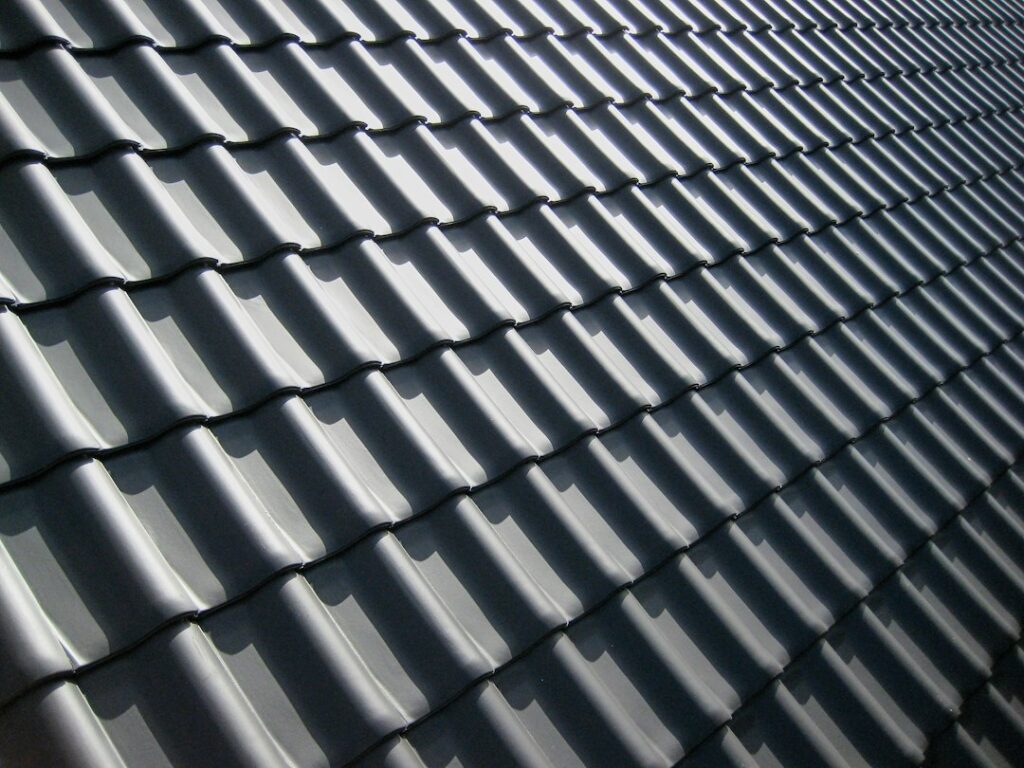
Stone-coated steel panels are pressed into shapes that mimic shingles, shakes or tile, then coated with acrylic and stone granules. They appeal to buyers who want metal performance with a traditional look, and the textured surface tends to hide small dents better than smooth painted metal. Some HOAs that do not allow standing seam will approve stone-coated profiles.
Metal Shingles
Stamped metal shingles interlock in smaller pieces, which helps on complex roofs with many angles. They come in steel or aluminum with painted finishes, and some products carry impact-resistance ratings. Price and performance vary considerably by manufacturer.
Color and Finish Choices
Finish affects both appearance and cost. Common painted finishes include polyester and silicone-modified polyester, which are generally less expensive, and PVDF (often sold under trade names such as Kynar) finishes, which are typically priced higher and marketed for better resistance to fading and chalking under strong sun. At Front Range elevations, UV exposure is intense, so ask about the paint warranty’s fade and chalk terms as well as the substrate warranty. Lighter colors and reflective pigments can keep the roof surface cooler in summer, while matte and textured finishes tend to hide dents and glare better.
Steel vs Aluminum
Most residential metal roofs in Colorado are steel, usually coated with zinc (galvanized) or an aluminum-zinc alloy (often sold as Galvalume) and then painted. Steel is strong, widely available and generally less expensive. Gauge matters: a lower gauge number means thicker metal, and thicker panels resist denting better and cost more. Ask bidders to state the gauge, coating type and paint system in writing.
Aluminum does not rust, which makes it a favorite in coastal areas, but it is softer than steel of similar thickness and costs more. For a dry inland climate, the corrosion advantage matters less, and the dent resistance of thicker steel is often more relevant on the hail-heavy Front Range.
Hail Resistance and Class 4 Impact Ratings
Hail is the main reason many Front Range homeowners look at metal. Colorado’s urban corridor is widely reported to be one of the most hail-prone regions in the United States, and repeat claims on asphalt roofs are common.
What UL 2218 Class 4 Means
UL 2218 is a widely used impact-resistance test for roofing. In simple terms, a lab drops steel balls of increasing size from set heights onto roofing samples, then checks whether the material cracks or ruptures. Ratings run from Class 1 to Class 4, with Class 4 indicating the sample withstood the largest ball (about 2 inches in diameter) without the kind of damage that would let water through. Many metal products carry Class 4 ratings, as do some asphalt and synthetic products.
A Class 4 rating is not a promise of a dent-free roof. The test looks at whether the roof still keeps water out, not whether it still looks perfect. Large hail can still dent Class 4 metal.
Cosmetic vs Functional Denting
Hail dents on metal are often cosmetic: the roof looks dimpled but still sheds water. Functional damage, such as punctures, opened seams, cracked coatings or loosened fasteners, is less common. Many insurers treat these differently, and some policies exclude cosmetic damage to metal roofs, which can mean a dented roof is not replaced after a storm. Stone-coated and textured finishes tend to hide minor dents better than smooth, glossy panels. The hail damage roof guide covers how damage is evaluated and how claims commonly work.
Insurance Discounts
Some insurers offer premium discounts for Class 4 roofing, and some do not. The size of any discount, the documentation required and whether a cosmetic-damage exclusion applies all vary. Before choosing a product partly for insurance savings, ask your insurer in writing what discount would apply and what documentation is needed.
Snow, Noise and Energy Performance in Colorado
Snow Shedding and Snow Guards
Smooth metal roofs shed snow quickly, which helps reduce snow loads and ice dams but creates a new hazard: sliding sheets of snow and ice can fall onto walkways, decks, vehicles, gutters and lower roofs. Snow guards (small brackets or continuous rail systems attached to the roof) hold snow in place so it melts gradually. In Colorado mountain towns they are standard; along the Front Range they are often recommended above entrances, driveways and lower roofs. Expect snow guards to add cost, and ask the installer how they will be fastened without compromising the panels.
Gutters may need heavier brackets or different placement under metal roofs. Proper attic insulation and attic ventilation still matter, because a warm attic can melt snow unevenly and send ice down the slope.
Is a Metal Roof Noisy?
The loud “tin roof in the rain” image comes mostly from panels fastened over open framing, as on barns and sheds. On a house, metal is typically installed over solid decking, underlayment and an insulated attic, which dampens much of the sound. Heavy hail may be noticeable, but many owners report that rain on a well-installed metal roof is not dramatically louder than on shingles. Stone-coated products are generally quieter still.
Energy and Reflective Coatings
Many metal roofs are available with reflective “cool roof” coatings. ENERGY STAR’s cool roofs page explains that cool roofs combine high solar reflectance with high thermal emittance, lists metal among common cool roof materials, and notes that cool roofs generally save the most energy in hot, sunny climates and on buildings with low roof insulation. The EPA’s guide to using cool roofs lists metal shingles or tiles coated with reflective paint or granules among steep-slope cool roof products and notes that products with certain reflective pigments tend to cost more. On the Front Range, a reflective metal roof can help with summer attic heat, but savings depend heavily on insulation, roof color, orientation and how much the home relies on air conditioning.
How Long Does a Metal Roof Last?
Metal roofs are generally expected to last considerably longer than asphalt shingles. Industry estimates commonly put well-installed standing seam at 40 to 60 years or more and exposed-fastener systems somewhat lower, with periodic fastener maintenance. Paint finishes typically carry separate warranties against chalking and fading. Actual lifespan depends on metal thickness, coating, installation quality, exposure and maintenance.
Over a long ownership period, a higher upfront metal roof cost can be partly offset by fewer replacements and potentially fewer hail repairs. If you expect to move in a few years, the payback is less certain, though buyers often see a newer metal roof as a selling point.
Installing Metal Over Existing Shingles
Some metal systems can be installed over a single layer of asphalt shingles, which avoids tear-off and disposal costs. This approach has limits:
- Code limits: Building codes commonly limit how many roof coverings may be stacked and may prohibit re-covering when the existing roof is water-soaked or deteriorated. Requirements vary by jurisdiction, so confirm with your local building department.
- Hidden decking problems: Covering old shingles prevents anyone from seeing soft or rotted sheathing.
- Flatness and fastening: Standing seam often needs a flat substrate or battens; installers may add purlins or a new layer of sheathing.
- Manufacturer requirements: Warranties may specify underlayment and substrate conditions.
- Insurance: Some insurers ask about multiple roof layers.
Even when an overlay is allowed, many roofers prefer a full tear-off to inspect the deck, install new ice barrier and underlayment, and re-flash chimneys and walls properly. Flashing details at roof-to-wall joints, chimneys and penetrations are among the most important parts of any metal roof installation.
What Drives Metal Roof Cost Up or Down
- Roof size, pitch and complexity: Steep, cut-up roofs with valleys, dormers and skylights require more labor, trim and flashing.
- Metal type and gauge: Thicker steel, aluminum and specialty metals add cost.
- Finish: Premium paint systems and textured or stone-coated finishes cost more.
- Tear-off and decking: Removing multiple layers and replacing damaged sheathing adds cost.
- Accessories: Snow guards, ridge vents, custom trim and gutters are often priced separately.
- Installer availability: Fewer contractors specialize in standing seam than in shingles, and demand spikes after big hail seasons.
Get at least three written bids that specify the system, metal type and gauge, finish, underlayment, flashing approach, snow guards, ventilation, permit and warranty terms. Ask each installer for addresses of local metal roofs they completed several years ago.
Metal vs Asphalt: Comparing Long-Term Cost
Upfront price is only part of the comparison. A simple way to frame it is cost per year of expected service. If an architectural shingle roof costs a homeowner a certain amount and is expected to last roughly 20 to 25 years under Front Range conditions, while a standing-seam roof costs perhaps two to three times as much but may last two or more times as long, the annualized cost can end up closer than the sticker prices suggest. Hail changes the math further. A homeowner who replaces an asphalt roof after every major hail event, paying a wind and hail deductible each time, may come out ahead with a more impact-resistant system, while a homeowner whose asphalt roof has never been hit may not.
Other factors to weigh:
- How long you plan to stay. Short ownership periods reduce the chance of recouping the premium directly, though a newer metal roof can still help resale.
- Deductible structure. Percentage-based hail deductibles make each claim more expensive and may tip the balance toward a more durable roof.
- Class 4 asphalt as a middle option. Impact-resistant shingles cost more than standard shingles but far less than standing seam, and some insurers treat them similarly for discount purposes.
- Resale and HOA rules. Some neighborhoods restrict metal profiles or colors, which can narrow choices to stone-coated products.
None of these figures are guaranteed. Get bids for both options on the same roof and ask your insurer for premium quotes on each before deciding.
Maintaining a Metal Roof
Metal roofs need less routine attention than shingles, but they are not maintenance-free. Owners and inspectors commonly watch for:
- Backed-out, loose or rusted screws and cracked washers on exposed-fastener panels.
- Scratches or cut edges where bare metal can begin to corrode.
- Sealant at trim, ridge caps and penetrations that has dried and cracked.
- Debris collecting in valleys and behind chimneys.
- Snow guards that have loosened or bent after heavy snow.
- Flashing at walls, chimneys and vents, which remains a common leak point on any roof type. The roof flashing guide explains what to look for.
Avoid walking on metal panels whenever possible; it can dent ribs, scratch finishes and is a fall hazard. Use binoculars from the ground and schedule periodic professional checks, especially after hailstorms.
Metal Roofs and Home Inspections
The ASHI Standard of Practice calls for inspectors to inspect roofing materials, roof drainage systems, flashing, and skylights, chimneys and roof penetrations, and to describe the roofing materials and how the roof was inspected. Inspectors may choose not to walk metal roofs, which can be slippery and easily scuffed, and may evaluate them from a ladder or with binoculars or cameras instead. Walking any roof involves fall risk, and OSHA’s fall prevention campaign stresses planning, equipment and training for work at height. When buying a home with a metal roof, ask for installation records and warranty transfer details, and consider a specialized evaluation through a roof inspector. The home inspector hiring guide explains how to add specialists to a standard inspection.
References
- Cool Roofs — ENERGY STAR
- Using Cool Roofs to Reduce Heat Islands — U.S. Environmental Protection Agency
- ASHI Standard of Practice for Home Inspections — American Society of Home Inspectors
- OSHA’s Fall Prevention Campaign — Occupational Safety and Health Administration
Frequently asked questions
How much does a metal roof cost?
As rough installed estimates, exposed-fastener steel panels often run about $5 to $10 per square foot, stone-coated steel about $9 to $15, and standing-seam steel about $10 to $16 or more. Many whole-house metal roofs land somewhere around $15,000 to $40,000 or more.
Is a metal roof worth it in Colorado?
For owners planning to stay long term, metal's lifespan and hail performance can offset the higher upfront cost. Class 4 rated metal resists functional hail damage, though it can still dent. Insurance discounts and cosmetic-damage exclusions vary, so check with your insurer.
Does hail dent a metal roof?
Large hail can dent metal roofs, including Class 4 rated products. Most dents are cosmetic and do not affect water-shedding. Some policies exclude cosmetic damage to metal roofs, so review your coverage before choosing a product.
Are metal roofs noisy in rain or hail?
Metal installed over solid decking, underlayment and an insulated attic is usually much quieter than metal over open framing. Heavy hail may be noticeable, and stone-coated products tend to be quieter than smooth panels.
Can a metal roof go over existing shingles?
Sometimes. Codes commonly limit the number of roof layers and may prohibit re-covering a deteriorated roof, and manufacturers have substrate requirements. Many roofers prefer tear-off so they can inspect the decking and re-flash properly. Check with your local building department.
Weighing a metal roof on a home you’re about to buy or after another hail claim? Send us a note and we’ll connect you with a Front Range inspector who can assess the existing roof and decking before you commit.