EPDM Rubber Roofs: Low-Slope Lifespan, Seams and Ponding
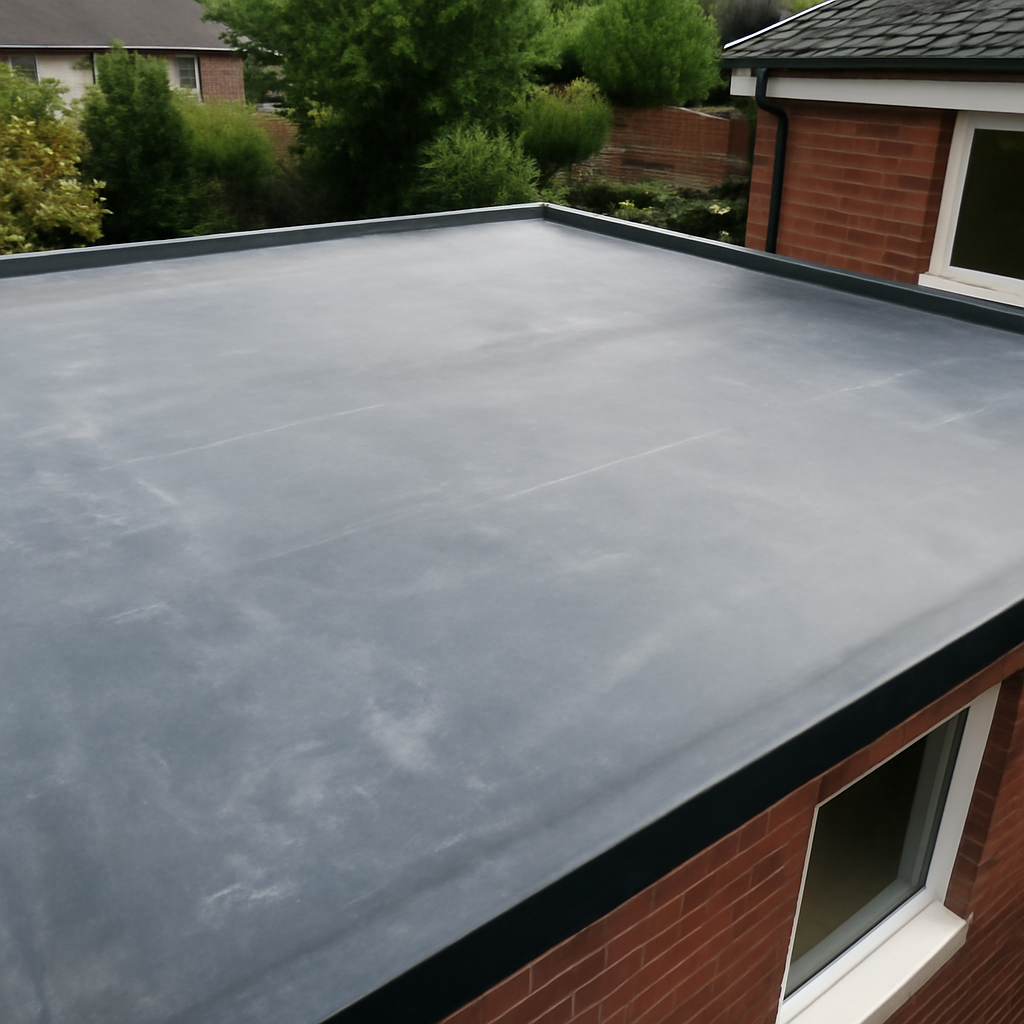
Most Front Range houses have steep shingle roofs, yet a surprising number also carry a section of low-slope roofing somewhere: a porch roof, a garage or carport, a rear addition, or the flat roof of a modern home. On many of those areas the covering is EPDM, the black synthetic rubber membrane that has been used on low-slope roofs for decades. An EPDM rubber roof is simple, flexible and forgiving when it is installed and detailed well. When it fails, the cause is rarely the rubber sheet itself. It is almost always a seam, a flashing, a penetration or water that sits on the roof longer than it should. This guide explains what EPDM is, how it ages, the failure points inspectors look for, how it compares with TPO and coatings, what snow and ice do to a flat roof in Colorado, and the general cost picture for repair and replacement.
Part of our Structure & Exterior guide — start there for the full picture →
Roof damage or a roof replacement? Get a local roofer on the phone.
📞 Call (833) 850-2469What an EPDM Rubber Roof Is
EPDM stands for ethylene propylene diene monomer, a synthetic rubber compound. On roofs it comes as large flexible sheets, commonly in thicknesses described in mils (thousandths of an inch), with 45 and 60 mil being familiar residential and light-commercial options and thicker sheets available. Most residential EPDM is black, although white-topped versions exist.
The membrane is a single-ply system: one layer of rubber does the waterproofing, unlike older built-up roofs that stack several layers of felt and asphalt. Sheets are installed in one of three general ways:
- Fully adhered. The membrane is glued to a cover board or insulation board with bonding adhesive. This is the most common approach on houses.
- Mechanically attached. Fasteners and plates hold the sheet along the seams, with the next sheet lapped over them.
- Ballasted. The sheet lies loose and is held down by river rock or pavers. This is more common on large commercial roofs that can carry the weight.
Where two sheets meet, they are joined with seam tape or adhesive, and every edge, wall, curb, vent pipe and drain needs its own flashing detail. Those joints and details are where most of the craftsmanship, and most of the risk, lives.
Where EPDM shows up on houses
EPDM is designed for low-slope roofs, often described as roofs with a pitch of less than about 3 in 12, where shingles do not shed water reliably. Typical residential locations include garage roofs, covered porches, rear additions and flat-roofed modern homes. If you see a smooth black or gray sheet with visible lapped seams and a rubbery feel, it is very likely EPDM. A thermoplastic membrane such as TPO is usually white and has heat-welded seams, which is one quick way to tell them apart.
How Long EPDM Lasts and What Shortens Its Life
Manufacturers and roofers commonly describe service lives for well-installed EPDM in the range of roughly 20 to 30 years, sometimes longer on thicker membranes with good drainage. Those are general expectations, not guarantees. A roof with excellent seams and positive drainage may outlast its expected life; a roof with poor details may leak in its first few years.
Several factors shorten the life of a rubber membrane:
- Ultraviolet exposure. EPDM is generally considered UV resistant, but the high-altitude sun on the Front Range is intense, and aged membranes can become chalky, lose some flexibility and show surface crazing. How much this matters depends on the specific product and its age.
- Thermal cycling. Black EPDM gets very hot in summer sun and very cold on clear winter nights. Repeated expansion and contraction stresses seams, flashings and the adhesive bond.
- Foot traffic and abuse. Rooftop decks set directly on the membrane, satellite installers, holiday-light crews and snow shoveling with metal tools can puncture or abrade the sheet.
- Standing water and debris. Leaves, pine needles and grit that collect in low spots hold moisture against seams and can clog drains and scuppers.
- Hail. Hail resistance varies with membrane thickness, the stiffness of the board beneath it and the size of the stones. A thin membrane over soft insulation may bruise or puncture where a thicker sheet over a firm cover board might survive. A roof check after a significant hailstorm is reasonable.
Seams, Flashing and Penetrations: The Usual Failure Points
Ask an experienced roofer where a rubber roof leaks and the answer is nearly always the same: at the edges and the joints, not in the middle of the field. Inspectors focus their attention on the same places.
Seam problems
Older EPDM roofs often have liquid-adhesive seams, while newer installations typically use factory-applied or field-applied seam tape. Either type can fail when the surfaces were not cleaned and primed properly, when the seam was installed in cold or wet weather, or simply with age. Warning signs include:
- Seam edges that have lifted, curled or opened into a fishmouth.
- Seams that can be peeled back with light finger pressure.
- Missing or deteriorated lap sealant at T-joints where three sheets meet.
- Patches of different age layered over one another, suggesting repeated repairs in the same area.
Flashing and edge details
Where a low-slope roof meets a wall, a steeper roof, a parapet or the edge of the house, the membrane has to turn up or over and be terminated and counterflashed so water cannot get behind it. Common defects include membrane that stops short of the wall without a termination bar, counterflashing that is missing or loose, sealant used as the only line of defense, and drip edges that let water run back under the sheet. Transitions between a shingle roof and an EPDM section are particularly prone to leaks if the shingles were not lapped correctly over the membrane.
Penetrations and curbs
Plumbing vents, exhaust fan hoods, skylight curbs, satellite mounts and HVAC equipment all pass through or sit on the membrane. Each needs a prefabricated boot or a field-wrapped flashing that is properly adhered and sealed. Cracked boots, unsealed fasteners from old satellite dishes, and equipment stands that sit directly on the membrane without protection are frequent findings. Our roof leak guide explains how water can travel some distance from the entry point before it shows on a ceiling, which is why the stain inside is not always directly below the defect.
Ponding Water and Drainage
A flat roof is not supposed to be perfectly flat. It is supposed to slope gently toward drains, scuppers or gutters so water leaves the surface. Ponding water, meaning water that remains on the roof well after rain or snowmelt, is one of the most common problems on low-slope roofs and one of the most important for buyers to understand.
Ponding matters for several reasons. Standing water keeps seams and flashings wet for long periods, it adds weight to the roof structure, it collects dirt and organic debris that can support plant growth, and in winter it can freeze into ice that stresses the membrane and blocks drainage. Many roofers and manufacturers use a rule of thumb that water remaining roughly 48 hours after precipitation indicates a drainage problem, though specific warranty language varies.
Causes of ponding include:
- Insufficient slope built into the framing or tapered insulation.
- Sagging or deflected roof framing, sometimes from long-term overloading or rot.
- Drains or scuppers set too high, undersized or clogged.
- Gutters and downspouts that back up, especially with ice in winter.
- Compressed or wet insulation beneath the membrane creating low spots.
Evidence of ponding is often visible even on a dry day: rings of dirt, sediment lines, algae staining or a slight depression in the surface. Repairs range from clearing drains to adding tapered insulation crickets or, in some cases, addressing structural deflection. Our guide to flat roof repair walks through the common fixes and when a patch is no longer enough.
Snow, Ice and Low-Slope Roofs in Colorado
Front Range winters bring a mix of heavy spring snowstorms, quick melts and hard refreezes. Low-slope roofs hold snow rather than shedding it, so they experience these cycles more directly than steep roofs.
FEMA’s Snow Load Safety Guide (FEMA P-957) notes that steep roofs are more likely to shed snow by sliding than flat and low-slope roofs, and that on flat or low-slope roof systems snowmelt may accumulate in low areas on roofs with poorly designed or blocked drainage, a condition it calls ponding, which creates a concentrated load on the roof structure. The same guide explains that drifting snow builds up at roof steps, parapets and obstructions, which is exactly the situation on a garage or porch roof tucked against a taller wall of the house.
The FEMA guide also describes warning signs of an overstressed roof during a snow event, including sagging roof members or sheathing, popping, cracking and creaking noises, and doors or windows that can no longer be opened or closed. Its snow-removal guidance cautions against mechanical snow removal equipment because of the risk of damaging the roof membrane, and recommends plastic rather than metal shovels and avoiding sharp tools such as picks. For a homeowner with an EPDM roof, the practical point is that metal shovels and ice chippers are a quick way to puncture the membrane. If snow removal is necessary, it is generally safer to leave a protective layer of snow on the membrane and to hire someone who works on roofs routinely.
Ice dams can also form where a low-slope section drains toward a gutter or where heat escaping from a poorly insulated space below melts snow that then refreezes at the cold edge. Water backed up behind that ice can work its way under edge flashings. The mechanics are similar to those on shingle roofs, and our article on ice dams covers prevention through insulation, air sealing and ventilation.
EPDM vs TPO, Coatings and Other Low-Slope Options
EPDM competes with several other low-slope systems, and each has trade-offs. The right choice depends on the roof’s size, exposure, use and budget, and on which systems local roofers install well.
| System | Typical traits | Common concerns |
|---|---|---|
| EPDM (rubber) | Flexible, long track record, tolerant of cold, usually black | Adhesive or taped seams, shrinkage on some older sheets, absorbs heat when black |
| TPO | Usually white and reflective, heat-welded seams | Quality varies by formulation and installer; welds must be done correctly |
| Modified bitumen | Asphalt-based rolls, torch, cold or self-adhered | Seams and granule loss; torch application carries fire risk on houses |
| Roof coatings | Liquid-applied layer over an existing sound roof | Not a fix for wet insulation, failed seams or poor drainage; compatibility matters |
TPO’s heat-welded seams are often presented as an advantage over taped EPDM seams, while EPDM’s flexibility and long field history are its main selling points. Our TPO roofing guide covers that membrane in more detail. Coatings are a separate category: they can extend the life of an aging but still sound roof, but they do not repair saturated insulation or structural ponding, and not every coating is compatible with EPDM. The elastomeric roof coating guide explains where coatings help and where they simply hide problems.
Cool roof considerations
Black EPDM absorbs a lot of solar heat. EPA describes a cool roof as one that absorbs and transfers less heat from the sun to the building, with high solar reflectance being the most important property, and it lists single-ply membranes with light- or cool-colored pigments among cool products for low-slope roofs. EPA also reports that in air-conditioned residential buildings a cool roof can reduce peak cooling demand by 11 to 27 percent. Whether a white-topped membrane or a reflective coating makes sense on a particular house depends on climate, what is below the roof and how much of the home it covers. On a small porch roof the effect is minor; on a flat roof over living space it may be more noticeable in summer.
What a Home Inspector Looks For on a Rubber Roof
Under the ASHI Standard of Practice, a home inspector inspects roofing materials, roof drainage systems, flashing, and skylights, chimneys and roof penetrations, and describes the roofing materials and the methods used to inspect the roofing. On a low-slope section that is safely accessible, that usually means walking or viewing the surface and noting:
- The membrane type and, where it can be judged, its general condition and approximate age.
- Open, lifted or repeatedly patched seams.
- Flashing at walls, edges, curbs and penetrations.
- Evidence of ponding, debris accumulation and blocked drains or scuppers.
- Punctures, blisters, wrinkles or areas that feel soft or spongy underfoot, which can suggest wet insulation.
- Interior stains on ceilings below the flat roof area.
An inspector may not be able to walk every roof safely, particularly in snow or ice, on fragile surfaces or at height, and the report should say how the roof was viewed. A general home inspection is a visual survey; it does not include moisture surveys of the insulation or core cuts. If the inspector notes soft areas, multiple patches or ceiling stains, a roofer can perform a closer evaluation, sometimes using moisture meters or infrared scanning. Our structure and exterior inspection hub covers how roofs fit into the rest of the exterior evaluation.
Repair, Recover or Replace: Hedged Cost Ranges
Costs for EPDM work vary widely with roof size, access, the number of penetrations, the condition of the deck and insulation, tear-off requirements and local labor rates. The ranges below are general 2026 figures for planning only, and written quotes from local roofers are the only reliable numbers.
- Small repairs. Patching a puncture, resealing a seam or replacing a vent boot is often a service-call job, commonly a few hundred dollars depending on access and minimum charges.
- Larger repairs. Re-flashing a wall, rebuilding a drain or addressing several failed seams may run from several hundred to a couple of thousand dollars.
- Full replacement. Residential EPDM replacement is often quoted per square foot, and small porch or garage roofs can still cost a few thousand dollars because of setup, tear-off and minimum job charges. Larger flat roofs over living space can cost considerably more, especially if insulation or decking must be replaced or tapered insulation added to correct ponding.
- Coatings. Coating an existing sound roof is usually less expensive than replacement, but prep, compatible primers and the coating itself add up, and the roof must be dry and in reasonable condition first.
When a roof has wet insulation in large areas, recurring leaks at many seams or chronic ponding from structural deflection, repeated patching tends to be a poor value compared with addressing the underlying problem.
Buying a house with a flat garage roof or a rubber-covered addition is common on the Front Range, and a clear picture of the membrane’s condition helps you plan. The guide to hiring a home inspector explains what to expect from an inspection and how to choose someone who will actually get eyes on the roof.
References
- Snow Load Safety Guide (FEMA P-957) — Federal Emergency Management Agency
- Using Cool Roofs to Reduce Heat Islands — U.S. Environmental Protection Agency
- ASHI Standard of Practice for Home Inspections — American Society of Home Inspectors
Frequently asked questions
How long does an EPDM rubber roof last?
Well-installed EPDM is commonly expected to last roughly 20 to 30 years, sometimes longer on thicker membranes with good drainage. Seam quality, flashing details, ponding water and sun exposure decide how close a particular roof comes to that range.
Is ponding water on a rubber roof a problem?
Water that remains on the roof well after rain or snowmelt is a drainage problem. It keeps seams wet, adds weight, collects debris and can freeze in winter. A roofer can clear drains or add tapered insulation to correct the slope.
Can I shovel snow off an EPDM roof?
Use caution. FEMA's snow load guidance recommends plastic rather than metal shovels and warns against sharp tools and mechanical equipment because they can damage the roof membrane. Leaving a thin layer of snow protects the rubber.
Is EPDM better than TPO?
Neither is better in every case. EPDM is flexible with a long track record but usually has taped or glued seams; TPO is typically white and reflective with heat-welded seams. Installer skill matters as much as the membrane.
How much does it cost to replace a small EPDM roof?
Small porch or garage roofs often cost a few thousand dollars to replace because of tear-off and minimum job charges, while larger flat roofs over living space cost more. These are general 2026 ranges; local quotes are the reliable figure.
Have a flat garage or porch roof on a home you are about to buy? Get in touch and we will connect you with a Front Range inspector who checks low-slope seams, flashing and drainage.