Mold Culture: What a Lab Test Really Tells You
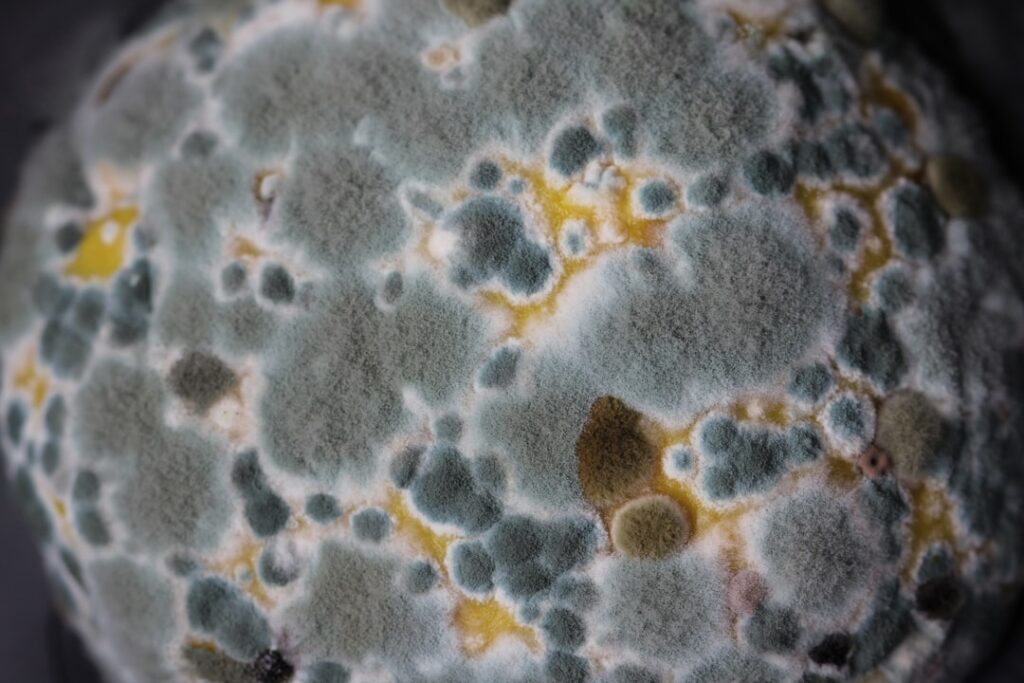
If a contractor or test kit mentions a “mold culture,” it helps to know what that actually means before you pay for one. A mold culture is a lab method that grows mold from a sample so it can be identified, and it sits alongside several other sampling approaches homeowners encounter. This guide explains how culturing works, where settle plates and agar fit in, and the important distinction between viable and non-viable testing. It summarizes EPA and CDC guidance current as of 2026 and is educational only; consult a certified professional for testing decisions and your physician about symptoms.
Is this mold, asbestos, or water damage? Get a free instant screen
Upload a clear photo of the suspect area. You'll get an instant AI screening opinion and what to do next. This is screening guidance, not a professional determination.
Screening guidance only. AI can be wrong. Confirm asbestos, mold type, or lead with lab testing or a licensed professional before acting.
What a mold culture is
A mold culture is a laboratory technique that takes a sample of mold, places it on a nutrient medium, and lets it grow under controlled conditions. As the mold develops, a lab analyst can identify the genus and often the species by examining the colonies and their structures under a microscope. The defining feature is that culturing only grows living spores, the ones still viable enough to germinate.
This makes culturing a “viable” method. It tells you which molds in your sample are alive and capable of reproducing, which is different from counting every spore present, living or dead. That distinction shapes what the results can and cannot tell you, and it is the single most important thing to understand before paying for any mold test.
Agar plates: the nutrient medium
The growth medium in most mold cultures is agar, a gel made from seaweed extract and mixed with nutrients that mold needs. The agar sits in a shallow dish, and a mold sample is introduced to its surface. Different agar formulations favor different molds, so labs sometimes use more than one type to capture a fuller picture.
Once inoculated, the dish is incubated at a set temperature for several days to a couple of weeks. Visible colonies emerge, each one originating from a viable spore or fragment. The analyst then counts and identifies what grew. Because incubation takes time, culture results are slower than spore-counting methods, which is one trade-off homeowners should weigh when a quick answer matters.
Settle plates: passive air sampling
A settle plate is a simple, passive way to culture airborne mold. An open agar dish is left exposed in a room for a set period so spores in the air drift down and land on the medium. The dish is then sealed and incubated, and whatever grows reflects the viable airborne mold that settled during the exposure window.
Settle plates are inexpensive and easy, which is why some DIY kits use them. Their weakness is that they only capture spores heavy or numerous enough to fall onto the plate during the sampling time, and they do not give a true volumetric concentration. They indicate presence more than precise quantity. A single settle plate, in particular, is a weak basis for any major decision about a home. For a broader picture of sampling options, the site’s mold inspection and testing hub puts these methods in context.
Viable versus non-viable sampling
This is the core concept behind mold testing methods, and understanding it prevents wasted money.
Viable (culture-based) sampling
Viable methods, including cultures and settle plates, grow living mold. Strengths: they can identify species precisely and confirm what is actively able to colonize. Limitations: they miss dead spores entirely, even though dead spores still cause allergic reactions, and they take days to weeks because growth has to happen first. They also favor fast-growing molds, which can outcompete slower species on the plate and skew the apparent mix.
Non-viable sampling
Non-viable methods, such as spore-trap air sampling, capture and count all spores on a sticky slide regardless of whether they are alive. Strengths: fast results and a total spore count including dead ones. Limitations: they often cannot identify species as precisely as a culture, because identification relies on spore appearance alone.
Neither approach is universally better. They answer different questions. A culture tells you what is alive and what it is; a spore trap tells you how many spores are present overall. Some assessments use both to get a more complete picture, but most homeowner situations do not require either.
What culture results actually tell you, and what they don’t
A culture can confirm that a specific mold is present and growing, which is useful for medical or legal documentation. What it cannot do is set a pass-or-fail health threshold, because no federal standards define a “safe” mold concentration for any species. The CDC and EPA both note that sampling is generally unnecessary for ordinary home situations, since visible growth already tells you to remove it and fix the moisture.
Culture results also vary with conditions: the agar type, incubation time, and the fact that some molds grow faster than others can skew which colonies dominate the dish. Results should be interpreted by someone who understands those limitations, not read as a precise inventory of everything in your home. A number on a report without expert interpretation can create anxiety without telling you anything actionable.
How a mold culture compares to other tests
Homeowners encounter several test types, and it helps to see how a culture fits among them. Surface samples, taken by swab or tape lift, confirm what a specific visible spot is but say nothing about the air. Bulk samples analyze a piece of material. Air spore traps count airborne spores quickly without identifying viability. A culture, by contrast, trades speed for the ability to identify what is alive and name it precisely. Choosing among them depends entirely on the question you are trying to answer, and for most homeowners the honest answer is that no test is needed at all.
DIY culture kits versus professional sampling
Consumer mold test kits, many of which use settle plates, promise an easy answer for a low price, but their limitations are significant. A single settle plate left out in a room captures only spores that happen to fall on it during the exposure window, gives no true concentration, and offers no outdoor control for comparison. Worse, because mold spores are present in virtually all indoor air, almost any settle plate will grow something, which can alarm a homeowner without indicating an actual problem. The result is a test that frequently produces a scary-looking dish regardless of whether the home has a real mold issue.
Professional sampling, by contrast, follows a methodology: appropriate sample types for the question, outdoor control samples, an accredited lab, and expert interpretation of the results. That structure is what makes professional results meaningful where a DIY plate is not. For homeowners who can already see and smell mold, neither is necessary, the answer is to remove it and fix the moisture, but if sampling is genuinely warranted, professional methodology is far more reliable than a kit from a shelf.
When a mold culture is worth it
Culturing makes sense in a few specific cases. A physician may request species identification to guide treatment of a diagnosed condition. A real estate, insurance, or legal dispute may need documented results. A recurring or unusual contamination problem may warrant precise characterization before remediation. Outside those situations, a culture rarely changes the basic plan, which is to remove visible growth and correct moisture. Our overview of the common species of mold found indoors explains why identification seldom alters the cleanup response.
Why no result sets a safe threshold
A point worth emphasizing is that no mold result, from a culture or any other method, can tell you whether your home is “safe,” because no federal standards define an acceptable mold concentration for any species. This is a frequent source of confusion. A homeowner receives a culture report listing molds and counts and expects a clear pass or fail, but no such standard exists. The presence of mold is interpreted in context, the moisture conditions, visible growth, occupant health, rather than against a numeric limit. This is precisely why public health agencies emphasize that visible growth already warrants action regardless of any number, and why a culture result is best understood as one piece of information rather than a verdict.
What the lab process looks like
Understanding the workflow demystifies what you are paying for. After a sample is collected, it is sealed and sent to a laboratory accredited for microbial analysis. For a culture, the lab transfers material to agar and incubates it, then an analyst examines the colonies as they develop, identifying molds by their growth characteristics and microscopic structures. The lab issues a report naming the molds found and, depending on the method, estimating quantities. The whole process for a culture takes longer than a spore count because the mold has to grow first.
The accreditation of the lab matters. A result is only as trustworthy as the laboratory that produced it, so a reputable provider uses an accredited lab and can tell you which one. Chain-of-custody handling, proper sample storage, and timely delivery to the lab all affect accuracy. If a provider is vague about which lab analyzes the samples or how they are handled, that is a reason for caution.
Common misunderstandings about mold cultures
Several myths surround culturing. One is that a culture gives a complete picture of a home’s mold; in reality it only reflects what was in the specific sample and what was viable enough to grow. Another is that a “clean” culture means no mold problem; a culture can miss dead spores and slow-growing species entirely. A third is that the species name dictates the cleanup; for nearly all home situations, the response is the same regardless of what grows. Keeping these limitations in mind prevents over-reading a single report. A culture is a useful tool for a specific question, not a verdict on your home’s overall air quality.
How sampling fits into a real inspection
In a professional assessment, sampling is one tool among several, and rarely the first. A qualified inspector starts with a visual survey and moisture readings, because moisture is what drives mold. Sampling, whether by culture, settle plate, or spore trap, supplements that investigation when there is a specific question to answer. Treat any test, especially a single settle plate from a DIY kit, as one data point rather than a verdict on your home’s air quality. An inspector who leads with expensive sampling before doing the basic moisture investigation may be selling tests rather than answers.
References
- CDC guidance on mold testing and sampling — Centers for Disease Control and Prevention
- EPA position on mold testing and sampling — U.S. Environmental Protection Agency
- NIEHS overview of mold and indoor environments — National Institute of Environmental Health Sciences
Front Range homeowners weighing whether lab sampling is worth it can talk it through with a vetted local inspector via our contact page.