Do You Need Insulation in a Crawl Space? A Decision Guide
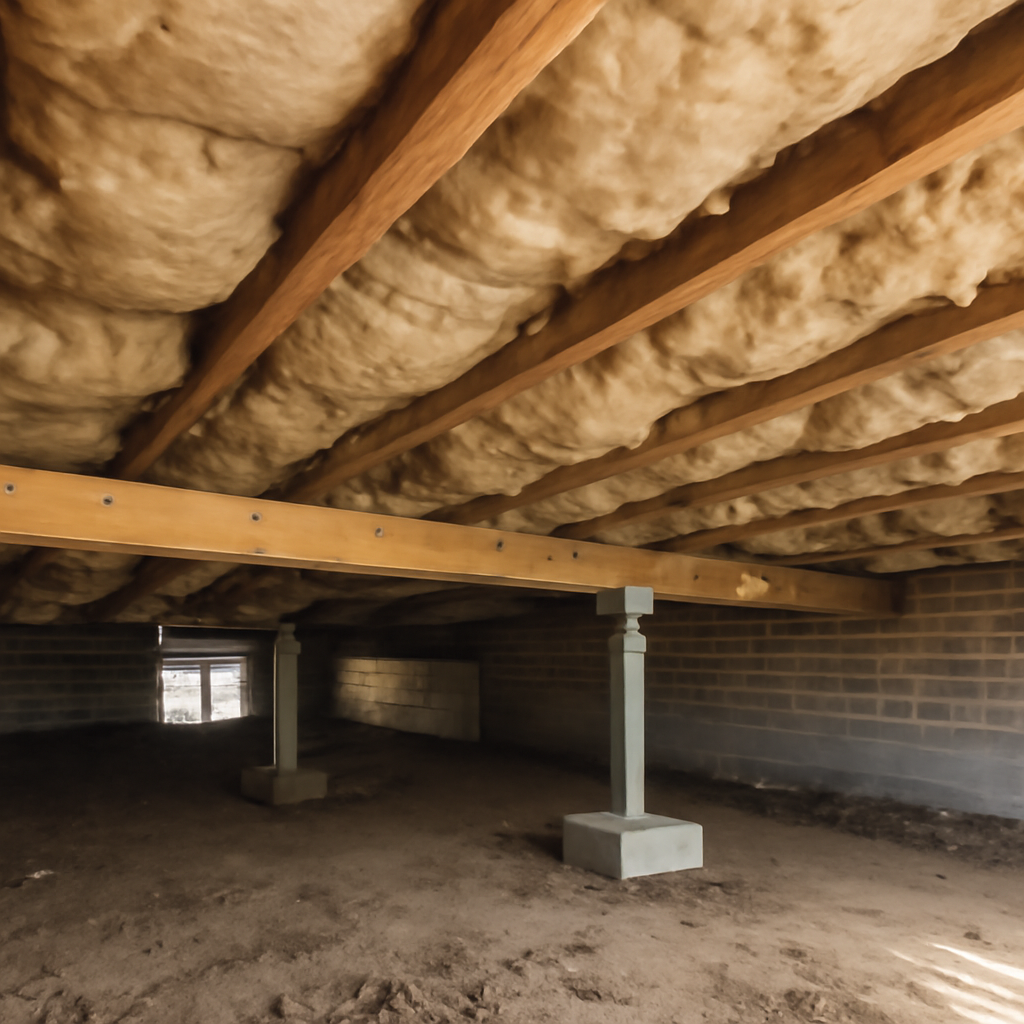
Most homes with a crawl space have some insulation down there, but plenty have none, and plenty more have insulation that has fallen, soaked up water or been shredded by rodents. That leaves owners and buyers asking a fair question: does this crawl actually need insulation, and if so, where should it go? The answer depends less on a single rule than on a short chain of decisions. Is the floor above cold? Are pipes or ducts running through the crawl? Is the crawl vented to the outdoors or sealed? Is it dry? This guide walks through those decisions for Front Range homes. It draws on ENERGY STAR, EPA and ASHI material available in 2026 plus general building practice, and it is general education rather than a design for a particular house.
Part of our Crawl Space & Attic Guide guide — start there for the full picture →
Do You Need Insulation in a Crawl Space? The Short Answer
In a heating climate like Colorado’s, a crawl space under conditioned rooms almost always benefits from insulation somewhere. The real question is where, and whether the crawl is ready for it.
There are two places insulation can go. In a traditional vented crawl, the crawl is treated as outdoors, and insulation belongs in the floor framing, directly under the living space. In a sealed or encapsulated crawl, the crawl is treated as part of the house, and insulation belongs on the foundation walls and rim joists instead. Putting insulation in both places usually wastes money, and putting it in the wrong place for the crawl type can trap moisture or leave pipes exposed to cold.
So the useful version of the question is not “insulation, yes or no” but three smaller ones:
- Is there a reason to insulate? Cold floors, freezing pipes, high heating bills, or ducts running through a cold crawl are the usual triggers.
- Which approach does this crawl use? Vented and sealed crawls put the insulation in different places.
- Is the crawl dry, clean and pest-free? If not, insulation should wait until those problems are fixed.
Some crawls genuinely do not need more. A sealed crawl with insulated walls in good condition, or a vented crawl with full-depth, well-supported floor batts that are dry, may already be where it should be. In those cases, the better spend is often air sealing, especially at the rim joist, rather than more insulation. For the broader context on crawl space systems and the other guides in this series, start at the crawl space insulation guide.
When Crawl Space Insulation Matters Most
Insulation earns its keep when it solves a real problem. These are the situations where it tends to make the clearest difference.
Cold floors above the crawl
The most common complaint is a floor that feels cold underfoot in winter, especially in rooms over a vented crawl. Wood subfloors over an uninsulated, ventilated crawl sit right next to air that can be close to outdoor temperature on a January night. Even a well-sized furnace struggles to make that floor comfortable, because the heat leaves through the bottom as fast as it arrives from the registers. Insulation under the floor, or a sealed crawl that stays closer to indoor temperature, typically fixes the comfort problem more effectively than turning up the thermostat.
Pipes that freeze
Water supply lines and drain traps in a cold crawl are a classic freeze risk, particularly near foundation vents, the access hatch and outside walls. A single frozen and split pipe can soak the crawl, the insulation and the framing before anyone notices. Where pipes run matters for the insulation plan: in a vented crawl with floor insulation, the pipes sit below the insulation and stay on the cold side, so they need their own pipe insulation and sometimes heat tape. In a sealed crawl with wall insulation, pipes sit inside the warmer envelope. The guide to frozen pipes covers the warning signs and what to do if a line has already frozen.
Energy loss and ducts in the crawl
Many Front Range homes route forced-air ducts through the crawl. ENERGY STAR notes that sealing and insulating ducts can improve heating and cooling efficiency by as much as 20 percent, and it lists crawlspaces among the places to focus on first. A leaky, uninsulated duct running through a vented crawl is effectively heating the outdoors. That is one of the strongest arguments for either insulating and sealing those ducts or bringing the whole crawl inside the envelope.
Colorado climate considerations
Much of the Front Range, including the Denver metro and Colorado Springs areas, is generally mapped in IECC climate zone 5, with higher mountain communities in colder zones. ENERGY STAR’s retrofit table, based on the 2021 International Energy Conservation Code, recommends R30 for floors in zones 4C, 5 and 6, and for basement or crawlspace walls in zones 4C and 5 through 8 it lists R15 insulative sheathing or R19 batts. These are cost-effectiveness recommendations for existing homes rather than a legal requirement for every crawl. The local building department has the final word for permitted work, and the exact zone for a specific address is worth confirming rather than assuming.
Colorado’s dry air helps in one way: crawl moisture problems here are often driven by ground water, plumbing leaks and poor drainage more than by humid outdoor air. That shapes which approach makes sense, and it is covered in more depth below.
Signs a crawl is under-insulated
- Floors noticeably colder than walls in the same room during winter
- Rooms over the crawl that are hard to heat compared with the rest of the house
- Any history of frozen pipes under the house
- Bare joists with no insulation, or batts that cover only part of the floor area
- Insulation lying on the ground, hanging in loops, or compressed to a fraction of its original thickness
- Bare foundation walls and rim joists in a crawl that has its vents closed
Where the Insulation Goes: Vented vs. Sealed Crawls
This is the decision that drives everything else. Insulating the wrong surface is the most common and most expensive mistake.
Vented crawl: insulate the floor
In a vented crawl, outside air moves through foundation vents, so the crawl is outside the thermal envelope. The insulation boundary sits at the subfloor. Batts of fiberglass or mineral wool, or rigid foam, fill the spaces between floor joists and are held tight to the subfloor with supports. Gaps where pipes, wires and ducts pass through the floor should be air sealed so warm air does not leak into the crawl. The guide on floor joist insulation in a crawl space covers support methods, depth and common failures, and the companion guide on which way insulation should face explains the facing direction in a heating climate.
The weak points of this approach are predictable. Batts sag without continuous support. They absorb moisture from the ground and from humid air. They leave pipes and ducts below the insulation on the cold side. And they create attractive nesting material for rodents.
Sealed crawl: insulate the walls and rim
In a sealed or encapsulated crawl, the vents are closed, the ground and often the walls are covered with a continuous vapor barrier, and the crawl is dried with a small supply of conditioned air or a dehumidifier. The crawl becomes part of the house, so the insulation moves to the foundation walls and the rim joist. The floor above does not need its own insulation in that design, and pipes and ducts sit inside the warm side.
Sealing a crawl is a bigger project with more moving parts, including moisture removal, radon and combustion appliances. The side-by-side comparison in vented vs encapsulated crawl space covers those trade-offs, so this guide focuses on the insulation decision itself.
The middle ground
Some homes keep the vents open but lay a ground cover over the dirt floor and keep floor insulation. That reduces ground moisture reaching the batts and framing at moderate cost, but it does not change where the thermal boundary sits. Installing a proper ground cover is covered in crawl space vapor barrier installation.
Choosing materials
Material choice follows location. Floor framing usually gets batts or cut rigid foam. Foundation walls in a sealed crawl usually get rigid foam board or closed-cell spray foam, because they tolerate occasional dampness better than fiberglass against concrete. Exposed foam often needs a fire-rated covering or a code-recognized exception, which is a question for the installer and the local building department. The guide to crawl space insulation types compares the options in more detail.
Decision Table: Should This Crawl Be Insulated, and Where?
The table below summarizes typical situations. It is a starting point for a conversation with an inspector or contractor, not a substitute for looking at the actual crawl.
| Situation | Insulate? | Where |
|---|---|---|
| Vented crawl, dry, bare joists, cold floors above | Yes | Between floor joists, supported tight to the subfloor; air seal floor penetrations; insulate exposed pipes and ducts separately |
| Vented crawl with sagging or partial batts, dry | Yes, repair or replace | Re-secure or replace floor batts with continuous support; fill missing bays |
| Sealed crawl with vents closed, walls bare | Yes | Foundation walls and rim joists; floor insulation not usually needed |
| Sealed crawl with insulated walls in good shape | Usually no | Check rim joist air sealing and the vapor barrier instead |
| Ducts or water lines in a vented crawl | Yes, in two places | Floor insulation plus sealed and insulated ducts and pipe insulation; or consider sealing the crawl |
| Standing water, wet soil or recent leaks | Not yet | Fix drainage, plumbing and moisture first |
| Visible mold growth on framing or old insulation | Not yet | Find and fix the moisture source, clean up affected areas, then insulate |
| Rodent droppings, nests or chewed insulation | Not yet | Exclude pests and remove contaminated material before new insulation |
| Crawl used only for a slab-on-grade addition with no living space above | Often no | Focus on the boundary with the conditioned house, if any |
When Not to Insulate Yet
Insulation is a finishing step. Installing it over an unsolved problem tends to hide the problem, hold moisture against the framing and turn a modest repair into a larger one. These are the conditions that should be fixed first.
Active water
Puddles, wet soil, water lines on the foundation walls, or a sump that runs constantly all point to a water problem. Common sources include downspouts discharging next to the foundation, soil sloping toward the house, irrigation spraying the foundation, and plumbing leaks. EPA’s guide to mold and moisture recommends keeping water away from the foundation by sloping the ground away from the building, and fixing leaks promptly. Insulation laid into a wet crawl soaks up water, loses much of its insulating value and can sag or fall. The guide to crawl space moisture control walks through how to find and fix the source.
Mold
Fuzzy or stained growth on joists, subfloor or old insulation means moisture has been present long enough for mold to grow. EPA’s guidance is direct: the key to mold control is moisture control, and the water problem must be fixed or the mold will return. Covering moldy framing with fresh insulation hides it from future inspection without solving it. Larger areas of growth are usually a job for a qualified remediation contractor, and anyone with health concerns should talk with a physician.
Pests
Droppings, nests, tunnels through batts and chewed wiring are common crawl findings. Rodent-contaminated insulation generally needs to be removed with appropriate protective equipment, and the entry points need to be closed, before new material goes in. Otherwise the new insulation becomes the next nest.
Unknown materials
Older homes sometimes have pipe wrap, duct insulation or other materials that could contain asbestos. Vermiculite insulation, a pebbly gray-brown loose fill, is a common example that should be lab-tested before anyone handles it. When age or appearance raises a question, testing before disturbing the material is the safer path.
Combustion appliances and radon
These matter mainly if the plan includes sealing the crawl. ENERGY STAR notes that sealing a home can trap pollutants such as carbon monoxide and radon, suggests a radon test and mitigation in high radon areas before sealing, and recommends that oil and gas appliances be tested for proper drafting before and after sealing. Floor insulation alone in a vented crawl changes less, but any project that closes vents or seals the crawl should account for both.
Rim Joists: The Most Overlooked Spot
The rim joist (also called the band joist) is the framing that sits on top of the foundation wall around the perimeter of the floor. It is a thin wood boundary between the crawl or basement and the outdoors, and it is full of gaps where the sill plate meets the foundation and where pipes and wires pass through.
ENERGY STAR lists the area between rim joists and under the sill plate as a common location for air leaks in basements and crawlspaces, and its step-by-step instructions are to seal gaps first, using caulk for gaps of about a quarter inch or less and spray foam for larger ones, then fit insulation against the rim joist and seal any remaining holes. In a sealed crawl, the rim is part of the insulated wall and should be treated with the walls. In a vented crawl, it is still worth air sealing, because cold air leaking in at the rim chills the floor framing and can reach pipes.
The guide to rim joist insulation covers material choices and the moisture considerations for rim joists in more detail.
What Crawl Space Insulation Costs and What Drives the Price
Cost varies widely, and specific numbers depend on the house, the crawl and local labor rates. The main drivers are predictable, though.
- Approach. Floor batts in a vented crawl are usually the lowest material cost. Sealing a crawl and insulating the walls costs more because it bundles a vapor barrier, air sealing, wall insulation and a moisture-removal plan.
- Material. Fiberglass batts generally cost less than mineral wool, rigid foam or closed-cell spray foam, which in turn vary by thickness.
- Access and height. Low clearance, tight access hatches and obstructions slow the work and raise labor costs.
- Removal. Pulling out old, wet or contaminated insulation adds labor and disposal cost, and more if testing or special handling is needed.
- Prep work. Drainage fixes, plumbing repairs, pest exclusion and mold cleanup are separate costs that come before insulation.
- Extras. Duct sealing, pipe insulation and rim joist air sealing are sometimes included and sometimes priced separately.
When comparing quotes, it helps to confirm which surface is being insulated, the R-value and material, how batts will be supported, and whether air sealing and removal of old material are included. Ranges and the factors that move them are covered in crawl space insulation cost, and full sealing projects are covered in crawl space encapsulation cost.
What a Home Inspection Covers in the Crawl
For buyers, the inspection report is usually the first detailed look at a crawl. Under the ASHI Standard of Practice, the inspector is required to inspect insulation and vapor retarders in unfinished spaces and the ventilation of foundation areas, and to describe the insulation and vapor retarders, as well as any absence of insulation in unfinished spaces at conditioned surfaces. The inspector is also required to describe the methods used to inspect under-floor crawlspaces.
There are limits. The ASHI standard says the inspector is not required to disturb insulation, and is not required to enter crawlspaces with less than 24 inches of vertical clearance or with an access opening smaller than 16 by 24 inches. So a report may note insulation from the hatch without confirming its condition across the whole crawl. If the report flags missing, fallen or wet insulation, or limited access, a follow-up evaluation by a contractor is reasonable before closing.
The crawl space hub collects related guides on vents, vapor barriers, moisture and dehumidifiers.
A Practical Order of Operations
For owners who have decided the crawl needs attention, a sensible sequence keeps money from being spent twice:
- Look first. With a good light, note water, mold, pests, pipes, ducts, vents, the ground surface and any existing insulation. Photos help when talking to contractors.
- Fix water. Gutters, downspout extensions, grading, plumbing leaks and, where needed, a sump.
- Clean up. Remove wet, moldy or pest-contaminated material and close pest entry points.
- Pick the approach. Vented with floor insulation, or sealed with wall insulation, based on the house, pipes, ducts, budget and appliances.
- Ground cover. A vapor barrier on the dirt floor helps in almost any approach.
- Air seal. Rim joist, sill plate and floor penetrations.
- Insulate. Floor or walls, not both, unless a specific design calls for it.
- Verify. Check the crawl again after a wet season and a cold snap for moisture, sagging or condensation.
If the plan involves closing vents, add a radon test before and after the work and have any fuel-burning appliances in or near the crawl checked by a qualified professional.
References
- ENERGY STAR. Recommended Home Insulation R-Values
- ENERGY STAR. Basement and Crawlspace Air Sealing and Insulating Project
- ENERGY STAR. Heat and Cool Efficiently
- U.S. EPA. A Brief Guide to Mold, Moisture and Your Home
- American Society of Home Inspectors. ASHI Standard of Practice for Home Inspection
Frequently asked questions
Is crawl space insulation required by code?
For new construction and permitted work, the energy code adopted by the local jurisdiction sets requirements. For existing homes, ENERGY STAR publishes recommended retrofit levels, such as R30 for floors in climate zone 5. The local building department confirms what applies to a specific project.
Should the floor or the walls of a crawl space be insulated?
It depends on the crawl type. A vented crawl is insulated at the floor framing under the living space. A sealed crawl is insulated at the foundation walls and rim joists. Insulating both is usually unnecessary.
Can insulation go in a crawl space that gets wet?
Not until the water problem is fixed. Wet insulation loses much of its value, can sag or fall, and can support mold. Fix drainage and leaks, let the crawl dry, then insulate.
Does crawl space insulation stop pipes from freezing?
It can help, but placement matters. Floor insulation in a vented crawl leaves pipes on the cold side, so they need their own pipe insulation. A sealed crawl with insulated walls keeps pipes inside the warmer envelope.
How can a buyer tell if crawl insulation is in good shape?
The inspection report should describe insulation and vapor retarders in the crawl. Look for notes about fallen, wet or missing batts and limited access, and ask for a contractor evaluation if the inspector could not see the whole space.
Not sure whether the crawl under a Front Range home needs insulation, repairs first, or both? Get in touch with us and we can help connect you with a qualified local inspector to take a closer look.