Black Mold on Basement Walls: What Homeowners Know
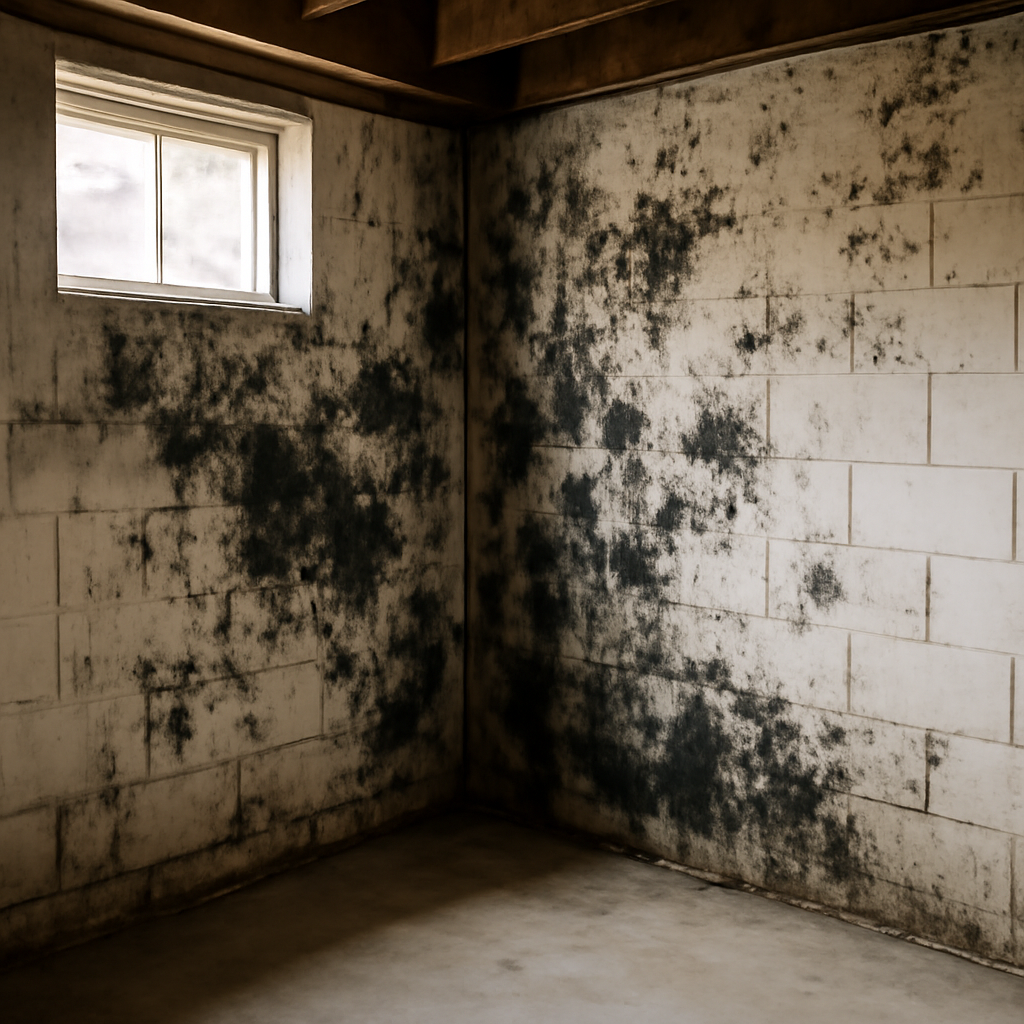
Basements are the most common place homeowners find mold, and the reason is simple: they sit below grade where moisture collects and air moves slowly. Black mold on basement walls usually marks a long-running dampness problem rather than a one-time spill, which is why scrubbing the stain rarely ends the issue. This guide summarizes EPA and CDC guidance current as of 2026 and is educational only; consult a physician for symptoms and a certified professional for testing and remediation decisions.
Part of our Black Mold & Your Health guide — start there for the full picture →
Is this mold, asbestos, or water damage? Get a free instant screen
Upload a clear photo of the suspect area. You'll get an instant AI screening opinion and what to do next. This is screening guidance, not a professional determination.
Screening guidance only. AI can be wrong. Confirm asbestos, mold type, or lead with lab testing or a licensed professional before acting.
What causes black mold on basement walls?
Mold on a basement wall always comes back to moisture, and below-grade walls have several ways to get wet. Water seeps through foundation cracks after rain or snowmelt. Concrete and block walls wick groundwater upward through capillary action. Warm, humid indoor air condenses on cool foundation walls, especially in summer. And plumbing leaks, failed sump pumps, or poor exterior grading send water toward the foundation.
Once a wall stays damp, spores already in the air settle on dust, paint, paper-faced drywall, or framing and grow. The black color often comes from Cladosporium or Aspergillus, not necessarily the Stachybotrys homeowners dread; only lab analysis can confirm the species. Finished basements are especially vulnerable because drywall, carpet, and wood paneling are organic food for mold and hide moisture behind them.
Is black mold on basement walls dangerous?
The CDC links indoor mold exposure to nasal congestion, coughing, wheezing, and throat and eye irritation, with stronger reactions in people who have asthma, allergies, or weakened immune systems. Because basements often house HVAC equipment and air returns, spores can travel upstairs, so the problem is not always contained to the basement.
The dark appearance does not prove a toxic species, and no federal standard sets a safe indoor spore level. The practical response, per the EPA, is to remove visible mold and fix the moisture rather than chase a number. If household members have unexplained respiratory symptoms that ease when they spend time away from home, that pattern is worth raising with a doctor. The guide on black mold in the basement covers exposure questions in more depth.
Best Basement Dehumidifiers: our top 3 picks
| Product | Best for | Key features | Price | Buy |
|---|---|---|---|---|
| AEOCKY ARION-001 | Best overall for basements |
| $169.99as of Nov 4, 2026 4:32 am GMT+0000 | Buy now →Check current price |
| boglvr D025A | Large or very damp basements |
| — | Buy now →Check current price |
| KNKA PD30MA-20 | Longest included drain hose |
| $179.98as of Nov 4, 2026 4:32 am GMT+0000 | Buy now →Check current price |


Prices are Amazon’s listed prices as of the time shown and change often; check Amazon for today’s price. As an Amazon Associate we earn from qualifying purchases.
Cleaning a small mold area on a basement wall
The EPA’s guidance allows homeowners to clean visible mold under about ten square feet on hard surfaces. Ventilate the space, wear an N95 respirator, gloves, and eye protection, and shut off any HVAC return nearby so cleaning does not spread spores. For non-porous surfaces like sealed concrete, painted block, or metal, scrub with detergent and water and dry thoroughly.
Porous materials are the catch. Mold roots into drywall paper, bare wood, carpet, and insulation, and the EPA notes that contaminated porous items often must be discarded rather than cleaned. Bleach mainly removes color from porous surfaces and is not required for routine mold cleanup. If a damp-wipe leaves the stain or the material stays musty, plan to cut out and replace that section. Never mix bleach with ammonia, and keep the area dry afterward. For step-by-step methods, see how to remove mold from basement walls.
Finding and fixing the moisture source
Cleaning is wasted effort if the water keeps coming. Start outside: make sure soil slopes away from the foundation, downspouts discharge several feet from the house, and gutters are clear. Inside, look for efflorescence (white mineral crust) that signals water moving through the wall, damp spots after rain, or condensation on cool surfaces in summer.
A moisture meter helps distinguish a surface condensation problem from active seepage. Condensation is solved with dehumidification and insulation; seepage requires sealing cracks, improving drainage, or in serious cases interior or exterior waterproofing and a sump system. Until the source is fixed, any remediation is temporary. The EPA stresses that controlling moisture is the single most effective mold-prevention measure.
Preventing basement mold long term
Keep relative humidity in the EPA’s recommended 30 to 50 percent range; basements often need a dedicated dehumidifier with a drain to hold that line through summer. Insulate cold water pipes and, where appropriate, foundation walls to stop condensation. Avoid storing cardboard boxes and fabric directly against walls or on the floor, since they trap moisture and feed mold.
When finishing a basement, choose mold-resistant materials: closed-cell foam or rigid insulation instead of paper-faced batts, mold-resistant drywall, and inorganic flooring rather than carpet over concrete. Good prevention is mostly about keeping the slab and walls dry and the air moving, not about any product applied after the fact.
When to call a professional
Bring in a professional when growth covers more than roughly ten square feet, returns after cleaning, follows flooding or sewage backup, or hides behind finished walls. Large jobs, contaminated HVAC systems, and any situation involving sewage call for trained remediation with containment so spores do not spread through the house during removal.
A certified inspector can map moisture, locate the entry point, and confirm with accredited-lab sampling whether and where mold is active. For how testing and remediation fit together, see the mold inspection and testing hub, and the guide on mold in basement removal covers what a remediation project involves.
Front Range basement realities
Colorado’s dry climate gives Front Range basements an edge, but local conditions still create problems. Expansive clay soils around Denver, Aurora, and Castle Rock shift with moisture and can crack foundations, opening seepage paths. Spring snowmelt and summer monsoon storms send sudden water at foundations that stayed dry for months. And tightly sealed, energy-efficient homes trap humidity in finished basements where air barely circulates.
The most common Front Range pattern is summer condensation: warm humid air meeting a cool concrete wall. A basement dehumidifier and attention to grading and downspouts handle the majority of cases here before they ever become a remediation project.
Telling condensation apart from seepage
The two main ways a basement wall gets wet call for opposite fixes, so identifying which you have comes first. Condensation forms when warm, humid indoor air contacts a cool below-grade wall, leaving an even film of moisture across the surface, often worst in summer and accompanied by a generally damp, clammy feel to the whole room. Seepage, by contrast, enters through specific points, cracks, the cove joint where wall meets floor, or porous block, and tends to appear as localized wet patches or staining that worsen after rain or snowmelt.
A simple diagnostic helps. Tape a square of plastic sheeting tightly to a suspect wall, sealing all four edges, and leave it a day or two. Moisture beading on the room side of the plastic indicates condensation from the air; moisture on the wall side means water is moving through the masonry from outside. Efflorescence, the white crusty mineral deposit, is another seepage tell, because it forms as water passes through concrete and evaporates, leaving dissolved salts behind. Condensation responds to dehumidification and insulation; seepage requires sealing the entry point, improving exterior drainage, or installing a perimeter drain and sump.
Why finished basements hide the worst problems
A finished basement complicates mold because the materials that make it comfortable, drywall, framing, carpet, and paper-faced insulation, are exactly the organic foods mold prefers, and they sit against the coolest, dampest surfaces in the house. Worse, finishes hide moisture. Water wicking through a foundation wall can soak the back of the drywall and the bottom plate of a stud wall for months while the painted surface looks fine, so growth is well established before anything shows.
The telltale signs in a finished basement are subtle: a musty smell that intensifies near the floor or in a closet, baseboards that feel cool and slightly soft, carpet edges that stay damp along an exterior wall, or paint that bubbles near the floor. Because the growth is behind the surface, surface cleaning accomplishes nothing. A moisture meter run along the bottom of finished walls, or a small inspection opening near a suspect corner, reveals whether the cavity is wet. When framing and insulation behind a finished wall are contaminated, the affected section generally has to be opened, dried, and rebuilt rather than wiped down.
Choosing materials when you refinish
If a basement has to be reopened and rebuilt after a moisture problem, the rebuild is the chance to make the next decade easier. Replace paper-faced batt insulation with closed-cell spray foam or rigid foam board, which do not absorb water or feed mold and double as a vapor control layer against the foundation. Use mold-resistant (paperless) drywall, which swaps the paper facing for fiberglass that mold cannot colonize as readily.
For flooring, favor inorganic, water-tolerant options, sealed concrete, luxury vinyl plank, or tile, over carpet laid directly on the slab, since carpet traps moisture and holds spores. Keep a small air gap or a dimpled membrane between framing and the foundation wall so any incidental moisture can drain and dry rather than soaking into wood. None of these materials substitutes for fixing the water source, but pairing a dry foundation with inorganic, moisture-tolerant finishes gives mold far less to work with if a future leak slips through.
Exterior fixes that stop water before it reaches the wall
The most durable basement mold prevention happens outside the house, where water is intercepted before it ever loads the foundation. Grading is the foundation of the whole effort: soil should slope away from the house for the first several feet, so rain and snowmelt run away rather than pooling against the wall. Over time settling and landscaping often reverse that slope, directing water toward the foundation, so it is worth checking after any major storm or yard project.
Gutters and downspouts do the rest. Clogged gutters overflow and dump concentrated water at the base of the wall, and downspouts that discharge right at the foundation defeat good grading, so extending them to carry water several feet away makes a measurable difference. Window wells should drain rather than fill, and any below-grade window benefits from a cover. Where seepage persists despite good surface drainage, a perimeter drain and sump system collects groundwater and pumps it away before it reaches the slab. The EPA frames moisture control as the single most effective mold-prevention measure, and on a basement wall most of that control is won at the gutter, the grade, and the downspout, long before any interior cleaning is needed.
Sizing and placing a basement dehumidifier
For the condensation-driven cases that dominate dry-climate basements, a dehumidifier is often the single most effective tool, but it only works if it is sized and placed to hold the line. A unit too small for the space runs constantly without ever pulling humidity below the target, while one matched to the basement’s square footage and dampness keeps relative humidity within the EPA’s 30 to 50 percent range with margin to spare. A built-in hygrometer or a separate one nearby lets you confirm it is actually achieving that, rather than assuming.
Placement and drainage decide whether it keeps working unattended. Positioning the dehumidifier centrally, with clearance around the intake and exhaust, lets it treat the whole space rather than a corner. Routing its drain to a sump, a floor drain, or a condensate pump removes the chore of emptying a reservoir, which is the usual reason a unit gets switched off and forgotten. Running it through the humid months, not just after a problem appears, prevents the summer condensation that feeds most Front Range basement mold. A dehumidifier that is correctly sized, well placed, and continuously drained quietly removes the moisture that every wall-mold problem ultimately depends on.
One caution applies: a dehumidifier treats humid air, not water entering through the wall. If readings stay high despite a properly running unit, or if wet patches and efflorescence keep appearing in specific spots, the problem is seepage rather than condensation, and no dehumidifier will keep pace with water actively pushing through the foundation. In that case the fix moves outdoors to grading and drainage, or to sealing and a sump system, and the dehumidifier returns to its proper role of managing the residual humidity once the bulk water is stopped.
References
- Mold Cleanup in Your Home — U.S. Environmental Protection Agency
- A Brief Guide to Mold, Moisture and Your Home — U.S. Environmental Protection Agency
- About Mold and Your Health — Centers for Disease Control and Prevention
- Mold and Your Health — Colorado Department of Public Health and Environment
Frequently asked questions
What causes black mold on basement walls?
Moisture, in some form. Foundation seepage, groundwater wicking through concrete, condensation on cool walls in summer, and plumbing or sump-pump failures all keep walls damp enough for mold to grow. The visible stain is a symptom; the water source is the real problem.
Can I clean basement wall mold myself?
Small areas under about ten square feet on hard, non-porous surfaces are usually a DIY job under EPA guidance, using detergent, water, and protective gear. Mold on drywall, wood, carpet, or insulation usually means removing and replacing that material instead of cleaning it.
Is black mold on basement walls dangerous?
It can cause congestion, coughing, and irritation, with stronger effects for people who have asthma, allergies, or weakened immunity, and basement spores can travel upstairs through the HVAC. The dark color does not confirm a toxic species, so discuss symptoms with a doctor.
How do I stop basement mold from coming back?
Control moisture. Fix grading and downspouts, seal seepage points, keep humidity between 30 and 50 percent with a dehumidifier, and avoid storing cardboard or fabric against the walls. Cleaning without fixing the water source only delays the next outbreak.
If mold keeps returning to your basement walls, Front Range homeowners can reach out through our contact page to connect with a vetted local inspector who can trace the moisture source.