Best Basement Dehumidifiers (2026): 6 Picks for Cool, Damp Rooms
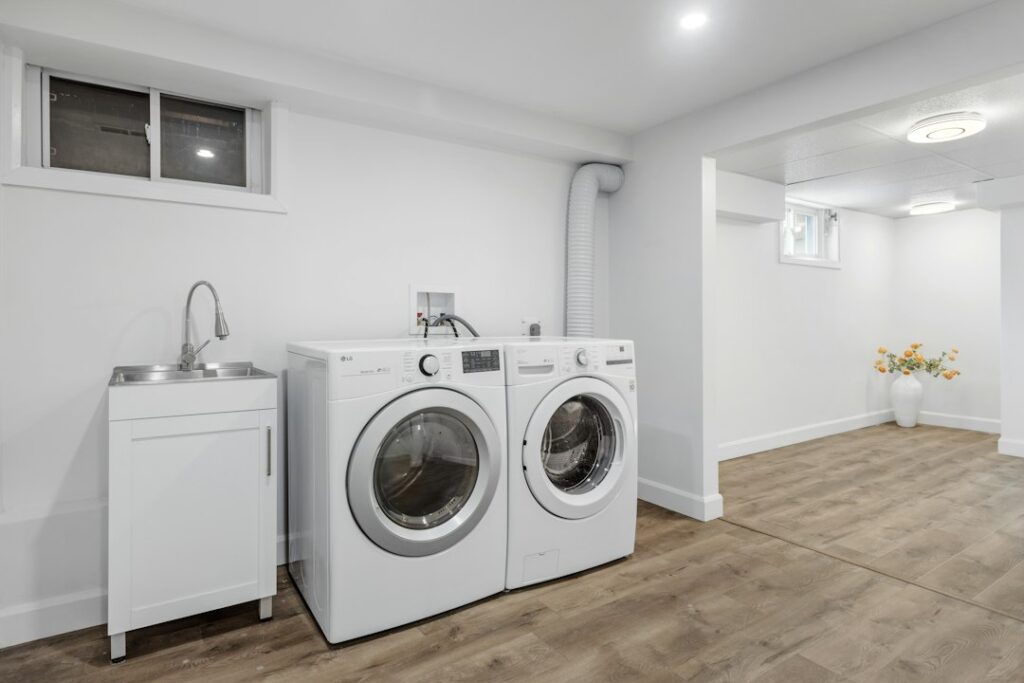
The best basement dehumidifier is not simply the biggest one. A basement is cooler than the rest of the house, it often has no window to open, and nobody wants to carry a full tank up the stairs twice a day. That makes three things matter more than headline pints: continuous drainage to a floor drain or sump, defrost protection so the coils keep working when the room sits in the low 60s, and a humidistat that can hold the space in the 30 to 50 percent range the EPA recommends. This guide summarizes EPA and ENERGY STAR guidance current as of 2026; for visible mold or water entry, consult a qualified professional. Six picks follow, then a buying guide built for below-grade rooms.
Part of our Humidity Control guide — start there for the full picture →
As an Amazon Associate we earn from qualifying purchases.
How we compared: we compared 14 current Amazon listings returned for basement dehumidifiers on what each listing states: capacity and test conditions, drainage method and hose details, auto-defrost, ENERGY STAR status, humidity setpoint range and controls. Two of the 14 are small thermoelectric units that are not realistic for a basement, so the useful field is 12 compressor dehumidifiers. We did not lab-test or handle any of them. Prices and availability change often, so check the current listing before buying.
Quick picks: the best basement dehumidifiers by situation
| Product | Best for | Key features | Price | Buy |
|---|---|---|---|---|
| AEOCKY ARION-001 | Best overall for basements |
| $169.99as of Nov 19, 2026 9:12 pm GMT+0000 | Buy now →Check current price |
| boglvr D025A | Large or very damp basements |
| $229.99as of Nov 19, 2026 9:12 pm GMT+0000 | Buy now →Check current price |
| KNKA PD30MA-20 | Longest included drain hose |
| $169.99as of Nov 19, 2026 9:12 pm GMT+0000 | Buy now →Check current price |
| Waykar PD160B-PRO | Efficient pick for small basements |
| $157.49as of Nov 19, 2026 2:35 pm GMT+0000 | Buy now →Check current price |
| SEMKAP PD8R-03ME | Nonstop drying mode |
| $149.99as of Nov 19, 2026 2:35 pm GMT+0000 | Buy now →Check current price |
| DGVAM V2 | ENERGY STAR with defrost |
| $180.48as of Nov 19, 2026 2:35 pm GMT+0000 | Buy now →Check current price |
Prices are Amazon’s listed prices as of the time shown and change often; check Amazon for today’s price. As an Amazon Associate we earn from qualifying purchases.
The six picks, compared listing by listing
1. AEOCKY ARION-001 — Best Overall for Basements

Compact 50-pint compressor unit with auto-defrost, gravity drain and a garden-hose adapter for long drain runs.
Check price on Amazon$169.99 as of Nov 19, 2026 9:12 pm GMT+0000 — prices change; see Amazon for current price.Why we like it
- Combines auto-defrost with garden-hose drainage
- Dual float and proximity sensors guard against overflow
- Auto mode holds a 45–55% RH band
- Small footprint fits beside a sump or utility sink
| Specification | Details |
|---|---|
| Type | Piston compressor with brushless DC fan motor |
| Stated capacity | 50 pints/day at 95°F and 95% RH; up to 3,000 sq ft claimed |
| Drainage | 0.5 gal tank; included hose for gravity drain; 3/4-inch garden-hose adapter included |
| Modes | Continuous, Sleep, Auto (45–55% RH), Constant Humidity (40–80% RH) |
| Cold-room protection | Intelligent auto-defrost |
| Certifications / coverage | ETL, RoHS, REACH, NRCan named; 3-year coverage |
AEOCKY ARION-001 — compressor, 50 pt (95°F/95%), 0.5 gal tank + hose + garden-hose adapter, auto-defrost, 45–55% auto, 3-yr coverage
One of Only Two Listings Pairing Auto-Defrost With a Garden-Hose Connection
Seven of the 12 compressor listings mention auto-defrost, and four of the 12 say their drain accepts a standard garden hose. Only two do both, the 80-pint Waykar and this ARION, and the ARION is the one that includes the adapter in the box. For a basement, that pairing covers the two problems that make most dehumidifiers fail in practice: frost on the coils in cool air and a tank nobody empties.
The listing is upfront that its 0.5 gal tank fills quickly at high output, and it steers buyers toward continuous gravity drainage instead. That is the right advice for a basement. It also describes two independent water-level sensors, a float and a proximity switch, which is more redundancy than any other listing on the shelf describes.
Two gaps. The listing does not claim ENERGY STAR certification, and it gives only the hot, saturated capacity figure, so expect noticeably less than 50 pints in a 65°F basement. Much of the copy is promotional, including market-share claims we cannot verify.
Pros
- Auto-defrost plus garden-hose drainage, adapter included
- Redundant overflow sensors
- Auto mode targets a sensible humidity band
- Longer stated coverage than most listings
Cons
- No ENERGY STAR claim
- Small 0.5 gal tank makes the hose essential
- Only a hot, saturated capacity figure
Check AEOCKY ARION-001 price on Amazon
2. boglvr D025A — Best for Large or Very Damp Basements

ENERGY STAR 100-pint unit with a Basement Mode near 40% RH, app control and a 3/4-inch garden-hose fitting.
Check price on Amazon$229.99 as of Nov 19, 2026 9:12 pm GMT+0000 — prices change; see Amazon for current price.Why we like it
- Highest stated capacity on the basement shelf
- Gives a second rating at 86°F and 80% RH
- Dedicated Basement Mode at about 40% RH
- Phone app lets you check humidity remotely
| Specification | Details |
|---|---|
| Type | Compressor dehumidifier, ENERGY STAR per listing |
| Stated capacity | 100 pints/day at 95°F and 90% RH; 60 pints/day at 86°F and 80% RH |
| Drainage | 1.13 gal tank; 3.3 ft hose; accepts a standard 3/4-inch garden hose |
| Modes | Comfort (about 50%), Basement (about 40%), Continuous, Free mode 30–80% RH |
| Controls | Tuya / Smart Life app, Alexa voice, touch panel, 1–24 h timer |
| Size / weight | About 13.6 x 10.5 x 19.6 in; 30.9 lb |
boglvr D025A — compressor, 100 pt (95°F/90%) / 60 pt (86°F/80%), Basement Mode ~40%, app + Alexa, garden-hose drain, ENERGY STAR
The Only Listing With a Preset Basement Humidity Mode
No other listing on the shelf offers a mode built specifically for basements. The boglvr’s Basement Mode holds about 40% RH, which sits inside the EPA’s ideal 30 to 50 percent band and gives a margin below the 60 percent ceiling the EPA says to stay under. It also offers a free setpoint from 30 to 80 percent.
Its 60 pints at 86°F and 80% RH is the highest cooler-condition rating among the four basement-shelf listings that give one; the KNKA and AEOCKY 80-pint units both list 56. For a large or genuinely damp lower level, that extra margin matters. The app is also useful in a basement nobody visits daily, since it shows humidity without walking downstairs.
The weak spot: the listing does not mention auto-defrost. In a basement that stays above the mid-60s that may not matter, but in a cooler space confirm defrost behavior in the manual. The included hose is short at 3.3 ft, so plan on a garden hose.
Pros
- Highest cooler-condition rating on the shelf
- Basement Mode at a sensible target
- Remote monitoring by app
Cons
- No auto-defrost mentioned
- Short included hose
- Large and heavy for small spaces
Check boglvr D025A price on Amazon
3. KNKA PD30MA-20 — Best for a Long Included Drain Hose

ENERGY STAR 80-pint unit with a 6.56 ft drain hose, 1.45 gal tank and shutoff that also covers an external tank.
Check price on Amazon$169.99 as of Nov 19, 2026 9:12 pm GMT+0000 — prices change; see Amazon for current price.Why we like it
- Longest hose included on the basement shelf
- Largest internal tank at 1.45 gal
- States 56 pints at basement-like conditions
- Display and lights can be turned off
| Specification | Details |
|---|---|
| Type | Compressor dehumidifier, ENERGY STAR per listing |
| Stated capacity | 80 pints/day at 95°F and 95% RH; 56 pints/day at 86°F and 80% RH |
| Drainage | 1.45 gal tank; 6.56 ft hose; optional 2.64 gal external tank sold separately |
| Modes | Auto (50% default), Dry, Setting 30–80% RH; 12-hour timer |
| Noise | 40–45 dB stated |
| Model / warranty | PD30MA-20; 1-year manufacturer warranty |
KNKA PD30MA-20 — compressor, 80 pt (95°F/95%) / 56 pt (86°F/80%), 1.45 gal tank, 6.56 ft hose, ENERGY STAR, 40–45 dB
Twice the Included Hose Length of Most Basement Listings
Most compressor listings on this shelf that state a hose length include about 3.3 ft. Two KNKA PD30MA listings include 6.56 ft, and this 80-pint version is one of them. In a basement where the floor drain is across the room, that extra length is the difference between continuous drainage out of the box and a trip to the hardware store.
The listing also says the full-tank alert and shutoff work with KNKA’s optional external tank, which is a practical middle ground for a basement without a drain. It gives the cooler-condition figure of 56 pints, a better guide than the 80-pint headline.
It does not mention auto-defrost. For a basement that drops into the low 60s in winter, that is the main reason it ranks below the ARION.
Pros
- 6.56 ft hose and 1.45 gal tank
- Shutoff extends to the external tank
- States a realistic cooler-condition rating
Cons
- No auto-defrost mentioned
- One-year warranty
- External tank sold separately
Check KNKA PD30MA-20 price on Amazon
4. Waykar PD160B-PRO — Best Efficient Pick for Small Basements

34-pint ENERGY STAR Most Efficient 2025 unit with defrost sensors, 30–80% RH control and gravity drainage.
Check price on Amazon$157.49 as of Nov 19, 2026 2:35 pm GMT+0000 — prices change; see Amazon for current price.Why we like it
- Claims ENERGY STAR Most Efficient 2025
- Auto-defrost sensors listed
- Power-outage memory restarts the unit
- Lighter and smaller than 80-pint machines
| Specification | Details |
|---|---|
| Type | Rotary compressor dehumidifier |
| Stated capacity | 34 pints/day at 95°F and 90% RH; up to 2,000 sq ft claimed |
| Efficiency claim | 2025 ENERGY STAR Most Efficient; DOE and TUV named |
| Drainage | 0.62 gal tank or included 3.3 ft hose |
| Protection | Auto-defrost sensors, overload protection, outage memory, child lock |
| Size / weight | About 10.9 x 8.4 x 19.3 in; 22 lb |
Waykar PD160B-PRO — compressor, 34 pt (95°F/90%), Most Efficient 2025, auto-defrost, 0.62 gal + hose, 38 dB min
One of Two Most Efficient Claims on the Shelf, and the Only Small One
Eight of the 14 listings claim ENERGY STAR certification. Two claim the higher Most Efficient 2025 designation: the 80-pint AEOCKY RHEA-001 and this 34-pint Waykar. For a small finished basement, a storage room or a lower-level bedroom suite, the Waykar is the efficient choice that also lists defrost protection.
Restart after a power outage matters below grade, where spring storms and summer outages can leave a unit off for hours. This listing names power-outage memory along with full-tank shutoff and overload protection.
The trade-off is capacity. At 34 pints under hot, saturated test air, it will fall well short of an 80-pint unit in a large, wet basement. The listing’s energy-savings figure is a marketing claim; check the model in the ENERGY STAR finder.
Pros
- Most Efficient 2025 claim in a compact unit
- Defrost sensors and outage memory
- Low 38 dB minimum
Cons
- Too small for large or wet basements
- Short hose; tank is under a gallon
- Savings claim is promotional
Check Waykar PD160B-PRO price on Amazon
5. SEMKAP PD8R-03ME — Best for Nonstop Drying

32-pint compressor unit with a continuous mode, auto-defrost for cold rooms and a 30–90% RH setpoint.
Check price on Amazon$149.99 as of Nov 19, 2026 2:35 pm GMT+0000 — prices change; see Amazon for current price.Why we like it
- Continuous mode runs regardless of setpoint
- Auto-defrost described for cold rooms
- Widest setpoint range at 30–90% RH
- Outage memory and child lock
| Specification | Details |
|---|---|
| Type | Compressor dehumidifier |
| Stated capacity | 32 pints/day at 95°F and 90% RH; up to 2,500 sq ft claimed |
| Modes | Continuous DEHU, Auto, Customized (30–90% RH, low/high fan) |
| Drainage | 2.5 L tank or included 3.28 ft hose |
| Protection | Auto-defrost, overload protection, outage memory, full-tank shutoff |
| Noise | 35 dB at lowest fan speed per listing |
SEMKAP PD8R-03ME — compressor, 32 pt (95°F/90%), continuous mode, auto-defrost, 30–90% RH, 2.5 L tank + hose, 35 dB
The Only Listing Whose Setpoint Reaches 90% RH
Nine listings on the shelf offer a 30 percent floor, but the SEMKAP is the only one that also lets the setpoint run up to 90 percent. That upper end matters less than its Continuous DEHU mode, which ignores the setpoint and runs nonstop. After a spill or a minor seepage event, running continuously to a drain is exactly what the EPA means when it says to dry damp materials quickly.
It also mentions auto-defrost for cold rooms, which only seven of the 12 compressor listings do. With a 2.5 L tank and a short hose, it works best close to a floor drain.
It does not claim ENERGY STAR, and 32 pints is modest for a whole basement. Treat it as a pick for a single damp room, a cold storage area or a laundry space.
Pros
- True continuous mode for drying out
- Auto-defrost and outage memory
- Very low stated noise
Cons
- No ENERGY STAR claim
- Modest 32-pint capacity
- Short hose and small tank
Check SEMKAP PD8R-03ME price on Amazon
6. DGVAM V2 — Best ENERGY STAR Unit With Defrost

ENERGY STAR compressor dehumidifier with auto-defrost, real-time humidity readout and tank or gravity drainage.
Check price on Amazon$180.48 as of Nov 19, 2026 2:35 pm GMT+0000 — prices change; see Amazon for current price.Why we like it
- Claims ENERGY STAR and auto-defrost together
- Five selectable working modes
- Buzzer and light when the tank is full
- 24-hour programmable timer
| Specification | Details |
|---|---|
| Type | Compressor dehumidifier, ENERGY STAR 2026 per listing |
| Stated capacity | 45–80 pints/day; test conditions not stated; up to 4,500 sq ft claimed |
| Drainage | Removable tank or drain hose for gravity drainage; tank size and hose length not stated in listing |
| Controls | Real-time humidity readout, 5 modes, 24-hour timer, child lock |
| Size / weight | About 14.6 x 8.3 x 23.8 in; 32.5 lb |
DGVAM V2 — compressor, 45–80 pt (conditions not stated), ENERGY STAR, auto-defrost, 5 modes, tank or gravity drain
One of Four Listings Claiming Both ENERGY STAR and Auto-Defrost
Only four listings on the 14-item shelf claim both ENERGY STAR certification and auto-defrost: the AEOCKY RHEA-001, the 80-pint Waykar, the Waykar PD160B-PRO and this DGVAM. For a basement, those two features together are the most practical shorthand for “efficient in cool air.”
The listing is vague where others are specific. It gives capacity as a 45 to 80 pint range with no test conditions, and it does not state the tank size or the hose length. Those gaps are why it ranks last here, despite the useful feature combination.
If you choose it, confirm the model’s rated capacity in the ENERGY STAR product finder and buy a garden hose long enough to reach the drain.
Pros
- ENERGY STAR plus auto-defrost
- Real-time humidity display
- Audible full-tank alert
Cons
- Capacity range has no stated test condition
- Tank and hose sizes not stated
- Heaviest pick at 32.5 lb
Check DGVAM V2 price on Amazon
What humidity should a basement be kept at?
The EPA’s guidance is consistent across its mold resources: keep indoor relative humidity below 60 percent, ideally between 30 and 50 percent. In its mold course, the EPA adds that low humidity also discourages pests such as cockroaches and dust mites. For a basement, a setpoint of 45 to 50 percent is a sensible default in summer, dropping toward 40 percent if musty odors persist.
Two practical points. First, the onboard humidity readout on most units measures air at the intake, as the KNKA listings note, so a separate hygrometer on the far wall gives a truer picture. Second, condensation on cold water pipes, ductwork or concrete is a sign of humidity that is too high for the surface temperature. The EPA says to act quickly when condensation appears and dry the wet surface.
Drainage: the feature that makes or breaks a basement unit
ENERGY STAR notes that most portable dehumidifiers use a removable bucket with a full-bucket shutoff, and some accept a hose routed to a floor drain or sump pump. In a basement, gravity drainage is what lets a unit run for weeks without attention. All 12 compressor listings on this shelf include a drain hose; none includes a condensate pump.
That last point matters. If the floor drain is higher than the dehumidifier’s outlet, or the only drain is a laundry sink across the room, gravity will not work. The choices are to raise the unit on a sturdy platform so the hose slopes downhill, add a separate condensate pump, or choose a model with a built-in pump. Our guide to the dehumidifier drain hose covers slope and routing, and the dehumidifier with pump guide explains when a pump is worth it.
Check the hose fitting too. Four listings on this shelf accept a standard 3/4-inch garden hose, which makes long runs simple.
Cool basements, frost and defrost protection
ENERGY STAR advises that if a space typically falls below 65°F, buyers should consider a product specified for lower temperatures. Below that point frost can form on the coils, and the compressor may cycle without removing moisture. Auto-defrost or anti-frost sensors handle that by pausing the compressor while the coil clears.
This is also why capacity ratings changed. ENERGY STAR explains that since June 2019 the DOE test for portable dehumidifiers runs at 65°F instead of 80°F, specifically to reflect a basement setting. Listings on this shelf quote much hotter test points, so read their headline pints as a summer ceiling. When a listing gives a second rating at 86°F and 80% RH, use that one to compare.
Many Front Range basements sit in the low to mid 60s for much of the year, which is right at the frost threshold. That is why we weighted defrost so heavily in the picks above.
Sizing a basement dehumidifier
ENERGY STAR’s chart sizes by how damp the space is and how big it is. For a large room over 2,000 sq ft, a slightly to moderately damp space needs 30+ pints per day, a very damp one 40+ and a wet one 50+. Smaller spaces need 20 to 30, 25 to 40 and 30 to 50 respectively. ENERGY STAR also says it is better to oversize than undersize.
A typical Front Range unfinished basement that smells musty in summer is in the moderately damp category. A basement with damp spots on the slab, efflorescence on the walls or seasonal seepage is very damp or wet, and the bigger units above make more sense. For a fuller walk-through, see our dehumidifier for basement guide.
Basement vs crawl space dehumidifiers
This roundup covers portable units for a basement you can walk into. A crawl space is a different job. The EPA’s mold course describes crawl spaces with high humidity, especially those with bare earth floors, as common sites of hidden mold growth, because soil wicks moisture into the air. Crawl spaces usually need a vapor barrier or full encapsulation first and a purpose-built, low-profile unit that can be ducted and drained or pumped.
If that is your situation, our separate best crawl space dehumidifier roundup and the crawl space dehumidifier guide are the better starting points, along with the crawl space hub.
Placement and safety in a basement
- Plug the unit directly into a wall outlet. The U.S. Fire Administration advises plugging washers, dryers and other major appliances directly into the wall, and the same logic applies to a compressor unit running continuously.
- Keep it clear of the furnace and water heater. The USFA says to keep anything that can burn at least 3 feet from heat-generating equipment.
- If the basement has gas, oil or wood-burning equipment, the USFA recommends a carbon monoxide alarm there too.
- Keep the unit upright, level and away from walls, and let it stand upright for 24 hours before first use if it was shipped on its side.
- Close basement windows and the stairwell door while it runs so it is not trying to dry the outdoors.
When the basement needs more than a dehumidifier
A dehumidifier controls humidity in the air. It does not stop water entering through a foundation crack, poor grading, short downspouts or a failed window well. The EPA puts it simply: the key to mold control is moisture control, and wet materials should be dried within 24 to 48 hours. If the unit is filling its tank daily, if the walls show white mineral deposits, or if carpet or drywall at the base of the walls smells musty, look for the water source. Our guide on using a dehumidifier for mold explains what a unit can and cannot do once growth is present.
A home inspection is a good way to sort humidity problems from water-entry problems. If you are in the Denver metro or along the Front Range and want a vetted inspector to look at a damp basement, reach out through our contact page.
Frequently asked questions
What is the best humidity level for a basement?
The EPA recommends keeping indoor humidity below 60 percent and ideally between 30 and 50 percent. For most basements a setpoint around 45 to 50 percent works in summer. Use a separate hygrometer, because built-in sensors read the air at the unit's intake.
Do basement dehumidifiers work in cold basements?
Compressor units lose effectiveness below about 65°F, when frost can form on the coils, according to ENERGY STAR. Choose a model that lists auto-defrost or is specified for low temperatures if the basement stays in the low 60s or below.
Can a dehumidifier drain into a floor drain?
Yes. Most compressor units include a hose for continuous gravity drainage to a floor drain or sump. The hose must slope downhill all the way. If the drain is higher than the outlet, use a condensate pump or a model with a built-in pump.
What size dehumidifier does a basement need?
ENERGY STAR suggests 30+ pints a day for a moderately damp space over 2,000 sq ft, 40+ for a very damp one and 50+ for a wet one. Smaller spaces need less. It is better to oversize than undersize.
Is a basement dehumidifier the same as a crawl space dehumidifier?
Not usually. Portable basement units sit on the floor of a walk-in space and drain to a floor drain. Crawl space units are low-profile, often ducted and pumped, and work best after a vapor barrier or encapsulation is installed.
Can a dehumidifier pump water up and out of a basement?
Yes, dehumidifiers with a built-in condensate pump can push water up to a sink or out a window, often up to around 15 feet vertically. Without a pump, the unit relies on gravity drainage to a floor drain or sump. Check the stated pump height and hose length.
Is a dehumidifier needed in a finished basement?
A finished basement often needs a dehumidifier in humid months, because drywall, carpet and furniture absorb moisture and grow mold more easily than bare concrete. Measure humidity with a hygrometer; if it regularly tops 50 to 60 percent, a dehumidifier or HVAC dehumidification is worthwhile.
Where should a dehumidifier go in a basement?
A basement dehumidifier works best near the center of the damp area, away from walls and furniture so air flows freely around it, and close to a drain if using a hose. Keep doors to the basement closed and the unit at least a few inches off a wet floor.
More Questions About Basement Dehumidifiers
How much does it cost to run a basement dehumidifier?
Running a basement dehumidifier typically costs more in humid summer months, with a portable unit drawing roughly 300 to 700 watts while the compressor runs. Monthly cost depends on how long it runs to hold the target humidity, local electricity rates and the unit’s efficiency. An ENERGY STAR model removes more water per kilowatt-hour. Setting the humidistat near 50 percent instead of 35 percent, sealing basement air leaks and fixing water entry all cut runtime.
How long do basement dehumidifiers last?
Portable basement dehumidifiers typically last about 3 to 7 years, while whole-house or crawl space units installed by contractors often last longer. Continuous running in cool, damp basements wears compressors and fans, and dirty filters or coils shorten life further. Clean the filter every few weeks, keep the coils free of dust, check the drain hose for kinks or slime, and store the unit dry if it is not used in winter. Ice on the coils is a sign the unit needs defrost protection.
Does a basement dehumidifier help with mold?
A basement dehumidifier helps prevent mold by keeping relative humidity below about 50 percent, the range where mold growth slows. It does not remove existing mold, which must be cleaned from hard surfaces or removed from porous materials such as drywall and carpet. Mold on basement concrete or walls often signals water entry, condensation or poor drainage outside. Fix gutters, grading and leaks, then use the dehumidifier to keep the space dry.
Should a basement dehumidifier run in winter?
Most basements do not need a dehumidifier in winter, because heated indoor air is dry and humidity usually falls on its own. Check humidity with a hygrometer before deciding. Some basements stay damp all year due to groundwater, and a dehumidifier with low-temperature operation and auto defrost can run there. Standard units below about 65 degrees Fahrenheit may ice up, and running a dehumidifier when humidity is already low only wastes energy.
References
- A Brief Guide to Mold, Moisture and Your Home — U.S. Environmental Protection Agency
- Mold Course Chapter 2: Why and Where Mold Grows — U.S. Environmental Protection Agency
- Dehumidifiers: Buying Guidance — ENERGY STAR (U.S. EPA)
- Dehumidifier Testing and Capacity — ENERGY STAR (U.S. EPA)
- Basement and Garage Fire Safety — U.S. Fire Administration
Dehumidifiers for damp basements
Holding relative humidity under ~50% is the single most effective way to keep mold from taking hold in a basement or crawlspace.
| Product | Why | Buy |
|---|---|---|
 hOmeLabs 50-Pint (7,000 sq ft) | Popular large-basement unit. | Amazon — $269.95 |
 Frigidaire High-Humidity | Continuous-drain option. | Amazon — $303.74 |