Garage Dehumidifiers: Condensation, Rust and Drainage
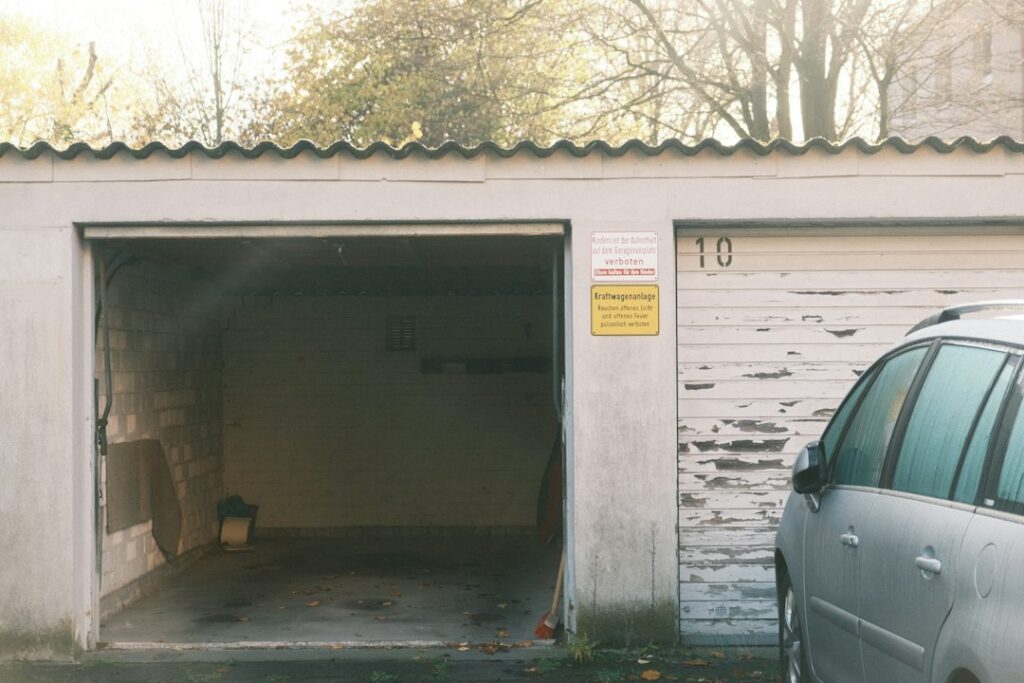
Garages collect moisture in ways the rest of a house does not. A car rolls in after a snowstorm on Interstate 25 carrying a few pounds of slush in the wheel wells, the slush melts onto a cold slab, and the water slowly evaporates into a space that is rarely heated, rarely ventilated and often packed with tools, bikes, paper boxes and lawn equipment. Over a winter that can show up as surface rust on hand tools, white bloom on concrete, musty cardboard and mildew on stored furniture. A garage dehumidifier is one way to pull that moisture back out of the air, but it is not always the right first step, and compressor-based units have real limits in cold garages. This guide covers where garage moisture comes from, how dehumidifiers work in unconditioned spaces, sizing, condensate drainage, cold-temperature limits, ventilation and insulation alternatives, energy use and hedged cost ranges for Colorado Front Range homes.
Part of our Heating, Cooling & Ventilation guide — start there for the full picture →
Does a Garage Need a Dehumidifier?
Some garages do and many do not. The direct answer depends on measured humidity, how the garage is used and what is stored in it. A detached garage that holds a car and a lawnmower in a semi-arid climate may never need one. An attached garage that doubles as a workshop, stores woodworking stock or holds a classic car through wet spring snowstorms may benefit from active dehumidification for part of the year.
The starting point is an inexpensive hygrometer, left in the garage for a few weeks across different weather. The U.S. Environmental Protection Agency’s guidance on mold and moisture recommends keeping indoor relative humidity below 60 percent, ideally between 30 and 50 percent, and notes that humidity meters are small, inexpensive instruments sold at many hardware stores. Readings that sit above roughly 60 percent for days at a time, especially alongside visible condensation, are the usual sign that something needs to change.
Signs that point toward a moisture problem in a garage include:
- Rust spots appearing on tools, shelving brackets, bike chains or the garage door hardware.
- A musty smell when the door is first opened, especially after storms.
- Condensation beading on the inside of the overhead door, on metal ducts, or on cold-water pipes that pass through the garage.
- Mildew on cardboard, upholstered furniture, leather goods or paper stored against exterior walls.
If none of these appear and the hygrometer readings stay moderate, the money is usually better spent on organization, sealed bins and basic drainage than on an appliance.
Where Garage Moisture Comes From
Understanding the source matters because a dehumidifier treats a symptom. If the source can be reduced, the appliance can be smaller, run less often or be skipped entirely.
Snowmelt and road spray from vehicles
On the Front Range, the most common source is the car itself. Snow, slush and magnesium chloride brine from treated roads ride in on tires and undercarriages, then melt on the slab. That water has to go somewhere: down a floor drain if one exists, out under the door if the slab slopes correctly, or into the air as it evaporates.
Condensation on cold surfaces
Warm, moist air that meets a cold surface drops its moisture as condensation. In a garage, the cold surfaces are everywhere: an uninsulated steel overhead door, a slab in contact with frozen ground, metal shelving, the car body after it comes in from a cold drive. The EPA notes that condensation can be a sign of high humidity and recommends acting quickly to dry wet surfaces and reduce the moisture source. In an attached garage, humid air can also migrate from the house through an unsealed entry door or gaps around penetrations.
Other sources
- Grade and drainage. Driveways that slope toward the garage, failed gutters or downspouts that dump next to the foundation can push water against or under the slab.
- Combustion appliances. Fuel-burning heaters that are not vented to the outdoors add water vapor to the air along with combustion gases.
Rust, Mold and What Happens to Stored Items
Rust needs moisture and oxygen. Hand tools, cast-iron table saw tops, fasteners and bicycle components are vulnerable when humidity stays high or when condensation forms on them during temperature swings. Road brine accelerates corrosion on anything it splashes onto. A tool chest pushed against an exterior wall in an unheated garage is a classic spot for surface rust.
Mold and mildew need moisture plus something to feed on. Cardboard boxes, paper records, wooden furniture, fabric and leather are all good food sources. The EPA’s brief guide to mold and moisture notes that if wet materials are dried within 24 to 48 hours after a leak or spill, in most cases mold will not grow, and that fixing the water problem is what keeps mold from returning after cleanup. Boxes sitting directly on a damp slab never get that chance to dry.
Practical storage steps often do as much as an appliance:
- Get boxes and furniture off the slab on shelving or pallets.
- Swap cardboard for lidded plastic bins for anything that matters.
- Leave a few inches of air space between stored items and exterior walls.
An attached garage also tends to hold paint, solvents, fuel and automotive products. The EPA’s page on volatile organic compounds lists stored fuels, paint supplies and automotive products as household VOC sources and notes that automobile emissions in attached garages are a source of benzene indoors. A dehumidifier does nothing for those vapors, which is one reason ventilation deserves a separate look.
How a Garage Dehumidifier Works in a Cold Space
Most portable dehumidifiers sold at home centers are compressor (refrigerant) units. A fan pulls air across a cold coil, moisture condenses on the coil and drips into a bucket or drain, and the air passes over a warm coil before returning to the room. That design works well in a basement held near living temperatures. It works less well as the air gets colder.
ENERGY STAR’s buying guidance says that if a space typically falls below 65 degrees Fahrenheit, buyers may want a product specified for use at lower temperatures, because frost can form on the condensing coils below that point. Frost can cause the compressor to cycle on and off repeatedly without removing moisture. Some models include an anti-frost sensor that shuts the unit off when the air temperature drops too low. Many Front Range garages sit below 65 degrees for much of the winter, exactly when snowmelt moisture peaks.
Several points follow from that:
- A standard compressor unit in a cold, unheated garage may spend much of the winter defrosting rather than drying. Manufacturer operating ranges vary, so the specification sheet matters more than the box art.
- Units marketed as low-temperature models, and desiccant dehumidifiers, which absorb moisture with a drying material rather than a cold coil, are generally designed to keep working in cooler conditions. Desiccant units typically draw more power, so the tradeoff should be weighed against how many months the unit would run.
- Cold air holds less moisture to begin with. A garage at 40 degrees with a high relative humidity reading may not contain much water in absolute terms, and the bigger issue may be condensation on surfaces when warmer air or a warm car enters.
In practice, garage dehumidifiers tend to earn their keep in spring, summer monsoon weeks and fall, and in garages that are insulated and lightly heated. In a cold, leaky garage in January, heat and air sealing often matter more than the appliance.
Sizing and Choosing a Unit
Dehumidifier capacity is rated in pints of water removed per 24 hours. ENERGY STAR’s sizing chart ties recommended capacity to how damp the space is without dehumidification and whether the area is under or over roughly 2,000 square feet. For a slightly to moderately damp space at 50 to 75 percent relative humidity, the chart suggests roughly 20 to 30 pints per day for a small to medium area; very damp spaces and spaces where walls or floors sweat call for more. ENERGY STAR also notes that it is better to oversize than undersize.
Beyond capacity, features worth checking for a garage include:
- Rated low-temperature operation and an auto-defrost or anti-frost function.
- A continuous-drain fitting for a hose, or a built-in condensate pump.
- Auto-restart after power outages, so the unit resumes after a storm knocks out power.
- ENERGY STAR certification. According to ENERGY STAR, certified dehumidifiers use more efficient coils, compressors and fans and use about 20 percent less energy than similar conventional units to remove the same amount of moisture. Efficiency is measured as an integrated energy factor in liters of water removed per kilowatt-hour, and higher is better.
Whole-home dehumidifiers connected to ductwork are designed for conditioned living space and are rarely a fit for a garage. Garages should not share return air with the house, both for fire separation and because of exhaust and vapors, so any garage unit should be a standalone appliance.
One practical note: a dehumidifier is a continuous-duty appliance, so plug it directly into a garage receptacle rather than a long, light-gauge extension cord, keep it away from fuel and solvent storage, and register it with the manufacturer in case of a recall.
Draining the Condensate
Water removal is where garage installations often go wrong. A 30-pint unit running hard can fill its bucket in less than a day, and a full bucket shuts the unit off. A dehumidifier that nobody empties stops working exactly when it is most needed.
ENERGY STAR describes the usual options: most portable units use a removable bucket with a full-bucket shutoff, some have a hose fitting so water can run directly to a floor drain or sump pump, and whole-home units are typically drained to a floor drain or condensate pump. For a garage, the realistic choices look like this:
- Gravity drain to a floor drain. The simplest option where a garage floor drain exists. The hose needs a continuous downhill run with no kinks or loops that trap water. Check where that floor drain actually discharges; some older garage drains go to dry wells or were never connected.
- Gravity drain outdoors. A hose through a wall or under the door to the exterior can work in warm months but can freeze in winter, backing water into the unit.
- Condensate pump. A small pump, built-in or external, lifts water up and over to a laundry sink, drain or exterior discharge. Pumps need their own outlet, periodic cleaning and a safety switch to prevent overflow.
Avoid letting condensate run onto the slab or down the driveway apron where it can freeze into an ice patch. Water discharged next to the foundation adds back the very moisture the unit was removing.
Ventilation, Heat and Insulation as Alternatives
In many Front Range garages, the most effective moisture control is not a dehumidifier at all. Colorado’s outdoor air is frequently dry, so moving garage air outdoors can lower humidity without a compressor. A properly installed garage exhaust fan on a humidistat or timer exhausts moisture and also helps clear vehicle exhaust and solvent vapors. It works best when outdoor air is drier than garage air.
Heat is the second lever. Warmer air holds more moisture before it condenses, and warmer surfaces stay above the dew point. A modest, properly vented or electric garage heater set to keep the space above freezing can reduce condensation on tools and also helps any compressor dehumidifier stay in its working range. Unvented combustion heaters add water vapor and combustion gases, so they work against the goal.
The third lever is the envelope. Garage insulation, an insulated overhead door, weatherstripping and air sealing at the house-to-garage wall keep surfaces warmer and limit how much humid house air drifts in. The combination usually looks like this:
- Manage the water: drain or squeegee snowmelt, fix grading, gutters and downspouts.
- Reduce sources: vent the dryer, avoid unvented heaters, dry wet gear elsewhere.
- Ventilate when outdoor air is drier than indoor air.
- Insulate and air seal so surfaces stay warmer.
- Add a dehumidifier if readings stay high after the first four steps.
For the same moisture problems below grade, the guides on choosing a dehumidifier for a basement and on how to lower humidity in a house cover the conditioned-space side of the problem.
What Home Inspectors Look For
Home inspectors do not typically evaluate dehumidifiers themselves. The American Society of Home Inspectors Standard of Practice lists humidifiers and dehumidifiers among items the inspector is not required to inspect. What an inspector does look at in a garage are the conditions a dehumidifier is meant to address and the clues that moisture has been a long-term issue:
- Slab cracking, settlement or slope that sends water toward the house or keeps it ponding.
- Efflorescence, staining or damage at the base of walls and at the house-to-garage wall.
- Corrosion on the overhead door hardware, water heater base or electrical boxes.
- Grading, gutters and downspouts that direct water toward the garage.
- Combustion appliances in the garage and their venting.
A dehumidifier running in a seller’s garage is a question, not a red flag: what problem is it solving, and what happens if it is turned off?
Typical Costs
Costs vary with capacity, brand, features and installation, so the following are general 2026 ranges rather than quotes:
- Portable compressor dehumidifier: often in the low hundreds of dollars, with larger and low-temperature models costing more.
- Desiccant unit: commonly comparable to or somewhat above mid-range compressor units, with higher operating cost in many cases.
- Condensate pump: typically a modest add-on, often well under a hundred dollars for a basic external pump, plus installation if a contractor routes the line.
- Dedicated circuit by an electrician: varies widely with panel location and distance; frequently several hundred dollars.
- Operating cost: depends on run hours, efficiency and local electricity rates. An ENERGY STAR certified model and a humidistat setpoint that is not lower than needed both help.
When to Call a Professional
A homeowner can handle hygrometer readings, storage changes and a plug-in unit with a floor-drain hose. Bring in help when water is entering the garage from outside, when the slab or walls show cracking or movement, when condensation keeps returning despite drying the space, when a new circuit or an exterior wall penetration is needed, or when a fuel-burning appliance sits in the garage. A Front Range inspector can review the garage alongside the rest of the house and point out which moisture fixes belong at the top of the list, and the heating and cooling hiring guide outlines how to vet the contractors who handle that work. More on choosing inspectors and trades is in the main hiring process section.
References
- Dehumidifiers — ENERGY STAR
- A Brief Guide to Mold, Moisture and Your Home — U.S. Environmental Protection Agency
- Volatile Organic Compounds’ Impact on Indoor Air Quality — U.S. Environmental Protection Agency
- Standard of Practice — American Society of Home Inspectors
Frequently asked questions
Will a regular dehumidifier work in a cold garage?
Often not well. ENERGY STAR notes that frost can form on the coils when air drops below 65 degrees Fahrenheit, which makes the compressor cycle without removing much moisture. Look for a unit rated for low temperatures or consider a desiccant model.
What humidity should a garage be kept at?
EPA guidance for indoor spaces recommends keeping relative humidity below 60 percent, ideally 30 to 50 percent. A garage is not living space, but staying under about 60 percent helps protect tools and stored items from rust and mildew.
Where should a garage dehumidifier drain?
A hose to a working floor drain is the simplest option. Otherwise a condensate pump can lift water to a sink or exterior discharge. Avoid draining onto the slab or next to the foundation, where water can freeze or soak back in.
Is an exhaust fan better than a dehumidifier for a garage?
In dry climates like the Colorado Front Range, an exhaust fan is often effective because outdoor air is frequently drier than garage air. It also helps clear vehicle exhaust and solvent vapors. During wet weeks a dehumidifier may still be useful.
How much does a garage dehumidifier cost?
Portable units commonly run in the low hundreds of dollars, with low-temperature and higher-capacity models costing more. A condensate pump or a new circuit adds to the total. These are general 2026 ranges, not quotes.
Seeing rust, musty boxes or condensation in a garage you are about to buy? Reach out to us and we will connect you with a Front Range inspector who can trace where the moisture is coming from.
Dehumidifiers for damp basements
Holding relative humidity under ~50% is the single most effective way to keep mold from taking hold in a basement or crawlspace.
| Product | Why | Buy |
|---|---|---|
 hOmeLabs 4,500 sq ft hOmeLabs 4,500 sq ft | Popular large-basement unit. | Amazon — $234.99 |
 Frigidaire High-Humidity Frigidaire High-Humidity | Continuous-drain option. | Amazon — $305.66 |