Best Dehumidifier for Bathroom (2026): 6 Small Units Compared
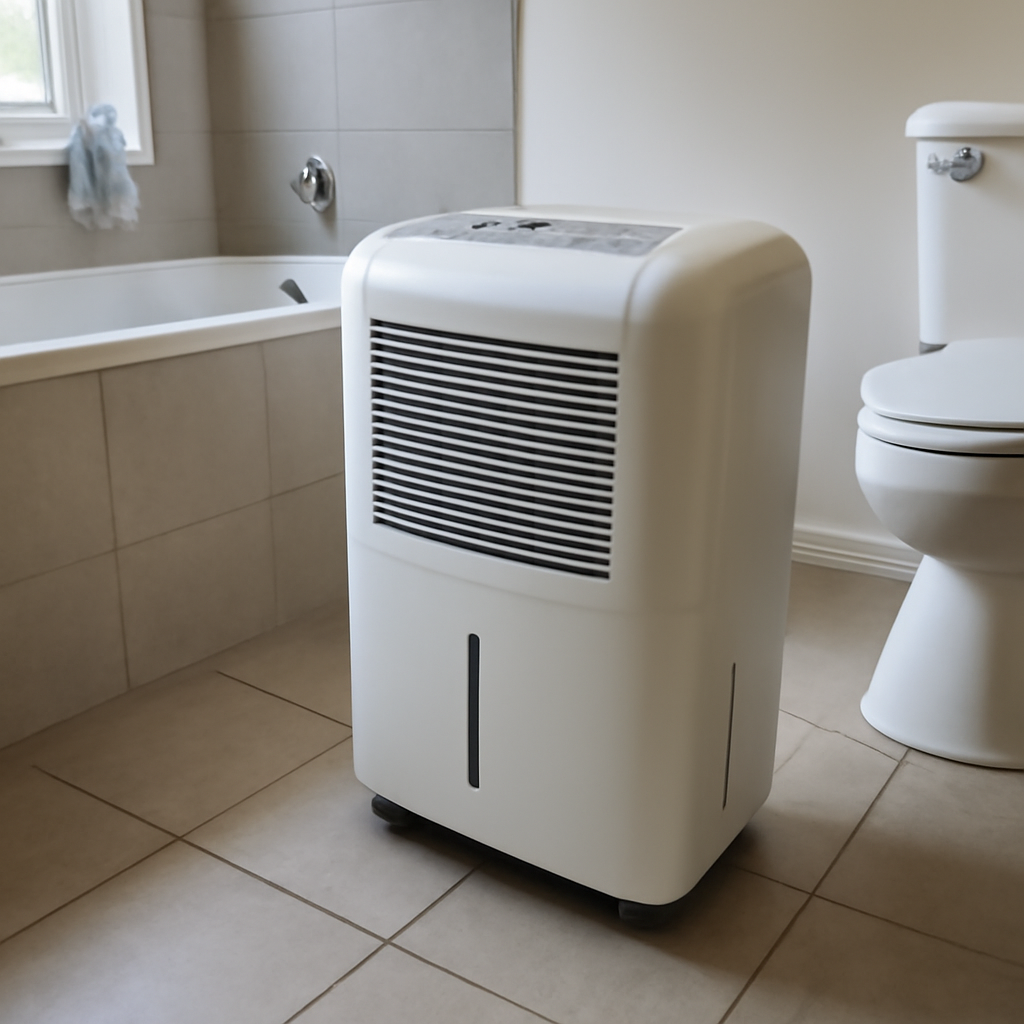
Shopping for the best dehumidifier for bathroom use starts with an uncomfortable fact: a small plug-in unit is the backup, not the fix. A hot shower releases moisture faster than any countertop dehumidifier can pull it back out, and the EPA and CDC both point first to running a bathroom exhaust fan that vents outdoors. Where a small dehumidifier earns its place is the windowless half bath, the bathroom whose fan is undersized or noisy enough that nobody runs it, and the hours after the fan shuts off when towels and grout are still damp. This roundup compares the small units that actually suit that job, ranks them on what each listing states about daily water removal, and explains how to pair one with ventilation so the mirror, ceiling and grout dry out between showers.
Part of our Humidity Control guide — start there for the full picture →
As an Amazon Associate we earn from qualifying purchases.
How we compared: we compared 12 current Amazon listings for dehumidifiers marketed for bathrooms on what each listing states: daily water removal and the test conditions behind it, tank size and shutoff behavior, timers, drainage, noise and listed dimensions. Eleven are small thermoelectric-style units (two are color variants of the same ToLife model) and one is a full-size 80-pint compressor unit that is far too large for a typical bathroom. We did not lab-test or handle any of these units. Prices and availability change often, so check the current listing before buying.
Quick picks: the best bathroom dehumidifiers by situation
| Product | Best for | Key features | Price | Buy |
|---|---|---|---|---|
| KCONBS D1A | Best overall for bathrooms |
| $69.99as of Nov 19, 2026 7:09 am GMT+0000 | Buy now →Check current price |
| NineSky CT2 | Highest stated daily removal |
| $59.98as of Nov 19, 2026 2:21 am GMT+0000 | Buy now →Check current price |
| Onsekin CS08 | Drain hose for tub or floor drain |
| $69.99as of Nov 19, 2026 7:09 am GMT+0000 | Buy now →Check current price |
| Windangel DH-D | Small counter, stated wattage |
| $49.99as of Nov 19, 2026 7:09 am GMT+0000 | Buy now →Check current price |
| OWAAE TZ-C4S | Large tank for a busy bathroom |
| $59.99as of Nov 19, 2026 7:09 am GMT+0000 | Buy now →Check current price |
| BEDRED CT11 | Lights-off sleep mode |
| $59.99as of Nov 19, 2026 7:09 am GMT+0000 | Buy now →Check current price |
Prices are Amazon’s listed prices as of the time shown and change often; check Amazon for today’s price. As an Amazon Associate we earn from qualifying purchases.
The six picks, compared listing by listing
1. KCONBS D1A — Best Overall for Bathrooms

Semiconductor unit rated at 680 ml a day, with a power mode the listing names for clearing steam after showers.
Check price on Amazon$69.99 as of Nov 19, 2026 7:09 am GMT+0000 — prices change; see Amazon for current price.Why we like it
- States daily removal and the test conditions
- Power mode aimed at post-shower dampness
- Six timer settings from 2 to 12 hours
- Two-year warranty stated in the listing
| Specification | Details |
|---|---|
| Type | Semiconductor (thermoelectric) condensation |
| Stated removal | Up to 680 ml (about 23 oz) per day at 86°F and 80% RH |
| Tank | 1.6 L with auto shutoff and red full-tank light |
| Controls | Power and sleep modes; six timer options from 2 to 12 hours |
| Noise | Below 28 dB in sleep mode per listing |
| Size / warranty | About 7.4 x 6.8 x 10.5 in; 2-year warranty |
KCONBS D1A — thermoelectric, 680 ml/day at 86°F/80% RH, 1.6 L tank, 2–12 h timer, under 28 dB sleep, 2-yr warranty
One of Only Two Listings That Name Shower Steam Directly
Every one of the 12 listings mentions bathrooms somewhere, usually in a long list of rooms. Only two describe what a bathroom actually throws at a dehumidifier. The KCONBS says its power mode pushes airflow around the unit to clear dampness after steamy showers, and the OWAAE (pick 5) talks about steam from daily activities. The KCONBS is the one of those two that also puts a number on output: 680 ml a day at 86°F and 80% relative humidity.
That figure matters because only five of the 11 small units on the shelf state a daily removal number at all. Of those five, the KCONBS ranks second behind the NineSky. It pairs that output with the most flexible timer on the shelf. Three listings offer timers, and this is the only one with short settings, from 2 to 12 hours, which suits a bathroom where you want the unit to run for a couple of hours after the last shower of the day and then stop.
What the listing does not state is a power draw or any safety listing such as UL or ETL. The listed weight of 1 lb also looks low for a unit with a 1.6-liter tank, so treat it as a likely data error. The tank holds a bit more than two days of rated output, so in a steamy bathroom expect to empty it every day or two.
Pros
- States output and test conditions
- Short timer settings fit post-shower runs
- Power mode written for bathroom steam
- Two-year warranty
Cons
- No power draw or safety listing named
- No drain hose option
- Listed weight looks inaccurate
Check KCONBS D1A price on Amazon
2. NineSky CT2 — Best for the Highest Stated Daily Removal

Semiconductor unit with a 95 oz tank and the highest stated output of the small units here, about 34 oz a day.
Check price on Amazon$59.98 as of Nov 19, 2026 2:21 am GMT+0000 — prices change; see Amazon for current price.Why we like it
- Highest stated daily output among small units
- Gives the test conditions behind the number
- Large 95 oz tank means fewer trips
- Stops if the tank is full or seated wrong
| Specification | Details |
|---|---|
| Type | Semiconductor cooling |
| Stated removal | Up to 34 oz per day at 86°F and 80% RH |
| Tank | 95 oz with auto shutoff when full or incorrectly installed |
| Noise | 40 dB or less per listing |
| Size / weight | About 8.3 x 5.7 x 14 in; 5 lb |
| Warranty | Not stated in listing |
NineSky CT2 — semiconductor, up to 34 oz/day at 86°F/80% RH, 95 oz tank, 40 dB or less, about 14 in tall
The Biggest Stated Output Among the Small Units
Of the five small units that give a daily figure, the NineSky’s 34 ounces is the highest, roughly a liter a day, and about three times the Windangel’s stated output. In a bathroom used for several showers a day, that headroom is the reason to pick it. The 95-ounce tank means the unit can run close to three days at its rated output before it shuts itself off.
The trade-off is size. At about 14 inches tall and 5 pounds, it is one of the larger small units and will not tuck behind a faucet. It needs floor space or a deep counter, away from the tub and toilet splash zone. This is also one of six listings on the shelf whose title claims coverage of 1,000 square feet, a figure no thermoelectric unit can realistically back up in a damp room; the ounces-per-day figure is the more honest guide.
The NineSky is one of two picks here that also appear in our general best dehumidifier roundup, where it covers small damp rooms. The listing does not state a warranty, a power draw or a safety listing.
Pros
- Highest stated output of the small units
- Large tank, roughly three days of rated output
- Shuts off if the tank is misplaced
Cons
- Bulky for a vanity counter
- 1,000 sq ft title claim is unrealistic
- No warranty or power draw stated
Check NineSky CT2 price on Amazon
3. Onsekin CS08 — Best With a Drain Hose

Semiconductor unit that ships with a drain hose for continuous operation, plus lights that can be switched fully off.
Check price on Amazon$69.99 as of Nov 19, 2026 7:09 am GMT+0000 — prices change; see Amazon for current price.Why we like it
- Only small unit here that includes a drain hose
- Can drain into a tub or floor drain
- Will not run with the tank misplaced
- Lights switch fully off
| Specification | Details |
|---|---|
| Type | Semiconductor condensation |
| Drainage | Tank with auto shutoff; drain hose included for continuous operation |
| Modes | High speed and sleep |
| Noise | Below 45 dB in night mode per listing |
| Size / weight | About 7.95 x 5.9 x 13.85 in; 5.5 lb |
| Stated removal / tank | Not stated in listing |
Onsekin CS08 — semiconductor, drain hose included, high-speed and sleep modes, under 45 dB at night, 5.5 lb
The Only Small Unit on the Shelf That Ships With a Drain Hose
Two of the 12 listings include a drain hose: this Onsekin and the full-size AEOCKY compressor unit. Among the small units, that makes the Onsekin the only one that can run without anyone emptying a tank. In a bathroom that is a real advantage, because the tub, shower pan or a floor drain is right there. Set the unit on a stable surface higher than the drain so gravity does the work, and route the hose so it cannot be kicked loose.
The listing also adds an aromatherapy feature, which is a matter of taste, and says the unit works best with doors and windows closed. That advice applies to all of these units, and it is one more reason the exhaust fan should do the heavy lifting during the shower itself.
The weak spot is the missing numbers. The listing does not state daily removal, tank size or a warranty, and its night-mode noise ceiling of 45 dB is the loudest stated figure among the picks. Buy it for the hose, not for documented capacity.
Pros
- Drain hose included for unattended running
- Shuts off if the tank is not seated
- Lights can be turned off completely
Cons
- No daily removal figure stated
- Tank size and warranty not listed
- Highest stated night-mode noise of the picks
Check Onsekin CS08 price on Amazon
4. Windangel DH-D — Best Small Unit With a Stated Wattage

Compact 44 oz unit that states its power draw, adds auto defrost and offers 24, 48 or 72 hour shutoff timers.
Check price on Amazon$49.99 as of Nov 19, 2026 7:09 am GMT+0000 — prices change; see Amazon for current price.Why we like it
- Only bathroom listing that states hourly power draw
- Auto defrost and three working modes
- Shutoff timers for unattended use
- Small footprint fits a vanity corner
| Specification | Details |
|---|---|
| Stated removal | Up to 11.8 oz (349 ml) per day at 86°F and 80% RH |
| Power | 24 W stated, about 0.58 kWh per day |
| Tank | 44 oz (1.3 L) with auto shutoff and red light |
| Controls | Sleep, normal and performance modes; 24, 48 or 72 hour timers or continuous |
| Size / weight | About 5.9 x 5.9 x 8.5 in; under 3 lb |
| Warranty | Not stated in listing |
Windangel DH-D — 11.8 oz/day at 86°F/80% RH, 24 W, 44 oz tank, auto defrost, 3 modes, 24–72 h timers
The Only Bathroom Listing That States Hourly Power Draw
None of the other 11 bathroom listings gives an hourly wattage. TABYIK and Deyagoo cap their daily use at 1 kWh or less, which is useful but vaguer. The Windangel states 24 watts, which works out to well under a kilowatt-hour a day of continuous running. For a unit that may run most of the day in a damp bathroom, that is the clearest operating-cost information on the shelf.
It is also one of only two small units on the shelf that name auto defrost (the Newo is the other), which helps in a cold bathroom over an unheated garage or on an outside wall in a Front Range winter. Timers come in day-long steps of 24, 48 or 72 hours rather than the KCONBS’s short settings.
The honest limit is output. At 11.8 ounces a day, it is the lowest stated figure of the five small units that give one, which is about a third of the NineSky. Use it for a powder room, a closet-sized bathroom, or as a top-up behind a working exhaust fan, not as the only moisture control in a family bathroom.
Pros
- Clear power draw stated
- Auto defrost for cold bathrooms
- Very small footprint
Cons
- Lowest stated daily removal of the picks
- No warranty stated
- Timers only in 24-hour steps
Check Windangel DH-D price on Amazon
5. OWAAE TZ-C4S — Best Large Tank for a Busy Bathroom

95 oz tank, sleep mode under 30 dB and a listing written around steam in enclosed bathrooms.
Check price on Amazon$59.99 as of Nov 19, 2026 7:09 am GMT+0000 — prices change; see Amazon for current price.Why we like it
- Listing written around bathroom steam
- Large 95 oz tank
- Stops when full or not seated
- Quiet sleep mode under 30 dB
| Specification | Details |
|---|---|
| Tank | 95 oz with auto shutoff when full or improperly positioned |
| Noise | Under 30 dB in sleep mode per listing |
| Intended use | Bathrooms, closets and RVs; works best at moderate to high humidity |
| Size | About 14 x 9 x 6 in |
| Stated removal | Not stated in listing |
| Warranty | Not stated in listing |
OWAAE TZ-C4S — 95 oz tank, auto shutoff, sleep mode under 30 dB, built-in handle, 7-color light
A Bathroom-Specific Listing With the Largest Tank Class
Five listings on the shelf advertise a 95-ounce tank, the largest among the small units. The OWAAE is the one whose description is written around bathroom use, noting steam from showers and daily activities in enclosed spaces. That framing is the reason it is here: the large tank gives a busy bathroom the longest stretch between emptying.
The model number, TZ-C4S, sits in the same family as the ToLife TZ-C2 listings on the shelf, and the feature lists read similarly, so treat these as close relatives rather than very different machines. Neither states daily removal in ounces.
That gap is the reason it ranks below the KCONBS and NineSky. A big tank only helps if the unit is pulling meaningful water, and the listing gives no way to judge that. Check that it is placed well away from the tub and sink, since the large tank means more water to spill if it tips.
Pros
- Large tank, fewer trips to the sink
- Quiet sleep mode
- Shuts off when full or misplaced
Cons
- No daily removal figure
- Close cousin of other listings on the shelf
- No warranty or power draw stated
Check OWAAE TZ-C4S price on Amazon
6. BEDRED CT11 — Best Lights-Off Sleep Mode

Thermoelectric unit with a 95 oz tank and a sleep mode that turns the ambient lights off automatically.
Check price on Amazon$59.99 as of Nov 19, 2026 7:09 am GMT+0000 — prices change; see Amazon for current price.Why we like it
- Names thermoelectric cooling plainly
- Sleep mode turns lights off automatically
- 95 oz tank with auto shutoff
| Specification | Details |
|---|---|
| Type | Thermoelectric (semiconductor) cooling |
| Tank | 95 oz with auto shutoff when full |
| Sleep mode | Ambient lights switch off and fan noise drops |
| Size | About 14.6 x 6.7 x 8.7 in |
| Stated removal / noise | Not stated in listing |
| Warranty | Not stated in listing |
BEDRED CT11 — thermoelectric, 95 oz tank, auto shutoff, sleep mode with lights off, about 14.6 in tall
Sleep Mode That Kills the Lights for You
Eleven of the 12 listings mention some kind of ambient or color light. For a primary-suite bathroom that opens onto the bedroom, a glowing unit all night is a nuisance. Several listings let you turn the lights off by hand; the BEDRED describes a sleep mode that turns them off automatically while the fan slows down, so one button handles both.
It is also one of seven listings that plainly name the thermoelectric or semiconductor technology inside. That honesty is worth something on a shelf where several listings imply far more capacity than this class of machine delivers.
What it does not give is any performance number: no daily removal, no decibel figure and no warranty. Choose it when the bathroom is attached to a bedroom and quiet darkness matters more than documented output.
Pros
- Automatic lights-off sleep mode
- Large tank
- Plainly names its cooling technology
Cons
- No removal, noise or warranty figures
- 1,000 sq ft title claim is unrealistic
- Tall unit for a counter
Check BEDRED CT11 price on Amazon
The exhaust fan is the real fix
A bathroom produces moisture in bursts. A hot shower fills the room with warm, saturated air quickly, and the job is to get that air outside before it condenses on cold surfaces. Both federal health agencies put ventilation first. The EPA’s moisture guidance says to run the bathroom fan or open the window when showering, and the CDC advises exhaust fans in kitchens and bathrooms that vent to the outside of the home. Neither says a plug-in dehumidifier should replace the fan.
The arithmetic explains why. The best small unit on this shelf states about a liter of water a day under warm, humid test conditions. A fan moves the steam itself out of the house in minutes. A small dehumidifier is useful in three situations:
- No fan, or a fan that vents nowhere. Some older Front Range homes have half baths with no fan, or fans that dump into the attic. Our guide to bathroom fan ducts explains why a fan that is not ducted outdoors simply moves the moisture problem into the attic.
- A fan that is undersized or turned off too soon. Adding a bathroom fan timer so the fan keeps running well after the shower ends is often the cheapest improvement available.
- After-hours drying. Towels, bath mats and grout stay damp long after the steam clears. A small unit on a 2-to-4 hour timer helps those surfaces dry.
If the fan is old or loud, replacing it is usually a better investment than any dehumidifier. ENERGY STAR notes that certified ventilation fans are quieter and use less energy than standard models, and quiet fans are fans people actually run. Our bathroom exhaust fan guide covers sizing and installation.
How to read small-dehumidifier specs honestly
Ounces per day, not square feet
Every small unit here uses a thermoelectric (Peltier) module rather than a compressor. These are quiet, light and simple, but their output is measured in ounces, not pints. The five small listings that state a figure range from 11.8 to 34 ounces a day, all measured at 86°F and 80% relative humidity, which is warmer and wetter than a bathroom between showers. Real-world output in a cooler room will be lower. For comparison, the one compressor unit on the shelf states 56 pints a day at the same conditions, which shows how different the two classes of machine are.
Ignore square-footage claims. Six of the 12 listings claim 1,000 square feet of coverage in the title. A bathroom is usually under 100 square feet, so the claim is irrelevant, and it is also unrealistic for this class of machine. Look for the ounces-per-day number and the test conditions; if a listing gives neither, you are buying without performance data.
Tank size and shutoff
Every listing here describes an automatic shutoff when the tank is full, and several also stop if the tank is removed or seated badly. A bigger tank means fewer trips, but a tank larger than about three days of output gains little, because you will want to empty and rinse it regularly anyway. Standing water in a warm tank can grow its own film, so rinse it weekly.
Timers and defrost
Only three listings on the shelf offer timers. A short timer is the most bathroom-friendly feature here, because the moisture load is concentrated after showers. Auto defrost, named by two of the small units, matters for cold bathrooms. ENERGY STAR notes that frost can form on dehumidifier coils below about 65°F, which is a real possibility in a Front Range bathroom on an exterior wall in January.
Noise and lights
Stated noise figures run from under 28 dB to under 45 dB in sleep or night mode. Those numbers are manufacturer claims without a stated test distance, so use them for rough ranking only. Eleven of the 12 listings include color lights; check that they can be turned off if the bathroom opens onto a bedroom.
Electrical safety and placement in a wet room
A bathroom is the worst room in the house for a plug-in appliance, so placement matters more than any spec on the box:
- Plug the unit into a GFCI-protected outlet, the kind with test and reset buttons, and press test once a month. Our guide to the bathroom GFCI outlet explains how to check that the outlet actually trips.
- Keep it out of the splash zone: away from the tub, shower opening, sink basin and toilet, on a stable, level surface where it cannot be knocked into water.
- Plug it directly into the wall. The U.S. Fire Administration advises replacing worn or damaged cords and not overloading outlets; a bathroom outlet that already runs a hair dryer is not the place for a power strip.
- Leave the air inlet and outlet clear. Deyagoo’s listing, for example, specifies keeping its top inlet and back outlet unobstructed.
- None of the 11 small-unit listings names a UL or ETL safety listing. That does not prove a unit lacks one, but look for the mark on the product label before leaving it running unattended.
When bathroom moisture means something bigger
A small dehumidifier treats ordinary shower humidity. It will not fix a leak. The EPA’s advice for mold is to fix the moisture source, dry wet materials within 24 to 48 hours, and keep indoor humidity below 60 percent, ideally 30 to 50 percent. The CDC’s guidance is similar, at no higher than 50 percent. A cheap hygrometer will tell you whether the bathroom is getting back into that range within an hour or so of a shower.
Watch for signs that the problem is not humidity at all: soft or discolored flooring around the toilet, stains on the ceiling below an upstairs bathroom, peeling paint above the shower that returns after repainting, or a musty smell that persists when the room is dry. Our guides to mold in the bathroom and how to prevent mold in a bathroom walk through what to look for. The EPA says a moldy area under about 10 square feet is usually a do-it-yourself cleanup; larger areas, or mold that keeps returning, call for a professional.
Colorado’s dry climate makes a persistently damp bathroom more telling than it would be in a humid state. If you are buying or selling on the Front Range and want the bathroom fan, ducting and any hidden moisture checked, reach out through our contact page to connect with a vetted local inspector.
Frequently asked questions
Do I need a dehumidifier in my bathroom?
Usually not, if the bathroom has an exhaust fan that vents outdoors and you run it during and after showers. A small dehumidifier helps in bathrooms with no fan, a weak fan, or surfaces that stay damp for hours. It should support the fan, not replace it.
Will a small dehumidifier stop bathroom mold?
It can help by lowering humidity after showers, but mold control depends on removing moisture at the source. Run the exhaust fan, fix leaks, dry wet materials within 24 to 48 hours and clean small mold patches promptly. Recurring mold usually points to a ventilation or leak problem.
How much water does a small bathroom dehumidifier remove?
The small thermoelectric units in this roundup that state a figure range from about 12 to 34 ounces a day, measured at 86°F and 80% relative humidity. Real output in a cooler bathroom will be lower. Compressor units remove pints rather than ounces but are too large for most bathrooms.
Is it safe to run a dehumidifier in a bathroom?
It can be, with care. Plug it into a GFCI-protected outlet, keep it away from the tub, shower and sink, set it on a stable surface and avoid extension cords. Check the product label for a recognized safety listing before leaving it running unattended.
What humidity should a bathroom be after a shower?
The EPA recommends keeping indoor humidity below 60 percent and ideally between 30 and 50 percent, and the CDC says no higher than 50 percent. A bathroom will spike during a shower; what matters is that it returns to that range within an hour or so.
Do bathroom dehumidifiers make the room warmer?
Bathroom dehumidifiers add only a small amount of heat. Thermoelectric mini units draw little power, so the warming effect is usually hard to notice in a bathroom. Compressor dehumidifiers release more heat, which can be noticeable in a small closed room, but they are rarely needed in a bathroom unless it is unusually large or damp.
How do you clean a small bathroom dehumidifier?
Clean a small bathroom dehumidifier by unplugging it, emptying and rinsing the tank with warm soapy water, and wiping or vacuuming dust from the intake grille. Doing this every week or two in a bathroom prevents slime and musty odors in the tank. Let every part dry fully before reassembling and plugging it back in.
Is a dehumidifier or a fan better for a windowless bathroom?
An exhaust fan vented outdoors is better for a windowless bathroom, because it removes steam much faster than a portable dehumidifier. A dehumidifier is a useful add-on when the fan is undersized, noisy or cannot be upgraded, such as in a rental. Using both together dries the room fastest after a shower.
More Questions About Bathroom Dehumidifiers
How much should you spend on a bathroom dehumidifier?
A small bathroom dehumidifier typically costs far less than a full-size compressor unit, and spending more mainly buys a bigger tank, a drain hose option or quieter operation. For a windowless half bath or a small full bath, a compact thermoelectric unit is usually enough. Spending at the top of the mini-unit range rarely adds real moisture removal, because these units share similar small cooling plates. If the bathroom stays damp for hours after every shower, the money is often better spent on a properly ducted exhaust fan than on a pricier portable unit.
How long do small bathroom dehumidifiers last?
Small thermoelectric bathroom dehumidifiers typically last a few years of regular use, often less than a compressor dehumidifier. The fan is the part that usually wears out first, followed by the float switch that shuts the unit off when the tank is full. Bathroom steam, hairspray and dust shorten that life, so placement outside the direct shower spray zone helps. Signs a unit is failing include a louder fan, a tank that stays nearly empty on humid days, or a unit that no longer shuts off when the tank fills.
Where should a dehumidifier go in a bathroom?
A bathroom dehumidifier should sit on a stable, dry surface at least a few feet from the tub, shower and sink, with open space around its intake and exhaust grilles. Keep it off the floor where it can be splashed or knocked over, and never place it inside a shower enclosure. Plug it only into a GFCI-protected outlet and avoid extension cords in a wet room. A spot near the doorway often works well, because it pulls air from the whole room without sitting in the spray zone.
Should a bathroom dehumidifier run all the time?
No, a bathroom dehumidifier usually only needs to run during and for an hour or two after showers, not around the clock. Running it continuously wastes power and wears the fan sooner, while the room may already be near normal humidity between uses. A built-in timer or a simple outlet timer handles this well. If the bathroom never drops below about 60 percent humidity even with the unit and fan running, that points to a ventilation or leak problem worth having inspected.
Can a bathroom dehumidifier replace an exhaust fan?
No, a small bathroom dehumidifier cannot replace a properly vented exhaust fan, and most building codes expect a bathroom to have either an operable window or mechanical exhaust. An exhaust fan moves moist air outdoors in minutes, while a mini dehumidifier removes only a few ounces of water over a full day. A portable unit is best treated as a supplement for a windowless room or a weak fan. If there is no fan at all, adding one ducted to the exterior is the more durable fix.
References
- A Brief Guide to Mold, Moisture and Your Home — U.S. Environmental Protection Agency
- Mold: About Mold and Prevention — Centers for Disease Control and Prevention
- Ventilation Fans — ENERGY STAR (U.S. EPA)
- Dehumidifiers: Buying Guidance — ENERGY STAR (U.S. EPA)
- Appliance and Electrical Fire Safety — U.S. Fire Administration
Dehumidifiers for damp basements
Holding relative humidity under ~50% is the single most effective way to keep mold from taking hold in a basement or crawlspace.
| Product | Why | Buy |
|---|---|---|
 hOmeLabs 50-Pint (7,000 sq ft) | Popular large-basement unit. | Amazon — $269.99 |
 Frigidaire High-Humidity | Continuous-drain option. | Amazon — $307.74 |