Mold in Basement Walls: What Homeowners Need to Know
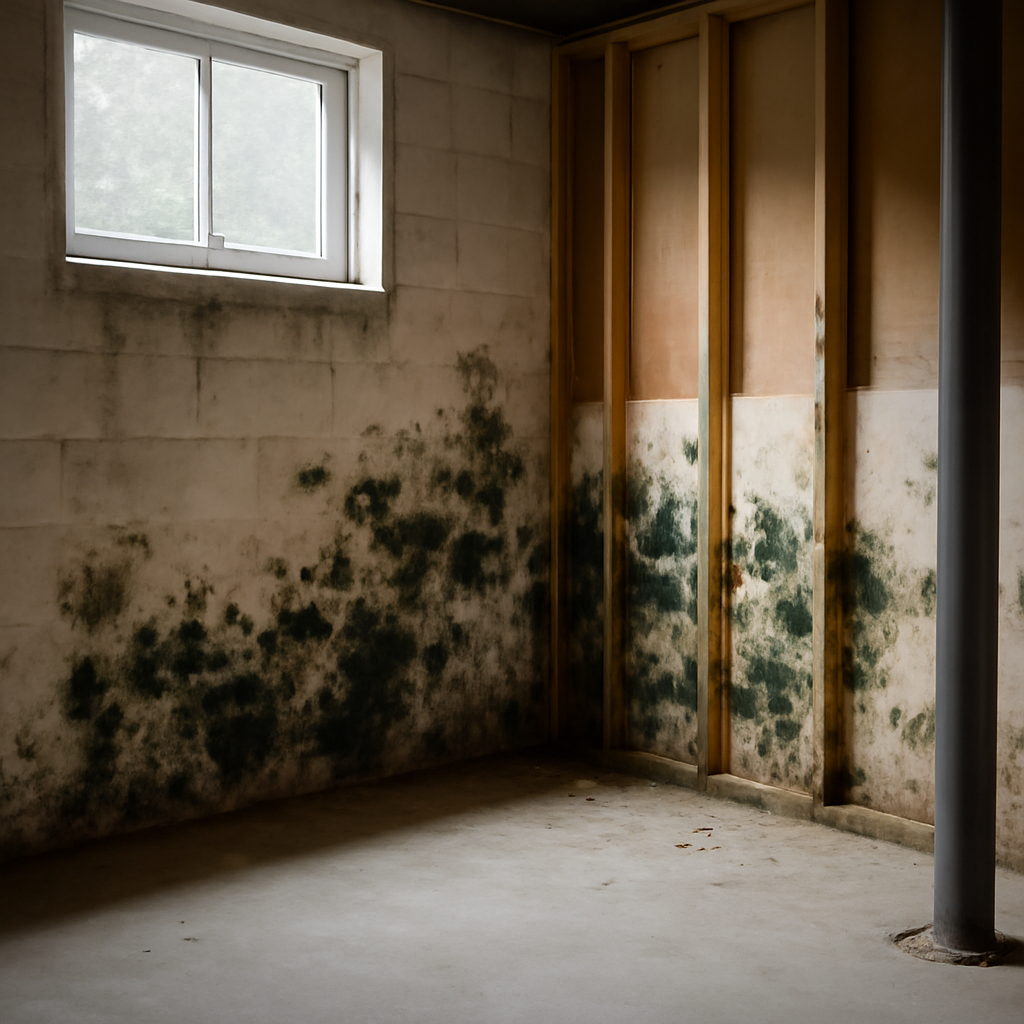
Discoloration spreading across a basement wall is rarely just a surface stain. Mold in basement walls almost always points to water moving through or condensing on the wall, and the visible growth is the symptom rather than the disease. Treating the wall without tracing the moisture leads to a frustrating cycle of cleaning and regrowth. This guide summarizes EPA and CDC guidance current as of 2026 and is informational only — consult a physician about symptoms and a certified professional for testing and remediation decisions.
Part of our Mold Around the Home guide — start there for the full picture →
Is this mold, asbestos, or water damage? Get a free instant screen
Upload a clear photo of the suspect area. You'll get an instant AI screening opinion and what to do next. This is screening guidance, not a professional determination.
Screening guidance only. AI can be wrong. Confirm asbestos, mold type, or lead with lab testing or a licensed professional before acting.
What mold in basement walls usually means
Mold needs moisture, a food source, and time. A basement wall supplies all three: below-grade concrete or block stays cool and prone to condensation, drywall and framing offer organic food, and basements are often the least ventilated part of a home. When you see mold on a basement wall, the EPA’s framework says the real question is where the water is coming from, because mold cannot grow without it.
The location of the growth often hints at the source. Mold low on a foundation wall suggests seepage or rising damp from outside. Mold high on a wall or near the ceiling can indicate condensation or a leak from above. Growth concentrated behind furniture or stored boxes usually reflects trapped humidity and poor airflow. Reading those patterns is the first diagnostic step, and the mold inspection and testing hub covers how professionals approach the same question.
Common causes in a basement
Several moisture pathways feed basement-wall mold, and more than one can be active at once.
Foundation seepage
Water from rain or snowmelt can move through porous concrete or block, especially where exterior grading slopes toward the house or gutters dump runoff near the foundation. Hydrostatic pressure pushes moisture through hairline cracks and the porous wall itself, leaving the interior face damp.
Condensation
Warm, humid indoor air meeting a cool basement wall produces condensation, the same way a cold glass sweats in summer. This is purely a humidity-and-temperature problem with no leak involved, and it is common in Front Range basements during humid stretches. The EPA recommends keeping indoor humidity below roughly 50 percent to limit it.
Plumbing and appliance leaks
Water heaters, washing machines, and supply or drain lines running through basement walls can leak slowly enough to feed mold for weeks before anyone notices. A persistently damp patch with no rain connection often traces back to plumbing.
How to identify it and gauge the severity
Look, touch, and smell. Surface mildew reads as a flat, powdery film that wipes away; established mold on or in the wall is darker, denser, sometimes slimy, and tends to return. A musty, earthy odor that persists even after cleaning suggests growth has reached porous materials behind the surface.
Severity hinges on what the wall is made of. Mold on bare, sealed concrete is comparatively easy to address because concrete is non-porous. Mold on drywall, paneling, or framing is more serious, because those porous materials usually have to be removed rather than cleaned. If a finished basement wall feels soft, the drywall has likely been saturated and the cavity behind it may hold hidden growth. The guide to black mold in walls explains what that hidden scenario typically involves.
Cleaning and removal: what works
For a small area within the EPA’s general 10-square-foot DIY threshold, the method depends on the surface.
On bare concrete or block, scrub the growth with detergent and water using a stiff brush, then dry the wall completely. The EPA states bleach is not necessary for routine cleanup on hard surfaces, and drying matters as much as the cleaning itself. Wear an N95 respirator, gloves, and goggles, since scrubbing releases spores.
On finished walls, the porous materials generally come out. Cut away and bag moldy drywall, remove affected insulation, and inspect the framing behind it. The colony in drywall cannot be reliably cleaned, so removal is the standard. Once the cavity is open and dry, and only after the moisture source is controlled, the wall can be rebuilt. Trying to paint or seal over mold on a basement wall traps the growth and lets it continue.
What it costs to address basement-wall mold
Cost tracks scope and whether structural drying and material removal are involved. Cleaning a small patch on bare concrete is inexpensive — cleaner, a brush, protective gear, and possibly a dehumidifier rental. Removing finished-wall materials and treating a larger area moves into professional remediation territory.
Professional remediation varies with square footage, containment needs, and the extent of water damage, ranging from the lower hundreds for a contained patch to several thousand dollars for an extensive finished-basement job with material removal and drying. Separate from remediation is the moisture repair — regrading, gutter extensions, foundation crack sealing, a sump pump, or a dehumidifier — which is the part that actually prevents recurrence. For vetting help, the guide to a mold inspection company covers what to look for.
Health context and why basement-wall mold matters
Mold on a basement wall does not stay contained to the basement. Air in a house tends to move upward through the stack effect, carrying basement air and any spores it holds into the living areas above, which is why a single moldy wall downstairs can influence the whole home’s indoor air quality.
The CDC notes that mold exposure can cause nasal congestion, throat and eye irritation, coughing, and wheezing, with stronger reactions in people who have asthma, mold allergies, or weakened immune systems. The American Lung Association ties damp, moldy indoor spaces to respiratory symptoms and asthma flares across mold types. There is no single “toxic black mold” identifiable by color, and the EPA treats all indoor mold the same way. The sensible response is prompt cleanup and moisture control, not alarm over species. If someone in the household has symptoms that ease away from home, that is a question for a physician, and anyone with a respiratory condition should not perform the cleanup themselves.
Diagnosing the moisture source step by step
Finding the water is the part that makes a cleanup last, and it follows a logical order. Start by noting whether the mold correlates with weather: growth that worsens after rain or spring snowmelt points to exterior seepage, while growth unrelated to weather suggests condensation or a leak.
Next, check the obvious leak sources — the water heater, washing machine connections, and any supply or drain lines running through the wall. A defined wet patch with no rain connection usually traces to one of these. Then assess condensation potential: a wall that feels cool and damp in humid weather, especially behind stored items where air does not circulate, is likely condensing moisture from the room air. A hygrometer reading above 50 percent supports that diagnosis.
Finally, look outside. Downspouts that discharge near the foundation, soil graded toward the house, and cracked or settled walkways that channel water toward the wall are common exterior contributors. Working through these in order narrows the cause, which determines whether the fix is a plumbing repair, a dehumidifier, regrading, gutter work, or a sump pump. Cleaning before this diagnosis is done is how homeowners end up repeating the job.
Preventing mold on basement walls
Keeping basement walls dry comes down to managing water from outside and humidity from inside. Extend downspouts well away from the foundation and grade the surrounding soil to drain away from the house. Seal foundation cracks and add a sump pump if water intrudes during wet weather. Run a dehumidifier to hold humidity below roughly 50 percent, and use a hygrometer to confirm it.
Indoors, leave space between stored items and the wall so air can move, avoid resting cardboard and fabric against cool concrete, and address any plumbing drip within the EPA’s 24-to-48-hour window. These steps remove the conditions mold needs, which is the only lasting prevention.
When to call a professional
Bring in help when mold covers more than about 10 square feet, when contaminated water is involved, when growth is hidden inside the wall cavity or HVAC system, or when occupants have health concerns — the EPA’s standard triggers for professional remediation. A finished basement with soft or stained drywall almost always warrants assessment, because the cavity behind the surface may hold growth you cannot see.
A qualified professional uses moisture meters and sometimes infrared imaging to find hidden dampness before any demolition, ensuring the repair targets the real source. If a household member has symptoms that improve away from home, consult a physician. The consistent message across health and trade agencies is to control the moisture, clean or remove affected materials properly, and escalate when the scope or the stakes rise.
Front Range basement walls through the seasons
Colorado’s seasonal swings drive predictable patterns in basement-wall mold. In late winter and spring, melting snowpack and thawing ground send water toward foundations, and walls that were dry all winter can begin to seep. Homes on clay-heavy soils common across parts of the Front Range are especially prone, because the clay holds water against the foundation rather than letting it drain away.
Summer shifts the risk toward condensation and storm runoff. Warm, humid air condenses on cool below-grade walls, and intense thunderstorms can briefly overwhelm drainage built for ordinary rain. The EPA’s 50 percent humidity benchmark applies year-round; a basement that reads higher needs a dehumidifier even without an active leak.
The practical Front Range routine is to inspect basement walls after spring melt and after major storms, keep gutters clear and downspouts extended well past the foundation, and run a dehumidifier through humid stretches. For recurring seepage, regrading the soil to slope away from the house, sealing foundation cracks, and adding perimeter drainage with a sump pump are the durable fixes. Reading the seasonal pattern early turns a damp wall into a maintenance task rather than a remediation project.
Finished versus unfinished basement walls
Whether a basement is finished changes both the risk and the response in important ways. An unfinished basement with bare concrete or block walls is, paradoxically, easier to manage. The non-porous masonry can be cleaned, and growth is visible the moment it appears, so problems get caught early. The downside is that bare walls offer no warning before condensation or seepage shows up as mold.
A finished basement hides the problem behind drywall, paneling, or framing. Water that reaches the wall cavity can feed mold for months out of sight, surfacing only as a musty smell, a stain bleeding through paint, or a soft spot in the drywall. By the time finished-wall mold is visible, the cavity behind it often holds more growth than the surface shows. That is why a finished basement wall that feels soft, smells musty, or shows staining warrants opening up rather than surface cleaning. The porous finishing materials — drywall, insulation, paneling — generally have to be removed once mold is established, consistent with the EPA’s guidance on porous materials.
The practical implication for anyone finishing a basement is to control moisture first. Insulating and drywalling over a wall that still seeps or condenses simply builds a hidden mold chamber. Proper drainage, a vapor barrier where appropriate, humidity control, and confirmation that the wall stays dry should all come before the finishing materials go up, or the finished space becomes a recurring remediation expense.
References
- A Brief Guide to Mold, Moisture and Your Home — U.S. Environmental Protection Agency
- About Mold and Your Health — Centers for Disease Control and Prevention
- Mold Cleanup in Your Home — U.S. Environmental Protection Agency
Frequently asked questions
Why does mold keep growing on my basement walls?
Because the moisture source is still active. Basement-wall mold is fed by foundation seepage, condensation on cool concrete, or a plumbing leak. Until you fix the water pathway and control humidity below roughly 50 percent, cleaning only offers a temporary result.
Can I just paint over mold on a basement wall?
No. Painting or sealing over mold traps the growth and lets it continue beneath the surface. The mold and any saturated porous material must be removed or cleaned first, and the moisture source controlled, before refinishing.
Is mold on concrete basement walls dangerous?
Concrete is non-porous, so surface mold on bare concrete is usually easier to clean than mold on drywall. The CDC links damp, moldy environments to respiratory irritation regardless of surface, so clean it promptly and see a physician about persistent symptoms.
When should I call a professional for basement-wall mold?
Call a pro when growth exceeds about 10 square feet, when contaminated water is involved, when mold is hidden in the wall cavity or HVAC system, or when occupants have health concerns. Finished walls with soft or stained drywall usually warrant assessment.
If a basement wall in your Front Range home keeps growing mold no matter how often you clean it, there is likely water you cannot see — connect with a vetted local inspector through our contact page to find the source.