Asbestos Tape on Ductwork: Identify, Test and Manage It
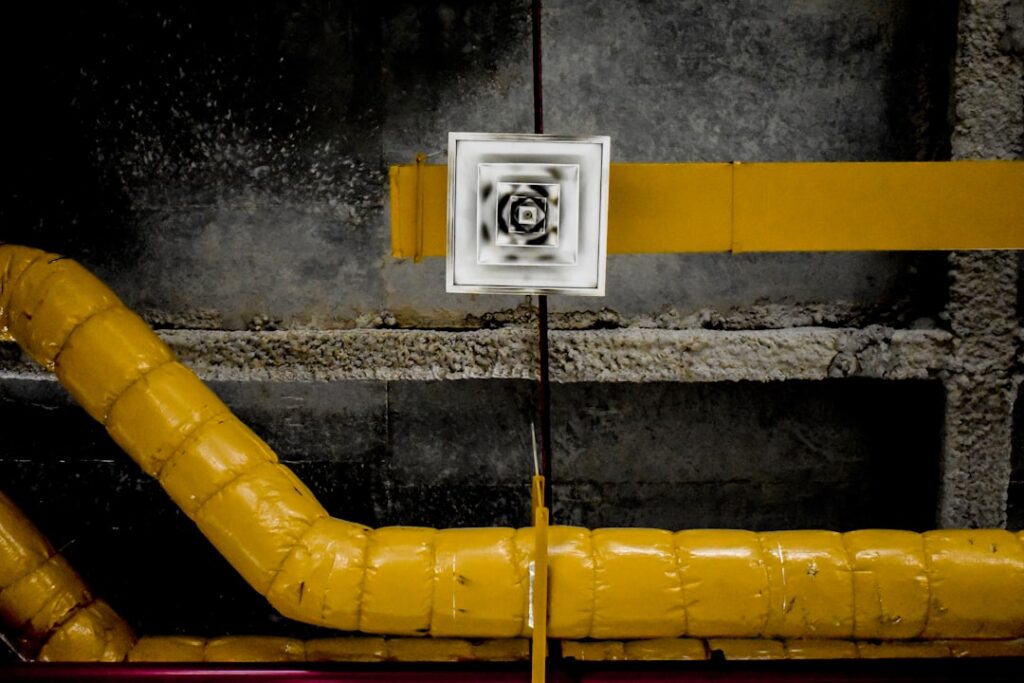
Pull the panel off an older furnace or look up at the trunk line in a basement ceiling, and the joints between duct sections are sometimes wrapped in a white or gray band that looks like cloth or heavy paper. That wrap is what most people mean by asbestos tape on ductwork, and it raises a fair question: is it hazardous, and what should happen to it when the furnace or ducts are replaced? This guide explains what the tape typically looks like, why a lab test is the only way to know what it contains, how condition changes the risk, and the realistic options from leaving it alone to professional removal. It summarizes EPA and OSHA guidance current as of 2026 and is educational only. A certified asbestos professional is the right source for decisions about a specific home, and Colorado projects may also fall under state rules.
Part of our Asbestos in the Home guide — start there for the full picture →
Is this mold, asbestos, or water damage? Get a free instant screen
Upload a clear photo of the suspect area. You'll get an instant AI screening opinion and what to do next. This is screening guidance, not a professional determination.
Screening guidance only. AI can be wrong. Confirm asbestos, mold type, or lead with lab testing or a licensed professional before acting.
What Asbestos Tape on Ductwork Looks Like
Duct tape in the modern sense is a silver or gray plastic-backed tape. The older material found on many pre-1980s systems is different. It tends to be a white, off-white or light gray band, a few inches wide, with a texture somewhere between coarse fabric and thick paper. Over decades it often yellows, browns near the furnace, and becomes stiff or brittle. Where it has been painted along with the ductwork, it can be hard to spot at all.
Common locations include:
- Seams and joints where round or rectangular duct sections connect, especially on the supply trunk near the furnace.
- The furnace plenum, where the supply or return duct meets the cabinet.
- Register boots, the fittings that transition from a branch duct to a floor or wall register.
- Takeoffs and elbows along branch runs in basements, crawl spaces and attics.
- Older oil or coal furnace conversions, where the original duct system stayed in place after the heating appliance was swapped out.
Asbestos-containing paper and cloth tapes were used on heating systems for much of the twentieth century, and homes built or remodeled through roughly the 1980s are the usual candidates. That date range is a rule of thumb, not a cutoff. Some older stock stayed in use after production changed, and some homes from the period never had it. The EPA’s list of places asbestos may be found includes hot water and steam pipes “covered with an asbestos blanket or tape” and oil and coal furnaces with asbestos insulation, which is why duct and furnace tape belongs on the same short list of materials to treat with care.
For a broader look at the product category, the guides to asbestos tape and asbestos duct tape cover labeling, brand history and the visual differences from fiberglass tape in more depth.
Why Appearance Alone Cannot Confirm Asbestos
Plenty of non-asbestos tapes and wraps look nearly identical. Fiberglass cloth tape, cellulose-based paper tape and later mastic-and-fabric systems can all present as an off-white band at a duct joint. The EPA states plainly that you generally cannot tell whether a material contains asbestos simply by looking at it, unless it is labeled, and that if in doubt, the material should be treated as if it contains asbestos and left alone.
Confirmation comes from a laboratory. A small sample of the tape is analyzed, usually by polarized light microscopy, and the report lists whether asbestos was detected, which type, and an estimated percentage. The guide to asbestos tests walks through sampling methods and lab options, and the guide to asbestos test results explains how to read the report once it comes back.
Who should take the sample
The EPA recommends that a trained and accredited asbestos professional take samples, noting that sampling done incorrectly can be more hazardous than leaving the material alone, and that taking samples yourself is not recommended. Home kits exist and are widely sold; the guide to the home test kit for asbestos explains how they work and where they fall short. For tape that is already brittle or flaking, cutting a sample tends to release more material than sampling a firm sheet product, which is one more reason to involve a professional.
When testing is worth it
The EPA notes that if building materials are not damaged and will not be disturbed, a home does not need to be tested for asbestos. Testing becomes worthwhile when the tape is damaged, or when a furnace swap, duct modification, basement finish or other project is going to cut through, pull apart or otherwise disturb it. In those cases the result determines how the job has to be done and what it is likely to cost.
Best Asbestos Test Kit: our top 3 picks
| Product | Best for | Key features | Price | Buy |
|---|---|---|---|---|
| Seeml Labs Asbestos Inspector in a Box | Verifiable lab accreditation |
| $22.00as of Nov 5, 2026 2:42 pm GMT+0000 | Buy now →Check current price |
| SLGi 1-Pack (5 Day) | Single sample with return postage |
| $35.00as of Nov 5, 2026 1:36 pm GMT+0000 | Buy now →Check current price |
| Asbestos-Sampling.com 2-Sample | Type and percentage in the result |
| $59.95as of Nov 5, 2026 1:36 pm GMT+0000 | Buy now →Check current price |


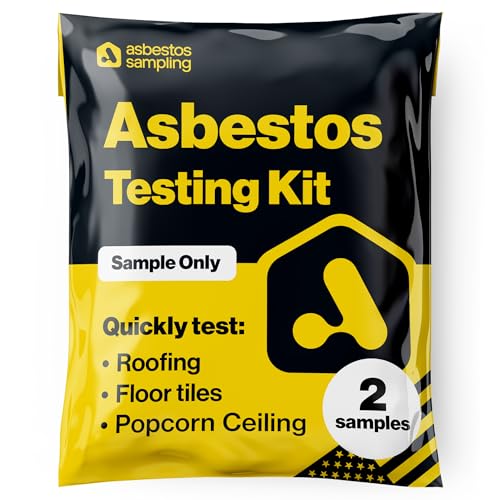
Prices are Amazon’s listed prices as of the time shown and change often; check Amazon for today’s price. As an Amazon Associate we earn from qualifying purchases.
How Condition Changes the Risk
Asbestos causes harm when fibers become airborne and are inhaled. The EPA describes asbestos-containing materials that are in good condition and not disturbed as unlikely to pose a health risk, and lists the activities that release fibers: disturbing, damaging, improper removal, repairing, cutting, tearing, sanding, sawing, drilling or scraping. It also flags that damaged material is a particular concern when it is exposed to extreme vibration or air flow.
That last point matters for ductwork more than for most building materials. Supply and return ducts move air through the house every time the system runs, and the furnace cabinet vibrates. Tape that sits on the outside of a sealed duct joint, intact and painted over, is in a very different position from tape that has cracked, peeled away from the seam, or sits inside the airstream at a plenum or a failed joint.
Friable versus intact
“Friable” describes material that can be crumbled or reduced to powder by hand pressure. Older paper and cloth tapes can become friable as they age and dry out near heat sources. OSHA’s construction standard uses a related idea, defining “intact” material as asbestos-containing material that has not crumbled, been pulverized, or otherwise deteriorated so that the asbestos is no longer likely to be bound with its matrix. Intact tape is the lower-risk case; crumbling tape is the higher-risk one.
Condition, risk and suggested action
The table below is a general way to think about what is on the ducts. It is not a substitute for an inspection, and a professional may rank a specific situation differently.
| Condition of the tape | Relative risk | Typical action |
|---|---|---|
| Intact, firmly adhered, outside the duct, painted or sealed | Lower, as long as nobody disturbs it | Leave in place, avoid contact, check periodically |
| Intact but in a spot that gets bumped, such as a low basement trunk line | Low to moderate | Protect from contact, consider professional encapsulation or a protective covering |
| Small tears, lifting edges or minor flaking | Moderate | Limit access, do not touch or clean it, call an asbestos professional about repair |
| Brittle, crumbling or dusty, or debris on the floor below | Higher | Keep people out of the area, do not sweep or vacuum, arrange professional assessment |
| Inside the airstream, at a failed joint, or at the plenum | Higher, since airflow can carry fibers | Consider limiting system use until assessed; professional repair or removal |
| In the path of a planned HVAC replacement or remodel | Depends on the work | Test first; plan professional removal before demolition |
The EPA’s guidance also covers what to avoid around damaged material. Do not dust, sweep or vacuum debris that may contain asbestos, and do not track it through the house. If debris has fallen from duct tape onto stored items or a basement floor, that is a reason to call a professional rather than reach for a shop vacuum.
Your Options: Leave It, Seal It or Remove It
For tape that has been confirmed or presumed to contain asbestos, the realistic choices fall into three groups. Which one fits depends on condition, location, and what is planned for the heating system over the next few years.
Leave it alone and avoid disturbing it
The EPA’s starting point for asbestos-containing material in good condition is to leave it alone and keep an eye on it over time for signs of wear, tears, abrasions or water damage. For duct tape, that means not pulling at loose edges, not storing items against the ductwork, and not drilling or cutting through taped joints when hanging shelves, running cable or mounting a dehumidifier. A simple habit is to photograph the tape once a year from the same angle so changes are easier to spot.
Encapsulate or enclose it
The EPA describes repair as either sealing or covering the material, with the asbestos remaining in place. Sealing, or encapsulation, uses a product that binds the fibers together or coats the material so fibers are not released. Covering, or enclosure, places something over or around the material. The EPA specifically names pipe, furnace and boiler insulation as materials that can sometimes be repaired this way, and says this work should be done only by a professional trained to handle asbestos safely. The guide to asbestos encapsulation covers the products and process in more detail, including why encapsulation tends to suit intact material better than crumbling material.
Encapsulation keeps the tape in the home, so it still has to be disclosed where required, documented, and dealt with properly when the ducts are eventually replaced.
Professional removal
The EPA notes that removal may be required when remodeling or major changes will disturb the material, or when it is damaged extensively and cannot otherwise be repaired, and that improper removal can actually increase exposure. For duct tape, removal often means removing the affected duct sections or fittings as a unit rather than peeling tape off metal. The guide to asbestos abatement cost explains the factors that drive pricing, such as access, the amount of material, containment needs and disposal.
What not to do
- Do not scrape, peel or sand the tape off. These are the exact activities the EPA lists as releasing fibers.
- Do not cover it with new foil tape as a fix. Pressing and smoothing new tape over brittle old tape can crack it, and it complicates later removal.
- Be cautious about duct cleaning. Rotary brushes, air whips and high-velocity agitation are designed to dislodge material inside ducts. If asbestos tape or other suspect material is at joints or inside the system, it makes sense to have it tested and addressed before any duct cleaning, and to tell the cleaning company what is there. Some cleaners will decline the job until it is resolved.
- Do not use an ordinary vacuum on debris. The EPA says a regular vacuum cleaner should never be used for asbestos cleanup; trained crews use HEPA-filtered equipment and wet methods.
Planning an HVAC Replacement Around Asbestos Tape
Furnace and air conditioner replacement is the point where asbestos tape on ductwork most often stops being a background issue. Installers routinely cut into the plenum, reconnect or replace the supply and return transitions, and sometimes change trunk lines. Every one of those steps can tear the tape at exactly the joints where it is most common.
Sequence the work
- Identify suspect materials early. Ask the HVAC contractor during the estimate visit to note any wrapped joints, plenum tape, or old insulation on the furnace, ducts and nearby pipes.
- Test before the install date. Lab turnaround can take a few days, and results shape the scope of the job. The guide to asbestos in HVAC ductwork covers other duct-related materials worth sampling at the same time, such as duct insulation and vibration-damper cloth.
- Schedule abatement first if results are positive. A licensed abatement contractor removes or isolates the affected sections, cleans the area, and leaves it ready for the HVAC crew.
- Get documentation. Keep the lab report, the abatement contract, and any post-work clearance results with the home’s records. They are useful for future buyers and for later projects.
Who does what
HVAC technicians are generally not asbestos abatement workers. OSHA’s construction standard defines thermal system insulation as asbestos-containing material applied to pipes, fittings, boilers, breeching, tanks, ducts or other structural components to prevent heat loss or gain, and it sets training, supervision and work-practice requirements for employers whose crews remove or disturb such material. Ask the HVAC company directly whether it will work around taped joints at all, and whether it subcontracts abatement or expects the homeowner to arrange it.
Budget and timing
Because abatement adds a separate contractor, testing, and sometimes clearance testing, it can shift both the total cost and the install date. Building the asbestos step into the plan from the start avoids the common situation where an installer opens the plenum, finds suspect tape, and stops work with the house partly torn apart. On the Front Range, where a failed furnace in January tends to compress timelines, planning ahead is especially useful for older homes in Denver, Jefferson, Arapahoe and Boulder counties.
Colorado considerations
Colorado regulates asbestos work through the state health department’s air quality program, commonly referred to as Regulation No. 8. Requirements generally apply to inspection before renovation or demolition above certain quantities and to who may perform abatement, and they can apply to single-family homes. Thresholds and procedures change, so confirm the current rules with the Colorado Department of Public Health and Environment or the local building department before work starts.
Hiring the Right Professionals
The EPA describes two main types of asbestos professionals. Inspectors examine a home, assess conditions, take samples and advise on corrections. Contractors repair or remove the material. The EPA recommends using two different firms for those roles to avoid a conflict of interest, since a company that both assesses and removes has an incentive to recommend removal.
The EPA also notes that federal law does not require people who inspect, repair or remove asbestos in detached single-family homes to be trained and accredited, but that some states and localities do. For safety, it recommends homeowners ensure the workers they hire are trained and accredited, and ask for documentation of federal or state-approved training.
Questions to ask an abatement contractor
- Will the work area be sealed with plastic sheeting, and will the heating and air conditioning system be turned off during the work? The EPA lists both as expected practices.
- Will the material be wetted with a fine mist before removal, and will waste go into sealed, labeled, leak-tight bags?
- Will the crew remove whole duct sections or fittings rather than breaking material into small pieces?
- Who will perform cleanup, and with HEPA vacuums and wet wiping rather than ordinary vacuums?
- Will an independent party do visual inspection or air monitoring after the work?
- What written assurance will be provided that all procedures were followed?
Get the work plan, cleanup and the applicable federal, state and local regulations in a written contract before work begins, which is what the EPA recommends.
Protecting the household during the work
Keep children and pets out of the work area until the job is finished and the area has been cleaned. If occupants need to pass through a basement near the work, ask the contractor how access will be managed. Homeowners who plan to observe should not enter a regulated area, and ordinary dust masks are not adequate for asbestos; the guide to masks for asbestos removal explains what professional crews typically wear and why.
Related Materials Near the Furnace
Where there is asbestos tape on ductwork, there may be other older materials nearby. The EPA lists hot water and steam pipes covered with asbestos blanket or tape, and oil and coal furnaces and door gaskets with asbestos insulation, among common locations. An inspector looking at a furnace room will often check:
- Pipe wrap on hot water or steam lines running from a boiler or water heater. The guide to asbestos wrapped pipes covers how those wraps are identified and handled.
- Insulation or cement-like coatings on the outside of older boilers and furnace cabinets.
- Paper or millboard on walls and floors around older heating appliances.
- Vinyl floor tile and mastic in the same basement, if flooring work is planned at the same time.
Testing several suspect materials in one inspection is usually more efficient than sampling them one at a time, and it gives a clearer picture of what an HVAC or basement project will run into.
For more context on asbestos in the home, the asbestos and lead guide covers testing, rules and hazards in older housing, and the asbestos hub collects material-by-material guides.
Day-to-Day Living With Intact Duct Tape
Many homes have intact asbestos-containing tape on their ducts for decades without incident because nobody disturbs it. A few habits help keep it that way:
- Change filters gently. Avoid banging the filter rack or pulling at the cabinet seams when swapping filters.
- Keep storage away from duct runs. Boxes, bikes and ladders rubbing against a low trunk line can wear the tape over time.
- Tell anyone working in the basement. Electricians, plumbers and handymen should know which joints are suspect before they drill or cut.
- Watch for changes. New debris under a duct run, tape lifting at a seam, or dust collecting near registers are reasons to call for an assessment.
- Disclose when selling. Known asbestos conditions are commonly disclosed in real estate transactions, and documentation of testing or abatement helps buyers and inspectors.
If the tape is due to be disturbed by a planned project, testing and professional handling before the work begins is the most reliable way to keep fibers out of the air.
References
- Learn About Asbestos — U.S. Environmental Protection Agency
- Protect Your Family from Exposures to Asbestos — U.S. Environmental Protection Agency
- Asbestos – Overview — Occupational Safety and Health Administration
- 29 CFR 1926.1101 Asbestos (Construction) — Occupational Safety and Health Administration
Frequently asked questions
How can you tell if the tape on ductwork is asbestos?
Not by looking. Older asbestos tape is usually a white or gray cloth-like or papery band at duct seams and furnace connections, but fiberglass and paper tapes look similar. The EPA says a lab test is needed unless the material is labeled, and that suspect material should be treated as asbestos until tested.
Is asbestos tape on ductwork dangerous?
Intact tape that is not disturbed is generally a low risk, according to the EPA. Risk rises when tape is brittle, torn or crumbling, or exposed to air flow and vibration, because fibers can be released. Cutting, scraping or sanding it is the main way fibers get into the air.
Can asbestos duct tape be sealed instead of removed?
Sometimes. The EPA describes encapsulation and enclosure as repair options that keep the asbestos in place, and says pipe, furnace and boiler insulation can sometimes be handled this way by a trained professional. Sealing suits intact material better than crumbling material, and the tape still needs proper handling when ducts are replaced.
Should ducts with asbestos tape be professionally cleaned?
It is sensible to test and address suspect tape before any duct cleaning. Brushes and air whips are designed to dislodge material, and the EPA warns that damaged asbestos material exposed to air flow is a particular concern. Tell the cleaning company what is present before work is scheduled.
What happens to asbestos tape during a furnace replacement?
Installers often cut into the plenum and transitions where tape is common. The safer sequence is to test suspect materials first, have a qualified abatement contractor remove or isolate positive material, and then let the HVAC crew install. Colorado rules may also apply, so check with CDPHE.
Replacing a furnace in an older Front Range home and not sure about the tape on the ducts? Send us a note and we can point you toward a certified asbestos inspector before the install date.