Teflon Tape: Which Threads Need It and Which Leak With It
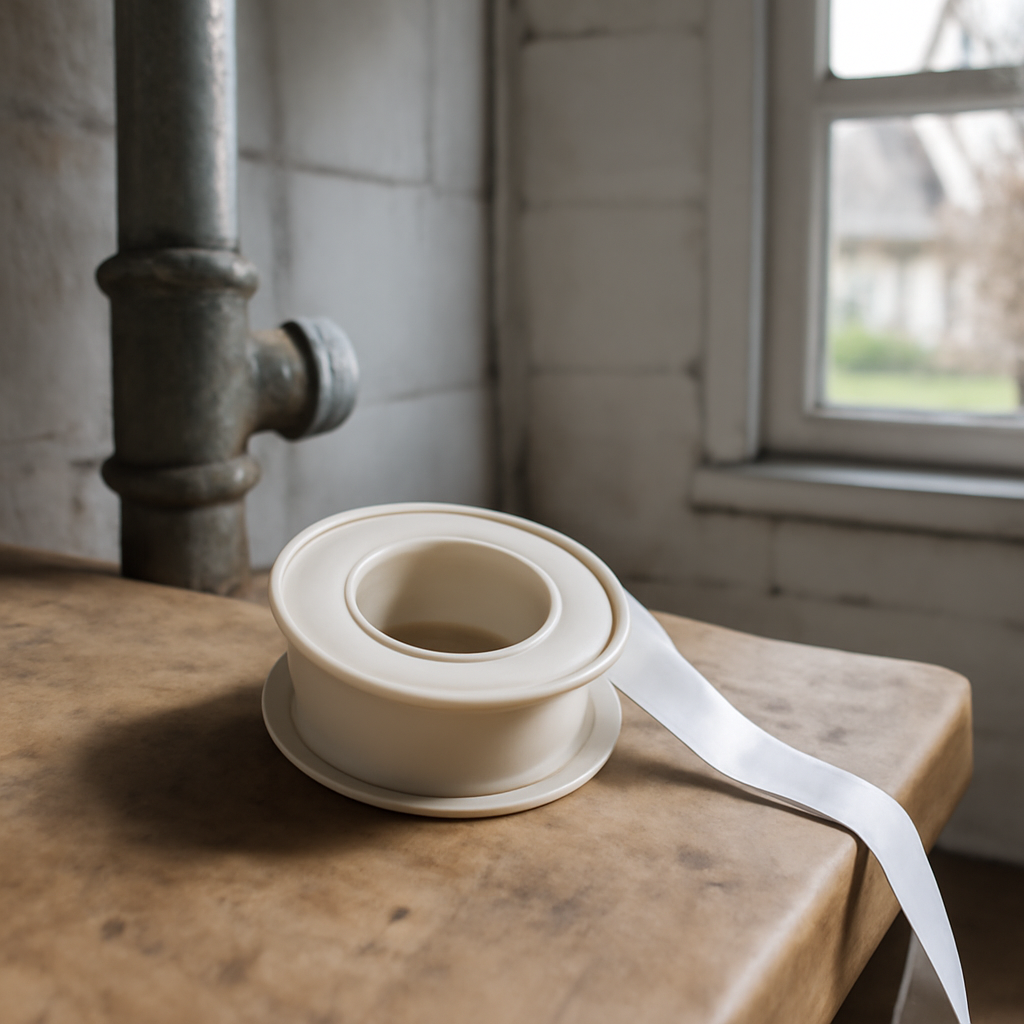
Few plumbing supplies are as cheap or as widely misused as teflon tape. A roll costs about as much as a cup of coffee, it lives in nearly every junk drawer, and it gets wrapped on almost anything that screws together. That habit causes a surprising number of the small leaks home inspectors find under sinks, behind toilets and at outdoor spigots. The tape works well on the right kind of joint and does nothing useful, or actively causes trouble, on the wrong kind. This guide explains what PTFE thread seal tape actually does, how to wrap it, where it does not belong, how the white, pink and yellow versions differ, when pipe dope is the better choice, and why gas connections deserve a licensed professional. It also covers showerheads, hose bibs, leak checks and what the materials and labor typically cost along the Colorado Front Range.
Part of our Plumbing & Water guide — start there for the full picture →
What Teflon Tape Does on Tapered Pipe Threads
Teflon tape is a thin film of polytetrafluoroethylene (PTFE), the same family of material sold under the Teflon brand name. Most rolls are generic PTFE, but the brand name stuck. Its job is narrow: it fills the tiny spiral gaps between male and female tapered pipe threads and lubricates them so the joint can be tightened further without galling.
That last point matters more than most people realize. Tapered pipe threads, the NPT standard used on most residential water and gas pipe in the United States, seal because the threads wedge together as they tighten. The taper is what makes the joint tight. Even when cut cleanly, the crests and roots of the threads never mate perfectly, which leaves a helical leak path along the spiral. Tape or pipe dope plugs that path. The lubrication lets the installer reach proper engagement without excessive force that could crack a fitting.
So the short answer to most teflon tape questions is this: use it on tapered male pipe threads where the threads themselves form the seal. Skip it where something else, such as a washer, a gasket, a ferrule or a flared cone, forms the seal.
How to Wrap Teflon Tape: Direction and Number of Wraps
Wrapping direction is the detail that separates a joint that seals from one that unravels. Hold the male fitting with the open end pointing toward you. Wrap the tape clockwise, the same direction the fitting will turn as it threads in. If the tape goes on counterclockwise, the female fitting pushes it backward as it tightens, bunching it up and peeling it away from the threads.
A practical wrapping sequence
- Clean the threads first. Old tape, dried dope, corrosion and grit all prevent a good seal. A wire brush or rag usually does the job.
- Start one thread back from the end. Leaving the first thread bare helps keep shreds of tape from being pushed into the pipe, where they can lodge in a valve seat, aerator or showerhead screen.
- Keep the tape snug and flat. Light tension lets the tape conform to the thread profile so the threads show through faintly.
- Overlap each pass by roughly half the tape width. That gives even coverage without lumps.
- Finish by pressing the tail into the threads. A loose tail tends to catch and peel.
Most manufacturers and trade guides suggest about three to five wraps of standard-thickness tape on common residential sizes such as 1/2-inch and 3/4-inch threads. Thicker or “heavy-duty” tape may need fewer. Larger pipe sizes may need more. Too little tape can leave a leak path. Too much can stop the joint from engaging properly, and on a brass or cast fitting the extra bulk can act like a wedge and split the female side. When a joint still weeps after reasonable tightening, the better fix is usually to take it apart, clean it, rewrap and reassemble, rather than cranking harder.
Where Teflon Tape Does Not Belong
A large share of the tape-related leaks that show up in inspection reports involve fittings that never needed tape at all. These joints seal by a different mechanism, and tape interferes with it.
Compression fittings
The angle stops under most sinks and toilets, along with many supply-line connections, use compression fittings. A brass or plastic ferrule is squeezed between the nut and the valve body, and that compressed ring forms the seal. The threads only provide clamping force. Tape on those threads does not seal anything, and if a strand migrates under the ferrule it can create a leak path. Some installers put a light film of thread lubricant on compression threads to ease tightening, which is a different practice from wrapping tape. Our guide to angle stop valves covers how those fittings are put together.
Flare fittings
Flare fittings, common on older gas appliance connectors, some refrigeration lines and certain water connections, seal metal to metal where a flared tube end seats against a cone. Tape on flare threads, or worse, on the flare face itself, prevents that metal contact and can cause a leak. This is one of the reasons gas appliance connections are best left to a licensed professional.
Rubber washers and gaskets
Garden hose threads, washing machine hoses, toilet supply-line coupling nuts, and many faucet supply connections seal with a rubber washer or gasket. The washer does the sealing, and the threads simply hold it in place. Tape on these threads usually does no harm by itself, but it often masks the real problem, which is typically a cracked, flattened or missing washer. Replacing the washer tends to solve the leak.
Plastic female fittings
Plastic female threads, especially on PVC, CPVC and some fixture components, can crack when a taped metal male fitting is driven in too far. Some plastic fittings call for a specific compatible sealant, and the product instructions should be the deciding factor.
White, Pink, Yellow and Pipe Dope: Choosing the Right Sealant
Store displays often hold several colors of PTFE tape, and they are not interchangeable in every application. Color conventions vary somewhat by manufacturer, so the packaging and listing marks matter more than the color alone.
- White tape is the standard, thinner general-purpose product used on water threads. It is fine for many residential water connections.
- Pink tape is typically a thicker, higher-density product marketed for water lines. Plumbers often prefer it on larger threads or brass fittings because it fills gaps with fewer wraps.
- Yellow tape is a thicker, gas-rated product. Products intended for natural gas and propane are listed for that use and labeled accordingly. Ordinary white tape should not be used on gas threads.
Pipe dope, or pipe joint compound, is the main alternative. It is a paste brushed onto male threads, and many formulas contain PTFE particles. Dope fills the thread gaps more completely and tends to tolerate slight back-adjustment better than tape. Many plumbers use dope alone on gas lines and some use tape plus dope on water connections. The key is selecting a compound rated for the service, such as potable water, natural gas or propane, and compatible with the pipe material. Some compounds are not recommended for certain plastics, so the label should always be checked before use on CPVC or PVC.
Gas Connections: Leave Them to a Licensed Pro
The most consequential place teflon tape shows up is on gas piping. A dripping water joint wastes water and can damage finishes. A leaking gas joint can create a fire or explosion hazard. For that reason, gas piping work, including connecting or replacing ranges, dryers, water heaters, furnaces and fireplaces, is generally best handled by a licensed plumber or gas fitter, and many Colorado jurisdictions require a permit for it.
Several details make gas work different from water work:
- Thread sealant must be gas-rated. Yellow PTFE tape or a compound listed for gas is the norm. White water tape is not appropriate.
- Flexible appliance connectors use flare fittings. As described above, those should not be taped on the flare.
- Leak testing is part of the job. Professionals check new or disturbed joints with a leak-detection solution or an electronic detector after the gas is restored.
- Pressure testing may be required. New gas piping is typically pressure-tested before it is put in service, and inspectors from the local building department may verify it.
Homeowners who smell gas should leave the house and call the gas utility or 911 from outside, rather than hunting for the source. For ongoing monitoring, a plug-in or hardwired combustible gas alarm can add a layer of protection. Our gas leak detector guide explains what those devices can and cannot sense. Gas appliances can also produce carbon monoxide when they are not burning or venting properly, and the U.S. Consumer Product Safety Commission recommends CO alarms on every level of the home and outside sleeping areas.
Showerheads, Hose Bibs and Other Common Uses
Homeowners most often reach for teflon tape when replacing a showerhead. The shower arm, the short pipe coming out of the wall, has tapered male threads, and the showerhead nut usually contains a rubber washer. A couple of wraps of tape on the arm helps prevent drips at the threads, while the washer seals the face. EPA’s WaterSense program notes that some leaky showerheads can be fixed by tightening the connection to the pipe stem and using pipe tape, also called teflon tape, and suggests checking the washer or O-ring at the same time. EPA also notes that standard showerheads use 2.5 gallons per minute, while WaterSense labeled models use no more than 2.0. Our shower head replacement guide covers flow rates and fittings.
Outdoor faucets are another frequent use. When a hose bib or sillcock is installed on a threaded fitting, the male threads going into the house plumbing are tapered pipe threads and take tape or dope. The garden hose connection on the spout is a different thread type that seals with a hose washer. EPA’s Fix a Leak Week guidance suggests replacing the hose washer if the connection leaks and ensuring a tight connection to the spigot using pipe tape and a wrench. Front Range winters make freeze damage a bigger concern than thread leaks for most outdoor faucets, which is why many homes here use freeze-resistant models. The frost-free hose bib guide covers how they work and how they fail.
Other places tape commonly belongs:
- Threaded nipples and adapters on water heaters, including tapered threads on dielectric fittings.
- Threaded drain valves and threaded plugs.
- Male adapters transitioning from copper or PEX to threaded fittings.
- Sump pump and irrigation threaded connections, depending on manufacturer guidance.
Places it usually does not belong include compression nuts on angle stops, the coupling nuts on braided supply lines, slip-joint nuts on sink drains, and the water inlet hoses on washers and dishwashers.
Finding and Fixing Leaks at Taped Joints
A taped joint that leaks usually announces itself with a small drip, mineral crust, a green or white stain on brass, or swelling in nearby cabinet panels. Slow leaks can go unnoticed for months, especially inside vanity cabinets. EPA WaterSense estimates the average family can waste 180 gallons per week, or about 9,400 gallons a year, from household leaks, and says fixing easily corrected leaks can save homeowners about 10 percent on their water bills.
EPA also describes a simple meter test: check the water meter before and after a two-hour window when no water is being used. If the reading changes, there is probably a leak somewhere. That test will not pinpoint a single joint, but it tells a homeowner whether to keep looking.
For joints that are confirmed to be leaking:
- Shut off the water at the nearest fixture valve or the main.
- Open a faucet downstream to relieve pressure.
- Disassemble the joint, remove all old tape or dope, and inspect the threads for cracks or damage.
- Rewrap clockwise with the correct number of wraps, or apply a compatible compound.
- Reassemble, restore water slowly and check the joint dry with a paper towel after several minutes and again the next day.
Cabinets under kitchen sinks see a lot of this. Our guide to a leak under the kitchen sink walks through tracing drips to the supply, drain or faucet. Battery-powered sensors placed on the cabinet floor, behind toilets and beside water heaters can catch slow leaks early. The water leak detector guide compares simple alarms with Wi-Fi models and whole-house shutoff systems.
What Home Inspectors Look For
A home inspection is a visual, non-invasive evaluation, so inspectors are not disassembling joints to check how they were wrapped. They do, however, notice the signs:
- Shredded tape protruding from compression fittings or supply-line nuts.
- White water tape visible on gas fittings, which suggests the gas work may not have been done by a professional.
- Active drips, mineral deposits or corrosion at threaded joints.
- Water staining, delamination or soft spots in cabinet bottoms.
- Amateur repairs layered on top of each other, such as tape wrapped around the outside of a fitting as a makeshift patch.
Tape wrapped around the outside of a leaking pipe is a sign the leak was never fixed properly. It is not a repair. Inspectors typically recommend evaluation by a licensed plumber when they see that kind of patch. For buyers interested in how inspectors approach plumbing generally, our overview of the home inspector hiring process explains what to ask before booking, and the plumbing and water hub collects related guides on supply, drain and water heater systems.
Teflon Tape and Repair Costs
The materials are inexpensive. A roll of standard white PTFE tape commonly sells for a few dollars, and thicker pink or yellow gas-rated rolls usually cost somewhat more. Pipe joint compound typically runs in a similar low range per container. Prices vary by brand, roll length and store.
As a general guide for 2026, a simple service call to reseal or replace a leaking threaded joint might run from roughly $150 to $350 in the Denver metro, depending on access, the plumber’s minimum charge and whether parts need replacing. Gas appliance connections typically cost more because of testing requirements and potential permit fees. Repairing water damage from a long-running leak can exceed the plumbing repair itself. Quotes from two or three licensed plumbers are the most reliable way to gauge local pricing.
When to Call a Plumber
Swapping a showerhead or retaping a hose bib connection is well within reach for most homeowners. Several situations call for a licensed plumber instead:
- Any gas piping or gas appliance connection.
- Joints that keep leaking after a careful rewrap.
- Cracked fittings or corroded threads that cannot be cleaned.
- Concealed leaks inside walls, ceilings or floors.
- Mixed-material transitions where compatibility is unclear.
References
- Fix a Leak Week — U.S. Environmental Protection Agency, WaterSense
- WaterSense Statistics and Facts — U.S. Environmental Protection Agency
- WaterSense Labeled Showerheads — U.S. Environmental Protection Agency
- Carbon Monoxide Information Center — U.S. Consumer Product Safety Commission
Frequently asked questions
Which way do you wrap teflon tape?
Hold the male threads facing you and wrap clockwise, the same direction the fitting turns as it tightens. Wrapping the other way lets the female fitting push the tape off the threads.
How many wraps of teflon tape should be used?
Three to five wraps of standard tape is a common guideline for 1/2-inch and 3/4-inch threads. Thicker tape may need fewer wraps. Too much tape can keep the joint from engaging and may crack the female fitting.
Should teflon tape go on compression fittings?
No. Compression fittings seal with a compressed ferrule, not the threads. Tape does not help and can create a leak path if it gets under the ferrule.
Can white teflon tape be used on gas lines?
No. Gas threads call for yellow gas-rated tape or a compound listed for gas, and gas work is best left to a licensed plumber or gas fitter who can leak-test the connection.
Is pipe dope better than teflon tape?
Neither is universally better. Pipe dope fills gaps more completely and is common on gas threads, while tape is tidy and easy for water connections. Many plumbers use both on certain water joints.
Seeing tape on fittings that should not have it, or drips under sinks in a home you are buying? Reach out through our contact page to connect with a Front Range inspector who checks visible plumbing connections.