Angle Stop Valves: Seized, Leaking, and Quarter-Turn Upgrades
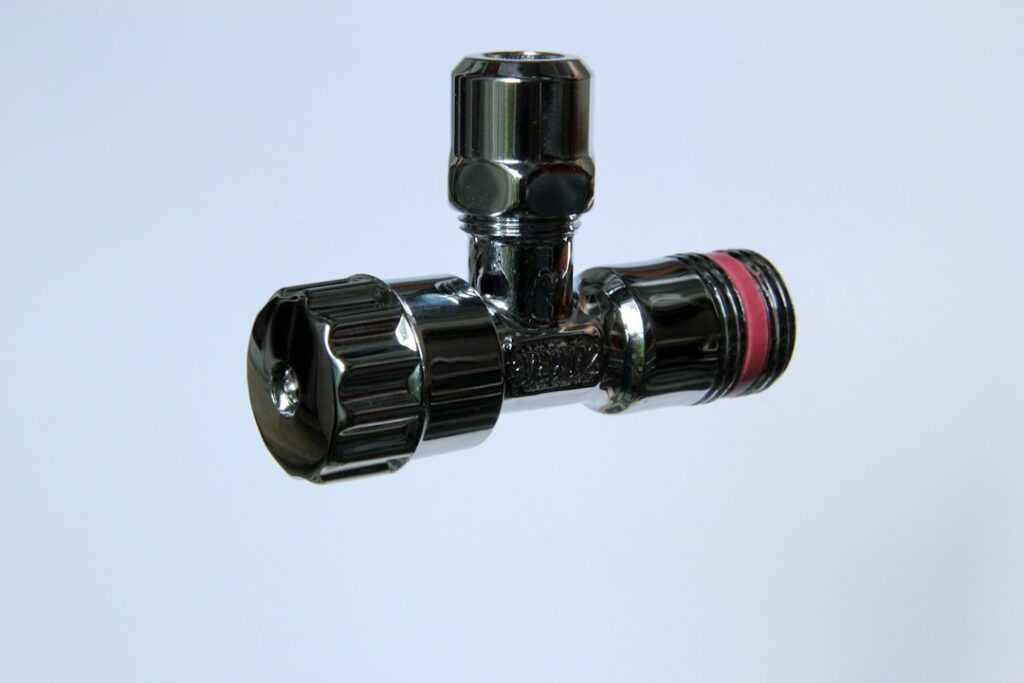
Every sink, toilet and many appliances in a typical house are fed through a small valve that most people only think about during an emergency. That valve is usually an angle stop, a compact fixture shutoff that turns the water supply 90 degrees from the wall or floor up toward the fixture. When it works, a homeowner can stop a running toilet or a failed faucet in seconds without shutting off the whole house. When it does not, a minor repair turns into a hunt for the main shutoff while water spreads across the floor. This guide explains how an angle stop valve works, why older multi-turn valves seize or weep, how inspectors and new owners can test them without causing a leak, how supply lines and connection types fit in, and what replacements typically cost in Colorado’s Front Range communities.
Part of our Plumbing & Water guide — start there for the full picture →
What an Angle Stop Valve Does
An angle stop is a fixture shutoff valve with its inlet and outlet at a right angle. The inlet connects to the water supply pipe coming out of the wall or floor, and the outlet points up toward the fixture, where a flexible supply line runs to the faucet or toilet fill valve. A straight stop has inlet and outlet in line and is used where the pipe comes up through the floor beneath the fixture.
Fixture shutoffs exist so one fixture can be isolated for repair without interrupting water to the rest of the house. Plumbing codes in most jurisdictions call for individual shutoffs at many fixtures, including sinks, toilets and dishwashers, though requirements vary by code edition and local amendment. In practice, most homes built in the last several decades have angle stops at every sink and toilet, and older homes may have a mix of valves, missing valves or fixtures plumbed directly with no shutoff at all.
Common places to find angle stops include:
- Under kitchen and bathroom sinks, usually one for hot and one for cold.
- Behind each toilet, on the cold supply only.
- Under the kitchen sink for the dishwasher, sometimes as a dual-outlet valve.
- Behind refrigerators for the ice maker line.
- At laundry sinks and wet bars.
Multi-Turn vs Quarter-Turn Angle Stops
There are two basic designs, and the difference matters for reliability.
Multi-turn compression stops
The traditional angle stop is a multi-turn valve. Turning the oval handle several times drives a stem down, pressing a rubber washer against a seat to stop flow. These valves are inexpensive, widely available and were the default for decades.
Their weakness is that they sit unused for years. During that time, mineral deposits from hard water build up on the stem and seat, the rubber washer hardens and may stick to the seat, and the packing around the stem dries out. When someone finally turns the handle, several things can happen:
- The handle will not turn. The stem is seized by corrosion or scale.
- The handle turns but water keeps flowing. The washer has deteriorated or the seat is scaled.
- Water weeps or drips from around the stem. The packing nut or packing has dried out and no longer seals once the stem moves.
- The handle snaps off or the stem breaks. Plastic handles and old stems can fail under force.
Front Range water varies by provider. Some districts deliver moderately hard water, which can accelerate scale buildup on valve parts. Homes on wells may see more.
Quarter-turn ball valve stops
A quarter-turn angle stop uses a ball with a hole through it. Turning the handle 90 degrees rotates the ball from open to closed. These valves have fewer parts that wear, the ball and its seals are less prone to sticking, and the handle position shows at a glance whether the valve is open or closed. Many plumbers now install quarter-turn stops as the default, and replacement of failed multi-turn stops with quarter-turn models is a common upgrade.
Quarter-turn valves are not immune to problems. They can still seize if left untouched for very long periods, and their stem seals can eventually leak. Brand and build quality vary. On balance, however, they tend to be more reliable than older multi-turn designs.
How to Test Angle Stops Safely
Knowing whether shutoffs work before an emergency is valuable, but testing old valves carries a real risk: exercising a seized multi-turn stop can start a leak at the stem or break the valve. The ASHI Standard of Practice specifically states that inspectors are not required to operate shut-off valves and manual stop valves, and most home inspectors do not turn fixture stops for that reason. The same standard does require inspectors to describe the location of main water and fuel shut-off valves.
Homeowners and new buyers who want to check their valves can reduce the risk with some preparation:
- Locate the main shutoff first. If a fixture stop starts leaking when turned, the main is the backup. Our main water shut-off valve guide explains where it usually sits in Front Range homes and how to operate it.
- Have towels, a bucket and a flashlight ready. Clear out the cabinet so drips are visible.
- Turn gently. If a handle does not move with reasonable hand pressure, stop. Forcing it with pliers is how stems break.
- Close the valve and test. Open the faucet or flush the toilet. If water keeps flowing, the valve is not sealing.
- Reopen fully and check the stem. Many multi-turn stops weep at the packing nut after being moved. A slight snugging of the packing nut, about an eighth of a turn, sometimes stops it. If not, the valve needs replacement.
- Check again later. Look under the sink an hour later and the next day for slow drips.
Some homeowners choose not to test old valves at all and instead schedule a plumber to replace all of them at once, accepting the cost in exchange for not risking a midnight leak. That is a reasonable approach for homes with original valves from the 1970s or 1980s.
Supply Lines Connected to the Angle Stop
The supply line between the stop and the fixture is just as important as the valve itself. Common types include:
- Braided stainless steel lines with rubber or polymer inner tubes, the most common modern choice.
- Chrome-plated copper or brass tubes, often found in older homes and still used where a finished look matters.
- Plain plastic or vinyl lines, cheaper and more prone to cracking and splitting with age.
- Corrugated copper lines, used in some installations.
Braided supply lines have a finite service life. The inner tube can deteriorate, and the crimped ends can corrode, particularly at toilets where cleaning chemicals drip on them. Many manufacturers suggest periodic replacement, and plumbers commonly replace the lines whenever the stop is replaced. A burst supply line can release a large volume of water quickly, which is one reason quality matters. Look for lines from established brands with intact crimps, no kinks and no visible bulges.
The connection at the stop is usually a compression fitting with a nut and a cone washer built into the supply line. Teflon tape is not needed on these threads. Overtightening can crack the nut or deform the washer. Our teflon tape guide explains which plumbing threads need sealant and which do not.
Copper Sweat, Compression and Push-Fit Connections
The other side of the angle stop, where it connects to the house pipe, comes in several styles. Each has trade-offs.
Compression
Compression stops slide over a copper or PEX stub-out (PEX with a support insert) and use a brass or plastic ferrule and nut to seal. They are the most common replacement choice because they require no soldering. A compression ferrule can be difficult to remove once compressed, so replacement often involves a ferrule puller or cutting the pipe back, which shortens the stub-out.
Sweat (soldered)
Sweat stops are soldered directly to copper pipe. They make a permanent, durable joint but require torch work, which carries fire risk inside walls and cabinets. Replacing a sweat stop means desoldering or cutting it off. Many plumbers convert sweat stops to compression or push-fit during replacement.
Push-fit
Push-fit stops grip the pipe with internal teeth and an O-ring. They install quickly and do not need special tools, which makes them popular for DIY replacements. Proper pipe preparation is essential: the pipe must be cut square, deburred and inserted to the full depth. They are typically more expensive per valve, and some plumbers prefer compression or crimped connections for long-term durability.
Threaded and PEX crimp or expansion
Threaded stops screw onto a threaded nipple, common with galvanized steel or some brass systems. PEX systems may use crimp or expansion stops that match the system’s fittings.
The ASHI Standard of Practice also asks inspectors to describe interior water supply piping materials, which helps owners know what kind of stop will fit when the time comes. For older homes, the EPA notes that among homes without lead service lines, the most common lead concern is brass or chrome-plated brass faucets and plumbing with lead solder. Federal law has since reduced the allowable lead content in plumbing products, which is one reason modern replacement valves are labeled lead-free.
Angle Stops, Toilets and Leak Detection
Toilets are where angle stops get the most use. A running toilet, a stuck flapper or a failing fill valve all require shutting off the supply before repair. Our toilet fill valve guide walks through diagnosing a constantly refilling tank. EPA’s Fix a Leak Week guidance suggests a dye test: put a few drops of food coloring in the toilet tank, and if color shows up in the bowl after 10 minutes, there is a leak.
A stop that does not fully close makes those repairs harder. It also makes a stop useless in an emergency. That combination is why many Front Range homeowners replace all fixture stops when they replace toilets or faucets.
Leak sensors provide a second layer of protection. Small battery-powered alarms placed under sinks and behind toilets sound off when they detect water. Smart sensors send phone notifications, and some systems tie into an automatic main shutoff valve. EPA WaterSense notes that leak detection and flow monitoring devices can help identify leaks and reduce water waste and damage. Our water leak detector guide compares options.
EPA also points out that a faucet dripping at one drip per second can waste more than 3,000 gallons a year. An angle stop that weeps at the stem is usually a smaller loss, but because it drips inside a closed cabinet, it can cause damage that goes unnoticed for months.
A Move-In Checklist for Fixture Shutoffs
The first weeks in a new home are a good time to map every shutoff, before anything goes wrong. A simple walk-through with a notepad or phone covers most of it:
- Count the stops. Every sink should normally have a hot and a cold stop, and every toilet a cold stop. Note any fixture plumbed without one.
- Identify the valve type. Oval or round multi-turn handles versus lever-style quarter-turn handles. Mixed types often indicate past repairs.
- Look at the condition. Green or white crust, rust streaks, dried drip marks on the cabinet floor and handles that look chewed by pliers are all clues.
- Check the supply lines. Plastic lines, kinked braided lines and lines with rust at the crimp are candidates for replacement.
- Note the appliance stops. Dishwashers, refrigerator ice makers, water filters and instant hot water dispensers often have their own small valves, sometimes saddle valves clamped onto a pipe.
- Label the main. A tag on the main water shutoff saves time during an emergency, especially for other household members.
Saddle valves deserve a closer look
Older ice maker connections were often made with a saddle valve, a small clamp that bolts around a copper pipe and pierces it with a needle when tightened. These are inexpensive and easy to install, which is why they were common, but they are also known for leaking at the clamp gasket and for clogging. Many plumbers now recommend replacing saddle valves with a proper tee and a dedicated stop. An inspector may note a saddle valve as an item for further evaluation.
Dual-outlet stops
Under a kitchen sink, a dual-outlet angle stop can feed both the faucet and the dishwasher from a single hot supply. These are convenient but mean one valve serves two fixtures. If the valve fails, both are affected. Checking that the dishwasher outlet has its own shutoff handle, where the design includes one, is worthwhile.
Angle Stop Valve Replacement Costs
A standard multi-turn compression angle stop commonly costs well under $20 at a hardware store, and quarter-turn models usually cost somewhat more. Push-fit models are typically priced higher than compression. Braided supply lines add a modest amount per fixture.
As a general guide for 2026, a plumber replacing a single angle stop and supply line in the Denver metro might charge in the range of $150 to $300, much of that being the trip or minimum charge. Replacing multiple stops in one visit usually lowers the cost per valve, with a whole-house replacement of every fixture stop often quoted as a single project. Sweat stops that require cutting and soldering, tight access, or galvanized pipe can increase the price. Getting written quotes from licensed plumbers is the best way to confirm local costs.
When to Replace Angle Stops
Replacement is worth considering when:
- The valve will not turn or will not shut off water fully.
- The stem drips or weeps and snugging the packing nut does not stop it.
- The valve body shows heavy corrosion or green and white crust.
- The handle is cracked, missing or replaced with pliers marks.
- A faucet, toilet or other fixture is being replaced anyway.
- The home has original valves several decades old and no one knows whether they work.
Buyers reviewing an inspection report may see notes about corroded stops, missing shutoffs or active leaks at valves. Our overview of the home inspection hiring process covers how to read those notes, and the plumbing and water hub links to guides on supply lines, drains and water heaters.
References
- ASHI Standard of Practice for Home Inspections — American Society of Home Inspectors
- Fix a Leak Week — U.S. Environmental Protection Agency, WaterSense
- WaterSense Statistics and Facts — U.S. Environmental Protection Agency
- Basic Information about Lead in Drinking Water — U.S. Environmental Protection Agency
Frequently asked questions
What is an angle stop valve?
An angle stop is a small fixture shutoff valve under a sink or behind a toilet. Its inlet and outlet sit at a right angle, so it turns the supply from the wall up toward the fixture and lets one fixture be shut off without cutting water to the whole house.
Why does my angle stop leak when I turn it?
Older multi-turn valves often have dried-out packing around the stem. Moving the stem breaks the seal and water weeps out. Snugging the packing nut slightly may help, but replacement is often the lasting fix.
Are quarter-turn angle stops better?
Quarter-turn ball valves are generally less prone to seizing and show open or closed at a glance. They are a common upgrade, though quality varies and they can still fail with age.
Will a home inspector test the shutoff valves?
Usually not. The ASHI Standard of Practice says inspectors are not required to operate shut-off valves and manual stop valves, partly because old valves can leak when turned. Inspectors do describe the location of the main water shutoff.
How much does it cost to replace an angle stop valve?
The valve itself is inexpensive. A plumber visit for one valve and supply line in the Denver metro often falls in the low hundreds of dollars, with lower per-valve pricing when several are replaced at once. These are general 2026 ranges.
Unsure whether the shutoffs in a home you are buying will actually work in an emergency? Contact us to be matched with a Front Range inspector who reviews visible supply valves and piping.