Door Stops: Preventing Drywall Holes and Hinge Damage
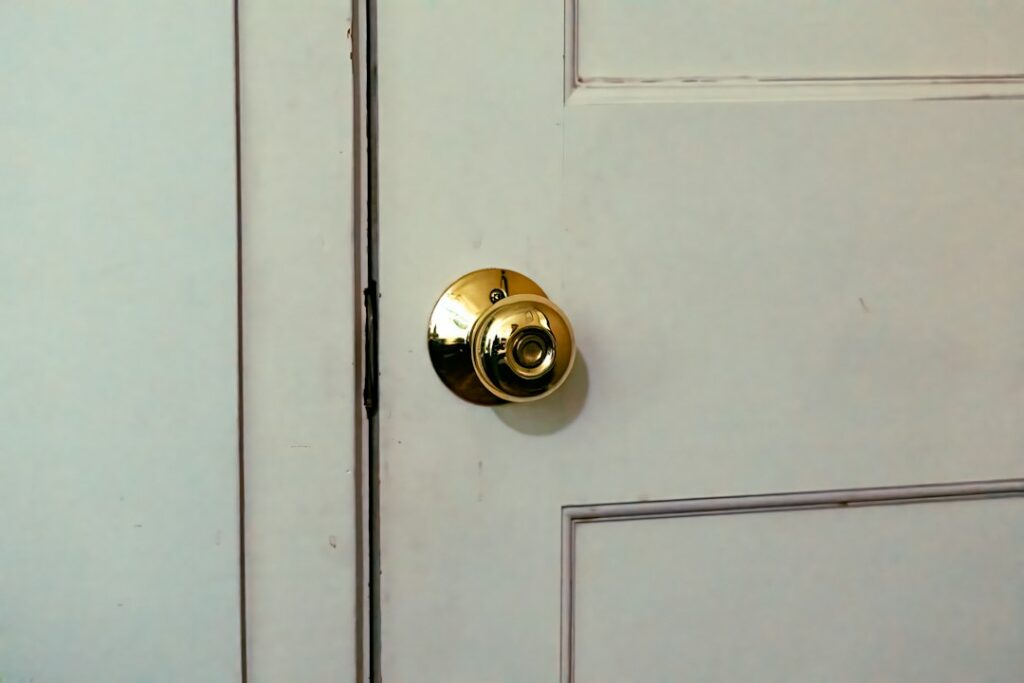
A door stop is one of the cheapest pieces of hardware in a house, and one of the most overlooked. When it is missing, bent or poorly chosen, the result is usually visible within months: a round hole in the drywall behind the door, a scuffed or cracked baseboard, a hinge leaf that has started to bend, or screws working loose from the jamb. Inspectors notice these details during walk-throughs because they hint at how a home has been used and maintained. This guide explains the main types of door stops, where each one works best, how the wrong choice can damage hinges and walls, how stops relate to doors that swing open on their own or will not latch, and what to expect to pay. It also clears up a common point of confusion: the strip of molding on the door jamb that is also called a doorstop.
Part of our Structure & Exterior guide — start there for the full picture →
What a Door Stop Does and Which Type to Use
A door stop limits how far a door can swing so the knob, lever or door edge does not hit the wall, a cabinet, an appliance or another door. Good placement stops the door a little before contact, absorbs the impact with a rubber or plastic bumper, and does it without putting leverage on the hinges. Five types cover most homes.
Baseboard spring stops
The classic coiled spring with a rubber tip, screwed into the baseboard or the wall near the floor. They are cheap, widely available and forgiving because the spring flexes on impact. The downside is that they bend, lose their tips and become a favorite toy for small children and pets. A spring without its rubber cap can gouge the door face and can be a sharp point at ankle height. Solid baseboard stops, a short rigid post with a bumper on the end, are less springy but harder to bend.
Solid and floor-mounted stops
Dome-shaped floor stops sit on the floor where the door would hit, and taller solid stops mount to the baseboard. Floor stops are useful where there is no baseboard or the wall is glass or tile. They are a trip hazard in walkways and can be hard to place on heated floors or over in-floor wiring, so location matters. Solid baseboard stops are a durable middle ground in hallways and bedrooms.
Hinge-pin stops
These clamp onto the hinge pin and use two small adjustable bumpers that press against the door and the jamb. They are popular because they leave no hole in the floor or baseboard and install in a minute. They also concentrate force in the worst possible place. When a door swings hard against a hinge-pin stop, the door acts as a long lever, and the impact load goes straight into the hinge leaves and screws.
Magnetic stops and holders
Magnetic stops combine a bumper with a magnet that holds the door open. They are handy for doors that tend to drift shut, such as a laundry room door or a bedroom door that a draft keeps closing. They should not be used on doors that are supposed to stay closed for fire separation, which is covered below.
Wedge stops
Rubber or plastic wedges slide under the door to hold it in place. They are portable and cost very little, but they are easily kicked out of position and can become a trip hazard. Wedges also work in the closed direction: door-stop security wedges, some with alarms, are sold for travel and as an extra layer on interior doors. Opinions differ on how useful they are, and they should never be left in a way that could block an exit in an emergency.
How the Wrong Stop Damages Hinges and Drywall
The most common damage a missing door stop leaves behind is a knob-shaped hole in the wall. Drywall is a relatively soft gypsum panel with paper faces. A lever or round knob striking it repeatedly crushes the gypsum, then breaks through the paper. A small dent can be filled with compound. A hole that goes through the face usually needs a patch, and repeated strikes can loosen nearby screws or crack taping joints. Our drywall repair guide covers patch methods and when a section should be cut out and replaced.
Some homeowners respond by screwing a stop directly into drywall where no baseboard or framing is behind it. That rarely holds for long because a door impact pulls on a small fastener in soft material. If a wall-mounted stop or a wall-protector disc must go into drywall, the fastener needs to be sized for the load. The guide to drywall anchors explains which anchor styles hold in shear and which pull out under repeated shock. Mounting into a stud or the baseboard is still the more reliable choice.
Hinge-pin stop stresses
Hinge-pin stops are effective on lightweight hollow-core doors in low-traffic rooms. Problems appear when they are used on heavy solid-core doors, on doors that slam because of air pressure, or where children swing on the door. Common signs include:
- A top or middle hinge leaf that is visibly bent or cracked near the knuckle.
- Screws backing out of the jamb or the door edge, or stripped screw holes.
- A door that now sags, rubs at the head jamb or no longer lines up with the strike plate.
- Dents in the jamb or door face where the bumpers sit.
Once a hinge is bent or its screws have stripped the wood, a new stop alone will not fix the door. The hinge may need replacing and the screw holes may need longer screws that reach framing, or plugs and new pilot holes. Our door hinges guide walks through hinge types, sag and screw repair. Using two hinge-pin stops, one on the top and one on the middle hinge, spreads the load but does not remove the leverage problem.
Baseboard and trim damage
A spring stop mounted into thin baseboard can split the trim, especially in older homes where the baseboard is dry pine or MDF. Pilot holes, a stop with a longer threaded stud, and locating the stop where a framing member sits behind the baseboard all reduce splitting. Our sibling article on baseboard trim covers trim gaps and what damaged trim can conceal.
Doors That Swing Open, Slam or Will Not Latch
Door stops often get blamed, or installed, when the real problem is the door itself. A door that drifts open or closed on its own is usually out of plumb. The hinge side of the jamb may be leaning, the hinges may be worn, or framing may have shifted. On the Colorado Front Range, expansive clay soils, seasonal humidity swings and settling in older homes can all nudge door frames out of alignment over time. A magnetic holder can mask the symptom, but the misalignment may also show up as a door that will not latch.
If a door bounces off the strike instead of catching, or has to be pushed hard to latch, the problem is usually strike alignment, a swollen door edge or a worn latch. The door won’t latch guide covers adjusting the strike plate, shimming hinges and checking the frame. When the latch mechanism itself is loose or sticky, our door knob guide explains replacement and backset sizing.
Slamming is a separate issue. In homes with forced-air heating and cooling, interior doors can slam or swing because of pressure differences when the blower runs, particularly in bedrooms without good return-air paths. A door stop protects the wall, but the underlying airflow imbalance may be worth raising with an HVAC technician.
Fire-rated doors and closers
Some doors are meant to close on their own. The door between an attached garage and the house is the most common example in single-family homes, and many local codes require it to be solid or fire-rated and, in some jurisdictions, self-closing. Multifamily buildings add fire-rated corridor and stair doors with closers. Wedging these doors open, propping them with a floor stop or holding them with an ordinary magnetic catch defeats their purpose. If a closer is weak or leaking, the fix is to adjust or replace it, which our door closer guide covers. Fire-safety guidance from the U.S. Fire Administration’s home escape planning page tells households to make sure doors and windows are not blocked and to close the door behind them when escaping a fire, which is a good reason to keep stops and wedges from obstructing exit routes.
Door Stop vs. Doorstop Molding on the Jamb
Search results for “door stop” mix two different things. The first is the hardware covered in this guide. The second is the doorstop molding: the thin strip of wood nailed around the inside of the door jamb that the door closes against. It keeps the door from swinging through the opening, gives the weatherstrip on exterior doors something to seal against, and hides the gap between the door and jamb.
Doorstop molding problems look different. A door that rattles when closed may need the stop molding moved slightly toward the door. A door that will not close fully may be hitting stop molding that was installed too tight or that has been painted thickly. On exterior doors, gaps between the stop and the door let in drafts and light. Repairs usually involve prying the molding off, repositioning it and renailing, with paint touch-up afterward. If the jamb itself is split or rotted, that is a bigger trim or carpentry job.
Child Safety, Security Wedges and Practical Placement
Doors are a familiar source of pinched fingers for small children, both at the hinge gap and at the latch edge. Finger-pinch guards and foam door stoppers that clip over the door edge are widely sold for this reason. The Consumer Product Safety Commission’s childproofing guide lists a range of household safety devices. Among other items, it recommends door knob covers and door locks to keep children out of rooms with hazards and notes that a door knob cover should be sturdy yet allow an adult to open the door quickly in an emergency. It also recommends anchoring furniture, TVs and ranges against tip-overs. Anchoring a tall dresser behind a door that swings into it is a sensible pairing with a door stop; see our furniture anchors guide for options.
Spring stops are worth a second look in homes with toddlers. Children pull off the rubber tips, which can be a choking concern, and the bare spring can scratch. Replacing springs with solid stops or one-piece designs avoids both issues.
Security wedges
Portable door-stop wedges marketed for security, including models with a built-in alarm, are popular with travelers and renters. They can add resistance to a door being pushed open inward, and the alarm types make noise if the door moves. They are not a substitute for a working lock, a solid door, a reinforced strike or secure framing. They also depend on the floor surface, slipping more on some tile and carpet. Anyone using one at home should be sure every household member knows how to remove it quickly.
Placement tips
- Place the stop so the door stops an inch or two before the knob would touch the wall.
- Mount spring and solid stops into the baseboard where a stud or bottom plate sits behind it when possible.
- Use a floor stop where a baseboard stop would be too short for the knob location, but keep it out of walking paths.
- Avoid hinge-pin stops on heavy, solid-core or frequently slammed doors.
- Check that the door does not hit a light switch, a thermostat or a cabinet before it reaches the stop.
- On closet doors, a stop keeps the door from hitting shelving or a closet rod bracket.
What Door Stops Cost and When to Call for Help
Costs are low but vary by finish, style and region. As rough ranges, homeowners can expect:
- Spring and solid baseboard stops: often a few dollars each, more for decorative finishes such as oil-rubbed bronze or matte black.
- Hinge-pin stops: commonly a few dollars to around ten dollars each.
- Magnetic stops and holders: usually somewhat more, roughly in the range of ten to thirty dollars depending on brand and finish.
- Floor stops: similar to magnetic stops, with commercial-grade versions costing more.
- Security wedges: commonly ten to thirty dollars, with alarm models at the higher end.
Labor is where costs can climb. A handyman may charge a minimum service fee for small jobs, so bundling several stops, a drywall patch and a hinge adjustment into one visit is usually more cost-effective. Drywall patches that need texture matching and repainting cost more than the hardware, and replacing bent hinges, refitting a sagging door or reworking a strike can add an hour or more. Prices in Denver, Boulder and the rest of the Front Range tend to track local labor rates, so getting a written quote for anything beyond simple installation is sensible.
What inspectors look at
The American Society of Home Inspectors Standard of Practice lists interiors among the systems an inspector examines, including walls, ceilings and floors and a representative number of doors and windows. Paint and other finish treatments are excluded. A home inspection is therefore not a door-by-door hardware audit, but inspectors commonly note damaged walls behind doors, doors that bind, will not latch or swing on their own, and missing or damaged hardware where they observe it. Those notes can point to larger issues such as framing movement or moisture. For more on how an inspection fits into a purchase, see our hiring process hub and the structure and exterior section, which covers framing, doors and other components inspectors evaluate.
When a professional makes sense
Installing a door stop is an easy do-it-yourself project. Call a carpenter or handyman when a door no longer closes square, when multiple doors in the house have started to stick or swing, when hinge screws keep stripping, or when wall damage keeps reappearing in the same spot. Several doors drifting out of alignment at once can suggest settling or framing movement, which is a reason to have the structure looked at rather than adding more stops.
References
- ASHI Standard of Practice for Home Inspections — American Society of Home Inspectors
- Childproofing Your Home: Safety Devices to Protect Your Children — U.S. Consumer Product Safety Commission
- Home Fire Escape Plans — U.S. Fire Administration
Frequently asked questions
What is the best door stop to protect drywall?
For most interior doors, a solid or spring stop screwed into the baseboard, ideally where framing sits behind it, is a reliable choice. Floor stops work where there is no baseboard, and wall-mounted bumpers can protect the exact spot the knob hits. If you are unsure what is causing recurring wall damage, our team can help through the contact page at https://inspectandtest.net/contact-us/.
Are hinge-pin door stops bad for hinges?
They can be. A hinge-pin stop puts the impact of a swinging door into the hinge leaves and screws, which can bend hinges or strip screw holes on heavy or frequently slammed doors. They suit lightweight hollow-core doors in low-traffic rooms better.
Why does my door swing open or closed by itself?
A door that drifts usually is not hanging plumb, because the jamb, hinges or framing have shifted. Air pressure from a forced-air HVAC system can also push doors. Adjusting hinges or the strike often helps, but several doors doing this at once may point to settling worth having checked.
Is a doorstop molding the same as a door stop?
No. Doorstop molding is the thin strip on the door jamb that the door closes against. A door stop is hardware that keeps an open door from hitting the wall. Rattling doors or doors that will not close fully often involve the molding, not the hardware.
Should fire doors be held open with a door stop?
Doors intended to be self-closing, such as many garage-to-house doors and fire-rated doors in multifamily buildings, should not be wedged or propped open. If a closer is weak or the door does not latch, have it repaired. Buyers with questions about a specific home can reach us at https://inspectandtest.net/contact-us/.
Questions about door damage, sagging frames or what an inspection will cover? Contact our team to talk through your home.