Door Knobs: Loose Knobs, Sticking Latches and Lever Upgrades
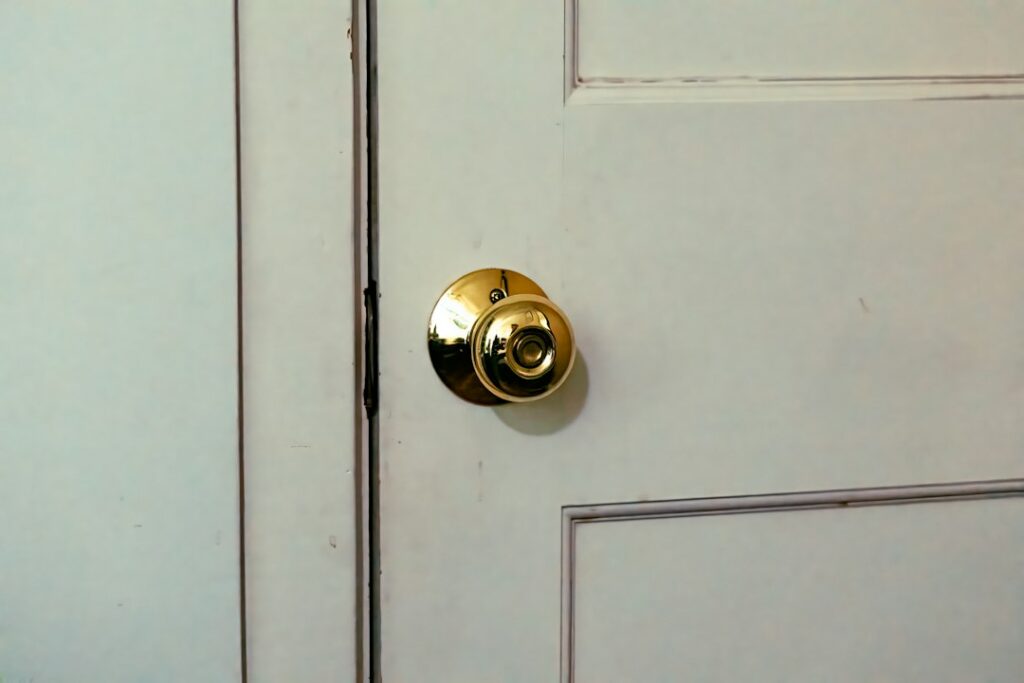
A door knob gets used more often than almost any other part of a house, and it usually gets attention only when something goes wrong: the knob wobbles, the latch will not catch, the privacy lock jams with a toddler on the wrong side, or arthritic hands struggle to turn it. Most of these problems are simple to diagnose, and many are simple to fix. Some point to issues with the door or frame rather than the hardware itself. This guide explains how knob and latch assemblies work, how to tighten a loose knob, why a latch stops catching, the difference between passage, privacy and keyed functions, what backset and bore size mean when buying replacements, why many households switch to lever handles, how entry knobs compare with deadbolts for security, and what replacement typically costs. Figures are general 2026 estimates, not quotes.
Part of our Structure & Exterior guide — start there for the full picture →
How a Door Knob Assembly Works
A typical residential knob set has three main parts. Two knobs (or levers) sit on either side of the door, connected by a spindle or by the knob chassis passing through a large round hole in the door face. That hole is the bore. A smaller hole runs from the door edge into the bore and holds the latch, the spring-loaded bolt with a slanted face that pops into the frame. On the frame side, a strike plate with a matching opening receives the latch.
Turning the knob retracts the latch. Releasing it lets the spring push the latch back out. When the door swings closed, the slanted face of the latch rides over the strike plate and snaps into the opening. Most modern sets also have a small secondary plunger called a deadlatch on entry and some other functions. When the door is closed properly, the plunger is held in by the strike and blocks the latch from being pushed back with a card or thin tool.
Older homes may have mortise locksets instead, where a rectangular lock body sits inside a pocket cut into the edge of the door. They are repairable, but parts are less standardized and replacement often means either finding compatible hardware or filling and re-boring the door.
Fixing a Loose Door Knob
A wobbly knob is the most common complaint, and the cause depends on the hardware design.
- Visible screws on the inside rose. Many knob sets have two through-bolts on the interior side that pass through the door into the exterior half. These loosen with use. Tightening them is often all that is needed. Overtightening can bind the mechanism, so snug is enough.
- Hidden screws. Many sets hide the screws under a decorative rose. Usually a small slot or pin hole on the knob neck releases the knob, after which the rose pops off and exposes the mounting screws.
- Set screw on the knob. Some older knobs attach to a threaded spindle with a small set screw. If the screw backs out, the knob spins loose or pulls off. Re-threading the knob to the right position and tightening the set screw fixes it.
- Stripped or worn parts. If screws will not tighten, the threads or the internal chassis may be worn. Replacement is usually the practical answer.
While the rose is off, check that the latch is fully seated in its hole and that its faceplate screws are tight. A latch that has shifted can make the knob feel sticky as well as loose.
When the Latch Will Not Catch
A door that will not stay closed is often blamed on the knob, but the hardware is frequently fine. The usual culprit is alignment between the latch and the strike plate. Our guide to a door that won’t latch covers this in detail. The short version:
- Check where the latch hits. Rub a little lipstick, chalk or a dry-erase marker on the latch, close the door gently, and see where the mark lands on the strike plate. If it is above, below or beside the opening, the door and strike are out of alignment.
- Tighten the hinges. Loose hinge screws let a door sag, dropping the latch below the strike. Long screws driven through the top hinge into the framing often pull a sagging door back into place. See our guide to door hinges.
- Adjust the strike. Small misalignments can be fixed by filing the strike opening slightly or moving the plate. Larger moves usually require filling the old screw holes and re-mortising.
- Check weatherstripping and gaps. On exterior doors, new or swollen weatherstripping can push the door away from the stop so the latch cannot reach the strike.
- Lubricate the latch. A latch that retracts but springs back slowly may just need a dry lubricant. Heavy oils tend to attract dust.
Some latch problems trace back to the frame. A split or soft jamb, a frame that has moved because of settling, or a door that has swollen with humidity changes all show up first as a latch that will not catch. Our guide to door frame repair covers those causes. On the Front Range, seasonal swings in humidity and expansive soils can make some doors latch easily in winter and bind in summer, which is a clue that the issue is movement rather than hardware.
Passage, Privacy and Keyed Door Knob Functions
Knob sets are sold by function, and buying the wrong function is a common mistake.
- Passage. No lock. Used on hallways, closets and rooms that do not need privacy.
- Privacy. A push button or turn button locks the inside knob, typically used on bathrooms and bedrooms. The outside usually has a small hole or slot for an emergency release tool. Keeping that tool somewhere accessible, such as on top of the door frame, saves trouble when a child locks a door.
- Keyed entry. Locks with a key from the outside and a button or turn piece inside. Used on exterior doors and doors to garages, often paired with a deadbolt.
- Dummy. A fixed knob with no latch, used on closet doors held by ball catches or on the inactive leaf of double doors such as French doors.
Households with young children often add knob covers or locks to keep children out of rooms with hazards. The CPSC’s childproofing guide lists door knob covers and door locks among its safety devices, and advises choosing a knob cover that is sturdy but still lets an adult open the door quickly in an emergency. The same thinking applies to privacy locks: they should be easy to release from outside.
Backset, Bore Size and Door Thickness
Replacing a knob on an existing door is usually straightforward if the new set matches the existing holes. Three measurements matter.
Backset
The backset is the distance from the edge of the door to the center of the bore. Most modern residential doors use one of two common backsets, and many replacement latches are adjustable between them. Measure before buying, and check the package to confirm the latch fits.
Bore size
The large face hole on most modern residential doors is a standard size, and most knob sets are designed for it. Older doors, mortise locks and some imported hardware differ. A new set that needs a larger bore requires drilling; one that needs a smaller bore may leave gaps that the rose cannot cover.
Door thickness
Interior and exterior doors are often different thicknesses, and knob sets list the range they fit. A set designed for a thinner interior door may not have screws long enough for a thicker exterior slab.
If a door has been drilled multiple times, has a split edge around the latch, or is warped, replacing the slab may make more sense than fighting the hardware. Our guide to interior door replacement cost covers prehung versus slab-only options.
Swapping a knob set step by step
When the holes match, replacing a knob set is usually a short job with a screwdriver. The general sequence:
- Remove the interior knob and rose, then pull the exterior half out of the bore.
- Unscrew the latch faceplate on the door edge and slide the old latch out.
- Set the new latch to the correct backset if it is adjustable, and insert it with the slanted face toward the strike side of the frame.
- Fit the exterior half so its spindle or chassis engages the latch, then attach the interior half and tighten the screws evenly.
- Install the new strike plate if it differs from the old one, and test the door several times, both gently and with a normal swing.
If the new latch does not sit flush, the mortise in the door edge may need light chisel work. If the knob turns stiffly after tightening, back the screws off slightly; overtightened through-bolts are a common cause of binding.
Lever Handles for Accessibility and Aging in Place
Lever handles have become the default in many new homes, and they are among the most common changes people make when planning to age in place. A lever can be operated with a closed fist, an elbow or a hand full of groceries. A round knob requires grip and wrist rotation, which can be hard for people with arthritis, limited hand strength or injuries.
Falls and injuries among older adults are a broad safety concern. The CDC’s older adult fall prevention page describes falls as a threat to the health of adults 65 and older and notes they can reduce the ability to remain independent. The CPSC’s older adult safety center similarly identifies falls as a leading cause of deaths and injuries in that age group and encourages people to spot and correct hazards at home. Neither source is specifically about door hardware. Lever handles are one part of a wider accessibility plan that commonly includes lighting, handrails, grab bars and clear paths, and an occupational therapist can help identify the changes that matter most for a particular person.
Things to know before switching to levers:
- Handing. Some levers are reversible; others are made for a left-hand or right-hand door. Check before buying.
- Return springs. Cheap levers can droop over time. Sets with stronger return springs keep the handle level.
- Pets. Some dogs and cats learn to open lever handles. A locking function or knob on certain doors may be worth keeping.
- Clothing snags. Levers with returns that curl back toward the door reduce snagging on sleeves and bag straps.
Door Knob Security: Entry Knobs vs Deadbolts
A keyed entry knob is a convenience lock, not a security lock. The latch is relatively short and spring-loaded, and the knob itself can be attacked with force. A deadbolt, by contrast, uses a solid bolt that extends deeper into the frame and does not retract unless the key or thumb turn moves it. For exterior doors, the usual recommendation is a deadbolt in addition to the entry knob or handle set. Our guide to deadbolt installation explains bolt throw, strike reinforcement and long strike screws, which often matter more than the lock itself.
Smart locks add keypad, app or code access and are usually installed in place of the deadbolt rather than the knob. Our guide to smart lock installation covers fit, power and backup keys.
A few security basics apply to entry knobs and handle sets:
- Rekey or replace locks after buying a home, since there is no way to know how many keys are in circulation.
- Make sure the deadlatch plunger is actually held in by the strike when the door closes. If the gap is too large, the latch can be slipped.
- Check that hinges on out-swinging doors have non-removable pins or security studs.
- Keep exits easy to open from inside. Double-cylinder locks that need a key on both sides can slow escape in a fire; check local rules before installing them.
What Inspectors Look For
Door hardware is part of the interior and exterior portions of a standard home inspection. The ASHI Standard of Practice lists exterior doors under the exterior section and a representative number of doors under interiors. Inspectors typically operate doors, note hardware that is missing, loose or does not latch, and look for causes such as sagging, binding or frame damage.
Typical report items include:
- Doors that do not latch or that rub the frame.
- Loose or damaged knobs, levers and strike plates.
- Privacy locks without an accessible emergency release.
- Exterior doors without deadbolts, or with damaged jambs at the strike.
- Patterns of sticking doors across the house that may point to structural movement.
An inspector does not usually test every lock with every key or evaluate the security rating of hardware. Our structure and exterior inspection section explains what is covered for doors and framing.
Door Knob Replacement Costs
Hardware prices vary widely by finish, brand and function. The ranges below are rough 2026 estimates for planning only.
- Passage and privacy knobs or levers: commonly around $15 to $60 each for basic sets, more for designer finishes.
- Keyed entry knobs and handle sets: roughly $30 to $150 for many residential sets, with decorative handle sets costing more.
- Handyman installation: often a minimum service charge plus a modest per-door rate. Replacing hardware on an entire house of interior doors is commonly a few hundred dollars in labor.
- Strike and latch adjustments: often bundled into a small handyman visit.
- Rekeying: a locksmith visit commonly includes a trip charge plus a per-cylinder fee.
- New bore or mortise conversion: extra labor, and sometimes a new door slab if the old one is damaged.
Buying matching finish and keyed-alike sets in a single purchase is usually cheaper and gives a more consistent look.
Homeowner and Buyer Checklist
- Tighten loose knobs at the mounting screws before replacing anything.
- Check latch-to-strike alignment and hinge screws when a door will not stay closed.
- Match function, backset, bore and door thickness when buying replacements.
- Consider levers where grip strength is limited or aging in place is the plan.
- Pair exterior knobs with a properly installed deadbolt, and rekey after moving in.
- Keep emergency release tools for privacy locks where adults can reach them.
For help choosing a qualified inspector, see our main guide to hiring a home inspector.
References
- Childproofing Your Home — U.S. Consumer Product Safety Commission
- Older Adult Safety — U.S. Consumer Product Safety Commission
- About Older Adult Fall Prevention — Centers for Disease Control and Prevention
- Standard of Practice — American Society of Home Inspectors
Frequently asked questions
How do you fix a loose door knob?
Most loose knobs need the mounting screws on the interior side tightened. If the screws are hidden, release the knob through the slot or pin hole on its neck, remove the rose and tighten the screws underneath. Stripped parts usually mean replacement.
Why does my door knob turn but the door will not latch?
The latch and strike plate are usually misaligned because of loose hinges, a sagging door, swelling or frame movement. Mark the latch to see where it hits, then tighten hinges or adjust the strike.
What is the difference between passage and privacy door knobs?
A passage knob has no lock and suits hallways and closets. A privacy knob has a push or turn button that locks from inside and an emergency release on the outside, which suits bathrooms and bedrooms.
Are lever handles better than door knobs?
Levers are easier to operate for people with limited grip or hand strength and are common in aging-in-place updates. Some pets can open them, and quality varies, so choose sets with firm return springs.
Is a keyed door knob enough security for an exterior door?
Generally no. A keyed knob has a short spring latch and is mainly a convenience lock. Most exterior doors are better protected with a properly installed deadbolt and a reinforced strike.
Doors that stick, sag or refuse to latch can be a clue to bigger issues. Get in touch to book a Front Range inspector who checks doors, frames and the structure behind them.