Dog Doors: Wall, Door and Patio Pet Doors Compared
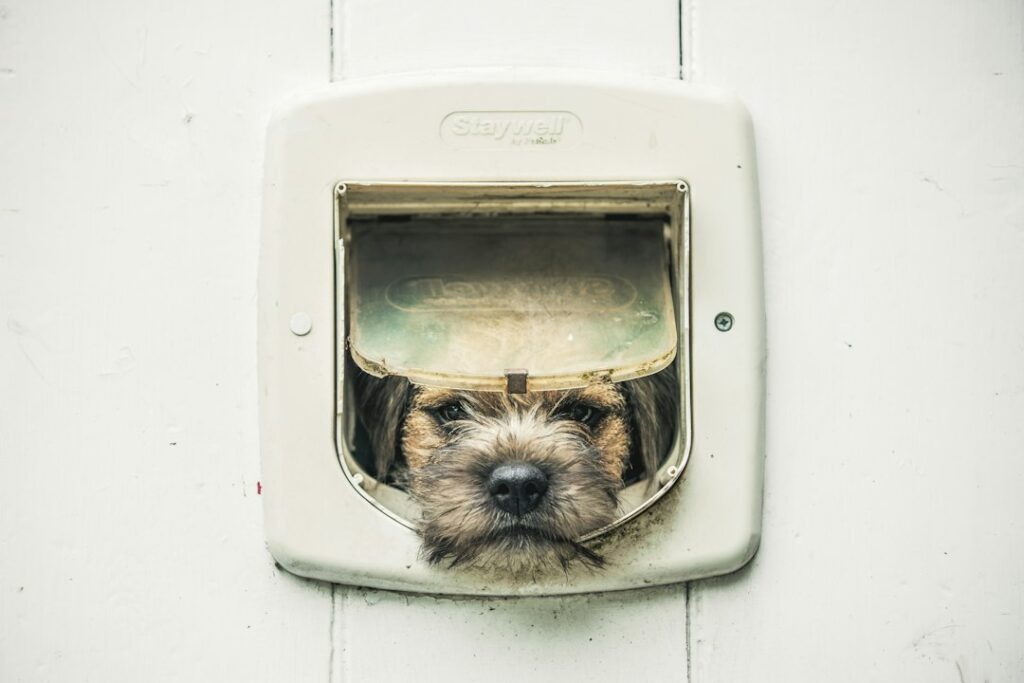
A dog door looks like a small convenience: a flap, a frame and a few screws. In practice it is a permanent hole in the building envelope, and it changes how a home seals against weather, how it locks, how it keeps out animals that are not the family pet, and in some locations how it resists fire. Home inspectors see pet doors in every kind of house on the Front Range, from 1950s ranches in Lakewood to new builds in Castle Rock, and the same handful of issues come up again and again. This guide explains the three main styles (door-mounted, through-the-wall and patio-panel inserts), what each does to air leakage and energy use, the security trade-offs, why a pet door does not belong in a fire-rated door between an attached garage and the house, what is hiding inside a wall before anyone cuts into it, and what installation typically costs.
Part of our Structure & Exterior guide — start there for the full picture →
What a Dog Door Is and How the Main Types Differ
A pet door is a framed opening fitted with one or more flexible flaps, or in some models a rigid panel, that lets an animal pass in and out without a person opening the main door. Nearly every product falls into one of three installation styles, and the style matters more than the brand.
Door-mounted pet doors
The most common type is cut into the lower panel of an existing exterior door. A template is traced on the door, the opening is cut with a jigsaw, and an inside and outside frame are screwed together through the slab, sandwiching the door. On a hollow-core or thin steel door this is straightforward. On a solid wood or fiberglass door with a foam core, the cut exposes the core, which then needs a tunnel liner or sealant so moisture does not wick into it.
The trade-off is that the door itself is permanently altered. If the pet door is later removed, the hole has to be covered with a patch kit or the slab replaced. Buyers sometimes discover that the pet door has quietly voided a door manufacturer’s warranty or compromised a door that was otherwise in good condition. Our guide to exterior door replacement cost is useful if the slab ends up needing replacement.
Through-the-wall pet doors
A wall-mounted unit passes through the full thickness of an exterior wall, typically below a window or beside a door, with a tunnel connecting an inside frame to an outside frame. Because the opening sits in a wall rather than a door, it can be larger and is often better insulated, and it leaves the entry door untouched. It is also the most invasive option: the installer cuts drywall, sheathing and siding, and has to work between studs while dealing with whatever runs through that cavity. A wall unit needs flashing and sealing at the exterior like any other penetration, or water will find its way into the wall.
Patio-panel and sliding-door inserts
For sliding glass doors, a popular option is a tall panel that drops into the track beside the sliding sash, with a pet door built into its bottom section. Renters and people who do not want to cut anything like these because they are removable. The weak points are well known: the panel creates extra seams where air and water can enter, the sliding door can no longer lock in its normal position unless a secondary bar or pin is added, and many panels are single-glazed or minimally weatherstripped.
Energy Loss, Drafts and Air Leakage
Every dog door is a potential air leak. A flap that seals well when closed may still let air through around its edges, and a flap that sticks partly open in wind or when a pet bumps it becomes a direct opening to the outdoors. In Colorado’s cold, windy winters, especially along the foothills where chinook winds gust hard, a poorly sealed pet door can be the single draftiest spot in a room.
Features that tend to reduce leakage include:
- Dual or triple flaps with a dead-air space between them, which act a little like a double-pane window.
- Magnetic closures along the bottom and sides of the flap so it pulls shut after each use.
- Brush or pile weatherstripping around the flap perimeter.
- Insulated or rigid panels rather than thin vinyl, which can stiffen and curl in cold weather.
- A tight, sealed frame where the pet door meets the door slab or wall, with no visible gaps.
ENERGY STAR’s seal-and-insulate guidance notes that sealing air leaks and adding insulation can make a home more comfortable and energy efficient, and lists weather stripping on doors among the simple fixes. A pet door is part of that door’s seal, so it deserves the same attention as the threshold and jamb. If the main door also leaks, our guides to weatherstripping doors and door threshold replacement cover the rest of the opening.
A practical way to see how much a pet door leaks is a blower door test. With the house depressurized, an auditor can use a smoke pencil or an infrared camera to show air pouring around the flap. The results are specific to that house, so treat any general claim about how much energy a pet door “costs” with caution. The real number depends on the flap design, the wind exposure, the size of the opening and how often the dog uses it.
Cold flaps, condensation and ice
On very cold nights, warm indoor air leaking through a flap can condense on the cold outer surface and freeze, sealing the flap shut or leaving it stuck partly open. Some owners also find water staining or swollen trim below a door-mounted unit, a sign that rain, snowmelt or condensation is running down the flap and into the door bottom. These are worth watching on any east- or north-facing door that does not get much sun.
Best Dog Doors: our top 3 picks
| Product | Best for | Key features | Price | Buy |
|---|---|---|---|---|
| PetSafe Extreme Weather Aluminum L | Best overall for cold winters |
| $121.46as of Nov 26, 2026 3:39 pm GMT+0000 | Buy now →Check current price |
| PetSafe Extreme Weather Plastic L | Stated cold-weather range |
| $89.91as of Nov 26, 2026 3:39 pm GMT+0000 | Buy now →Check current price |
| Ideal Air Seal | Rigid insulated flap |
| — | Buy now →Check current price |


Prices are Amazon’s listed prices as of the time shown and change often; check Amazon for today’s price. As an Amazon Associate we earn from qualifying purchases.
Security: The Other Hole in the Door
Any opening large enough for a dog may be large enough for a small person, and an opening near a door can let someone reach in to a lock or a thumb-turn. Door-mounted pet doors for large breeds are the biggest concern, because a large flap sits only inches from the deadbolt. Security has improved, but the basic risk is not going away.
Common ways owners reduce the risk include:
- Locking covers or closing panels that slide into the frame when the pet door is not in use, especially when the family is away overnight.
- Electronic or microchip-activated doors that unlock only for a tag or implanted chip. These also help keep out neighborhood cats and wildlife.
- Placing the pet door in a wall away from the entry door, so no one can reach a lock through it.
- Choosing the smallest size the dog can comfortably use rather than oversizing.
For sliding-door inserts, the original latch typically cannot engage while the panel is installed. A charley bar, a pin lock or a dedicated locking bracket is usually needed. Inspectors note when a patio door with a pet panel cannot be secured.
Fire-Rated Garage Doors: Do Not Cut a Pet Door Into Them
Many homeowners want the dog to come and go from an attached garage. The door between the garage and the living space is usually not an ordinary interior door. In most homes with attached garages, building codes generally require a solid or fire-rated door, often a 20-minute rated door, and many jurisdictions also require it to be self-closing. The U.S. Fire Administration’s garage fire safety guidance recommends a 20-minute fire-rated door that is self-closing and self-latching from the garage into the house, along with gypsum board on the shared wall and a ceiling of 5/8-inch Type X gypsum board when living space sits above the garage. USFA also notes that garage fires tend to spread farther and cause more injuries and dollar loss than fires that start in other areas of the home.
Cutting a pet door into that door defeats its purpose. A plastic flap and frame do not carry a fire rating, and the hole provides a path for smoke, heat and gases such as carbon monoxide from a running vehicle to enter the home. Fire-rated doors are labeled and tested as an assembly; altering them generally voids the rating. If a buyer finds a pet door in the house-to-garage door, the usual recommendation is to replace the door with a proper rated, self-closing unit. Our fire-rated door guide explains how to recognize one and what local codes typically expect. Requirements vary by jurisdiction and code edition, so confirm with your local building department before making changes.
If a pet needs garage access, a common alternative is a pet door in an exterior garage wall or the outside garage service door, not the fire-separation door.
Cutting Into Walls: What Can Be in the Cavity
Through-the-wall installations need more planning than a door-mounted unit. The space between the studs where the tunnel will go may contain:
- Electrical cable feeding receptacles, which are often set low on the wall in exactly the spot where a pet door would go.
- Plumbing supply or drain lines, particularly on walls near kitchens, laundry rooms or bathrooms.
- Gas lines or HVAC ducts in some layouts.
- Insulation and a vapor retarder, which need to be dealt with around the opening.
- Structural members. Cutting a stud on an exterior bearing wall without adding a header changes how loads reach the foundation. Most pet door kits are designed to fit between standard 16-inch on-center studs for this reason.
Before cutting, installers typically locate studs, check for receptacles and switches on both sides of the wall, look in an accessible basement or crawl space for wires or pipes running up into the cavity, and make a small exploratory hole first. Turn off power to any nearby circuits before cutting. In older homes, materials in plaster walls, joint compound or siding may contain asbestos or lead-based paint, and those should be tested before they are cut or sanded.
On the outside, the opening needs proper flashing, a sloped sill or drip edge, and sealant compatible with the siding. A wall pet door that lacks flashing is a classic source of hidden rot in the sheathing below it, which an inspector may only detect from soft siding or staining inside. Older openings can also loosen over time; problems around the surrounding jamb are covered in our door frame repair guide.
Pests, Wildlife and Unwanted Visitors
A flap that a dog can push open is also a flap that a raccoon, skunk, neighborhood cat or squirrel can push open. In Front Range neighborhoods near open space, raccoons are a frequent problem, and some owners report finding them in kitchens after learning to use the pet door. Mice and insects are smaller issues but persistent ones. CDC guidance on preventing rodents advises checking around windows and doors, especially those without weather stripping, and notes that mice can fit through a hole the width of a pencil. A warped or curled flap can leave gaps that size or larger.
Practical steps include closing the pet door at night, using a microchip-activated or collar-key door, keeping pet food indoors and away from the opening, and checking flaps and brushes each season for wear. If pests are already getting in, look at the pet door first, then at other common entry points such as the crawl space door and gaps around utility lines.
Sizing and Placement Basics
Manufacturers generally size pet doors so the flap is a bit taller than the dog’s height at the shoulder and a bit wider than its widest point, with the bottom of the opening at a height the dog can step over comfortably. Oversizing for a puppy who will grow is common; oversizing for an adult dog adds leakage and security exposure. Placement matters too:
- Choose a location the dog already uses, so training is easier.
- Avoid placing the outside opening where snow drifts or water pools.
- Consider what the dog lands on outside. A step down onto a deck or patio is easier on older dogs than a drop to uneven ground.
- Check that the opening does not let the dog out into an unfenced area or onto a pool deck without a barrier.
For homes with pools or hot tubs, a pet door can also give small children unsupervised access to the backyard, which is worth considering before installation.
Typical Dog Door Costs
Prices vary widely with the type, the size, the features and who does the work. As a rough 2026 guide for the Front Range:
- Basic door-mounted pet door, DIY: the kit itself is commonly in the tens of dollars for small models and more for large or insulated versions.
- Insulated, multi-flap or electronic units: often a few hundred dollars for the hardware alone.
- Professional installation in a door: often a modest labor charge in the low hundreds of dollars, more for steel, fiberglass or glass doors.
- Through-the-wall installation: typically higher, since it involves cutting, framing, flashing and finishing on two sides; costs rise if wiring or plumbing has to be rerouted or siding repaired.
- Glass pet doors: for a pet door built into a glass door or sidelite, the glass panel generally has to be custom-made with the opening, which can cost substantially more.
- Patio-panel inserts: commonly a few hundred dollars, with more for insulated or dual-pane versions.
Get quotes in writing and confirm whether flashing, trim, painting and drywall repair are included. These are general ranges, not estimates for any specific house.
What a Home Inspector Notes About Pet Doors
During a typical inspection, the inspector looks at exterior doors and the general condition of the building envelope, so a pet door often comes up in the report. Common observations include:
- A pet door in a door between an attached garage and the house, with a recommendation for a properly rated replacement door.
- Missing, torn, curled or stiff flaps and worn brushes or magnets.
- Gaps around the frame, missing sealant or loose screws.
- Water staining, swelling or rot below a door-mounted unit or around a wall unit.
- Patio doors that cannot be secured because of a panel insert.
- Signs of pest activity near the opening.
An inspector generally cannot see inside the wall around a through-the-wall unit, so concealed rot or missing flashing may only be inferred. If the report flags concerns, the next step is usually a door or window contractor or a carpenter. For a broader view of the exterior side of an inspection, see our structure and exterior inspections section, and the main guide to hiring a home inspector explains what to expect from the process.
More Questions About Dog Doors
Can you install a dog door in a sliding glass door?
Yes, a dog door can be added to a sliding glass door, most often with a pet-door panel insert that fits in the track without cutting the existing glass.
The insert sits between the sliding panel and the frame, so it works for renters and is easy to remove. Fit and weather sealing vary, and inserts can leave a gap that lets in drafts or makes the slider easier to force open, so a secondary lock or security bar is worth adding. A more permanent option is replacing the glass with a custom panel that includes a built-in pet door, usually done by a glass shop.
Can you install a dog door in a rental home?
A dog door in a rental home usually requires the landlord’s written permission, since cutting a door or wall is a permanent alteration that can affect security and the lease.
Renters often choose removable options instead, such as a sliding-door panel insert, a window insert for double-hung or sliding windows, or a replacement door slab that can be swapped back at move-out. Any cut-in door should be agreed in writing, including who pays to restore the original door. Landlords may also want a lockable flap cover for security and insurance reasons.
Do electronic dog doors work better than standard flaps?
Electronic dog doors that open only for a microchip or collar key generally do a better job of keeping out strays, raccoons and other animals than a standard flap.
They usually seal more tightly and lock automatically when closed, which improves security and reduces drafts somewhat. Tradeoffs include a higher purchase price, batteries or wiring to maintain, and occasional misreads that can leave a pet stuck outside. Some models allow curfew settings to keep pets in at night. For homes with wildlife problems or neighborhood cats, the added control is often worth it.
Can a dog door affect a home sale or inspection?
A dog door rarely affects a home sale on its own, but a home inspector may note issues such as air leakage, water intrusion, damaged framing around a wall unit or a pet door in a fire-rated garage entry door.
A door cut into the garage-to-house door is a common safety item because it defeats the door’s fire separation. Buyers without pets sometimes ask for the door to be replaced or the opening sealed, which can become a negotiation point. Sellers can help by making sure the flap seals well, the surrounding trim is intact, and a solid cover panel is available.
References
- Seal and Insulate with ENERGY STAR — ENERGY STAR
- Basement and Garage Fire Safety — U.S. Fire Administration
- How to Seal Up to Prevent Rodents — Centers for Disease Control and Prevention
- ASHI Standard of Practice for Home Inspections — American Society of Home Inspectors
Frequently asked questions
Do dog doors let in cold air?
Most let in some air, especially single-flap models with worn edges or no magnets. Dual or triple flaps, magnetic closures, brush seals and a well-sealed frame reduce leakage. A blower door test can show how much a specific pet door leaks.
Can I put a dog door in the door from my garage to the house?
Generally no. That door is usually required to be solid or fire-rated and often self-closing, and a pet door creates a path for fire, smoke and carbon monoxide. Put the pet door in an exterior garage wall or the outside service door instead, and check local code.
Are dog doors a security risk?
They can be, particularly large door-mounted units near a deadbolt. Locking covers, microchip-activated doors, wall placement away from the entry and choosing the smallest suitable size all reduce the risk.
Is it better to install a pet door in a wall or a door?
A wall unit leaves the entry door intact, can be better insulated and keeps the opening away from locks, but it requires cutting into a wall that may contain wiring or plumbing, and it needs proper flashing. A door unit is simpler but permanently alters the door.
How much does it cost to install a dog door?
A basic door-mounted kit can cost tens of dollars, while insulated or electronic units often run a few hundred. Professional installation in a door is commonly in the low hundreds of dollars, with wall and glass installations costing more. These are general 2026 ranges.
How do you train a dog to use a dog door?
Training a dog to use a dog door usually starts by taping the flap open and encouraging the dog through with treats and praise from the other side. Once the dog walks through confidently, lower the flap partway, then fully. Most dogs learn within a few days.
Can a dog door be installed in a metal door?
A dog door can be installed in a steel exterior door, but cutting metal requires the right blades, careful finishing of sharp edges, and attention to the foam core. Some metal door warranties are voided by cutting. A pro installer or a replacement door with a built-in pet door are common alternatives.
Do dog doors raise homeowners insurance costs?
A dog door generally does not raise homeowners insurance premiums by itself. However, a theft claim through an unlocked pet door could be disputed if there is no sign of forced entry. Checking the policy and locking the pet door when away from home are sensible precautions.
Buying a home with a pet door in the garage entry or a suspect wall opening? Reach out to us to connect with a Front Range inspector who will check doors, seals and fire separation.