Mold on Door: Causes, Cleaning by Material, and Fixes
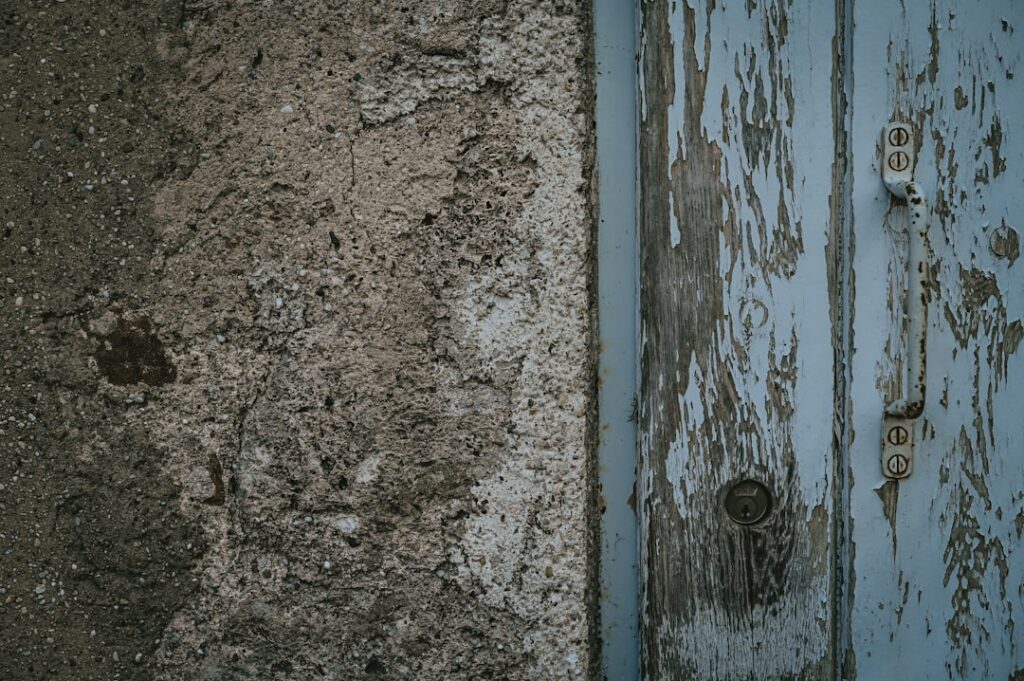
Finding mold on door surfaces is more common than most homeowners expect. Doors sit right where moisture problems collect: bathroom doors absorb shower steam, closet doors trap stale air, and exterior doors separate warm indoor air from a cold Colorado winter. The good news is that mold on the face of a door is usually a surface problem that responds well to cleaning. The less obvious news is that mold at the bottom of an exterior door, along the jamb or at the threshold can point to water getting in and to wood that is starting to rot. This guide walks through why mold grows on interior and exterior doors, how condensation and weatherstripping play in, how to clean each type of door, and when replacing the door or frame makes more sense than another round of scrubbing.
Part of our Types of Mold guide — start there for the full picture →
Is this mold, asbestos, or water damage? Get a free instant screen
Upload a clear photo of the suspect area. You'll get an instant AI screening opinion and what to do next. This is screening guidance, not a professional determination.
Screening guidance only. AI can be wrong. Confirm asbestos, mold type, or lead with lab testing or a licensed professional before acting.
Why Mold Grows on Doors
Mold needs three things: spores, food and moisture. Spores are always present; the CDC notes that mold enters homes through open doors, windows, vents and HVAC systems, and can be carried in on clothing, shoes and pets. Food is easy to find, because CDC also lists wood, paint, paper and dust among the materials mold grows on. That leaves moisture as the deciding factor, which is why the EPA Brief Guide says the key to mold control is moisture control.
Doors pick up moisture in a few predictable ways:
- Steam and humidity from showers, cooking, laundry and humidifiers settle on the coolest surfaces nearby, including door panels and frames.
- Condensation on doors in exterior walls when cold outdoor temperatures chill the door slab, glass inserts or metal skins.
- Water intrusion from rain, snowmelt or splashback at exterior doors, especially at the bottom rail, threshold and lower jamb.
- Trapped air in closets and rarely opened rooms where humidity lingers and surfaces never fully dry.
- Leaks from nearby plumbing, roof or window problems that wick into the frame.
Mold on a door is rarely the whole story. It is a symptom of conditions in that part of the house, and the surrounding walls, trim and floor deserve a look too. The mold types hub covers the common molds found on household surfaces.
Is It Mold, Dirt or Finish Damage?
Not every dark mark on a door is mold. Before cleaning, it helps to sort out what is actually there, because the fix differs.
- Mold usually appears as spots or clusters, often fuzzy, velvety or speckled, and frequently concentrated where moisture collects: bottom edges, panel grooves, around glass inserts and near hinges on the damp side. It often has a musty smell, and it tends to return in the same places after cleaning.
- Mildew is a term commonly used for flat, powdery mold growth on surfaces. It is still mold and is cleaned the same way.
- Dirt and hand marks show up around knobs, push plates and the lock edge, wipe away easily, and do not follow moisture patterns.
- Water staining on wood shows as dark rings or streaks, often at the bottom rail, without the fuzzy texture of growth. It indicates wetting and may become mold if it keeps happening.
- Finish failure such as blistering, peeling or graying of a clear coat can look like discoloration but is the finish breaking down, often from moisture or sun exposure.
The CDC notes that mold can look like spots of many different colors and can smell musty, and advises that if you see or smell mold, you should remove it. It also says there is no need to know the type of mold before cleaning it up. A simple test some homeowners use is to dab a spot with a diluted household cleaner: dirt usually lifts, while mold often lightens but returns. When in doubt, treat the spot as mold, clean it, and watch whether it comes back.
Doors in basements, garages and laundry rooms
Doors between the house and an attached garage, into an unfinished basement, or into a laundry room face their own moisture conditions. Basement doors can sit against cool, humid air for months. Garage entry doors see temperature swings and snowmelt tracked in from vehicles. Laundry room doors take humidity from washers and from dryers with leaky or disconnected vents. Spotting on the lower half of these doors, or on the side facing the damp space, is common. The fix is usually ventilation and humidity control in that space: a dehumidifier in the basement, a properly vented dryer, and keeping garage floors from pooling water against the door threshold.
Interior Doors: Bathrooms, Closets and Cold Walls
Bathroom doors
Bathroom doors take the most moisture of any interior door. Steam rises, cools against the door and runs down, often collecting along the top edge, the panel grooves and the bottom edge, which is frequently left unpainted on hollow-core doors. Small black or gray spots near the bottom of a bathroom door, or along the inside face in a room without a working exhaust fan, are a classic pattern.
The EPA notes that places that are often or always damp can be hard to keep completely free of mold, and that increasing ventilation, by running a fan or opening a window, and cleaning more frequently will usually prevent mold from recurring or keep it to a minimum. For bathroom doors, that means running the exhaust fan during and after showers, leaving the door open afterward to let the room dry, and sealing all six faces of the door, including the top and bottom edges, when painting.
Closet doors
Closets, especially those on exterior walls or shared with bathrooms, often have little air movement. Clothing packed tightly against a cold wall holds moisture, and the inside face of the closet door can develop spotting. Louvered or bifold doors also collect dust in their slats, which gives mold additional food. See our guides on how to prevent mold in a closet, black mold in a closet and closet door options, including styles that improve air movement.
Doors near cold exterior walls
Bedroom and hallway doors along exterior walls can show mold where furniture blocks airflow or where the wall itself is cold. The EPA Brief Guide lists the surface of walls behind furniture, where condensation forms, among common places for hidden mold. A door that stays open against a cold wall for months can behave the same way on its back face.
Exterior Doors, Frames and Jambs
Mold on an exterior door deserves closer attention because it can be paired with water damage to the structure around the door.
Where to look
- Bottom rail of the door slab: wood doors absorb water at an unsealed or worn bottom edge. Swelling, peeling paint and dark staining are warning signs.
- Lower jamb and brick mold: the vertical frame pieces near the threshold sit closest to splashback and snowmelt. Soft wood here often means rot.
- Threshold and sill: a failed sill seal can let water run under the threshold into the subfloor.
- Inside face around glass inserts: condensation on cold glass runs down and soaks the frame of the insert.
Press a screwdriver into suspect wood. Firm wood with surface spotting can usually be cleaned and refinished; wood that is soft, spongy or crumbles points to rot. Our guides on the door jamb and door frame repair explain how damaged sections are cut out and replaced.
Why the jamb matters
Mold on the surface of a jamb can be cleaned. Mold inside a rotted jamb cannot, because the EPA notes that porous materials can hold mold in their empty spaces and crevices so that it may be difficult or impossible to remove completely. Rotted wood also tends to keep wicking water, so cleaning alone only buys time. Repairing or replacing the damaged section, sealing the end grain and fixing the water path is the long-term answer. For more on mold in wood generally, see mold on wood.
Condensation on Exterior Doors in Colorado Winters
Front Range winters bring cold nights, often well below freezing, while homes are heated to comfortable indoor temperatures. That temperature difference turns exterior doors into cold surfaces. Steel doors conduct cold readily, glass inserts and storm doors can trap cold air against the slab, and older doors without a thermal break can frost at the edges.
When warm indoor air reaches those cold surfaces, it can drop below its dew point and condense. Water then beads on the inside face, runs down to the bottom rail and threshold, and soaks into wood or collects in the corners of metal doors. Repeated every night for weeks, that cycle is more than enough moisture for mold.
The EPA lists several actions that help prevent condensation:
- Reduce indoor humidity. EPA recommends keeping it below 60 percent, ideally between 30 and 50 percent. CDC recommends no higher than 50 percent.
- Increase ventilation or air movement, including fans as needed.
- Cover cold surfaces with insulation.
- Increase air temperature.
In practice, that means watching humidifier settings in winter, since the dry Front Range air tempts many households to humidify heavily; keeping entry areas from being closed off and unheated; and considering an insulated door or improved storm door setup if a door frosts regularly. The same physics drives window problems, so see our guides on window condensation, mold on windows from condensation and black mold around windows.
Weatherstripping and door sweeps
Worn weatherstripping lets cold air leak around the door edge, which chills the frame and creates localized condensation. It can also let wind-driven rain and snow in. A missing or damaged door sweep does the same at the bottom of the door. Replacing worn seals helps keep the frame warmer and drier. Our guides to weatherstripping doors and choosing a door sweep cover materials and installation.
When replacing weatherstripping on a door with mold, clean the frame and let it dry completely before installing new seals. Sealing over damp or moldy wood traps moisture against it.
How to Clean Mold off a Door
EPA guidance says that if the moldy area is less than about 10 square feet, roughly a 3 foot by 3 foot patch, in most cases homeowners can handle the cleanup themselves. A single door, even with heavy spotting, usually falls well under that threshold. Larger areas, extensive water damage or mold spread across walls and floors around the door call for a different approach.
General steps
- Fix or identify the moisture source first, so the cleanup lasts.
- Protect yourself. The EPA recommends gloves, goggles and an N-95 respirator to limit exposure to mold and spores.
- Ventilate by opening windows and running a fan exhausting outdoors.
- Scrub with detergent and water. EPA’s baseline guidance for hard surfaces is to scrub mold off with detergent and water and dry completely. Use a soft brush or sponge on painted and finished surfaces.
- Dry thoroughly with clean towels and a fan. Leave the door open so both faces and edges dry.
- Refinish once dry. EPA cautions against painting or caulking moldy surfaces, since paint applied over mold is likely to peel.
About bleach
CDC says mold can be removed from hard surfaces with household products, soap and water, or a bleach solution of no more than 1 cup of household laundry bleach in 1 gallon of water, and that bleach should never be mixed with ammonia or other cleaners because it produces a poisonous gas. The EPA Brief Guide notes that using a biocide such as chlorine bleach is not recommended as a routine practice during mold cleanup. Bleach can also discolor stained wood and damage some finishes, so detergent and water is the safer first choice on most doors. EPA also notes that dead mold may still cause allergic reactions, so whatever product is used, the growth needs to be wiped away, not just killed.
Cleaning and Replacement by Door Material
Door construction changes both how to clean mold and how likely the door is to be salvageable. The table summarizes the usual approach.
| Door material | Cleaning method | When to replace |
|---|---|---|
| Painted (any core) | Detergent and water with a soft sponge; dry; spot-prime and repaint if stained | Paint is blistering over soft or swollen material, or staining bleeds back through fresh paint |
| Stained or natural solid wood | Vacuum loose growth with a HEPA vacuum, scrub with detergent, dry; light sanding for surface stains, then reseal all faces and edges | Wood is soft, cracked or rotted at the bottom rail or stiles, or the door has warped and no longer seals |
| Hollow-core (wood veneer or hardboard skin) | Gentle wipe with detergent and a barely damp cloth; avoid soaking; dry immediately | Skin is delaminating or swollen, or there is mold at an open bottom edge that may extend inside; these doors are inexpensive to replace |
| Steel or metal-skinned | Detergent and water; dry; treat any rust and touch up paint | Rust has perforated the skin, the foam core is wet, or the bottom edge has rotted out of a wood-edged steel door |
| Fiberglass | Detergent and water with a soft brush; dry | Rarely needed for mold alone; check the frame and jamb, which are often wood and more vulnerable |
| Door frame, jamb and brick mold | Clean surface growth and dry; probe for soft wood | Wood is soft or crumbling; repair or replace the damaged section and correct the water path |
For deeper guidance on wood, see how to kill mold on wood.
Deciding to replace an exterior door
Replacing an interior hollow-core door is a modest project. Exterior doors are a larger decision, because the slab, frame, threshold and weatherstripping work as a system. Repeated mold and rot at the bottom of an exterior door often signals a failing threshold or a door that does not shed water well. If the frame is also damaged, a prehung replacement that includes a new frame and sill may solve the moisture problem more completely than patching. Our guide to exterior door replacement cost covers what drives the price.
Preventing Mold on Doors
The EPA Brief Guide states that if wet or damp materials or areas are dried within 24 to 48 hours after a leak or spill, in most cases mold will not grow. Every door prevention habit follows from that idea of keeping surfaces from staying wet.
- Ventilate bathrooms with an exhaust fan that vents outdoors, and leave the door open after showers.
- Seal all six faces of wood doors, including top and bottom edges, when painting or finishing.
- Keep humidity in range with a hygrometer; adjust winter humidifier settings so doors and windows do not sweat.
- Maintain weatherstripping and sweeps on exterior doors to limit cold air and water intrusion.
- Check exterior drainage. EPA recommends making sure the ground slopes away from the foundation and keeping gutters clean, both of which reduce splashback and pooling at doorways.
- Give closets airflow by not overpacking them, leaving the door open periodically, and keeping stored items off exterior walls.
- Clean small spots promptly before they spread into the finish or the wood.
Doors are not the only household items that show moisture this way. Wood furniture placed against cold walls or in damp rooms develops the same kind of spotting; see mold on furniture for cleaning and prevention tips.
When to Call a Professional
A spotted bathroom door is a simple cleanup. Professional help makes sense when:
- Mold returns quickly after cleaning, suggesting an unresolved moisture source.
- The jamb, threshold or subfloor near an exterior door is soft or discolored.
- There is a musty smell near the door but no visible growth, which may indicate mold inside the wall or under the floor.
- The affected area extends beyond the door to walls and floors, approaching or exceeding about 10 square feet.
- Someone in the home has asthma, allergies or a weakened immune system. CDC notes people with asthma or mold allergies may have severe reactions, and immune-compromised people may get lung infections from mold.
An inspector can use moisture meters and thermal imaging to trace water at doorways and frames, and can tell whether the problem is condensation, a failed threshold or a leak further up the wall. The mold inspection pillar explains what an inspection includes.
References
- A Brief Guide to Mold, Moisture and Your Home — U.S. Environmental Protection Agency
- Mold Cleanup in Your Home — U.S. Environmental Protection Agency
- About Mold — Centers for Disease Control and Prevention
Frequently asked questions
Why is there mold on my bathroom door?
Shower steam condenses on the door and collects along edges and panel grooves, especially if the exhaust fan is weak or the door stays closed. Run the fan during and after showers, leave the door open to dry, and seal all faces of the door when painting.
How do I clean mold off a door?
Wear gloves, eye protection and an N-95 respirator, then scrub with detergent and water using a soft sponge, and dry completely. Once dry, spot-prime and repaint if stains remain. Avoid painting over mold.
Is mold on an exterior door frame serious?
It can be. Surface spotting on sound wood is usually cosmetic, but soft or crumbling wood at the jamb or threshold suggests rot and a water entry problem that needs repair, not just cleaning.
Why does my front door get wet inside in winter?
Cold outdoor air chills the door, and warm, humid indoor air condenses on it. Lowering indoor humidity, improving air movement, and upgrading worn weatherstripping or an uninsulated door all help.
Should I replace a moldy hollow-core door?
If the skin is swollen or delaminating, or mold is inside an open bottom edge, replacement is usually simpler than cleaning because these doors are inexpensive and hard to dry out once wet.
Mold coming back around an exterior door or frame? Contact our team to have the moisture path at that doorway traced and documented.