Identifying Lead Paint: Signs, Testing, Locations
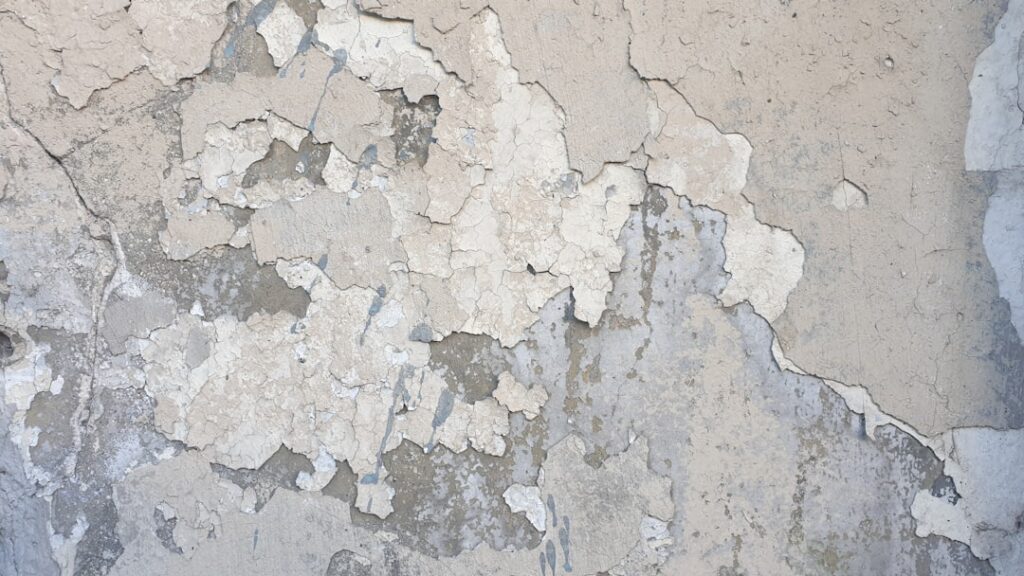
Identifying lead paint is less about a single trick and more about combining several pieces of evidence: the age of the home, the visual condition of the paint, the specific places lead was used, and, finally, a test that confirms it. Each piece narrows the question, and only testing closes it. This guide pulls the whole picture together so a homeowner can move from suspicion to certainty safely. It summarizes EPA and CDC guidance current as of 2026 and is informational only, not a substitute for a certified inspection or medical advice from your physician about exposure.
Part of our Lead Paint & Lead Testing guide — start there for the full picture →
Is this mold, asbestos, or water damage? Get a free instant screen
Upload a clear photo of the suspect area. You'll get an instant AI screening opinion and what to do next. This is screening guidance, not a professional determination.
Screening guidance only. AI can be wrong. Confirm asbestos, mold type, or lead with lab testing or a licensed professional before acting.
Identifying lead paint: the full picture
No single clue identifies lead paint on its own. The reliable approach stacks evidence. Start with the build date, the strongest predictor, then read the visual signs, then check the surfaces where lead was commonly applied, and finally confirm with testing. Each layer raises or lowers the probability, but only a swab, lab analysis, or XRF scan turns probability into a definitive answer. Homeowners who skip straight to a visual guess, in either direction, are the ones who get it wrong.
This combined method matters because lead exposure is a genuine health hazard, especially for young children and pregnant women, and because the wrong response, sanding a lead surface, or paying for needless abatement, has real costs. Working through the evidence in order keeps the response proportionate. For a deeper treatment of how age and location interact, the companion guide on identifying lead paint by age, location, and testing expands the framework.
Home age: the strongest single predictor
The federal ban on lead in residential paint took effect in 1978, making the build date the first and most useful filter. EPA estimates that the great majority of homes built before 1940 contain lead-based paint, with the proportion declining through the 1960s and 1970s, and dropping sharply for homes built in 1978 or later. A pre-1978 home should be treated as potentially containing lead until proven otherwise; a home built in the 1980s or later is far less likely to.
Age is a probability tool, not a verdict. A pre-1978 home may have been stripped or fully repainted, and renovations over the decades may have removed or covered lead surfaces. Conversely, leftover lead paint stock occasionally appeared in homes built just after the ban. Use the build year to decide how seriously to pursue the other steps. The older the home, the higher the suspicion and the stronger the case for testing before any disturbance.
Visual signs and where lead paint is found
Aging lead paint often shows two telltale patterns. Alligatoring is a network of small interconnected cracks that resembles reptile scales, caused by brittle old oil-based paint losing flexibility. Chalking is a fine powdery residue that forms on weathered surfaces, especially exteriors. Both are clues, not proof, since ordinary aged paints can develop similar patterns. The visual signs raise suspicion and tell you where to test.
Location sharpens the search. Lead paint was valued for durability, so it concentrates on high-wear and exterior surfaces: window sashes and sills, doors and door frames, stair railings and treads, baseboards, porches, and exterior siding and trim. Friction surfaces deserve the most attention, because windows and doors that rub grind paint into the fine dust that the CDC identifies as the leading cause of childhood lead exposure. Bare soil near an older foundation can also carry lead from decades of exterior weathering. To see how these signs present on interior walls specifically, the guide on what lead paint looks like on walls is useful.
Reading the layers when paint is chipped
Where paint has already chipped, the exposed cross-section offers a clue worth reading. In an older home, a chip can reveal a stack of paint layers built up over decades, and the deepest, oldest layers are the suspect ones in a pre-1978 house. A thick, hard, multi-layer buildup is more consistent with an old painting history than a thin modern coat, though it still does not confirm lead. This observation simply tells you that the surface has old paint worth testing, and it points toward sampling all the way to the substrate rather than just the top coat.
Why the eye is never the final word
Intact lead paint sealed under newer coats can show no visible signs at all, while non-lead aged paint can mimic the classic patterns. That double uncertainty is exactly why EPA and CDC treat visual inspection as a reason to test, never as a diagnosis. The dust hazard compounds this: a surface that looks fine can still release lead dust when disturbed by a renovation. Reading the signs tells you where to look; it cannot tell you what is actually there.
Why identifying lead paint matters
The effort of identification is justified by the health stakes. Lead is a toxic metal with no useful role in the body, and the CDC states that no level of lead in a child’s blood is considered safe. Young children are most vulnerable because they absorb lead more readily than adults and because their hand-to-mouth behavior brings settled lead dust into their bodies. Exposure during development can lower IQ, shorten attention span, and contribute to learning and behavioral problems that can last into adulthood.
Adults face risks too, including elevated blood pressure, kidney effects, and reproductive harm, and pregnant women have added concern because lead can reach a developing fetus. Identifying lead paint is the first link in a chain that protects a household: find it, decide whether to manage or remove it, and control the dust in the meantime. Anyone worried about symptoms should consult a physician, and a child’s exposure is assessed through a blood-lead test ordered by a pediatrician, not through any test of the paint itself.
Testing: turning suspicion into certainty
Three testing methods give definitive answers. A DIY swab kit, commonly the rhodizonate-based 3M LeadCheck, gives a fast surface read for a few dollars; a positive is meaningful, but a negative may miss lead under newer paint. Laboratory analysis of a paint chip, collected down to the substrate and sent to an accredited lab, reports a precise lead concentration and catches hidden layers. XRF testing, performed by a certified inspector with an X-ray fluorescence analyzer, reads lead through all layers across the whole home without damage and is the method used for formal inspections.
Match the method to the situation. A swab suits a quick personal check; lab analysis suits a single suspect surface where you need a real number; XRF or a certified risk assessment suits a whole-home evaluation, a renovation in a pre-1978 home, a real-estate transaction, or a child’s health concern. The more is at stake, the more the investment in certainty pays off. The detailed comparison in how to tell if something is lead paint walks through each method’s accuracy.
Lead beyond paint: dust, soil, and water
Identifying lead paint is the central task, but lead reaches a household through more than painted surfaces, and a complete picture accounts for the other routes. Lead dust, generated as paint deteriorates or friction surfaces wear, is the most common exposure path and settles on floors, sills, and toys. Soil around an older home’s foundation can hold lead that weathered off decades of exterior paint, which becomes a concern where children play in bare dirt or where dirt is tracked indoors.
Water is a separate pathway worth noting. Lead in drinking water generally comes from lead service lines or older plumbing and solder rather than from paint, so it is identified and addressed differently, often through water testing and, where needed, filtration or line replacement. The EPA and CDC treat these sources together because reducing a child’s total lead exposure means addressing whichever pathways are present. A certified risk assessment for a home commonly evaluates paint, dust, and soil together, giving a fuller answer than a paint test alone.
Common misidentifications to avoid
Identifying lead paint accurately also means avoiding the wrong conclusions. One frequent error is assuming any cracking or peeling paint in an old home is lead; aged non-lead paint develops similar patterns, so the assumption can trigger needless worry or expense. The opposite error is just as common and more dangerous: assuming a smooth, recently repainted surface is lead-free. New paint over old lead conceals the lead beneath without removing it, so a fresh coat tells you nothing about what lies under it.
Another misstep is conflating the look of a surface with the location of the hazard. A wall in the middle of a room may look weathered yet pose little risk, while a perfectly painted window that slides open grinds lead into dust every time it is used. The real risk follows friction, deterioration, and disturbance more than appearance. Keeping these distinctions straight steers a homeowner toward testing the right surfaces and away from drawing firm conclusions from looks alone, which is the recurring theme across every reliable lead-paint resource.
When to call a certified professional, and what comes next
Some situations call for a certified inspector or risk assessor from the start: before a major renovation in a pre-1978 home, during the purchase or rental of an older property, or when a child shows an elevated blood-lead level. EPA certifies lead inspectors and risk assessors, and a risk assessment does more than locate lead; it identifies where lead poses an actual hazard, including dust and soil, and recommends specific controls.
Once lead is confirmed, the response follows clear rules. Do not sand, scrape, or dry-remove it; those actions create hazardous dust. Intact, non-friction lead paint can often be managed in place by keeping it sealed, clean, and monitored. Deteriorating or friction-surface lead paint should be stabilized or abated only by EPA-certified, lead-safe firms operating under the Renovation, Repair and Painting Rule. Permanent abatement is licensed-professional work. For the wider context on hazards, disclosure rights, and safe practices, the pre-1978 housing hazard guide ties everything together.
Identifying lead paint in a transaction
Buying or renting an older home is one of the most important times to identify lead paint, and federal law builds the opportunity into the process. Under the Lead Disclosure Rule, sellers and landlords of most pre-1978 housing must disclose known lead-based paint and hazards, provide any available records, and give buyers and renters the EPA lead pamphlet. Home buyers also receive a ten-day window to conduct a lead inspection or risk assessment before becoming obligated, unless they waive it in writing.
That window is when identification pays off most. A certified inspection or risk assessment during the contingency period turns suspicion into documented fact, giving a buyer the basis to negotiate repairs, request a credit, or reconsider the purchase. Identifying lead paint after closing forfeits that leverage and shifts the cost to the new owner. Treating lead identification as a standard early step for any older-home purchase, alongside the general inspection, is how buyers protect both their health and their wallet.
Tools and methods professionals use
Professionals bring identification capabilities beyond what a homeowner can replicate. A certified inspector’s primary tool is the XRF analyzer, which reads lead content through all paint layers in seconds without damaging surfaces, allowing a full-home survey component by component. A risk assessor adds dust-wipe sampling, collecting surface dust from floors and sills for lab analysis, and soil sampling around the foundation, building a complete map of where lead exists and where it poses an actual hazard.
This breadth is why a professional assessment answers questions a single swab cannot. It distinguishes intact, low-risk lead from deteriorating or dust-shedding lead that demands action, and it prioritizes which surfaces need attention first. For a homeowner facing a renovation, a transaction, or a child’s health concern, the depth of a certified assessment justifies its cost. The combination of XRF, dust wipes, and soil sampling represents the most thorough identification available, well beyond the reach of visual inspection or consumer swabs alone.
References
- EPA guidance on identifying lead and protecting your family — U.S. Environmental Protection Agency
- CDC lead poisoning prevention resources — Centers for Disease Control and Prevention
- HUD lead inspection and hazard control guidance — U.S. Department of Housing and Urban Development
Frequently asked questions
What is the best way to identify lead paint?
Combine the evidence: use the build date as the strongest predictor, read visual signs like alligatoring and chalking, check common locations such as windows and doors, then confirm with a swab, lab paint-chip test, or XRF scan. Only testing gives a definitive answer.
Does old, cracking paint always mean lead?
No. Alligatoring and chalking are common on aging lead paint but also appear on ordinary aged paint, and intact lead paint may show no signs at all. Visual clues indicate where to test, not whether lead is present.
Where is lead paint most commonly found in a home?
On high-wear and exterior surfaces: window sashes and sills, doors and frames, stair railings, baseboards, porches, and exterior trim. Friction surfaces like windows matter most because they grind paint into hazardous dust.
When should I hire a certified lead professional?
Hire one before a major renovation in a pre-1978 home, during the purchase or rental of an older property, or if a child has an elevated blood-lead level. A certified risk assessor finds lead and identifies where it poses a real hazard.
Front Range homeowners who want certified help identifying or controlling lead paint can reach a vetted local inspector through our contact page.
Lead paint test kits
Instant swab kits flag lead on painted surfaces in minutes — useful before a renovation in any pre-1978 home.
| Product | Why | Buy |
|---|---|---|
 3M LeadCheck Swabs 3M LeadCheck Swabs | EPA-recognized instant swabs. | Amazon — $15.00 |
 Lead Test Kit (lab-based) Lead Test Kit (lab-based) | Mail-in for a documented result. | Amazon — $35.00 |