Asbestos Wrapped Pipes: Identify, Test and Handle Safely
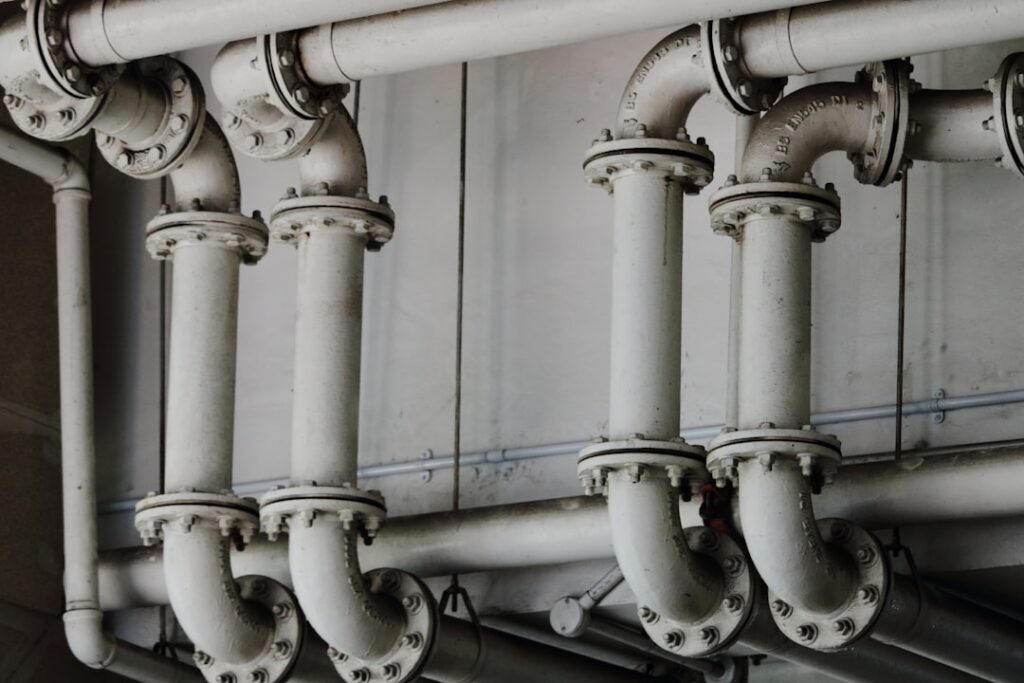
Older basements often hold a clue to the home’s original heating system: pipes wrapped in white, gray or tan insulation, sometimes with hard, plaster-like lumps at every elbow. Asbestos wrapped pipes were common on steam and hot water systems for much of the twentieth century, and the material is still in place in many homes. This guide explains the main types of old pipe insulation and how they usually look, why testing has to come before any handling, how to judge condition, and how repair, encapsulation and removal compare. It also covers cost drivers, protective equipment and what to expect in older Colorado homes. It summarizes EPA and OSHA guidance current as of 2026 and is educational only. A certified asbestos professional should make the call on any specific pipe run, and Colorado projects may also fall under state rules.
Part of our Asbestos in the Home guide — start there for the full picture →
Is this mold, asbestos, or water damage? Get a free instant screen
Upload a clear photo of the suspect area. You'll get an instant AI screening opinion and what to do next. This is screening guidance, not a professional determination.
Screening guidance only. AI can be wrong. Confirm asbestos, mold type, or lead with lab testing or a licensed professional before acting.
What Asbestos Wrapped Pipes Usually Look Like
Asbestos was valued for heat resistance, which made it a natural fit for insulating pipes that carried steam or hot water. The EPA lists “hot water and steam pipes coated with asbestos material or covered with an asbestos blanket or tape” among the places asbestos may be found in homes, and OSHA’s asbestos overview names insulation for pipes, including steam lines, as one of the material’s historic uses.
There is no single look. Pipe insulation came in several forms, and the same house can have more than one. The descriptions below are typical patterns, not identification rules, and many non-asbestos insulations look similar.
Common types of old pipe insulation
| Insulation type | Typical appearance | Notes |
|---|---|---|
| Corrugated air-cell | Gray or off-white paper-like layers with a corrugated, cardboard-like cross section, usually under a cloth or paper jacket | Often found on hot water and steam lines in basements; the layered structure can become crumbly with age |
| Magnesia or calcium silicate block | Thick, chalky white or off-white half-round sections, often jacketed with canvas or paper | Common on larger steam pipes; chalky material can be friable when damaged |
| Cloth or paper wrap | White or gray fabric-like or papery spiral wrap directly on the pipe | Sometimes painted; resembles asbestos tape used on ductwork |
| “Mudded” fittings | Hard, smooth, plaster-like coating molded around elbows, tees and valves | Often applied on site with a cement-like compound; can appear on lines otherwise insulated with fiberglass |
| Boiler and tank lagging | Cement-like coating or block insulation on the outside of boilers, water tanks and breeching | Usually part of the same heating system as the pipe wrap |
| Asbestos-cement pipe | Rigid gray pipe, often for water mains, sewer or flue use rather than insulation | A different product; see the guide to asbestos cement pipe |
For deeper detail on individual products, see the guides to asbestos pipe insulation and asbestos pipes. Rigid gray pipe used for water, sewer or vents is a separate topic covered in the guide to asbestos cement pipe.
Clues from the home and the system
Age is the strongest clue. OSHA’s construction standard treats thermal system insulation and surfacing material in buildings constructed no later than 1980 as “presumed asbestos containing material” unless proven otherwise. That does not mean every pre-1981 pipe wrap contains asbestos, or that later homes are clear, but it explains why professionals approach old pipe insulation cautiously.
Other clues include a boiler or the remnants of one, steam radiators, old gravity-fed heating, and pipes that run through crawl spaces or basement ceilings to radiators on upper floors. A newer furnace sitting next to wrapped pipes is a common sight: the heating appliance was replaced, but the old distribution piping stayed.
Test Before Touching Anything
The EPA states that you generally cannot tell whether a material contains asbestos simply by looking at it unless it is labeled, and that when in doubt the material should be treated as if it contains asbestos and left alone. A lab test is the only way to confirm.
The EPA also recommends that a trained and accredited asbestos professional take samples rather than homeowners, because sampling done incorrectly can be more hazardous than leaving the material alone. Pipe insulation is a good example of why. Cutting into air-cell or chalky block insulation can release more fiber than sampling a firm floor tile, and the jacket often hides how deteriorated the inner material is.
The guide to asbestos tests compares professional sampling, mail-in lab kits and what each costs, and the guide to asbestos test results explains PLM reports, percentages and “none detected” results. Test kits are also listed in the asbestos test kit category for homeowners comparing options.
When testing is not urgent
The EPA says that if building materials are not damaged and will not be disturbed, the home does not need to be tested. Intact, jacketed pipe insulation in a basement no one is remodeling can often wait. Testing becomes important before plumbing or heating work, a basement finish, a boiler replacement, or if the wrap has started to break down.
Assessing the Condition of Pipe Insulation
Risk depends far more on condition and on what is going to happen to the material than on the simple presence of asbestos. The EPA describes undamaged asbestos-containing material that will not be disturbed as unlikely to release fibers, and lists the activities that do release them: disturbing, damaging, improper removal, repairing, cutting, tearing, sanding, sawing, drilling or scraping.
The EPA suggests looking for signs of wear or damage such as tears, abrasions or water damage, and notes that damaged material is a bigger concern when it is often disturbed by hitting, rubbing or handling, or exposed to extreme vibration or air flow.
What to look for on a pipe run
- Jacket condition. A tight, painted canvas or paper jacket protects the insulation underneath. Torn or missing jacketing exposes it.
- Crumbling or powdery insulation. Air-cell and block insulation that flakes when touched, or that leaves debris on the floor or on stored items below, is in poor condition.
- Water damage. Leaks from fittings or condensation can soften wraps and cause them to sag or fall away.
- Damaged elbows. Mudded fittings sometimes crack and break off, especially where pipes have been bumped or where repairs were made nearby.
- Partial removal. Sections where a previous owner or contractor cut out insulation to make a repair can leave ragged, exposed edges.
Friable versus intact
Friable material can be crumbled by hand pressure, and much older pipe insulation becomes friable over time. OSHA defines “intact” material as asbestos-containing material that has not crumbled, been pulverized, or otherwise deteriorated so that the asbestos is no longer likely to be bound with its matrix. Intact, jacketed insulation is the low-risk case. Crumbling, exposed insulation is the case that needs attention.
Repair, Encapsulate or Remove
For pipe insulation that is confirmed or presumed to contain asbestos, the EPA describes a set of options. For slightly damaged material, it suggests that sometimes the best approach is to limit access and avoid touching or disturbing it. For material that is more than slightly damaged or that will be disturbed, it describes repair and removal by trained and accredited professionals.
Repair: sealing and covering
Repair keeps the asbestos in place. The EPA describes two forms. Sealing, or encapsulation, treats the material with a sealant that binds the fibers together or coats the material so fibers are not released, and the EPA specifically says pipe, furnace and boiler insulation can sometimes be repaired this way. Covering, or enclosure, places something over or around the material; the EPA notes that exposed insulated piping may be covered with a protective wrap or jacket. Both should be done only by a professional trained to handle asbestos safely. The guide to asbestos encapsulation explains products, limits and how encapsulated material is managed afterward.
Repair generally suits insulation that is mostly intact with localized damage. It does not suit insulation that is falling apart along its length.
Removal
The EPA notes that removal may be required when remodeling or major changes will disturb the material, or when damage is extensive and cannot otherwise be repaired, and warns that improper removal can increase exposure. For pipe insulation, the EPA also notes that for some repairs, such as pipe insulation removal, plastic glove bags may be adequate, sealed with tape and disposed of properly afterward. OSHA’s construction standard allows glove bag systems for removing asbestos from straight runs of piping and from elbows and other connections, with specifications such as 6 mil plastic and bags designed for fittings when used on elbows.
Longer or more deteriorated runs usually call for full containment with plastic sheeting and controlled air, which takes more time and costs more.
Never dry-strip pipe insulation
Pulling dry insulation off a pipe, knocking off mudded elbows with a hammer, or wire-brushing residue are the highest-risk ways to handle it. The EPA advises that removal crews wet asbestos material with a fine mist before removal, avoid breaking it into small pieces, and seal waste in leak-tight, labeled bags. OSHA’s construction standard prohibits dry sweeping, shoveling or other dry cleanup of dust and debris containing asbestos, along with using compressed air to remove asbestos except with an enclosed ventilation system. Those rules exist because dry handling sends fibers into the air.
Boilers, Steam Systems and Older Colorado Homes
Hot water and steam heat were common in older housing across the Front Range, including early neighborhoods in Denver, Englewood, Littleton, Golden, Boulder and Colorado Springs. Many of those homes have since switched to forced-air furnaces, but the pipe runs, abandoned radiators and sometimes the original boiler can still be in the basement. Wrapped pipes are also found in some mid-century homes with hydronic baseboard systems.
Boiler rooms are worth looking at as a whole. The EPA lists oil and coal furnaces and door gaskets with asbestos insulation among common locations, and OSHA’s definition of thermal system insulation covers material applied to pipes, fittings, boilers, breeching, tanks and ducts. When a boiler is being replaced or removed, the insulation on the boiler itself, the flue connection and the near piping is typically in the work zone. The guide to asbestos tape on ductwork covers related materials found where a forced-air system replaced a boiler.
Colorado rules
Colorado regulates asbestos work through the state health department’s air quality program, commonly referred to as Regulation No. 8. Requirements generally cover inspection before renovation or demolition above certain quantities and who may perform abatement, and they can apply to single-family homes. Trigger amounts and procedures change, so confirm current requirements with the Colorado Department of Public Health and Environment or the local building department before any work.
Cost Factors and Protective Equipment
Abatement pricing for pipe insulation varies widely. Rather than a single number, it helps to understand what moves the price. The guide to asbestos abatement cost covers typical ranges and regional factors in more depth.
What drives the cost
- Linear footage and pipe diameter. Longer runs and larger pipes mean more material and more labor.
- Number of fittings. Elbows, tees and valves take more time than straight runs, especially if they are mudded.
- Access. Open basement ceilings are easier than tight crawl spaces, finished ceilings or pipes inside walls.
- Condition. Crumbling insulation often requires more containment than intact, jacketed insulation.
- Method. Glove-bag work on short runs is generally less involved than full negative-pressure containment.
- Testing and clearance. Pre-work sampling, and any air monitoring or clearance testing after the job, add separate costs.
- Disposal and permitting. Waste handling and any required state notifications or fees.
- Restoration. Re-insulating pipes that stay in service with modern insulation after removal.
Asking for itemized quotes that separate testing, abatement, disposal and re-insulation makes comparisons easier.
Protective equipment
Respiratory protection for asbestos work is a professional matter. OSHA’s construction standard places removal of thermal system insulation in its highest-risk work class, requires respirators for that class, and sets selection, fit testing and training requirements for employers. A basic dust mask or N95 is not a substitute. The guide to masks for asbestos removal explains the respirator types used by abatement crews, and why fit and training matter as much as the mask itself.
Homeowners are generally better served by staying out of the work area altogether. The EPA recommends that household members and pets stay out until the work is complete, that the work area be sealed from the rest of the house, and that the heating and air conditioning system be turned off.
Wrapped Pipes During Projects, Inspections and Sales
Most encounters with asbestos wrapped pipes happen because some other job is about to begin. A plumber needs to reroute a supply line, a heating contractor is replacing a boiler with a high-efficiency unit, or a basement is being finished and the ceiling pipes are in the way. Each of those projects can turn intact insulation into disturbed insulation in a matter of minutes.
Plumbing and heating repairs
Cutting a pipe to add a fitting usually means cutting the insulation around it. If the wrap has not been tested, the safer path is to pause, have a sample taken, and plan the repair around the result. Where only a short section needs to come off, a trained crew can often use a glove bag on that section alone, which keeps the rest of the run intact. Abandoned lines that no longer carry water or steam are sometimes left in place and encapsulated rather than removed, which can be less disruptive if the pipes are not in the way.
Basement finishing
Framing a soffit around insulated pipes or drywalling a ceiling over them does not remove the asbestos. It hides it, which can make future repairs riskier for whoever opens the ceiling next. The EPA’s enclosure option involves deliberately covering material so fibers are not released, done by a trained professional, which is different from simply building over pipes during a remodel. Document what is behind any new finishes so later contractors know where it is.
Home inspections and sales
Standard home inspections usually note suspect pipe insulation as a visible condition without confirming asbestos, since confirmation requires a lab. Buyers who see a note about wrapped pipes in a report can ask for testing during the inspection period, request documentation of any past abatement, or factor removal or encapsulation into negotiations. Sellers who have test results, abatement contracts or clearance reports on file can make that conversation simpler. Disclosure obligations vary, so a real estate professional is the right source on what has to be disclosed in a specific transaction.
Keeping records
Whatever path is chosen, keep the lab report, a sketch or photos showing which pipes were sampled and what was found, the contractor’s written contract and assurance of completion, and any clearance results. Those records reduce repeat testing and help the next contractor plan safely.
Working With Contractors and Living With Wrapped Pipes
The EPA describes two kinds of asbestos professionals: inspectors, who examine, sample and recommend, and contractors, who repair or remove. It recommends hiring separate firms for each to avoid a conflict of interest, and asking for documentation of federal or state-approved training. It also notes that federal law does not require accreditation for work in detached single-family homes, though some states and localities do.
Questions worth asking
- Will the work use glove bags, mini-enclosures or full containment, and why that method for these pipes?
- Will the material be kept wet throughout removal?
- Will cleanup use HEPA vacuums and wet wiping, with waste in sealed, labeled bags?
- Who handles any required Colorado notification or permit?
- Will an independent party do visual inspection or air testing after the work?
Get the work plan, cleanup steps and the regulations the contractor will follow in a written contract, as the EPA recommends, and ask for written assurance at the end that all procedures were followed.
Living with intact pipe wrap
Intact, jacketed insulation can stay in place for years. Keep storage away from the pipes, tell plumbers and electricians where it is before they work nearby, and avoid hanging anything from insulated lines. Check the jackets periodically for tears or water damage, and if debris appears, do not sweep or vacuum it with a household vacuum, which the EPA cautions against. For a broader overview, the asbestos and lead guide and the asbestos hub cover other materials found in older Front Range homes.
References
- Learn About Asbestos — U.S. Environmental Protection Agency
- Protect Your Family from Exposures to Asbestos — U.S. Environmental Protection Agency
- Asbestos – Overview — Occupational Safety and Health Administration
- 29 CFR 1926.1101 Asbestos (Construction) — Occupational Safety and Health Administration
Frequently asked questions
How do you know if pipe wrap contains asbestos?
Only a lab test can confirm it. Corrugated air-cell, chalky magnesia block, cloth wraps and mudded elbows are common forms on older steam and hot water pipes, but non-asbestos insulation can look similar. The EPA recommends treating suspect material as asbestos and having a trained professional take samples.
Are asbestos wrapped pipes dangerous if left alone?
The EPA says asbestos-containing material in good condition that will not be disturbed is unlikely to release fibers. Risk rises when insulation is torn, crumbling or water-damaged, or when plumbing, heating or remodeling work will cut into it.
Can asbestos pipe insulation be encapsulated?
Often, if it is mostly intact. The EPA says pipe, furnace and boiler insulation can sometimes be sealed, and that exposed insulated piping may be covered with a protective wrap or jacket. Both should be done by a professional trained to handle asbestos.
Can a homeowner remove asbestos pipe insulation?
It is not recommended. The EPA says removal should be done only by trained and accredited professionals because improper removal can increase exposure. Dry stripping is especially risky, and Colorado may require licensed abatement and notification depending on the amount.
What does asbestos pipe insulation removal cost?
It depends on linear footage, fittings, access, condition, containment method, testing and disposal. Short runs removed with glove bags are generally less involved than long, crumbling runs that need full containment. Itemized quotes make comparison easier.
Found wrapped pipes in an older Front Range basement and want a second opinion before any work starts? Reach out here and we can help connect you with a certified asbestos professional.