Asbestos Sad Iron: How to Identify and Handle Antique Irons
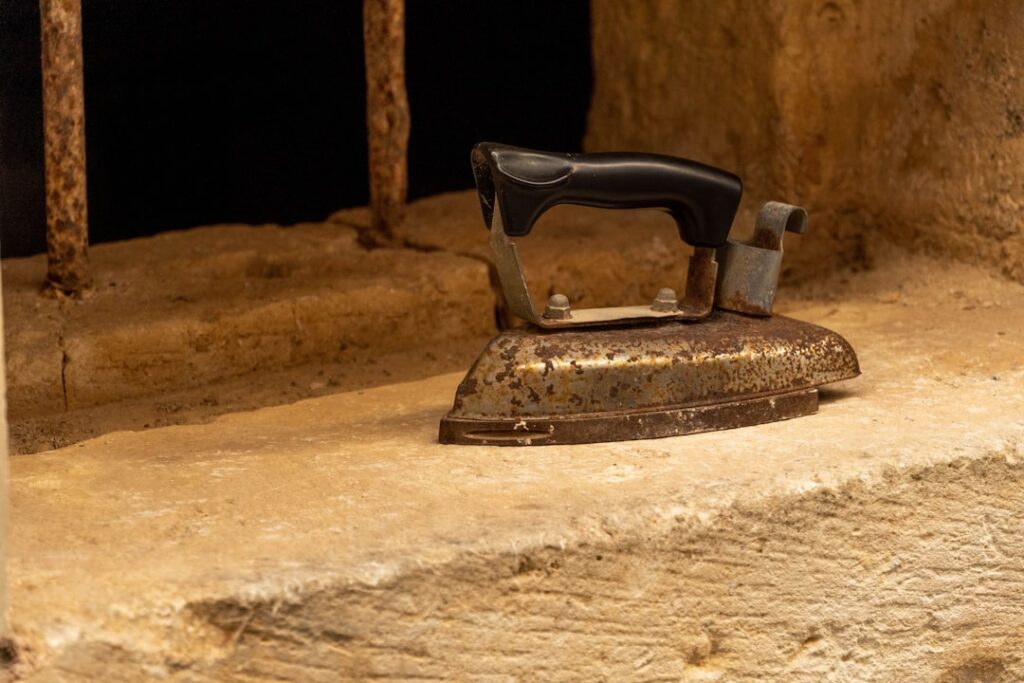
Antique sad irons turn up everywhere: estate sales in Colorado Springs, barn finds on the eastern plains, a grandparent’s mantel in Fort Collins, a doorstop in a Denver bungalow. Most are nothing more than a block of cast iron. A smaller group, mostly later “safety” or insulated designs, may carry an asbestos-containing liner in the hood, a pad under the handle, or a stand. That is where the phrase “asbestos sad iron” comes from, and it is why collectors, sellers and new homeowners ask whether these irons are safe to keep. This guide explains what a sad iron is, which parts could contain asbestos, how to tell, when testing makes sense, and how to display, store or dispose of one without creating a problem. It is educational only. It draws on general antiques knowledge plus EPA and OSHA guidance current as of 2026, it names no brands, and health questions belong with a physician.
Part of our Asbestos in the Home guide — start there for the full picture →
Is this mold, asbestos, or water damage? Get a free instant screen
Upload a clear photo of the suspect area. You'll get an instant AI screening opinion and what to do next. This is screening guidance, not a professional determination.
Screening guidance only. AI can be wrong. Confirm asbestos, mold type, or lead with lab testing or a licensed professional before acting.
What Is an Asbestos Sad Iron? The Short Answer
A sad iron is a solid flat iron heated on a stove or in a fire and used to press clothes before electric irons became common. “Sad” is an old word for heavy or solid. The basic sad iron is a single casting with a handle, and there is no asbestos in a plain piece of iron.
The concern applies to a subset of designs. Antiques references commonly describe insulated irons in which a detachable hood or cap fitted over a hot iron base, with a heat-resistant liner between the metal hood and the base. That liner kept the handle cool and held heat in the iron. On some of these irons the liner is reported to have been made with asbestos, often described as a gray or off-white board, paper or fabric layer. The exact material varied by maker, era and country, and many hoods contain no asbestos at all. Without a label or a lab result, nobody can say which is which by looking.
So the practical answer is this. A plain cast iron sad iron is just iron. An insulated or hooded iron, or one with a padded handle, may contain an asbestos-containing part, and that part only becomes a real exposure concern if it is worn, crumbling or disturbed. EPA’s general position on asbestos in the home applies here: material that is in good condition and will not be disturbed should be left alone.
Where Asbestos Could Be in an Antique Iron
Asbestos found its way into heat-handling household goods for the same reason it ended up in buildings. EPA’s Learn About Asbestos page explains that because of its fiber strength and heat resistance, asbestos has been used in building materials for insulation and as a fire retardant, and in a wide range of manufactured goods, including “heat-resistant fabrics,” gaskets and coatings. An iron that had to stay hot on one side and cool on the other was a natural candidate.
The table below summarizes the parts most often discussed by collectors. Treat it as a guide to where to look, not as a statement that any given iron contains asbestos.
| Item part | Possible material | Risk if intact | Risk if damaged |
|---|---|---|---|
| Solid cast iron base and sole plate | Cast iron or steel | None from asbestos | None from asbestos; rust is a cosmetic issue |
| Detachable hood or cap liner | Possibly asbestos board, paper or cloth on some designs; otherwise wood, cork, air gap or other insulation | Likely low if sealed inside the hood and not handled roughly | Higher if the liner is crumbling, flaking or exposed; may release fibers |
| Handle grip or pad | Wood, Bakelite-type plastic, or occasionally a wrapped insulating pad | Likely low for solid wood or plastic | A frayed fabric or board wrap could shed fibers if it contains asbestos |
| Iron stand or trivet pad | Metal; some stands had insulating pads or mats | Likely low if firm and unbroken | Possible fiber release if a pad is powdery or torn |
| Storage box or heating stove accessories | Wood, metal, or occasionally insulating board | Likely low | Possible concern if board is broken or sanded |
Hoods and liners
The hood is the part to examine first. On insulated designs, the hood is a separate shell, usually metal, that clips or latches over a hot base. Inside, between the shell and the iron, collectors describe a thin lining. It may look like stiff gray cardboard, a pale fibrous mat, or a woven fabric layer. Some are riveted in; others are glued or simply pressed into place.
Handles and grips
Most handles are wood, plain cast iron, or an early molded plastic. A small number had wraps or pads of insulating material. A solid wooden handle is not a concern. A handle wrapped in a dense, fibrous cloth that frays at the edges is worth a closer look, particularly if it resembles the woven textiles discussed in the asbestos cloth guide.
Stands and accessories
Irons were rested on trivets or stands while they cooled. Stands are usually all metal, but insulating pads and mats were common in kitchens and laundry rooms of the same era. Those pads belong in the same family as the household items covered in the asbestos blanket guide.
How to Tell If a Sad Iron Contains Asbestos
EPA’s Protect Your Family page is direct on this point: generally, you can’t tell whether a material contains asbestos simply by looking at it, unless it is labeled. If in doubt, EPA says, treat the material as if it contains asbestos and leave it alone. That principle is the starting point for any antique.
A careful visual check
A visual check can still narrow things down, as long as it does not involve scraping or prying. With the iron on a tray or sheet of plastic, look for:
- Construction. A single solid casting with no detachable parts has no hidden liner. A two-part iron with a removable hood may.
- Visible lining. Look into the hood from the open edge without removing anything. Note whether a layer is present and whether it is firm or crumbly.
- Condition. Flaking, powdery residue, torn edges, or dust collecting inside the hood suggest the material is breaking down.
- Markings. Some antiques carry patent dates, maker names or material notes cast or stamped into the metal. A marking alone rarely confirms asbestos, but it helps narrow the era.
- Past repairs. Replacement felt, cork or modern insulation suggests the original liner may already be gone.
None of these clues proves the presence or absence of asbestos. They help decide whether testing is worth the effort.
When testing makes sense
Testing is worth considering if the iron has a visible liner that is damaged, if it will be sold or donated and the buyer wants an answer, or if it is going to be restored. EPA notes that sampling done incorrectly can be more hazardous than leaving material alone and does not recommend that homeowners take samples themselves. For building materials, EPA points to a trained and accredited asbestos professional. For a small antique, a reasonable path is to ask a lab or an accredited inspector how they prefer to receive a sample, or to have a professional take it.
Some homeowners use mail-in kits, which typically include sampling instructions and a container. The asbestos home testing kits guide explains how they work and where their limits are. Results usually come back as a fiber type and an estimated percentage; the asbestos test results guide walks through the terms, and asbestos under a microscope shows what the lab is actually looking at. If a lab reports chrysotile, the most common commercial type, the chrysotile asbestos guide covers what that means.
Assume, or test?
For many collectors, assuming the liner contains asbestos and handling the iron accordingly is simpler and cheaper than testing. If the hood stays closed, the liner stays intact, and nobody intends to restore the piece, a lab result may not change what anyone does. Testing earns its cost when a decision depends on it: a sale, a restoration, or a damaged liner that needs a disposal plan.
How Much Risk Does an Antique Iron Pose?
The risk from any asbestos-containing item depends on whether fibers get into the air. EPA’s Learn About Asbestos page states that, in general, exposure may occur only when the asbestos-containing material is disturbed or damaged in some way to release particles and fibers into the air. EPA’s Protect Your Family page adds that asbestos-containing materials that are not damaged or disturbed are not likely to pose a health risk.
Applied to a sad iron, that suggests a sealed hood with an intact liner sitting on a shelf is a low-concern item. The picture changes when the liner is crumbling, when someone pries the hood off and scrapes out the old lining, or when the iron is used as a tool and banged around. Those are the situations to avoid.
It is still worth understanding why the topic gets attention. OSHA describes asbestos as a group of naturally occurring minerals resistant to heat and corrosion, notes that the fibers associated with health risks are too small to be seen with the naked eye, and lists asbestosis, lung cancer and mesothelioma among the diseases breathing asbestos fibers can cause. EPA adds that the greater the exposure, the greater the chance of harmful health effects, and that smoking makes the lung disease risk worse. A small, intact liner is not the same as years of occupational exposure, but those facts are why careful handling is the standard advice.
Handling, Displaying and Storing a Collectible Iron
Most people who own an antique iron want to keep it. That is usually reasonable with a few precautions. The guiding rule, drawn from EPA’s do’s and don’ts for homeowners, is to avoid any activity that damages the material.
Do not sand, scrape or break it
EPA’s list of homeowner don’ts includes not sawing, sanding, scraping or drilling asbestos-containing materials, and not dusting, sweeping or vacuuming debris that may contain asbestos. For an antique iron, that translates to:
- Do not wire-brush, sand or grind the inside of a hood.
- Do not pry out an old liner to “clean it up.”
- Do not use the iron as a hammer, doorstop that gets kicked, or children’s toy.
- Do not blow out dust with compressed air.
- Do not heat the iron on a stove to try it out.
Cleaning the outside of a solid casting is a different matter. Light rust on a plain iron with no liner can be handled as ordinary metal care.
Display options
A hooded iron with an intact liner can usually be displayed if it stays put. Practical steps include:
- Keep it on a shelf or in a cabinet where it will not be knocked or handled often.
- Leave the hood attached rather than separating the parts.
- Consider a closed display case for an iron with a visibly worn liner, which keeps dust contained and hands off.
- Keep it out of reach of children and pets, consistent with EPA’s advice to limit children’s access to materials that may contain asbestos.
- Check it occasionally, as EPA suggests for any suspect material, for new signs of wear, tears or powdery residue.
Storage and moving
For storage, wrap the iron in plastic sheeting or seal it in a heavy plastic bag before boxing it. This keeps any loose particles contained if the liner degrades over time. Label the bag so a future family member or buyer knows what it may contain. When moving house, pack it the same way rather than wrapping it in newspaper that will be shaken out later.
If the liner is already crumbling
A liner that is flaking, powdery or falling out is a different situation. Avoid handling the iron further. If small debris has fallen onto a shelf, EPA’s guidance against sweeping or vacuuming applies; wet wiping with a disposable damp cloth is the approach most guidance describes for small amounts, and the asbestos cleaning guide covers the steps and limits in more detail. Anyone handling damaged material should consider respiratory protection; the masks for asbestos removal guide explains why ordinary dust masks are not enough. For more than a few flakes, a trained professional is the safer route.
Display or Disposal: Deciding What to Do
There is no single right answer. The decision usually rests on condition, sentimental or collector value, and whether anyone will handle the piece.
- Intact liner, valued piece: keep it, display it where it will not be handled, and check it periodically.
- Intact liner, no particular value: keeping it is still reasonable; disposal is also reasonable if nobody wants it.
- Damaged liner: bag it, avoid handling, and either have it tested or treat it as asbestos waste.
- Restoration planned: test first. A restorer needs to know before the hood comes apart.
How to dispose of a suspect iron
Disposal rules for asbestos waste are set by states and local landfills, and they vary. A cast iron base with no liner is scrap metal. A hood with a suspect liner is the part that needs care. The general practice described in EPA’s guidance for contractors is that asbestos waste goes into sealed, leak-proof, labeled heavy-duty plastic bags. For a household item, that means double-bagging the hood without breaking it, labeling it, and calling the local landfill or county solid waste office to ask whether and where they accept it. Along the Colorado Front Range, county and municipal waste programs differ, so a phone call before the trip saves a wasted drive. The disposing of asbestos tiles guide explains the same bag-label-call process for a more common household material.
Selling, donating and disclosure
Antique irons are bought and sold every weekend. If the seller knows or suspects a liner contains asbestos, saying so in the listing is the honest course, and some platforms have their own rules on items that contain hazardous materials. A buyer who plans to use or restore the iron will want to know. If a lab result exists, including it with the sale is a simple way to settle the question.
Other Household Products That May Contain Asbestos
A sad iron is rarely the only older item in a house that raises the question. EPA’s Learn About Asbestos page lists places where asbestos may be found, including attic and wall insulation containing vermiculite, vinyl floor tiles and sheet flooring backing, roofing and siding shingles, textured paints and patching compounds, walls and floors around wood stoves protected with asbestos paper, millboard or cement sheets, hot water and steam pipes coated with asbestos material or covered with an asbestos blanket or tape, furnace door gaskets, heat-resistant fabrics, and automobile clutches and brakes.
EPA’s asbestos laws and regulations page also lists Consumer Product Safety Commission bans or restrictions on certain asbestos-containing products, naming emberizing materials, patching compounds, and asbestos-containing garments for general use. Those are specific categories, not a blanket ban on every product, which is one reason older household goods still turn up with asbestos components.
In practice, homeowners who find one suspect antique often find others: ironing board covers, oven mitts, stove mats, old hair dryers, or heat shields behind stoves. The asbestos products guide lists the categories most commonly found in homes. For building materials in a Front Range house, the asbestos hub and the broader asbestos and lead pillar collect guides on flooring, ceilings, pipe wrap, siding and more.
Antiques versus the house itself
It helps to keep proportion. A single hooded iron on a shelf is a small, contained item. Damaged pipe insulation in a basement, or textured ceilings in a house about to be remodeled, involve much more material and a far greater chance of disturbance. EPA suggests having a home inspected by a trained and accredited professional before a remodel or when building materials are damaged. An antique iron is a reason to be careful with that iron, not necessarily a reason to test the whole house.
A Short History of the Sad Iron
Before electricity reached most homes, pressing clothes meant heating a heavy iron on a stove and swapping it for a hot one as it cooled. Households often owned several irons so one could heat while another was in use. The solid handles became uncomfortably hot, which led to wrapped handles, separate cooler handles that clipped onto interchangeable bases, and insulated hoods. These designs are what most collectors mean by later sad irons.
As asbestos became widely used for heat resistance, it appears in descriptions of some of these insulated designs. Not every maker used it, and some irons that look similar used wood, cork or an air gap instead. Electric irons eventually replaced the type, which is why so many sad irons survive as decorative pieces, doorstops and bookends today. Their age, and the era of asbestos use, overlap enough that the question is reasonable to ask, but not enough to assume every old iron is a hazard.
Why the question comes up during home inspections
Antiques left behind in a house at closing, or found in an attic during a pre-listing cleanout, occasionally come up in conversations with inspectors. A standard home inspection does not sample personal property, and most inspectors will not comment on whether an object contains asbestos. What they can do is flag suspect building materials. The iron is the owner’s to evaluate, using the steps above.
References
- U.S. EPA. Learn About Asbestos
- U.S. EPA. Protect Your Family from Exposures to Asbestos
- U.S. EPA. Asbestos Laws and Regulations
- OSHA. Asbestos
Frequently asked questions
Do all antique sad irons contain asbestos?
No. A plain cast iron sad iron is solid metal with no asbestos. The concern applies to some insulated or hooded designs, where a liner between the hood and base may have been made with asbestos. Many hoods used other materials.
Is it safe to keep an asbestos sad iron on display?
EPA says asbestos-containing material in good condition that will not be disturbed is not likely to pose a health risk. An iron with an intact liner, kept on a shelf and not handled, is generally treated as low concern. Check it occasionally for wear.
How can someone tell if the hood liner contains asbestos?
EPA notes that asbestos generally cannot be identified by looking, unless the material is labeled. Only lab analysis confirms it. If in doubt, treat the liner as if it contains asbestos and avoid disturbing it.
Can the old liner be scraped out and replaced?
Scraping or sanding suspect material is on EPA's list of things homeowners should not do. If a restoration is planned, have the liner tested first, and use a trained professional if it contains asbestos.
How is a damaged antique iron disposed of?
Double-bag the suspect part in heavy plastic without breaking it, label it, and call the local landfill or county waste office to ask how they accept asbestos waste. Rules vary by location.
Found a hooded iron or another suspect antique and not sure whether to test, keep or toss it? Send us a photo and a short description and we will point you toward a sensible next step.