Best Iron Filters for Well Water (2026): 6 Picks Compared

The best iron filter for well water depends on three numbers from a lab test: how much iron, how much manganese, and whether there is hydrogen sulfide, the rotten-egg gas that often travels with iron. Low iron in clear water can be handled by cartridge filters in standard housings. Higher iron, manganese and sulfur call for a backwashing tank that oxidizes the iron with air and traps it in a media bed. Orange stains in the toilet, rust-colored laundry and slimy red-brown deposits are the usual signs, but only a test tells you which kind of filter you need. This guide focuses on iron specifically; for a broader view of well treatment including sediment and multi-stage systems, see our main best well water filter roundup.
Part of our Plumbing & Water guide — start there for the full picture →
As an Amazon Associate we earn from qualifying purchases.
How we compared: we compared 14 current Amazon listings returned for well-water iron filters: three air-injection tanks, two other backwashing tank systems, one softener-and-filter bundle, one regenerable resin unit and seven cartridge systems or cartridges. We read what each listing states about the oxidation method, media, stated iron and manganese limits, hydrogen sulfide handling, flow and maintenance. We did not lab-test or install any of them. Prices and availability change, so check the live listing.
Quick picks: the best iron filters for well water
| Product | Best for | Key features | Price | Buy |
|---|---|---|---|---|
| iSpring WCFM400K | Best overall air-injection iron filter |
| $975.99as of Oct 20, 2026 4:09 pm GMT+0000 | Buy now →Check current price |
| DuraWater 5600SXT AIO 1.5 | Iron plus rotten-egg odor |
| $945.00as of Oct 20, 2026 6:34 pm GMT+0000 | Buy now →Check current price |
| PRO+AQUA PRO-WELL-1E | Large households, backwashing |
| $630.20as of Oct 20, 2026 6:34 pm GMT+0000 | Buy now →Check current price |
| DuraWater 48K Softener/Iron | Hardness plus moderate iron |
| $829.00as of Oct 20, 2026 6:34 pm GMT+0000 | Buy now →Check current price |
| iSpring WGB32BM | Low iron, cartridge system |
| $459.00as of Oct 20, 2026 4:09 pm GMT+0000 | Buy now →Check current price |
| Waterdrop WHF21-FG | Compact two-stage cartridge |
| $138.99as of Oct 20, 2026 4:09 pm GMT+0000 | Buy now →Check current price |
Prices are Amazon’s listed prices as of the time shown and change often; check Amazon for today’s price. As an Amazon Associate we earn from qualifying purchases.
The six picks, compared listing by listing
1. iSpring WCFM400K — Best Overall Air-Injection Iron Filter

Whole-house iron and manganese filter using air injection and auto regeneration, media certified to NSF/ANSI 61.
Check price on Amazon$975.99 as of Oct 20, 2026 4:09 pm GMT+0000 — prices change; see Amazon for current price.Why we like it
- Regenerates with air only, no chemical feed
- Filter media certified to NSF/ANSI 61
- Programmable automatic flush intervals
- Clearly warns it is not for hydrogen sulfide
| Specification | Details |
|---|---|
| Method | Air injection with automatic media regeneration |
| Targets | Dissolved iron and manganese, solids and turbidity |
| Certification | Filter media certified to NSF/ANSI 61 |
| Not for | Hydrogen sulfide (listing says H2S can damage the system); does not reduce TDS |
| Control | Digital valve with customizable flush intervals |
| Size / warranty | About 63.5 in tall x 10.5 in wide; 104 lb; 1-year warranty |
iSpring WCFM400K — air-injection whole-house iron/manganese filter, NSF/ANSI 61 media, auto regeneration, not for H2S, 1-yr warranty
The Only Air-Injection System That Names a Media Certification and States Its Limits
Three of the 14 listings are air-injection tanks: this iSpring and two DuraWater “Iron Eater” models. Air injection works by drawing a pocket of air into the top of the tank, which oxidizes dissolved iron so the media bed can catch it, then backwashing the rust to drain. It needs no potassium permanganate or chlorine. The WCFM400K is the only one of the three that names a certification for its media, NSF/ANSI 61, the standard for drinking water system components.
It is also unusually candid. iSpring says the system does not remove hydrogen sulfide and that H2S can damage it, and that it will not reduce dissolved solids. Those warnings are the reason it leads this list: it tells a well owner exactly when not to buy it. If your test shows sulfur, look at the DuraWater pick below.
The listing does not state a maximum iron or manganese concentration in the visible text, which is a real gap for sizing. Call iSpring with your test results before buying. At 63.5 inches tall and 104 lb, it needs floor space, a drain for backwash water and enough well pump flow to backwash the bed properly.
Pros
- Chemical-free air regeneration
- NSF/ANSI 61 media certification
- Clear about H2S and TDS limits
Cons
- Maximum iron level not stated
- Not for hydrogen sulfide
- Tall, heavy tank needing a drain
Check iSpring WCFM400K price on Amazon
2. DuraWater Fleck 5600SXT Air Injection Iron Eater 1.5 — Best for Iron Plus Rotten-Egg Odor
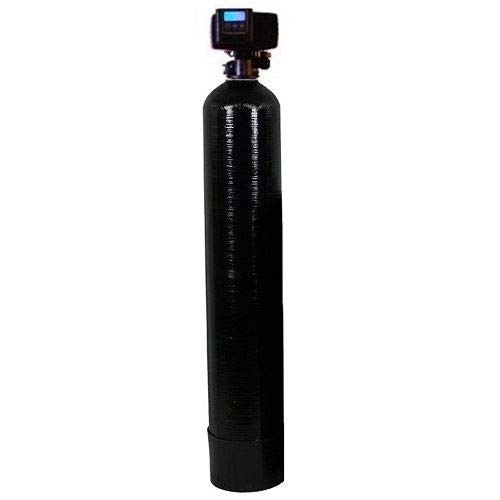
Air-injection tank on a Fleck 5600SXT valve with 1.5 cu ft of catalytic carbon for iron, manganese and H2S.
Check price on Amazon$945.00 as of Oct 20, 2026 6:34 pm GMT+0000 — prices change; see Amazon for current price.Why we like it
- Lists iron, manganese and hydrogen sulfide
- Fleck 5600SXT, a widely serviced valve
- 1.5 cu ft catalytic carbon media
- Daily automatic backwash
| Specification | Details |
|---|---|
| Method | Air injection with daily backwash |
| Media | 1.5 cu ft Centaur catalytic carbon |
| Targets | Iron, manganese, hydrogen sulfide |
| Valve | Fleck 5600 SXT digital |
| Included | 10 x 54 in mineral tank, media, 1 inch plastic bypass |
| Limits / certification | Maximum iron, manganese or H2S levels not stated; no certification named |
DuraWater AIO 1.5 — air injection, Fleck 5600SXT, 1.5 cu ft catalytic carbon, iron + Mn + H2S, 10×54 tank, 1 in bypass
The Air-Injection Tank to Choose When Sulfur Comes With the Iron
Iron and hydrogen sulfide often show up together in well water, and the iSpring above explicitly cannot handle H2S. The two DuraWater air-injection listings say they remove iron, manganese and H2S, and this 1.5 cu ft model uses catalytic carbon, a media type designed for oxidized sulfur and iron. We picked it over the 1.0 cu ft version because more media means more capacity before backwash and a better margin on harder-working wells.
The Fleck 5600SXT control valve is one of the most widely used residential valves, which matters on a rural property where you may need parts or a service tech years from now. DuraWater says installation is DIY with basic plumbing skills.
The weakness is the absence of numbers. The listing does not give a maximum iron, manganese or H2S level, a service flow rate, or a certification. Air-injection systems have real limits on how much sulfur and iron they handle, so share your lab results with the seller before ordering.
Pros
- Handles H2S as well as iron, per listing
- Fleck valve with broad parts support
- Larger 1.5 cu ft media bed
Cons
- No concentration limits stated
- No certification named
- Needs a drain and adequate backwash flow
Check DuraWater AIO 1.5 price on Amazon
3. PRO+AQUA PRO-WELL-1E Heavy Duty Well Filter — Best Backwashing System for Large Households

Backwashing whole-house well filter for 4+ bathrooms, listing iron, hydrogen sulfide, manganese and other contaminants.
Check price on Amazon$630.20 as of Oct 20, 2026 6:34 pm GMT+0000 — prices change; see Amazon for current price.Why we like it
- Sized for households of 4+ people, 4+ baths
- Lists iron, manganese and hydrogen sulfide
- Programmable backlit digital backwash control
- Three connection options for installation
| Specification | Details |
|---|---|
| Method | Backwashing tank with automatic digital control |
| Targets | Iron, hydrogen sulfide, manganese, plus chemicals, VOCs, heavy metals and more |
| Media | Not named; listing mentions prefilled premium-grade media |
| Household size | 4+ bathrooms |
| Build | Fiberglass-lined polyethylene tank; built in the USA per listing |
| Warranty | Bullets say 5-year; spec field says 1 year standard, 3 years with registration |
PRO+AQUA PRO-WELL-1E — backwashing well filter, iron/Mn/H2S claims, 4+ bathrooms, digital control, media not named, warranty stated two ways
The Broadest Contaminant List Among the Backwashing Tanks
Besides the three air-injection tanks, two more listings are backwashing tank systems: this PRO-WELL-1E and the DuraWater softener-iron combo. The PRO+AQUA lists the widest range of targets on the shelf, from iron, manganese and hydrogen sulfide to VOCs, pesticides, lead, uranium and radium. It is sized for larger households with 4 or more bathrooms, and it comes with a programmable digital control and three connection options.
A long contaminant list without numbers is a reason for caution, not confidence. The listing does not name the media, does not say how it oxidizes iron, and gives no concentration limits. Radium and uranium in particular are health contaminants that should be confirmed by testing after treatment, not assumed. It also says it does not reduce TDS.
The warranty is stated two ways, as with other PRO+AQUA listings, so confirm the terms in writing. For a large household with a test showing moderate iron and sulfur, it is a reasonable backwashing option to discuss with the seller.
Pros
- Sized for large households
- Iron, manganese and H2S listed
- Programmable backwash control
Cons
- Media and oxidation method not named
- No concentration limits
- Warranty stated inconsistently
Check PRO+AQUA PRO-WELL-1E price on Amazon
4. DuraWater Fleck 5600SXT 48K Softener/Iron Filter — Best for Hardness Plus Moderate Iron
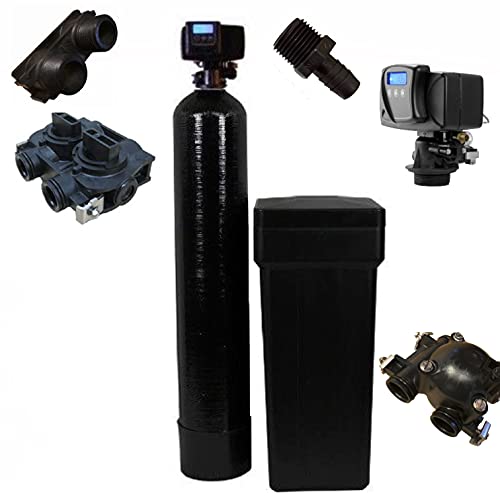
48,000-grain softener with fine mesh resin for iron, on a Fleck 5600SXT metered valve, for 2 to 5 people.
Check price on Amazon$829.00 as of Oct 20, 2026 6:34 pm GMT+0000 — prices change; see Amazon for current price.Why we like it
- One tank handles hardness and iron staining
- Fine mesh resin chosen for iron
- Metered regeneration saves salt and water
- Five-year warranty stated
| Specification | Details |
|---|---|
| Method | Ion exchange softener with fine mesh resin |
| Capacity | 48,000 grains |
| Valve | Fleck 5600SXT digital metered |
| Household size | 2 to 5 people, 2 to 3 bathrooms |
| Included | 3/4 inch bypass; DIY instructions |
| Iron limit / certification | Not stated in listing |
DuraWater 48k-56sxt-FM — 48,000-grain softener/iron filter, fine mesh resin, Fleck 5600SXT metered, 2–3 bathrooms, 3/4 in bypass
The Only Single-Tank Unit Here Sold as Both Softener and Iron Filter
Many wells are both hard and slightly iron-bearing. A softener with fine mesh resin can exchange dissolved ferrous iron along with calcium and magnesium, and this DuraWater is the only listing on the iron-filter shelf that combines the two jobs in one tank. It targets the red staining iron causes and the scale hardness causes, on the same Fleck 5600SXT valve as the DuraWater air-injection pick.
The key word is moderate. Softener resin handles dissolved iron, not iron that has already oxidized into rust particles, and it is vulnerable to fouling at higher iron levels or when iron bacteria are present. The listing gives no iron limit, so this is the pick for a well that tests hard with low iron and no sulfur, not for heavy orange water.
Sized for 2 to 5 people and 2 to 3 bathrooms, it fits a typical family home. The listing does not name a certification.
Pros
- Softening and iron in one tank
- Fleck metered valve
- Five-year warranty stated
Cons
- Not for high iron, oxidized iron or sulfur
- Iron limit not stated
- Uses salt
Check DuraWater 48K Softener/Iron price on Amazon
5. iSpring WGB32BM — Best Cartridge System for Low Iron

Three-stage 20-inch whole-house system: 5 micron sediment, carbon block and an iron filter rated to 3.0 ppm iron.
Check price on Amazon$459.00 as of Oct 20, 2026 4:09 pm GMT+0000 — prices change; see Amazon for current price.Why we like it
- States limits: 3.0 ppm iron, 1.0 ppm manganese
- Sediment and carbon stages protect the iron cartridge
- Up to 15 GPM through 20-inch housings
- No drain, salt or backwash needed
| Specification | Details |
|---|---|
| Stages | 5 micron polypropylene sediment, coconut carbon block, FM25B iron and manganese cartridge |
| Stated limits | Iron up to 3.0 ppm; manganese up to 1.0 ppm |
| Flow | Up to 15 GPM; 1 inch NPT ports |
| Cartridge life | Sediment and carbon up to 100,000 gallons or 12 months; FM25B about 50,000 gallons at 3.0 ppm |
| Media claim | Catalytic iron media lasts up to 3 times longer than greensand, per iSpring |
| Warranty | 1-year limited with registration |
iSpring WGB32BM — 3-stage 20 x 4.5 in cartridges, iron to 3.0 ppm, Mn to 1.0 ppm, up to 15 GPM, 1 in NPT, no drain needed
One of Few Listings That States an Iron Ceiling, With No Drain or Backwash
Four listings on the shelf state the same limit, because they use the same iSpring iron cartridge family: up to 3.0 ppm iron and 1.0 ppm manganese. Those are the clearest concentration limits on the shelf. The WGB32BM is the complete three-stage system built around the 20-inch FM25B cartridge, and its sediment and carbon stages catch particles and odor before water reaches the iron stage.
Cartridge systems have practical advantages. They need no drain for backwash water, no salt, no electrical outlet and no minimum pump flow for backwashing. The trade-off is ongoing cartridge cost, and a hard ceiling: above 3.0 ppm iron, iSpring itself points buyers toward its WCFM air-injection systems. The listing also notes the iron media lasts up to three times longer than greensand because the catalytic media is not consumed.
The listing describes NSF/ANSI testing of the sediment and carbon cartridges by an independent third party, not certification. Iron cartridges also do nothing for hydrogen sulfide in quantity, and they clog faster if iron bacteria are present.
Pros
- Stated iron and manganese limits
- No drain, salt or power needed
- Up to 15 GPM flow
Cons
- Limited to 3.0 ppm iron
- Ongoing cartridge replacement
- Not for H2S or iron bacteria
Check iSpring WGB32BM price on Amazon
6. Waterdrop WHF21-FG — Best Compact Two-Stage Iron Cartridge System

Two-stage 10-inch system with iron/manganese and carbon cartridges, tested at 96.4% iron reduction, up to 15 GPM.
Check price on Amazon$138.99 as of Oct 20, 2026 4:09 pm GMT+0000 — prices change; see Amazon for current price.Why we like it
- Publishes tested iron and manganese percentages
- Compact 10 x 4.5 inch housings
- Up to 15 GPM through 1 inch ports
- Iron media claims compliance with NSF/ANSI 61 and others
| Specification | Details |
|---|---|
| Stages | Iron and manganese reduction cartridge, then coconut shell GAC |
| Tested results | Up to 96.4% iron, 98.2% manganese, 95.63% chlorine (third-party tested) |
| Flow | Up to 15 GPM; 1 inch NPT |
| Cartridge life | Up to 50,000 gallons or 6 months |
| Standards claimed | Both cartridges meet NSF/ANSI 372; iron media meets 61, 42, 44, 53 and 58, per listing |
| Size / weight | About 15.6 x 14.4 x 7.5 in; 10 lb; 1-year warranty |
Waterdrop WHF21-FG — 2-stage 10 x 4.5 in, iron/Mn + GAC, 96.4% Fe / 98.2% Mn tested, 15 GPM, 50,000 gal / 6 mo
The Smallest Whole-House Iron System, With Published Test Percentages
Among the cartridge systems, the WHF21-FG is the most compact: two 10-inch housings in a package about 15.6 inches tall and 10 lb. It is also one of two Waterdrop listings that publish percentage results for iron and manganese reduction. A percentage is useful, but it is not the same as a ceiling. A 96.4% reduction from 2 ppm iron leaves you well under the EPA’s 0.3 mg/L secondary standard; the same percentage from a much higher starting level may not.
Waterdrop says the iron media meets a long list of NSF/ANSI standards, including 61 and 372. That is a claim about the media’s materials and compliance, not a performance certification of the assembled system for iron. Both cartridges carry a 6-month or 50,000-gallon rating.
Waterdrop’s larger three-stage WHF3T-FG is the top pick in our main well filter roundup. This two-stage version suits a utility space where a bigger system will not fit and iron is low.
Pros
- Compact two-housing design
- Tested reduction percentages published
- 15 GPM flow, 1 inch ports
Cons
- No stated maximum iron level
- 6-month cartridges
- No separate sediment cartridge
Check Waterdrop WHF21-FG price on Amazon
Test first: iron, manganese, sulfur and bacteria
An iron filter is chosen from test results, not from stains. The CDC notes that EPA rules for public water systems do not apply to private wells, so the owner is responsible for testing, and recommends testing at least once a year for total coliform, nitrates, total dissolved solids and pH. The EPA’s well guidance adds that stained plumbing fixtures and laundry call for testing iron, copper and manganese, and an objectionable taste or smell calls for testing hydrogen sulfide.
The EPA’s secondary standards give the thresholds where problems appear: 0.3 mg/L for iron (rusty color, sediment, metallic taste, reddish or orange staining) and 0.05 mg/L for manganese (black to brown color and black staining). These are aesthetic standards, not health limits, but they are the levels a filter needs to get you under.
Ask the lab for four results: total iron, manganese, hydrogen sulfide and pH. Low pH affects how well oxidizing media work. Our guide to well water testing explains how to order a useful panel, and Front Range owners in granite-rich areas should add radon in water, covered in testing for radon in well water.
Air injection, catalytic media and greensand: how iron filters work
Iron in a well usually arrives dissolved and invisible, then turns orange when it meets air. Every iron filter on this shelf works by forcing that oxidation to happen inside the filter, then catching the particles.
- Air injection (AIO): the iSpring WCFM400K and both DuraWater Iron Eaters draw air into the tank to oxidize iron, then backwash the trapped rust to drain. No chemicals; needs a drain, power and adequate pump flow.
- Catalytic media cartridges: the iSpring FM-series and Waterdrop iron cartridges use media that speeds oxidation and filtering in a standard housing. No drain, but cartridges need replacing and have stated limits.
- Greensand: a traditional manganese-coated media that typically regenerates with potassium permanganate or chlorine. No greensand system appears on this shelf; iSpring’s listings compare their catalytic media to it, saying theirs lasts up to three times longer because it is not consumed.
- Softener resin: fine mesh resin in a softener can exchange low levels of dissolved iron along with hardness, as the DuraWater combo does, but it is not a high-iron solution.
Our guide to well water filtration systems shows how these fit together with sediment filters, softeners and disinfection.
Iron bacteria: the problem a filter alone will not fix
Iron bacteria are naturally occurring organisms that feed on dissolved iron and leave reddish-brown slime in toilet tanks, on well equipment and inside filters. The problems they cause are mostly practical: they foul cartridges and media quickly and can cause odors. Slimy deposits, rather than gritty rust, are the usual clue.
No listing on this shelf claims to treat iron bacteria. The usual approach is to disinfect the well and plumbing, often through shock chlorination by a well professional, and then filter. Installing an iron filter on a well with an active bacterial problem tends to shorten media life and leave the underlying issue in place. The EPA notes that high bacteria levels can sometimes be controlled by adding disinfection to a well, and that some well problems need a new source entirely.
Installation, drains and when to call a well professional
Backwashing tanks need a drain that can accept the backwash flow, a bypass valve, an outlet for the control head and a well pump able to supply the backwash rate. Cartridge systems need only space on the main line and room to swap housings. In both cases, iron treatment goes ahead of any softener and after a sediment filter if the well carries sand.
Bring in a well or water treatment professional when iron is high, when sulfur and iron appear together, when bacteria are suspected or when the pump and pressure tank are borderline. Buyers of Front Range homes on wells should get a water test and a look at the well equipment before closing. Our plumbing and water hub explains what inspectors check, and you can contact us to connect with a qualified local inspector.
References
- Secondary Drinking Water Standards: Guidance for Nuisance Chemicals — U.S. Environmental Protection Agency
- Protect Your Home’s Water — U.S. Environmental Protection Agency
- Guidelines for Testing Well Water — Centers for Disease Control and Prevention
Frequently asked questions
What is the best iron filter for well water?
It depends on your test. For moderate iron and manganese without sulfur, the iSpring WCFM400K air-injection system stands out for its chemical-free regeneration and NSF/ANSI 61 media certification. If hydrogen sulfide is present too, the DuraWater 5600SXT air-injection unit with catalytic carbon lists iron, manganese and H2S. For low iron, a cartridge system such as the iSpring WGB32BM is simpler.
How much iron in well water is too much?
The EPA's secondary standard for iron is 0.3 mg/L. Above that level, water can look rusty, taste metallic and leave reddish or orange stains. It is an aesthetic standard rather than a health limit, but it is the usual target for treatment.
Is air injection better than greensand for iron?
Air injection avoids chemical regeneration, while greensand traditionally regenerates with potassium permanganate or chlorine. Both need backwashing and a drain. No greensand system appears on this shelf; the choice should follow your iron, manganese, hydrogen sulfide and pH results.
Can a water softener remove iron from well water?
A softener with fine mesh resin can handle low levels of dissolved iron along with hardness, as the DuraWater 48K combo is designed to do. Higher iron, oxidized iron or iron bacteria foul softener resin, so those wells need a dedicated iron filter ahead of the softener.
What causes slimy orange deposits in a toilet tank on well water?
Slimy reddish-brown deposits usually point to iron bacteria rather than plain iron. No iron filter on this shelf claims to treat them. The usual approach is to disinfect the well and plumbing first, often through shock chlorination by a well professional, and then filter.
Buying a Front Range home with orange-stained fixtures and a private well? Reach out through our contact page to connect with an inspector who can evaluate the well system and water quality.