Testing for Radon in Well Water: What to Know

Most radon conversations focus on the air seeping up from soil into a basement, but for homes on a private well, water is a second pathway worth checking. Radon dissolves into groundwater as it passes through uranium-bearing rock, and that water then carries the gas into the home, where it escapes into the air during showers, laundry, and dishwashing. Testing for radon in well water tells homeowners whether their water supply is adding to the radon they breathe. This guide summarizes EPA guidance current as of 2026 and explains why private wells matter, how the test works, and what the results mean. It is educational only and does not diagnose any condition or replace a certified professional; consult a certified lab for testing and a qualified treatment specialist for remediation decisions.
Part of our Radon Levels guide — start there for the full picture →
Should You Test Your Well Water for Radon?
If your home draws from a private well, testing for radon in well water is worth considering, especially in regions with elevated geologic radon. Radon in water is primarily a concern for private wells that tap groundwater from rock formations containing uranium. Public water systems that use surface water generally release dissolved radon before it reaches the tap, and many regulated systems are monitored, so the issue centers on private, unregulated wells.
The reason it matters is twofold. The dominant risk from waterborne radon is inhalation, not ingestion: when water is agitated during a shower, washing machine cycle, or running faucet, dissolved radon escapes into the indoor air, adding to the radon already entering from the soil. A smaller, separate risk comes from drinking the water directly. The EPA has studied both pathways, and the inhalation route is generally the larger contributor to overall risk. Because the air pathway dominates, the EPA recommends testing the home’s air for radon first; if air levels are high and the home is on a well, testing the water helps identify whether the well is part of the problem. Our pillar overview of radon testing for Front Range homeowners explains how air and water testing fit together.
How Radon Gets Into Well Water
Radon forms continuously as uranium in soil and rock decays. Groundwater moving through fractured granite and other uranium-bearing formations dissolves radon along the way, so a well drawing from that aquifer delivers radon-laden water to the home. The deeper and more rock-bound the source, the more likely the water carries measurable radon. Surface water, by contrast, loses most of its dissolved radon to the atmosphere before use, which is why the concern is specific to wells.
Once that water enters the house, the radon does not stay put. Any activity that sprays, heats, or agitates the water releases the gas into indoor air. Showering is a notable contributor because hot water and spray maximize off-gassing in an enclosed space. The released radon then mixes with the home’s air, where it adds to whatever is entering through the foundation. Front Range homeowners on wells in the foothills and rural Douglas, Jefferson, or El Paso county areas, where granite is common, have geology that can produce both soil and water radon.
How the Test Works
Testing radon in water requires a different method than testing air, and it must be done carefully to avoid losing the gas before analysis. The homeowner or a sampler collects a water sample directly from a tap, typically following specific instructions to fill a special vial completely with no air bubbles and no aeration, because agitation drives radon out of the sample. The sealed sample is then sent promptly to a certified laboratory, since radon decays and delayed analysis skews the result low.
Because the sampling technique strongly affects accuracy, many homeowners have a professional collect the sample or follow lab instructions exactly. The lab reports the radon concentration in the water, usually in picocuries per liter (pCi/L) of water, which is a different measurement context than the pCi/L used for air. The two numbers are related but not interchangeable; a rough rule the EPA has cited suggests that a large concentration of radon in water contributes a much smaller increment to the air concentration. Homeowners weighing a combined approach can read about pairing water with other checks in our guide to a radon water test.
Choosing a Certified Lab
The accuracy of a radon-in-water result depends heavily on the laboratory that analyzes it, so choosing a qualified lab matters as much as collecting the sample correctly. Radon decays continuously, which means the lab must process the sample promptly and account for the time elapsed since collection. A reputable lab provides clear sampling instructions, the correct vials designed to prevent aeration, and a quick turnaround so the result reflects the water’s true radon content rather than an artificially low number caused by decay during a delay.
Homeowners can look for laboratories that participate in recognized radon proficiency programs or that hold state certification for water analysis, since these credentials indicate the lab follows validated methods. State health or environment departments often maintain lists of certified labs and can advise on local options. Because the sampling technique strongly affects the result, many homeowners either have a professional collect the sample or follow the lab’s instructions to the letter, filling the vial completely with no bubbles and avoiding any agitation. Pairing careful collection with a certified lab is what turns a water test into a number a homeowner can actually trust when deciding whether treatment is warranted. A result from an uncertified source, or one delayed in transit, can read low and provide false reassurance, which is the opposite of what a homeowner needs when health and a costly treatment decision are at stake.
Air First, Then Water
Sequencing matters. The EPA recommends testing the home’s air for radon first, since the air pathway is where the bulk of the health risk and the action level of 4 pCi/L apply. If the air test comes back high and the home is on a private well, water testing helps determine whether the well is contributing. Testing water in a home with low air radon and a public supply is rarely the priority. Letting the air result guide whether to test water keeps spending focused on the larger risk.
What the Results Mean and Treatment Options
There is no single nationally enforced federal limit for radon in private well water the way there is a clear 4 pCi/L air action level; private wells are not federally regulated. Interpreting a water result therefore depends on how much it is contributing to the home’s air radon and on state guidance. A high water concentration paired with elevated air radon points to the well as a meaningful source worth treating. State health departments and certified labs can help homeowners interpret a specific number.
When treatment is warranted, two main approaches exist. Aeration treatment bubbles air through the water in a sealed tank to strip out the radon, venting it safely outdoors; it is generally considered the more effective and preferred method, especially at higher concentrations. Granular activated carbon (GAC) filtration passes water through carbon that adsorbs radon; it works for lower concentrations but can accumulate radioactivity over time and requires careful management and disposal. Both treat the water at the point of entry so the whole home benefits. A qualified water-treatment specialist sizes and installs the right system, and addressing the water source complements any air-side mitigation described in our guide to how to fix radon in a home.
Public Water vs. Private Wells
The distinction between public water systems and private wells explains why radon in water is largely a private-well issue. Public systems that draw from surface water, lakes, rivers, and reservoirs, expose the water to open air during collection and treatment, and dissolved radon escapes to the atmosphere long before the water reaches a tap. Even public systems that use groundwater are regulated and monitored, and many incorporate storage and treatment steps that allow radon to dissipate. As a result, the homeowner who is most likely to face waterborne radon is the one drawing directly from a private, unregulated well that taps groundwater from radon-bearing rock.
Private wells are not covered by the federal Safe Drinking Water Act the way public systems are, which means no agency routinely tests them and the responsibility falls entirely on the homeowner. A well drilled into fractured granite or other uranium-bearing formations can deliver water with meaningful radon, and because the water goes straight from the aquifer to the home with no intervening treatment, whatever radon it carries arrives intact. Owners of private wells in geologically active radon regions therefore have the strongest reason to consider water testing once an air test has shown a problem.
This regulatory gap is also why interpreting a private-well result depends on state guidance rather than a single federal water limit. While the air pathway has a clear EPA action level of 4 pCi/L, there is no equivalent federally enforced standard for radon in private well water. State health departments often provide guidance on when a water concentration is high enough to warrant treatment, factoring in how much the water is contributing to the home’s air radon. A homeowner with a private well who receives a high water result should look to their state program and a certified lab to put that number in context.
The Connection Between Water and Air Radon
Understanding how waterborne radon becomes airborne clarifies why the two pathways are linked and why air testing comes first. Radon dissolved in water does not pose much risk while it sits quietly in a pipe or a glass; the concern arises when the water is agitated, heated, or sprayed, which releases the dissolved gas into the surrounding air. Everyday household activities are surprisingly effective at this off-gassing: a hot shower in an enclosed bathroom, a running washing machine, a dishwasher, and even a faucet filling a sink all liberate radon from the water into the indoor air the household breathes.
The released radon then joins whatever radon is already entering the home through the foundation, raising the overall indoor air concentration. This is why a home on a high-radon well can show elevated air readings even if the soil pathway alone would not account for them, and why the inhalation route is considered the dominant risk from waterborne radon rather than drinking the water directly. The EPA has cited a rough relationship in which a large concentration of radon in water contributes a much smaller increment to the air concentration, which helps explain why air testing is the priority and water testing is a follow-up for homes that test high and rely on a well.
The practical implication is that treating the water addresses one source of the air problem, not a separate issue. A homeowner who mitigates the soil pathway with a sub-slab system but ignores a high-radon well may find air levels remain elevated because the water is still off-gassing radon during daily use. Accounting for both pathways, soil and water, is what gives a private-well household confidence that the home’s air radon has been addressed completely rather than partially.
When to Call a Professional
Test the home’s air for radon first; if it reads at or above the EPA action level of 4 pCi/L and the home is on a private well, then test the well water for radon through a certified laboratory, following sampling instructions precisely or having a professional collect the sample. If results show the well is a significant contributor, consult a qualified water-treatment specialist about aeration or activated-carbon treatment sized for your concentration. State health departments can help interpret a specific water result. For Front Range homeowners on wells in granite-rich areas, checking the water closes a gap that an air test alone can miss, ensuring both pathways are accounted for.
More Questions About Radon in Well Water
How much does it cost to test well water for radon?
Testing well water for radon typically costs about $25 to $60 for a mail-in lab kit and roughly $75 to $150 when a water professional collects the sample, according to industry estimates. The kit usually includes a sealed vial that must be filled without trapping air bubbles, because radon escapes quickly from agitated water. Samples need to reach the lab within a day or two, so overnight shipping is common. Some state health departments and county extension offices offer subsidized radon-in-water testing, which can lower the cost considerably for private well owners.
Is it safe to shower with radon in well water?
Showering with radon-laden well water mainly matters because radon escapes into the bathroom air as the water sprays, adding to the indoor airborne radon level. The water itself contributes a much smaller risk when swallowed. For most homes, radon released from water is a modest share of total indoor radon compared with soil gas, but very high water levels can raise air levels meaningfully, especially in small, poorly ventilated bathrooms. Running the bathroom exhaust fan helps, and homeowners concerned about a high water result should test the indoor air and talk with a certified water treatment professional.
Does a water softener or carbon filter remove radon?
A standard water softener does not remove radon, but a granular activated carbon (GAC) filter and an aeration system both can. GAC filters work for lower radon concentrations and cost less up front, though the carbon gradually accumulates radioactive decay products and may need careful handling when it is replaced. Aeration systems bubble or spray the water so radon escapes and is vented outdoors, and they handle higher concentrations with very high removal rates. Treatment should be installed at the point where water enters the house so every tap and shower is covered.
How often should a private well be tested for radon?
A private well should be tested for radon at least once, and then retested every few years or whenever the indoor air radon level is high, the well is deepened, or a new well is drilled. Radon in groundwater depends on the surrounding rock, especially granite and other uranium-bearing formations, so levels tend to stay fairly stable but can change after drilling work. Homes with a treatment system should test both before and after the unit to confirm it is working. Many owners pair the radon test with routine bacteria and nitrate testing to save on trips and shipping.
References
- Radon in Drinking Water — EPA
- Radon Information for Colorado Residents — CDPHE
- Health Risk of Radon — EPA
Frequently asked questions
Should I test my well water for radon?
If your home is on a private well, it is worth considering, especially where geologic radon is elevated. The EPA recommends testing the home's air first; if air radon is high and you have a well, water testing helps reveal whether the well is contributing.
How does radon get into well water?
Groundwater moving through uranium-bearing rock dissolves radon, so a private well drawing from that aquifer delivers radon-laden water. Activities like showering and laundry then release the gas into indoor air, where it adds to soil-sourced radon.
How is radon in water tested?
A water sample is collected from a tap into a special vial filled completely with no bubbles or agitation, then sent promptly to a certified lab. Careful sampling matters because agitation and delay drive radon out and skew results low.
How is radon in water treated?
Two main methods exist: aeration, which bubbles air through the water to strip radon and is generally preferred, and granular activated carbon filtration for lower levels. A qualified specialist sizes and installs the right point-of-entry system.
Do homes on city water need a radon water test?
Homes on public water rarely need their own radon water test, because water from surface sources such as reservoirs loses most of its radon before it reaches the tap. Utilities using groundwater may have some radon, and a utility's water quality report can answer the question. Indoor air testing remains the priority for every home.
Can radon in well water affect a home sale?
Radon in well water can come up during a home sale, especially in states where lenders or buyers commonly request well water testing. A high result is usually handled by negotiating the cost of an aeration or carbon treatment system. Sellers with test results should disclose them as their state's disclosure rules require.
Where can I get a certified radon water test kit?
Certified radon water test kits are available through state-certified drinking water laboratories, many state radon programs, and some county health departments. The kit should come from a lab that is certified to analyze radon in water specifically. Following the lab's sampling and shipping instructions exactly is essential for a valid result.
Front Range homeowners on a private well who want both air and water radon assessed can connect with a vetted local professional through our contact page to arrange proper testing.
Test your home for radon
Radon is invisible and odorless, so a test is the only way to know your level. A short-term kit gives a first reading in days; a digital monitor tracks it over time.
| Product | Why | Buy |
|---|---|---|
 AirChek Charcoal Radon Test Kit | Lab fee usually included; EPA short-term protocol. | Amazon — $21.95 |
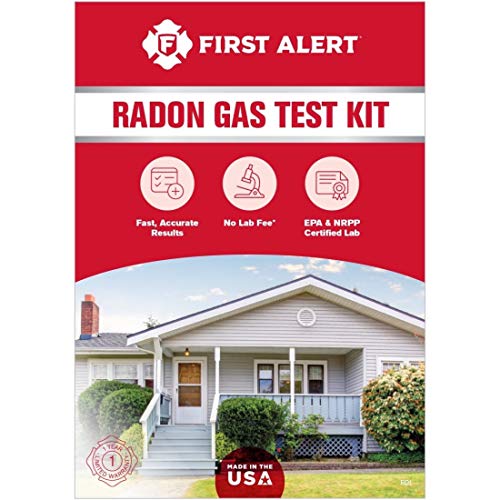 First Alert RD1 Radon Test Kit | Widely stocked; 48-hour charcoal test. | Amazon — $17.95 |
 Airthings Corentium Home | Digital monitor with a long-term average. | Amazon — $146.14 |