Radon in Water Symptoms: Well Water Risk Guide

Radon does not produce immediate symptoms in most people. Persistent cough, shortness of breath, chest pain, or unexplained weight loss can be late-stage indicators of radon-caused lung cancer — but these appear only after years of exposure, not as a warning sign. Searches for radon in water symptoms typically come from homeowners on private well water who have tested their water or heard about radon in private wells and want to understand the health implications. This guide explains why radon in water does not produce acute symptoms, how the inhalation-from-water-use exposure pathway actually works, what EPA water-radon levels matter for action decisions, and what treatment options reduce the risk. The content summarizes EPA and CDPHE guidance current as of 2026 and is not medical advice.
Part of our Radon Levels guide — start there for the full picture →
The Honest Answer About Radon in Water Symptoms
There are no acute symptoms specific to drinking water containing radon. Radon is a noble gas; it does not chemically react with body tissues, does not cause stomach upset, does not produce a taste or smell in water, and does not produce headaches or nausea at the levels found in private wells. The actual risk is long-term and statistical: cumulative alpha-radiation exposure from radon and its progeny increases lung-cancer risk over many years of exposure, with the effect generally appearing 10 to 30 years after initial exposure rather than as a near-term warning.
The inhalation-from-water-use exposure pathway, not direct ingestion, accounts for most of the lung-cancer risk associated with water-radon. Showering, dishwashing, laundry, and other indoor water-use activities release dissolved radon into indoor air, where it can be inhaled along with its short-lived radioactive progeny. Ingestion of water-radon contributes a smaller share of total exposure under typical residential use patterns.
How Water-Radon Differs From Soil-Gas Radon
The dominant residential radon exposure pathway in nearly all homes is soil-gas advection: radon-containing soil gas pulled into the house through foundation cracks, sump pits, and plumbing penetrations. Water-radon is a secondary pathway that becomes significant in homes drawing water from private wells in granite-bedrock or other uranium-rich geological formations.
Municipal water systems generally have low water-radon levels. Surface-water systems (rivers, reservoirs) off-gas dissolved radon during treatment and storage. Groundwater-sourced municipal systems also typically off-gas radon during distribution and storage. EPA’s radon in drinking water page notes that water-radon is a measurable indoor-air contributor mainly in private-well-served homes in geographies with elevated bedrock-uranium content.
The Inhalation-from-Water-Use Conversion Factor
Indoor air radon levels rise when dissolved radon is released from water during showering, dishwashing, laundry, and toilet flushing. The conversion factor is approximately 10,000 to 1: 10,000 pCi/L of radon in water translates to roughly 1 pCi/L in indoor air under typical residential water-use volumes (around 80 gallons per person per day) and typical air-exchange rates.
For a private well measuring 4,000 pCi/L in water, the indoor-air contribution from water use is roughly 0.4 pCi/L. For a well measuring 40,000 pCi/L, the indoor-air contribution is roughly 4 pCi/L, which is the EPA action level for indoor air on its own. The water-pathway air contribution adds to any soil-gas air contribution, so a home with elevated water-radon and elevated soil-gas radon can reach problematic indoor concentrations from the combined exposure.
EPA Action Levels for Water-Radon
EPA has not finalized a federal Maximum Contaminant Level for water-radon under the Safe Drinking Water Act. The agency proposed a multimedia mitigation framework rather than a single MCL. The practical action level cited by most state radon programs and well-water laboratories is 4,000 pCi/L: well-water levels above 4,000 pCi/L typically warrant treatment, while levels below 4,000 pCi/L may be acceptable depending on indoor-air radon test results.
The 4,000 pCi/L water threshold corresponds roughly to a 0.4 pCi/L indoor-air contribution under typical residential use, which is comparable to the average outdoor air radon concentration. State guidelines vary; the Colorado Department of Public Health and Environment radon program publishes Colorado-specific water-radon testing guidance for private-well households, which is especially relevant in granite-bedrock areas of the Front Range foothills.
Why the No-Acute-Symptoms Answer Matters
The lack of acute symptoms from radon in water is the central reason testing is the only way to know the risk. Homeowners who feel fine but draw water from a private well in a high-uranium geological setting can have meaningful water-radon exposure without realizing it. The risk model is cumulative dose over years, similar to the soil-gas radon risk model. Acute symptoms are not part of the diagnostic picture for radon exposure at residential levels.
Symptoms that homeowners sometimes attribute to water-radon — headaches, fatigue, gastrointestinal upset — are not produced by radon at the concentrations found in private wells. These symptoms have other causes that warrant medical evaluation independently of radon testing. A sibling article on symptoms of radon gas covers the noble-gas chemistry and absence-of-symptoms framework in more depth.
Treatment Options for Elevated Water-Radon
Two treatment approaches are common for private wells with elevated water-radon. Aeration is the most effective option. An aeration system sprays well water through an aerated chamber where dissolved radon is stripped into the headspace and vented outdoors. Aeration systems typically achieve 95 to 99 percent radon removal and treat the entire household water supply at the point of entry. Installed cost runs $3,500 to $5,500 in 2026 for a typical residential system.
Granular activated carbon (GAC) filtration is the second option. GAC adsorbs radon onto the carbon media; the radon decays in place over time. GAC systems are less expensive (roughly $1,000 to $2,500 installed) but accumulate radioactivity in the carbon bed, requiring periodic media replacement and careful disposal of spent media. GAC works best for wells with moderately elevated water-radon (under 30,000 pCi/L); higher levels typically require aeration.
Treatment Sizing and Vendor Selection
Sizing depends on household water use, water-radon concentration, and treatment efficiency required. State radon programs maintain lists of certified water-treatment contractors. CDPHE references certified Colorado contractors for both aeration and GAC installation. Verify contractor credentials and request system specifications including expected post-treatment water-radon concentration and recommended maintenance schedule before signing.
When to Test Water-Radon Versus Indoor-Air Radon
For most Front Range homeowners, indoor-air radon testing is the primary screening test. If the home is on municipal water, water-radon is rarely the dominant pathway and testing water adds little to indoor-air results. If the home is on a private well, especially in granite-bedrock foothill areas of Jefferson, Boulder, Clear Creek, or Larimer County, water-radon testing alongside indoor-air testing identifies whether water is contributing meaningfully to indoor exposure.
The decision framework is straightforward. Test indoor air first. If indoor air is at or above 4 pCi/L and the home is on a private well, test water-radon to determine whether soil-gas mitigation alone will solve the problem or whether water-radon treatment is also needed. American Lung Association radon resources include a decision flowchart for water-radon testing.
What This Means for Front Range Well-Water Homes
Front Range homeowners on private wells in granite-bedrock foothill areas should plan for both soil-gas radon testing and water-radon testing. The broader Colorado radon testing guide covers the multi-pathway testing framework, the relative cost of each test, and the typical pattern of findings across Front Range geological settings. A sibling article on what causes radon in homes covers entry pathways including water-pathway radon in more detail.
Homeowners who feel anxious about possible symptoms should remember that radon does not produce acute symptoms at residential exposure levels. The action that reduces risk is testing, then treatment if the results warrant it, not symptom monitoring. NIEHS radon health-topic materials reinforce the same testing-first framework.
Putting It Together
Water-radon does not produce acute symptoms. The exposure pathway that matters is inhalation of dissolved radon released from water during indoor water-use activities, not ingestion. EPA recommends action at roughly 4,000 pCi/L in water for private wells. Aeration treatment achieves 95 to 99 percent removal; GAC filtration is a lower-cost option for moderately elevated levels. Front Range private-well households in granite-bedrock geological settings should plan for both indoor-air and water-radon testing.
Front Range homeowners on private wells who want to talk to a vetted water-radon professional can reach out through our contact page.
Testing the Water Versus Testing the Air
Water-radon testing is a different procedure than indoor-air testing. Water-radon tests collect a sample of water from a tap, sealed in a special vial designed to prevent radon off-gassing during transit. The sample is shipped to a state-certified laboratory for analysis using liquid scintillation counting. Most water-radon tests return results within seven to 14 days. Testing kit cost typically runs $30 to $75 from a state-certified vendor; some state radon programs offer reduced-cost kits for private-well households.
Indoor-air testing uses different devices: charcoal canisters, alpha-track detectors, electret ion chambers, or continuous radon monitors placed in the lowest occupied level of the home. For homes on private wells, running both tests gives a complete exposure picture. If water-radon is elevated but indoor air is acceptable, the water pathway is contributing minimally to indoor exposure. If indoor air is elevated, water testing identifies whether soil-gas mitigation alone will solve the problem or whether water treatment is needed in parallel.
Maintenance for Water-Radon Treatment Systems
Aeration systems require periodic maintenance. The aerator chamber needs periodic cleaning to remove mineral buildup that can reduce treatment efficiency. The radon-vent exhaust line needs visual inspection to confirm proper venting above the roofline and to check for blockages. Replacement parts (pumps, valves, sensors) have typical service lives of five to 15 years depending on the system and water-chemistry conditions.
GAC systems require periodic media replacement. As the carbon media adsorbs radon over time, the bed becomes radioactive. Spent media must be disposed of through a licensed radioactive-materials handler in many jurisdictions, which adds to the ongoing operational cost. Most GAC systems require media replacement every two to five years depending on water-radon concentration and household water-use volume. Maintenance cost over the life of a GAC system can approach the upfront cost of an aeration system, which is why aeration is often the more cost-effective long-term option for wells with sustained elevated water-radon.
Combined Soil-Gas and Water-Pathway Exposure
Some Front Range private-well homes show elevated radon from both soil-gas and water pathways simultaneously. The combined exposure can produce indoor-air concentrations that neither pathway alone would generate. Treatment for combined exposure usually involves both sub-slab depressurization for the soil-gas pathway and water-treatment (aeration or GAC) for the water pathway. The two systems operate independently and are typically installed by separate contractors.
The decision to treat both pathways depends on the test results. If post-mitigation indoor-air testing shows the system reduced indoor radon to below 2 pCi/L, water-pathway treatment may not be necessary even if water-radon is elevated. If indoor air remains above 4 pCi/L after soil-gas mitigation, water-pathway treatment is typically the next step. Sequential testing and intervention often produces better cost-effectiveness than installing both systems simultaneously based on first-test results.
More Questions About Waterborne Radon Health Risk
Can showering in radon water make you sick right away?
No, showering in water containing radon does not make a person sick right away. Hot showers release dissolved radon into bathroom air, and the decay products can be inhaled, but the risk involved is long-term lung cancer risk, not immediate illness. Nausea, headaches, dizziness or skin irritation after a shower point to other causes, such as other well contaminants, poor ventilation or a medical condition, and are worth discussing with a doctor and a water testing lab.
Is radon in well water a risk for babies and formula?
Radon in well water used for infant formula is a low ingestion risk compared with breathing the radon released into indoor air, but families with infants have extra reason to test. Babies are more sensitive to many well-water contaminants, including nitrates, arsenic and bacteria, which can cause real short-term harm. A comprehensive well test that includes radon covers these together. A pediatrician can advise on formula water if the well shows any contaminant above health guidelines.
What well water contaminants cause symptoms that people blame on radon?
Several well water contaminants can cause noticeable symptoms that people sometimes wrongly blame on radon. Bacteria such as E. coli and coliforms can cause stomach upset and diarrhea; nitrates are dangerous to infants; high iron or manganese stains fixtures and changes taste; sulfur bacteria produce a rotten-egg smell; and arsenic and uranium carry long-term health risks. A full well water panel from a certified laboratory, along with a separate radon-in-water test, shows which contaminants are actually present.
How much does radon in water add to indoor air radon?
A common rule of thumb is that every 10,000 pCi/L of radon in water adds roughly 1 pCi/L to indoor air on average. The actual contribution varies with household water use, bathroom ventilation and house size, and it spikes in bathrooms and laundry rooms during use. A well reading of 2,000 pCi/L therefore adds only a small amount, while 40,000 pCi/L could add around 4 pCi/L by itself. Comparing water and air test results shows how much each source contributes.
References
- EPA Radon and Drinking Water — EPA
- CDPHE Colorado Radon Program — Colorado Department of Public Health and Environment
- American Lung Association Radon Resources — Lung.org
- NIEHS Radon Health Topic — NIEHS
Frequently asked questions
Does radon in water cause symptoms like headaches or nausea?
No. Radon does not produce acute symptoms at the concentrations found in private wells. Headaches, fatigue, and gastrointestinal upset are not caused by water-radon exposure and have other causes worth medical evaluation. The actual radon risk is long-term lung cancer over decades of cumulative exposure.
What level of radon in water requires treatment?
Most state radon programs and well-water laboratories use 4,000 picocuries per liter as a practical action threshold. EPA has not finalized a federal Maximum Contaminant Level. Action depends on water-radon level and indoor-air radon test results combined.
How does radon in water enter indoor air?
Showering, dishwashing, laundry, and other indoor water-use activities release dissolved radon from water into indoor air. The conversion is roughly 10,000 picocuries per liter in water to 1 picocurie per liter in indoor air under typical residential water-use volumes.
What treatment removes radon from well water?
Aeration is the most effective treatment, achieving 95 to 99 percent radon removal at $3,500 to $5,500 installed. Granular activated carbon filtration is a lower-cost option ($1,000 to $2,500) that works for moderately elevated levels but accumulates radioactivity in the media over time.
Does radon give water a taste or smell?
No, radon gives water no taste, smell or color, so water that seems perfectly normal can still contain high radon. Odd tastes or smells come from other substances such as sulfur, iron or chlorine. Only a lab test of a properly sealed sample can measure radon in water.
Should someone exposed to radon in well water see a doctor?
Someone concerned about past exposure to radon in well water can discuss it with a doctor, especially if they smoke or have smoked. There is no test to measure past radon exposure, but a physician can weigh it alongside other risk factors when considering lung cancer screening.
How quickly does treating well water lower radon exposure?
Treating well water lowers radon exposure as soon as the aeration or carbon system is running, because treated water releases little radon into the home. A follow-up water test after installation confirms the system is working, and periodic retesting catches declining performance.
Front Range private-well households can get in touch through our contact page for a referral to a qualified Colorado-certified water-radon professional.
Test your home for radon
Radon is invisible and odorless, so a test is the only way to know your level. A short-term kit gives a first reading in days; a digital monitor tracks it over time.
| Product | Why | Buy |
|---|---|---|
 AirChek Charcoal Radon Test Kit | Lab fee usually included; EPA short-term protocol. | Amazon — $21.95 |
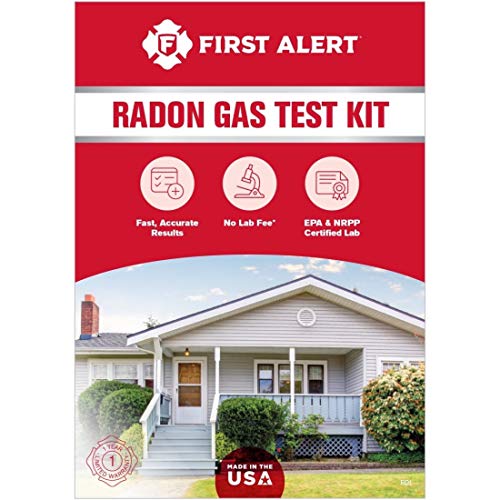 First Alert RD1 Radon Test Kit | Widely stocked; 48-hour charcoal test. | Amazon — $17.95 |
 Airthings Corentium Home | Digital monitor with a long-term average. | Amazon — $99.99 |