Asbestos Pronunciation: How to Say It and What It Means

Asbestos is one of those words people read far more often than they say out loud. It turns up in home inspection reports, real estate disclosures, remodeling quotes and lab results, and when the moment comes to discuss it with an inspector or contractor, plenty of homeowners pause over how to pronounce it. The short version is simple: most American speakers say it as-BES-tus, with the stress on the middle syllable. This guide covers the common asbestos pronunciation and its accepted variants, where the word comes from, and then the part that matters more for a house: what asbestos actually is, which six minerals federal regulations name, how chrysotile differs from the amphibole types, and where the material tended to hide in older homes. It summarizes EPA and OSHA information available in 2026. It is general education, not a diagnosis of any material in your home and not a substitute for testing by an accredited laboratory or advice from a licensed professional.
Part of our Asbestos in the Home guide — start there for the full picture →
Is this mold, asbestos, or water damage? Get a free instant screen
Upload a clear photo of the suspect area. You'll get an instant AI screening opinion and what to do next. This is screening guidance, not a professional determination.
Screening guidance only. AI can be wrong. Confirm asbestos, mold type, or lead with lab testing or a licensed professional before acting.
How to Say Asbestos: The Common Pronunciation
Asbestos has three syllables. In everyday American English, the most common way to say it is as-BES-tus. The stress lands on the middle syllable, which sounds like the word “best” without a strong final t. The first syllable is a short, light “as” or “az,” and the final syllable is usually reduced to a soft “tus,” similar to the ending of “status” or “cactus.”
A phonetic spelling often given in dictionaries is roughly /æsˈbɛstəs/, and many dictionaries also list a version with a z sound at the start, roughly /æzˈbɛstəs/. Both are widely heard, and neither is likely to confuse anyone. Listening to a range of speakers, you will also hear some small variations:
- as-BES-tus: probably the most common American version, with a soft s in the first syllable.
- az-BES-tus: the same stress pattern with a z sound at the start, common in casual speech because the s blends into the b that follows.
- as-BES-toss: a fuller final vowel, more like “toss,” which is heard in some British and Commonwealth speech and in careful or emphatic American speech.
- AS-bes-tus: stress on the first syllable. This is less common and generally treated as a nonstandard variant, although listeners will still know what you mean.
Pronunciation guides differ slightly in how they spell these sounds, so treat the renderings above as approximate rather than official. The practical rule is easy to remember: put the weight on BES, keep the ends light, and you will sound like the people who work with the material every day.
Where the Word Asbestos Comes From
The word is generally traced to ancient Greek, where asbestos is usually translated as “unquenchable” or “inextinguishable.” It is commonly described as combining a negative prefix, “a-,” with a form related to the Greek verb for quenching or extinguishing. In other words, the name described something that would not go out or would not be destroyed by fire. Etymology references vary a little in the details, and the word passed through Latin and French before it settled into English, so the exact route is best treated as general background rather than settled fact.
The meaning fits the material’s reputation. Long before modern building codes, fibrous minerals that would not burn were valued as curiosities and as practical heat-resistant materials. Popular histories often mention lamp wicks and fire-resistant cloth. Whatever the precise ancient uses were, the core idea carried into the industrial era: here was a mineral fiber that resisted heat and fire, and that property is exactly what made it attractive to manufacturers of insulation, roofing, flooring and many other products.
There is an irony in the name. A word that celebrates durability now signals a hazard. The same toughness that made the fibers useful also means they persist once released. When building materials containing asbestos are cut, sanded, broken or allowed to deteriorate, tiny fibers can become airborne. That is why the word deserves more attention than just getting the syllables right.
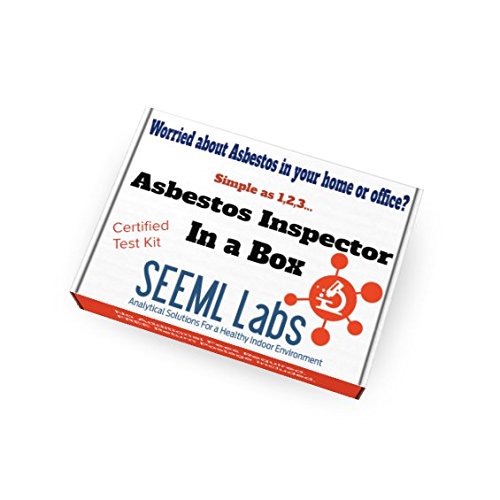
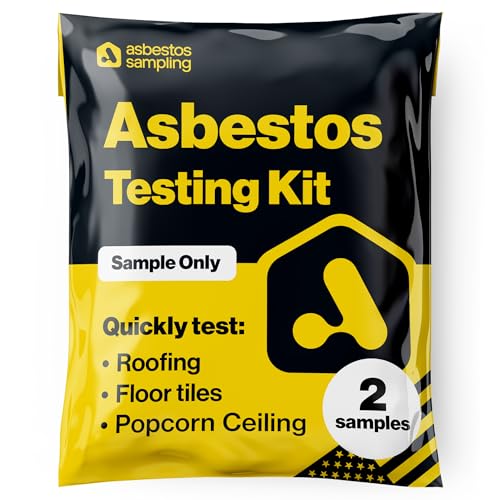
Best Asbestos Test Kit: our top 3 picks
| Product | Best for | Key features | Price | Buy |
|---|---|---|---|---|
| Seeml Labs Asbestos Inspector in a Box | Verifiable lab accreditation |
| $22.00as of Nov 25, 2026 4:00 pm GMT+0000 | Buy now →Check current price |
| SLGi 1-Pack (5 Day) | Single sample with return postage |
| $26.60as of Nov 25, 2026 4:49 pm GMT+0000 | Buy now →Check current price |
| Asbestos-Sampling.com 2-Sample | Type and percentage in the result |
| $59.95as of Nov 25, 2026 4:49 pm GMT+0000 | Buy now →Check current price |

Prices are Amazon’s listed prices as of the time shown and change often; check Amazon for today’s price. As an Amazon Associate we earn from qualifying purchases.
Asbestos Pronunciation Table: Related Terms and Meanings
Asbestos rarely appears alone on a lab report or an inspection summary. The terms below come up often, and several of them are as tricky to pronounce as the main word. Pronunciations are approximate and reflect common American usage; dictionaries may show minor differences. Meanings are plain-language summaries, not legal definitions.
| Term | Pronunciation (approximate) | Meaning |
|---|---|---|
| Asbestos | as-BES-tus (also az-BES-tus) | A group of naturally occurring fibrous minerals valued for heat resistance and strength |
| Chrysotile | KRIS-uh-tile | White asbestos, generally described as the serpentine type with curly fibers; OSHA calls it the most commonly used form |
| Amosite | AM-uh-site | An amphibole type often called brown asbestos |
| Crocidolite | kro-SID-uh-lite | An amphibole type often called blue asbestos |
| Tremolite | TREM-uh-lite | An amphibole mineral; the asbestos form appears in federal definitions and can occur as a contaminant in other minerals |
| Anthophyllite | an-tho-FIL-ite (also an-THOF-uh-lite) | An amphibole mineral named in federal asbestos definitions |
| Actinolite | ak-TIN-uh-lite | An amphibole mineral named in federal asbestos definitions |
| Amphibole | AM-fuh-bole | A mineral group whose asbestos forms are generally described as straight, needle-like fibers |
| Friable | FRY-uh-bul | Crumbly; easily broken into small pieces or powder, which makes fiber release more likely |
| Vermiculite | ver-MIK-yuh-lite | A pebble-like mineral used as loose attic insulation; some of it was contaminated with asbestos |
| Asbestosis | as-bes-TOH-sis | Scar-like tissue buildup in the lungs linked to breathing asbestos fibers |
| Mesothelioma | mez-oh-thee-lee-OH-muh | A cancer of the lining of the chest or abdomen strongly associated with asbestos exposure |
For the inspection side of these terms, the guide to friable asbestos explains why the condition of a material often matters as much as its contents.
What Asbestos Is, According to EPA and OSHA
Once the word is comfortable, the next question is what it actually refers to. The U.S. Environmental Protection Agency describes asbestos as a mineral fiber that occurs in rock and soil. EPA notes that because of its fiber strength and heat resistance, asbestos has been used in a variety of building construction materials for insulation and as a fire retardant, and in a wide range of manufactured goods, mostly building materials, friction products such as brakes and clutches, heat-resistant fabrics, packaging, gaskets and coatings.
The Occupational Safety and Health Administration describes asbestos as the name given to a group of naturally occurring minerals that are resistant to heat and corrosion. That phrase, “a group,” is the key point. Asbestos is not one substance. It is a commercial and regulatory label applied to several fibrous minerals that share useful properties.
The six regulated asbestos minerals
OSHA’s asbestos overview lists the mineral fibers chrysotile, amosite, crocidolite, tremolite, anthophyllite and actinolite, along with any of these materials that have been chemically treated or altered. The construction industry standard, 29 CFR 1926.1101, uses slightly more precise wording in its definitions section: asbestos includes chrysotile, amosite, crocidolite, tremolite asbestos, anthophyllite asbestos, actinolite asbestos, and any of these minerals that has been chemically treated and/or altered.
The difference between the two lists is worth a moment. In the regulation, the last three are written as “tremolite asbestos,” “anthophyllite asbestos” and “actinolite asbestos.” Those minerals can occur in forms that are not fibrous, and the regulatory definition targets the asbestos form. For a homeowner, the takeaway is simpler: when a lab report names any of these six, it is reporting a regulated asbestos mineral.
The same standard defines asbestos-containing material, or ACM, as any material containing more than one percent asbestos. It also defines presumed asbestos-containing material, or PACM, as thermal system insulation and surfacing material found in buildings constructed no later than 1980. That definition is written for employers and workers, not homeowners, but it is a useful signal. Pipe and boiler insulation, sprayed or troweled ceiling and wall coatings, and similar materials in a pre-1981 building are treated by the workplace rule as presumed to contain asbestos unless testing shows otherwise.
Chrysotile Versus Amphibole Asbestos
The six regulated minerals are usually grouped into two families. Chrysotile belongs to the serpentine group and is generally described as having soft, curly or wavy fibers. The other five, amosite, crocidolite, tremolite, anthophyllite and actinolite, belong to the amphibole group, whose asbestos forms are generally described as straight, stiff and needle-like. These descriptions come from general mineralogy and are best treated as a broad picture rather than a field identification method, because nobody can reliably tell asbestos types apart by eye.
Chrysotile matters most for houses because it was so widely used. OSHA’s asbestos page refers to chrysotile as the most commonly used form of asbestos. The same page states that evidence has increasingly shown that all asbestos fiber types, including chrysotile, cause mesothelioma in humans. That is an important correction to an old myth. It is sometimes claimed that chrysotile is harmless or that only amphibole types matter. OSHA’s position does not support that view, and homeowners should not treat a chrysotile result as reassuring. The dedicated guide to chrysotile asbestos goes further into where this type tended to appear and why it still shows up in lab reports.
Amosite and crocidolite are often called brown and blue asbestos, and those nicknames are mostly historical. The colors of a finished product rarely match the color of the fiber inside it. Floor tile, roofing, joint compound and textured ceiling coatings are mixtures, and the asbestos inside them is not visible. Only laboratory analysis, typically polarized light microscopy for bulk building samples, can identify which type is present and in what proportion.
Why the Word Still Shows Up in Inspection Reports
A word with ancient roots still appears in modern paperwork for a practical reason: asbestos is a health hazard when fibers become airborne. OSHA explains that asbestos fibers associated with health risks are too small to be seen with the naked eye, and that breathing them can cause a buildup of scar-like tissue in the lungs called asbestosis, with loss of lung function. OSHA’s overview also states that there is no “safe” level of asbestos exposure for any type of asbestos fiber.
EPA frames exposure around disturbance. According to EPA, asbestos fibers may be released into the air by the disturbance of asbestos-containing material during product use, demolition work, building or home maintenance, repair and remodeling. EPA adds that, in general, exposure may occur only when the material is disturbed or damaged in some way. EPA also notes that exposure increases the risk of lung disease, that smoking makes that risk worse, and that disease symptoms may take many years to develop.
Put those statements together and a clear rule emerges for homeowners. Intact material that is left alone is generally a lower concern than material that is crumbling, damaged or about to be cut, sanded or demolished. That is why the word appears in inspection reports. An inspector flagging a “suspect material” is not saying the house is dangerous to live in. The flag usually means the material should be tested before anyone disturbs it.
Where Asbestos Hid in Older Homes
EPA lists several places in homes where asbestos may be found. The list is a useful checklist for an older property:
- Attic and wall insulation produced containing vermiculite.
- Vinyl floor tiles, the backing on vinyl sheet flooring, and adhesives.
- Roofing and siding shingles.
- Textured paint and patching compounds used on walls and ceilings.
- Walls and floors around wood-burning stoves protected with asbestos paper, millboard or cement sheets.
- Hot water and steam pipes coated with asbestos material or covered with an asbestos blanket or tape.
- Oil and coal furnaces and door gaskets with asbestos insulation.
Age is the biggest clue. Asbestos use in residential building products was widespread through much of the twentieth century, and older homes are more likely to contain it than newer ones. The guide on when asbestos was used in homes walks through the general timeline and why a construction date is a starting point rather than a guarantee. Remodels complicate the picture. A newer kitchen may sit on top of old flooring, and a 1990s addition can be attached to a 1950s structure.
Walls deserve a specific mention, because drywall work is one of the most common do-it-yourself projects. Joint compound and some wall and ceiling texturing products have been associated with asbestos in older construction. The question of whether the board itself contained it is covered in the guide on whether asbestos was used in drywall. If a project involves sanding or cutting into older walls or ceilings, testing first is the safer sequence.
A note for Colorado Front Range homes
The Front Range has a large stock of mid-century housing in established neighborhoods across Denver, Lakewood, Aurora, Arvada, Colorado Springs, Fort Collins and Boulder, along with older farmhouses and mountain cabins at the edges of the metro areas. Many of these homes have been updated over the decades, and the updates can hide older layers. Basements with old boilers or steam pipes, popcorn ceilings, original floor tile under carpet, and vermiculite in attics are all worth noting during a pre-purchase inspection or before a renovation. Colorado also has its own rules for asbestos work in some situations, which are summarized in the guide to asbestos in Colorado.
How to Find Out Whether a Material Contains Asbestos
Pronouncing the word correctly does not help identify the material. Asbestos cannot be confirmed by looking at a product, by its color, or by its texture. The only reliable way to know is laboratory analysis of a sample. There are two common routes:
- Professional sampling. A trained inspector collects samples using wet methods and containment, seals them, and sends them to an accredited lab. This is the safer route for friable or damaged material and for large renovation projects.
- Mail-in home kits. Kits provide containers and instructions so a homeowner can take a small sample and mail it to a lab. The guide to asbestos home testing kits covers how they work, their limits, and when a kit is a reasonable choice. The kit is only a collection tool; the result depends on the lab and on careful sampling.
Lab reports typically state whether asbestos was detected, which type was found, and an estimated percentage. That is where the vocabulary above becomes useful. A result might read “Chrysotile 3%” or “None detected.” The guide to reading asbestos test results explains what those lines mean, including why a result near one percent may warrant more careful follow-up and why a single sample does not always represent an entire room.
Sampling itself disturbs the material, so it carries some risk. Wetting the area lightly, wearing appropriate respiratory protection, sealing the sample immediately and cleaning up with damp wipes are common precautions described in kit instructions and professional practice. If the material is already crumbling or covers a large area, a professional is the better choice.
What to Do If a Suspect Material Turns Up
Whether the word comes up during a home inspection, a remodel quote or a casual look at a basement pipe, a calm and orderly response works best:
- Leave it alone. EPA’s guidance centers on disturbance. Do not sand, scrape, drill, cut or sweep suspect material.
- Note its condition. Is it intact, or is it cracked, crumbling, water-damaged or flaking? Damaged material is a higher priority.
- Test before work. If a renovation, repair or demolition will disturb the material, get it sampled and analyzed first.
- Plan with professionals. If asbestos is confirmed and the material will be disturbed, discuss options with a qualified abatement contractor, which may include removal, encapsulation or enclosure.
- Budget realistically. Costs vary by material, quantity, access and local requirements. The guide to asbestos removal pricing covers the factors that drive quotes.
Some people also confuse asbestos with modern insulation products, especially in attics and walls. The two are different materials with different hazards, and the comparison of asbestos vs fiberglass explains how to tell when a question about insulation needs a lab and when it does not. For questions about dust and residue after a project, the guide on asbestos cleaning explains why ordinary vacuums and dry sweeping are a poor idea.
Talking About Asbestos With Inspectors and Contractors
Knowing the pronunciation is mostly about confidence. Clear conversations with professionals make it easier to get accurate answers. A few questions tend to be useful:
- Which materials in this house would you consider suspect, and why?
- Is the material intact or damaged, and does that change your recommendation?
- Which lab will analyze the samples, and what method will it use?
- How many samples are needed to represent this material?
- If asbestos is confirmed, what are the options other than removal?
- What containment and cleanup steps will be used during the work?
Good professionals welcome these questions. If a contractor dismisses concerns, refuses to test before disturbing an older material, or claims to identify asbestos by sight alone, that is a signal to get a second opinion. The broader asbestos hub collects the site’s guides on identification, testing and safe handling, and the asbestos and lead overview places both hazards in the context of older Front Range housing.
More Questions About Asbestos Terms
How do you pronounce chrysotile?
Chrysotile is usually pronounced KRIS-uh-tile, with the stress on the first syllable. It is the most common type of asbestos, often called white asbestos, and was widely used in building products.
The name comes from Greek words meaning gold and fiber, referring to the mineral’s silky appearance. Hearing the term in an inspection report usually means the lab identified chrysotile in a sample. Lab reports may list the type along with the estimated percentage.
How do you pronounce mesothelioma?
Mesothelioma is usually pronounced MEZ-oh-thee-lee-OH-muh. It is a cancer of the thin lining around the lungs, abdomen, or heart, and is strongly associated with asbestos exposure.
The word combines mesothelium, the name of the lining tissue, with the suffix -oma, meaning tumor. People encountering the term in news stories or legal advertising often wonder about pronunciation. Anyone with health concerns related to asbestos exposure should discuss them with a doctor.
What does friable mean in asbestos reports?
Friable means a material can be crumbled, pulverized, or reduced to powder by hand pressure when dry, and in asbestos reports it signals a higher risk of releasing fibers. The word is pronounced FRY-uh-bul.
Friable asbestos materials include pipe lagging, sprayed-on coatings, and some ceiling textures. Non-friable materials, such as floor tiles and cement siding, hold fibers more tightly when intact. Friability affects how regulations treat removal and disposal, so it appears often in inspection reports and contractor quotes.
What does ACM stand for in asbestos reports?
ACM stands for asbestos-containing material, which the EPA defines as material containing more than 1% asbestos. It appears throughout inspection reports, contractor quotes, and regulatory documents.
Related abbreviations include PACM for presumed asbestos-containing material, used when materials are assumed to contain asbestos without testing, and RACM for regulated asbestos-containing material, which covers friable materials and those likely to become friable during work. Knowing these terms makes inspection reports easier to read.
References
- U.S. EPA. Learn About Asbestos
- Occupational Safety and Health Administration. Asbestos Overview
- Occupational Safety and Health Administration. 29 CFR 1926.1101, Asbestos (Construction)
Frequently asked questions
How do you pronounce asbestos?
Most American speakers say as-BES-tus, with the stress on the middle syllable. Many dictionaries also list a version starting with a z sound, az-BES-tus, and some speakers give the last syllable a fuller sound, like toss. All of these are widely understood.
What does the word asbestos mean?
It is generally traced to ancient Greek and usually translated as unquenchable or inextinguishable. The name reflects the fire resistance of the fibrous minerals, which is the same property that made asbestos popular in insulation and building materials.
What are the six types of asbestos?
OSHA lists chrysotile, amosite, crocidolite, tremolite, anthophyllite and actinolite, plus any of these that have been chemically treated or altered. The construction standard 29 CFR 1926.1101 specifies the asbestos forms of tremolite, anthophyllite and actinolite.
Is chrysotile asbestos safer than other types?
It should not be treated as safe. OSHA describes chrysotile as the most commonly used form of asbestos and states that all asbestos fiber types, including chrysotile, cause mesothelioma in humans. OSHA also states there is no safe level of asbestos exposure.
Can asbestos be identified by looking at it?
No. Asbestos fibers are too small to see, and products containing them look like ordinary building materials. Laboratory analysis of a sample is the only reliable way to confirm whether a material contains asbestos and which type is present.
How do you pronounce amosite?
Amosite is usually pronounced AM-oh-site. Amosite, sometimes called brown asbestos, is an amphibole type once used in insulation board and pipe insulation. The name comes from an acronym for a South African mining company, Asbestos Mines of South Africa, which produced much of the world's supply.
How do you pronounce vermiculite?
Vermiculite is usually pronounced ver-MICK-yoo-lite. It is a mineral expanded for use as loose-fill attic insulation and garden additives. Some vermiculite, especially from Libby, Montana, was contaminated with asbestos and should not be disturbed. Inspection reports and EPA guidance use the term often when discussing older attics.
How do you pronounce tremolite?
Tremolite is usually pronounced TREM-oh-lite. Tremolite is an amphibole asbestos type and a common contaminant in vermiculite and some talc deposits. Lab reports may list it when found in samples from older homes, and it is often discussed alongside Libby, Montana, vermiculite insulation.
Found a suspect pipe wrap, floor tile or ceiling texture in an older Front Range home? Send us a note and we can point you toward qualified testing before any work begins.