Was Asbestos Used in Drywall? Board, Mud and Texture Explained
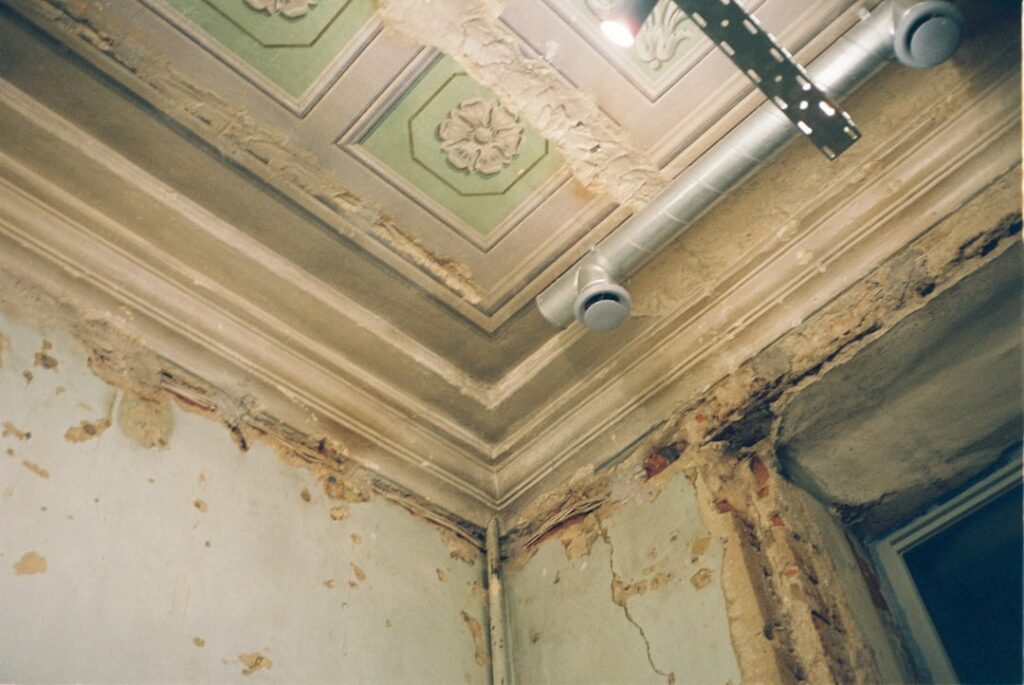
Cut into a wall in an older house and the question comes up almost immediately: was asbestos used in drywall, and is this dust a problem? The honest answer has two parts. The gypsum board itself, the paper-faced panel most people picture when they hear “drywall,” was not typically an asbestos product. The materials used to finish it are a different story. Joint compound, taping mud, patching compound and spray or roller-applied wall and ceiling texture made before roughly the late 1970s or 1980s may contain asbestos, and in many older homes those layers cover nearly every square foot of wall. This guide explains where the risk usually sits, which eras deserve suspicion, how sampling works, why sanding is the step to avoid, and what the realistic options look like once a result comes back. It draws on EPA and OSHA guidance current as of 2026 and is meant for general education. Sampling, removal and abatement decisions belong with a trained, accredited asbestos professional.
Part of our Asbestos in the Home guide — start there for the full picture →
Is this mold, asbestos, or water damage? Get a free instant screen
Upload a clear photo of the suspect area. You'll get an instant AI screening opinion and what to do next. This is screening guidance, not a professional determination.
Screening guidance only. AI can be wrong. Confirm asbestos, mold type, or lead with lab testing or a licensed professional before acting.
Was Asbestos Used in Drywall Itself?
Drywall, also called gypsum board, wallboard or by the common trade name for it, is a sheet of gypsum plaster pressed between two layers of heavy paper. Gypsum is a soft mineral that holds water in its crystal structure, which is one reason the board resists fire. Because the board already had useful fire performance, manufacturers generally had less reason to add asbestos to the panel itself than to products like pipe insulation or cement sheet.
That does not mean every old panel is automatically clean. Some board made in the middle decades of the twentieth century may have contained asbestos in small amounts, and records for specific products and plants are incomplete. Building codes, regional suppliers and individual product lines varied. The practical takeaway is that the board is usually the lower-probability part of an old wall, but it is not a part anyone can clear by looking at it.
Where the concern concentrates is the finishing system. A drywall wall is never just board. It is board plus paper tape plus several coats of joint compound at every seam, corner and fastener, often with a skim coat or texture layer on top and paint over everything. EPA’s Learn About Asbestos page lists “textured paint and patching compounds used on walls and ceilings” among the places asbestos may be found in a home. That line is the core of this topic: in an older house, the asbestos question for walls is mostly a question about mud and texture.
For a broader overview of how this plays out room by room, see the companion guide on asbestos in drywall, and the wider asbestos hub for related materials such as flooring, insulation and siding.
Why Joint Compound and Texture Are the Real Concern
Asbestos fibers were added to many building products for strength, workability and heat resistance. EPA notes that because of its fiber strength and heat resistance, asbestos was used in a variety of construction materials for insulation and as a fire retardant. In joint compound and texture, short fibers helped the wet mud hold together, spread smoothly, resist cracking and cling to vertical and overhead surfaces. The fiber most often associated with these products is chrysotile, the white serpentine form of asbestos covered in more detail in the guide to chrysotile asbestos.
Several finishing products fall under suspicion in older homes:
- Joint compound (taping mud). Applied over seams, inside and outside corners and screw or nail heads. Even a “plain” wall may have a surprising amount of it.
- Patching compound. Small tubs or bags used for repairs. These are the products named in the federal consumer ban discussed below.
- Wall texture. Knockdown, orange peel, skip trowel and other textures were often sprayed or rolled on using compound-based mixes.
- Ceiling texture. Spray-applied acoustic or “popcorn” ceilings are a closely related product and a common reason older homes are sampled.
- Skim coats. A thin layer of compound over a whole wall, sometimes added during an earlier remodel.
Because these layers were applied by hand, sometimes in different decades, a single wall can contain more than one product. A 1960s seam might have been patched in the 1980s and textured in the 1990s. That layering affects how testing should be done, covered later in this guide.
Which Eras to Suspect
There is no single cutoff date that clears a home, and anyone selling or remodeling should treat dates as a rough screening tool rather than an answer. With that caveat, a few landmarks help frame the question.
The patching compound ban. EPA’s Asbestos Laws and Regulations page lists, among other federal agencies’ rules, a Consumer Product Safety Commission ban on asbestos-containing patching compounds (16 CFR Part 1304). That ban is commonly dated to the late 1970s. It applied to consumer patching compounds, and existing stock and installed material did not disappear when it took effect.
The broader EPA ban that did not hold. The same EPA page explains that on July 12, 1989, EPA issued a final rule banning most asbestos-containing products, and that in 1991 the regulation was overturned by the Fifth Circuit Court of Appeals, so that only a few asbestos-containing products remained banned. That history is one reason many inspectors stay cautious about building materials installed into the 1980s.
The 2024 chrysotile rule. EPA’s page also notes that on March 28, 2024, EPA finalized a rule under TSCA section 6(a) to prohibit the manufacture, import, processing, distribution and commercial use of chrysotile asbestos. That rule shapes the future market; it does not change what is already inside older walls.
Taken together, a cautious reading looks something like this. Homes with original wall finishes from the 1950s through the 1970s are the most likely to contain asbestos in compound or texture. Homes finished in the early-to-mid 1980s are a gray zone, partly because older inventory may have been used after the ban and partly because records are thin. Homes finished later are less likely to be a problem, though remodels, patches and older materials reused on site can still surprise people. Along the Colorado Front Range, a large share of the housing stock in older neighborhoods of Denver, Lakewood, Aurora, Boulder and Colorado Springs was built or remodeled during exactly those decades, so the question comes up often in real estate transactions here.
State history can matter too, especially for homes with materials sourced from out of state. For a look at how one large state approached the issue, see when asbestos was banned in California.
Wall Materials, Eras and What to Do
The table below summarizes the usual suspects. Likelihoods are rough and hedged on purpose; only laboratory analysis can confirm whether a particular wall contains asbestos.
| Wall material | Era usually suspected | Asbestos likelihood (hedged) | Suggested action |
|---|---|---|---|
| Gypsum board (panel only) | Pre-1980s | Generally low, not zero | Leave intact; sample before cutting large areas |
| Joint compound / taping mud | 1950s to late 1970s, possibly into the 1980s | Moderate to high in original finishes of that era | Sample before sanding, cutting or demolition |
| Patching compound | Before the late-1970s consumer ban | Moderate; depends on product and age | Treat old patches as suspect; sample with the wall |
| Wall texture (knockdown, orange peel) | 1950s to 1980s | Moderate to high for original sprayed texture | Do not scrape or sand; sample first |
| Popcorn or acoustic ceiling | 1950s to 1980s | Moderate to high for original material | Leave alone or encapsulate; sample before removal |
| Finishes applied after the 1980s | 1990s and later | Low, unless older material was reused | Confirm age from permits or records when possible |
If the age of a wall is unknown, the safest assumption is the conservative one. Treating a suspect wall as asbestos-containing until a lab says otherwise costs very little and avoids the worst outcome, which is spreading fibers through a house during a project.
Testing: Composite Sample or Separate Layers?
Asbestos cannot be identified by sight. Fibers associated with health risks are too small to be seen with the naked eye, as OSHA notes on its asbestos overview. The only way to know is to collect a sample and have it analyzed by a laboratory, most often using polarized light microscopy for bulk building materials.
Walls raise a sampling question that floors and pipe wrap usually do not: should the lab analyze the wall as one combined sample, or analyze each layer separately?
- Layered analysis reports results for each distinct material, for example the board, the joint compound and the texture. This shows exactly which layer contains asbestos and at what estimated percentage. It is usually the more informative approach for planning work.
- Composite analysis blends the layers into a single result for the “wall system.” Some regulatory contexts have historically allowed this for wallboard assemblies, and it can produce a lower overall percentage because the asbestos-containing compound is diluted by the larger mass of gypsum. Rules on when composite results are acceptable vary by agency and situation, so the approach should be chosen by the professional who knows which requirements apply.
For homeowners, the useful point is to ask how the lab will report the result before samples are sent. A composite number below a regulatory threshold does not mean the joint compound itself is free of asbestos, and that difference can matter a great deal to a contractor planning to sand seams. The guide on asbestos drywall testing walks through the sampling process, and the guide to reading asbestos test results explains how to interpret percentages, “trace” findings and layer-by-layer reports.
Some homeowners consider mail-in kits. These collect a sample that an outside lab analyzes, so lab accreditation is what matters, and the act of cutting a sample out of a wall is itself a disturbance. The comparison of asbestos home testing kits covers the trade-offs. When a renovation is planned, having an accredited inspector sample all the suspect materials in the work area at once is usually more efficient than testing one patch at a time.
Why Sanding Is the Step to Avoid
Asbestos in intact, painted joint compound is generally not releasing fibers just by sitting on a wall. EPA explains that asbestos fibers may be released into the air when asbestos-containing material is disturbed during product use, demolition, maintenance, repair and remodeling, and that, in general, exposure may occur only when the material is disturbed or damaged in some way.
Drywall finishing work is almost entirely disturbance. Sanding joint compound produces very fine dust by design. Dry scraping texture, cutting openings for outlets or recessed lights, chasing wires and demolishing walls all break the material apart. Fine compound dust travels far, settles on every surface and is easily stirred up again by sweeping or ordinary household vacuums.
The health stakes are serious. EPA lists lung cancer, mesothelioma and asbestosis as three of the major health effects associated with asbestos exposure and notes that symptoms may take many years to develop. OSHA states that there is no “safe” level of asbestos exposure for any type of asbestos fiber. Those statements are the reason professionals recommend testing before sanding rather than after.
Practical precautions while a wall is untested:
- Do not sand, scrape or power-cut suspect compound or texture.
- Avoid hanging heavy fixtures with large anchors in suspect ceilings until results are in.
- If a small area is already damaged, keep people and pets away, mist lightly to keep dust down and avoid dry sweeping.
- Do not run a central forced-air system with open returns near a damaged area if it can be avoided.
If dust has already been created, the guide to asbestos cleaning outlines what a homeowner can and cannot reasonably handle, and when professional cleanup is the better call.
Removal, Encapsulation or Leave It Alone
A positive result does not automatically mean the walls must come out. In many homes, intact walls with asbestos-containing compound can be managed in place. The main options are:
Leave it undisturbed. If the walls are in good condition and no work is planned, leaving them alone is often reasonable. The material should be documented so future contractors know about it before they cut.
Encapsulate. Painting with a suitable sealant or primer binds the surface. Skim-coating over existing compound with new, asbestos-free material is another approach, provided the old layer is not sanded first. Encapsulation keeps the material in place, so it remains a consideration before future remodels.
Enclose. Installing new drywall over old walls, sometimes called overlaying, covers the original surface without demolition. Fasteners still penetrate the old layer, so the work is best planned with a professional who can advise on dust controls.
Remove. Full removal makes sense when walls are coming out for a remodel, when material is badly damaged, or when a buyer or lender requires it. Removal involves containment, negative air, wet methods, careful bagging and proper disposal. OSHA’s construction standard for asbestos governs worker protections on these jobs, and EPA’s NESHAP rules address handling and disposal in many situations.
Cost varies widely with square footage, access, the number of layers involved and local disposal fees. The guide to asbestos drywall removal cost breaks down the typical pricing factors, and the overview of asbestos sheetrock covers how contractors approach different wall assemblies.
Remodeling an Older Front Range Home
Many Colorado homeowners first run into this topic during a kitchen or basement remodel, or when an inspection report during a home purchase flags original wall texture. A few habits make the process smoother:
- Test before bidding. Contractors bid more accurately when they know which walls and ceilings contain asbestos. A clean result can also avoid unnecessary abatement charges.
- Sample the work area, not just one wall. Additions, patches and earlier remodels mean neighboring rooms can differ.
- Keep the report. Results are useful for future projects, for disclosure conversations and for anyone who works on the house later.
- Coordinate trades. Electricians, plumbers and HVAC installers routinely cut drywall. Make sure they know about any positive results before they start.
- Check local requirements. State and local rules can apply to renovation and demolition work, so a qualified asbestos professional or the relevant state agency is the place to confirm what applies to a specific project.
For a wider view of how asbestos and lead issues fit together in an older home, start at the asbestos and lead guide, which links the testing, removal and disclosure topics in one place.
What an Inspector Looks For on Site
An accredited asbestos inspector approaches walls differently than a general home inspector does. A standard home inspection may note original texture or an older ceiling finish as a possible concern, but it does not include sampling. An asbestos survey focuses on identifying each distinct material and deciding where samples are needed.
Typical steps include walking each area of planned work, noting where finishes look different from one another, and checking for evidence of past patches or remodels. Inspectors often look at closets, utility rooms and spaces behind access panels, because original finishes tend to survive there after main rooms have been updated. They also consider ceilings separately from walls, since texture products were often applied overhead even when walls were smooth.
Samples are usually taken from inconspicuous spots, with the area misted and the opening sealed afterward. The number of samples depends on how many distinct materials and areas are present, not simply on the size of the house. A clear written report should list each sampled material, its location, the analysis method and the result, so contractors can plan around it. Asking for that level of detail up front avoids the common problem of a single vague “positive” result that leaves everyone guessing which walls are affected.
Common Myths About Drywall and Asbestos
“All old drywall has asbestos.” Not accurate. The board itself was generally a low-probability material. The finishing compounds and textures are where the concern usually lies.
“Newer houses are automatically clear.” Also not reliable. Older stock, reused materials and earlier patches can appear in newer-looking walls, and the late-1980s regulatory history means dates alone are not proof.
“A low composite result means the mud is safe to sand.” A composite result describes the blended wall system. The compound layer on its own may contain more asbestos than the combined number suggests.
“Paint seals it permanently.” Paint helps with intact surfaces, but sanding, cutting or demolition goes straight through it.
“A wet mask and a shop vacuum are enough for a small job.” Ordinary dust masks and household or shop vacuums are not designed for asbestos fibers. Small jobs still warrant professional advice.
More Questions About Asbestos in Drywall
How much does it cost to test drywall for asbestos?
Testing drywall or joint compound for asbestos typically costs about $25 to $75 per sample for lab analysis, and roughly $250 to $750 when a licensed inspector collects several samples. Home mail-in kits exist, though some states require licensed sampling for certain projects.
Most remodels need several samples because different rooms, patches and texture layers may differ. Rush turnaround costs more. Testing before demolition or sanding is far cheaper than cleaning up a contaminated house, and some local rules require a survey before renovation permits are issued.
Can you hang pictures on walls with asbestos joint compound?
Yes, hanging pictures with a nail or small hook on walls with asbestos joint compound is generally considered low risk, because it disturbs very little material. The bigger concern is sanding, cutting or demolishing the wall.
For extra caution, mist the spot with water before drilling, use a hand tool rather than a high-speed drill where possible, and wipe dust with a damp cloth instead of sweeping or vacuuming with an ordinary vacuum. Larger jobs such as running new wiring through walls deserve testing first.
Was asbestos used in plaster walls?
Yes, some older plaster, especially certain textured or acoustic finishes and some base coats, contained asbestos, mostly in homes built before about 1980. Many traditional lime and gypsum plasters did not, so plaster cannot be judged by age alone.
Patch layers added over the decades can also differ from the original coat. Testing a sample from each distinct layer is the only reliable way to know. Until results are back, avoid sanding, chiseling or demolishing old plaster and keep surfaces intact and painted.
Does asbestos in drywall have to be disclosed when selling a home?
Sellers in many states must disclose known asbestos, including test results showing asbestos in joint compound or texture. Disclosure rules vary by state, and sellers usually are not required to test if they have never done so.
Having test results can actually help a sale, because buyers know exactly what they are dealing with. If asbestos is confirmed, sellers can share the lab report, note that the material is intact, and provide any abatement records. A local agent or real estate attorney can confirm disclosure obligations.
References
Frequently asked questions
Was asbestos used in drywall panels themselves?
The gypsum board panel was generally not an asbestos product, though some older board may have contained small amounts. The bigger concern is joint compound, patching compound and wall or ceiling texture, which EPA lists among places asbestos may be found in a home.
What years of drywall mud may contain asbestos?
Original joint compound and texture from roughly the 1950s through the late 1970s are the most suspect, and material installed into the 1980s is a gray zone. Dates are only a screening tool; a lab test is the only way to know.
Is it safe to sand old joint compound?
Not until it has been tested. Sanding turns compound into fine dust, and EPA notes asbestos exposure generally occurs when material is disturbed. OSHA states there is no safe level of asbestos exposure.
Should drywall be tested as a composite or by layer?
Layer-by-layer analysis shows which material contains asbestos, which is usually more useful for planning work. A composite result blends the board and compound and may understate what is in the compound itself. Ask the inspector which method fits the situation.
Do walls with asbestos joint compound have to be removed?
Not always. Intact walls can often be left alone, encapsulated with a sealant or skim coat, or covered with new drywall. Removal by a qualified abatement contractor makes sense when walls are coming out or the material is damaged.
Did popcorn ceilings contain asbestos?
Many popcorn ceilings applied before the mid-1980s contained asbestos, though not all. The ban on spray-applied asbestos surfacing came in the 1970s, but existing stock was used afterward. Testing a sample is the only way to know before scraping or remodeling.
Can you paint over asbestos joint compound?
Yes, painting over intact asbestos joint compound is generally acceptable and can help seal it. Avoid sanding first; clean the surface by wiping instead. Use a brush or roller rather than spraying at high pressure, and repair any damaged areas through a qualified contractor.
Do home inspectors test drywall for asbestos?
Standard home inspectors do not test drywall for asbestos. They may note materials that could contain asbestos based on the home's age, and recommend testing. Sampling is done by a licensed asbestos inspector or a lab-tested sample, depending on state rules.
Planning to open up a wall in an older home and not sure what is in the mud? Tell us the age of the house and what the project involves, and we can help sort out whether testing should come first.
Asbestos test kits
Asbestos can only be confirmed by a lab. A mail-in kit gets you a sealed sample container and accredited analysis — never sand or disturb suspect material first.
| Product | Why | Buy |
|---|---|---|
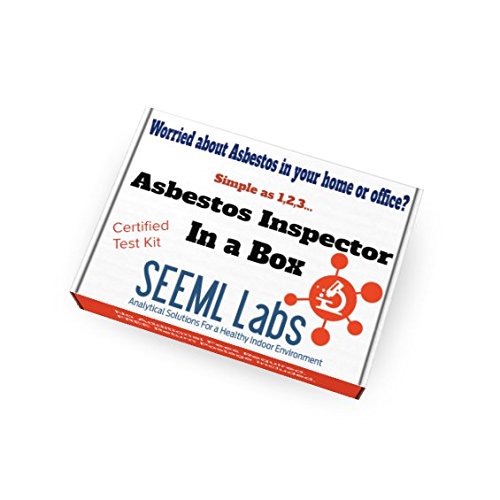 Asbestos Test Kit (mail-in lab) | Includes PPE + sealed mailer. | Amazon — $22.00 |
 Pro-Lab Asbestos Test Kit | Widely available; lab fee separate. | Amazon — $63.99 |