When Was Lead Paint Used? A Plain-Language Guide
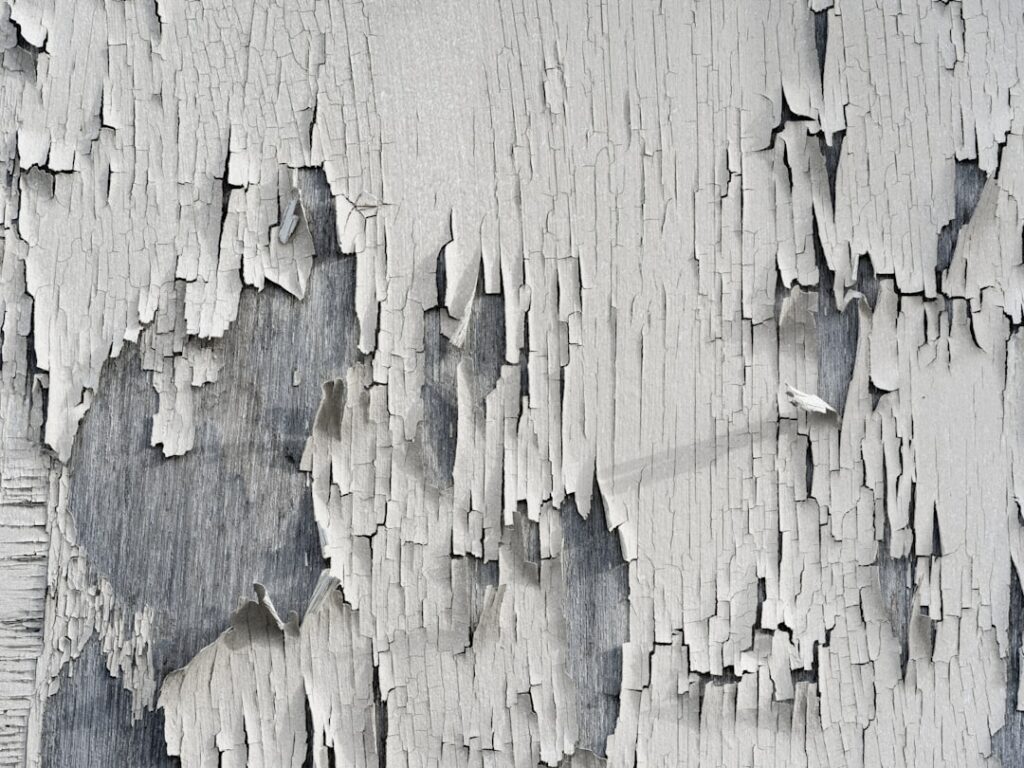
Lead-based paint sits behind one of the most consequential dates in American housing: 1978, the year the federal government banned it for residential use. Knowing when lead paint was used helps homeowners and buyers gauge their risk, because the probability a home contains lead paint rises sharply with each decade you go back from that ban. The short answer is that lead paint was used widely from the late 1800s through 1978, with the highest concentrations in homes built before 1950. This guide summarizes EPA, CDC, and HUD guidance current as of 2026 and is informational only — for testing decisions or suspected exposure, consult a certified professional and your physician. Below is the full timeline and what it means for your property.
Is this mold, asbestos, or water damage? Get a free instant screen
Upload a clear photo of the suspect area. You'll get an instant AI screening opinion and what to do next. This is screening guidance, not a professional determination.
Screening guidance only. AI can be wrong. Confirm asbestos, mold type, or lead with lab testing or a licensed professional before acting.
When was lead paint used, exactly?
Lead-based paint was manufactured and applied to homes in the United States from the late nineteenth century until the federal ban took effect in 1978. The EPA notes that the Consumer Product Safety Commission banned lead in residential paint that year, after decades of mounting evidence about its health effects, especially on children.
The risk is not uniform across that century. The likelihood and concentration of lead paint scale with age. Federal data cited by HUD indicates that roughly 87 percent of homes built before 1940 contain lead-based paint, dropping to about 69 percent for homes built between 1940 and 1959, and around 24 percent for those built from 1960 to 1977. After 1978, the probability falls to near zero for the original paint layers. For broader context on these materials, the asbestos and lead hazard guide covers the full picture of pre-1978 housing risks.
The timeline by decade
Understanding how usage changed over time helps date your own home’s risk.
Late 1800s to 1940: peak use
Lead was a premium paint ingredient, valued for durability, moisture resistance, and color. White lead carbonate was a standard pigment. Homes from this era carry the highest probability of lead paint, often in multiple layers and at high concentrations.
1940 to 1960: gradual decline
Manufacturers began offering titanium-dioxide-based paints, and lead content in some products fell. Still, lead paint remained common, particularly in exterior applications and high-wear surfaces like trim, windows, and doors.
1960 to 1978: declining but present
Voluntary reductions and growing health awareness lowered usage, but lead paint was still legally sold and applied. A home from this period is less likely to contain it than a 1930s home, but the risk is far from zero.
1978 onward: the ban
The residential ban ended new applications. Homes built after 1978 are generally considered low-risk for original lead paint, though renovations using old stock or imported products are rare exceptions.
Why the date matters for your home
The 1978 line is more than trivia — it triggers legal obligations and practical precautions. Federal law requires sellers and landlords of pre-1978 housing to disclose known lead paint and provide an EPA pamphlet to buyers and renters. The mechanics of that requirement are covered in the lead paint disclosure guide.
Intact, well-maintained lead paint is generally low-risk. The hazard arises when paint deteriorates — chipping, peeling, or chalking — or when it is disturbed by renovation, sanding, or friction on windows and doors. Lead dust and chips are the primary exposure routes, and young children are most vulnerable because they absorb lead more readily and explore by putting hands and objects in their mouths.
How the ban came about and why it took so long
The 1978 ban did not arrive suddenly. Concern about lead’s health effects dated back decades, and the timeline of regulation explains why so much lead paint accumulated in American housing before the rules caught up.
By the early twentieth century, the toxicity of lead was understood in medical circles, and some European countries restricted lead paint in the 1920s. The United States moved far more slowly, in part because the lead and paint industries were economically powerful and the dangers — especially to children — were not yet widely appreciated by the public. Lead paint remained a premium product, marketed for its durability and washability, throughout the first half of the century.
Mounting evidence of childhood lead poisoning through the 1950s and 1960s, and the broader environmental and consumer-protection movements of the era, finally drove federal action. The Lead-Based Paint Poisoning Prevention Act passed in 1971, and the Consumer Product Safety Commission’s ban on lead in residential paint took effect in 1978. By then, decades of application had left lead paint in the majority of the nation’s older housing stock — which is why the legacy persists today even though new use ended nearly half a century ago.
Who is most at risk from lead paint
The hazard is not evenly distributed across a household. Understanding who faces the greatest risk shapes how urgently a homeowner should respond to lead paint.
Young children, particularly those under six, are the most vulnerable. Their developing brains and nervous systems are sensitive to lead, they absorb a larger fraction of ingested lead than adults, and their hand-to-mouth behavior means they readily swallow lead dust and chips. The CDC emphasizes that no safe blood-lead level has been identified in children, and even low-level exposure can affect learning, attention, and behavior.
Pregnant women are also at heightened risk, because lead crosses the placenta and can affect fetal development. Adults face risks too, including elevated blood pressure and kidney effects from chronic exposure, and renovation workers who disturb lead paint without protection can carry lead dust home on clothing. For households with young children or expectant mothers, deteriorated lead paint is a priority to address rather than monitor, and disturbance should never be attempted without lead-safe controls.
How to know if your home has lead paint
Age is a strong predictor but not a confirmation. Two reliable methods establish whether lead paint is present.
- Lead inspection. A certified inspector uses an X-ray fluorescence (XRF) analyzer to identify lead in painted surfaces without damaging them, surface by surface.
- Risk assessment. A broader evaluation that identifies lead hazards — deteriorated paint, dust, and soil — and recommends controls.
- Lab testing. Paint chip or dust-wipe samples sent to an accredited laboratory confirm lead content and quantity.
Hardware-store swab kits offer a quick screen but are prone to false results and do not satisfy regulatory standards. For purchase or pre-renovation decisions, professional lead-based paint testing is the dependable route. The lead inspection overview explains what a certified visit includes.
Renovating a pre-1978 home safely
Renovation is the moment when intact, low-risk lead paint becomes a genuine hazard, because cutting, sanding, and demolition turn solid paint into the dust and chips that cause exposure. Anyone working on a pre-1978 home should understand the rules that govern this.
The EPA’s Renovation, Repair and Painting (RRP) rule requires that paid contractors working on pre-1978 housing be RRP-certified and follow lead-safe work practices. Those practices include containing the work area with plastic sheeting, minimizing dust generation, using HEPA-filtered vacuums, prohibiting high-dust methods, and performing a cleaning verification afterward. The goal is to keep lead dust from spreading through the home and to clean it thoroughly when the work is done.
Certain methods are banned outright because they aerosolize lead: open-flame burning or torching, machine sanding or grinding without a HEPA attachment, and uncontained power washing. Homeowners doing their own work are not bound by RRP the way contractors are, but the health logic applies equally — disturbing lead paint without controls endangers the household, especially children and pregnant residents. For anything beyond trivial work, hiring a certified contractor and following lead-safe practices is the responsible path, and the removing lead paint guide details safe methods.
What to do if your home has lead paint
Discovering lead paint does not mean immediate removal is necessary. The response depends on the paint’s condition and the household.
If the paint is intact and undisturbed, the safest approach is often to leave it alone and maintain it, monitoring for deterioration. When intervention is warranted, options range from encapsulation — sealing the surface with a specialized coating — to enclosure or full removal. Each carries different costs and disturbance levels.
Any work that disturbs lead paint should follow the EPA’s Renovation, Repair and Painting (RRP) rules, which require lead-safe work practices and, for paid contractors, RRP certification. Dry sanding, open-flame burning, and power washing are prohibited because they spread lead dust. Households with young children or pregnant residents should treat deteriorated lead paint as a priority and avoid DIY disturbance.
Where lead paint was used inside and outside the home
Lead paint was not applied evenly throughout a house. Knowing the high-probability locations helps homeowners and inspectors focus their attention.
Lead concentrations tended to be highest on surfaces that needed durability and weather resistance. Exterior siding, trim, porches, and railings were frequent applications, since lead improved adhesion and longevity outdoors. Inside, windows and doors are the classic concern: the friction of opening and closing wears painted surfaces into fine dust, and window wells collect chips and dust that accumulate over decades. Baseboards, stair railings, and kitchen and bathroom surfaces — where moisture-resistant paint was prized — also carry elevated odds.
This distribution matters because the friction and impact surfaces are exactly where deterioration produces the most dust. A 1930s home might have lead paint throughout, but the windows and doors pose the greatest exposure risk because they generate dust through normal use. The exterior is a separate concern: weathered lead paint sheds chips into the surrounding soil, which becomes a contamination source for children playing in the yard. The lead poisoning test guide explains how exposure is measured in the body.
Lead in other building materials and water
Paint is the most common source, but lead appeared in other parts of older homes too. Pre-1986 plumbing frequently used lead solder on copper pipes and, in some cases, lead service lines connecting the home to the water main. Lead can leach into drinking water from these components, particularly with corrosive water or long standing times.
Because the timeline for plumbing lead differs from paint — the federal restriction on lead in plumbing came in the mid-1980s, later than the 1978 paint ban — a home can have non-lead paint but lead-bearing plumbing, or vice versa. Homeowners concerned about water should consider a water lead test kit in addition to paint testing. The two hazards are related but distinct, and clearing one does not clear the other.
Lead paint and the Front Range housing stock
Colorado’s older neighborhoods — central Denver, parts of Boulder, and historic districts across the Front Range — include substantial pre-1978 housing. Buyers touring a 1920s bungalow or a mid-century ranch should assume lead paint is possible and factor testing into their inspection plan. Newer suburban developments in Douglas, Elbert, and outer Adams counties largely postdate the ban and carry minimal original-paint risk.
The practical takeaway: let the build year guide your diligence. Pre-1950 homes warrant proactive testing; 1960s–1970s homes warrant attention to any deteriorated surfaces; post-1978 homes generally do not require lead-paint testing absent a specific concern.
References
- Protect Your Family from Sources of Lead — U.S. Environmental Protection Agency
- Lead Poisoning Prevention — Centers for Disease Control and Prevention
- Lead-Based Paint Programs — U.S. Department of Housing and Urban Development
If you own or are buying a pre-1978 home on the Front Range and want help arranging certified lead testing before you renovate or close, reach out through our contact page to connect with a qualified local professional.
Lead paint test kits
Instant swab kits flag lead on painted surfaces in minutes — useful before a renovation in any pre-1978 home.
| Product | Why | Buy |
|---|---|---|
 3M LeadCheck Swabs 3M LeadCheck Swabs | EPA-recognized instant swabs. | Amazon — $199.00 |
 Lead Test Kit (lab-based) Lead Test Kit (lab-based) | Mail-in for a documented result. | Amazon — $150.00 |