Tremolite Asbestos: What Homeowners Need to Know
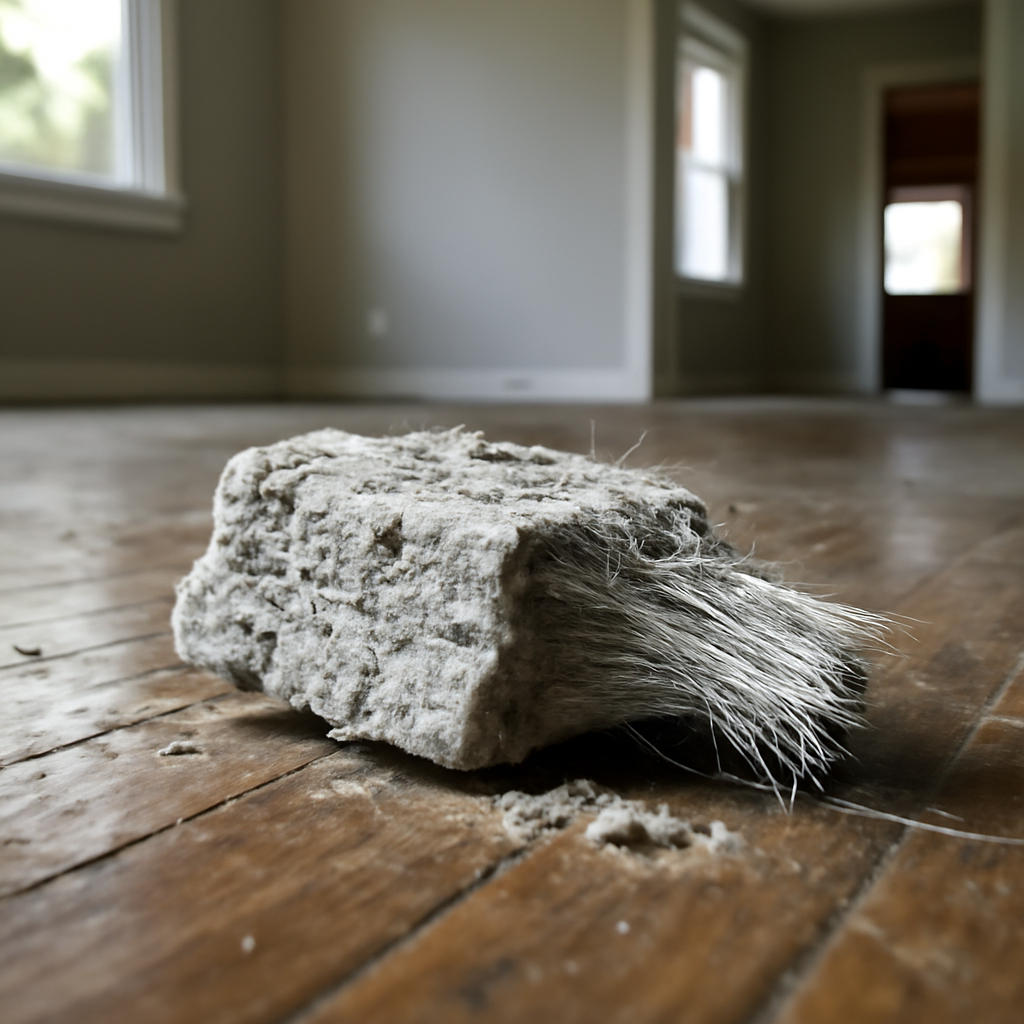
Some of the most dangerous asbestos a household can encounter was never sold as asbestos at all. Tremolite asbestos is a member of the amphibole family that was almost never mined or marketed on its own, yet it became one of the most consequential exposure sources in American homes because it rode along as a contaminant in other minerals, most notably the vermiculite insulation that filled millions of attics. Its straight, durable fibers place it among the more hazardous asbestos types, which is why understanding where it hides matters for anyone living in an older Front Range house. This guide summarizes EPA, CDC, and NIH guidance current as of 2026 and is educational only; it does not replace laboratory testing or the advice of a certified asbestos professional.
Is this mold, asbestos, or water damage? Get a free instant screen
Upload a clear photo of the suspect area. You'll get an instant AI screening opinion and what to do next. This is screening guidance, not a professional determination.
Screening guidance only. AI can be wrong. Confirm asbestos, mold type, or lead with lab testing or a licensed professional before acting.
What tremolite asbestos is
Tremolite is a naturally occurring silicate mineral that can crystallize in a fibrous, asbestos form. It belongs to the amphibole family, the group with straight, stiff, needle-like fibers, which also includes amosite, crocidolite, actinolite, and anthophyllite. Unlike chrysotile, the curly serpentine asbestos that dominated commercial products, tremolite was not valued as a commercial product itself, because its properties were less suited to manufacturing.
Its significance is therefore not about products labeled as tremolite, of which there were essentially none, but about contamination. Tremolite occurs alongside other useful minerals in the ground, and when those minerals are mined, the tremolite comes with them. That is how it entered homes: not as a chosen ingredient, but as an unwanted passenger inside vermiculite and talc. The wider mineral context is explained in the InspectandTest article on amphibole asbestos, and the broader hazard picture appears in the pre-1978 housing guide.
Why tremolite is considered especially hazardous
As an amphibole, tremolite has the fiber shape associated with the worst health outcomes. Its fibers are straight, rigid, and biopersistent, meaning they penetrate deep into lung tissue and the pleural lining and resist the body’s attempts to clear them. They can linger for years, sustaining the inflammation that leads to disease. Research links amphibole fibers, tremolite among them, strongly to mesothelioma and other asbestos-related illnesses.
The exposure at the Libby, Montana vermiculite mine, which was contaminated with tremolite and related amphiboles, produced one of the most studied asbestos-disease clusters in the United States. That history is why health agencies treat tremolite-contaminated materials with particular caution. No asbestos exposure is considered risk-free, but the durability and shape of tremolite fibers reinforce the most conservative handling advice.
The difference between tremolite and chrysotile
Chrysotile accounted for the overwhelming majority of commercial asbestos use, and its curly fibers are somewhat more likely to be cleared from the lung over time. Tremolite, by contrast, was a contaminant rather than a product, and its straight amphibole fibers are more biopersistent. For a homeowner, the practical point is that the safe handling rules are identical, leave it undisturbed, test before work, use professionals, but the presence of tremolite, as in old vermiculite, makes the case for the most cautious response stronger.
Where tremolite asbestos shows up at home
Two contaminated materials carried tremolite into homes. The most significant is vermiculite insulation. A large share of the United States vermiculite supply came from a mine near Libby, Montana whose deposit was laced with tremolite and other amphibole asbestos. Sold widely as loose-fill attic insulation, often under the Zonolite brand, this material is the principal residential source of tremolite. Because so much vermiculite traces to that mine, the EPA advises treating older vermiculite insulation as asbestos-containing unless testing proves otherwise.
The second source is talc. Talc and tremolite can form in the same geological deposits, so talc products, historically including some consumer powders and industrial talc, could be contaminated with tremolite. This is the thread connecting tremolite to the broader concern over asbestos in cosmetic and consumer talc. Homeowners with suspect attic insulation should read the InspectandTest piece on loose fill asbestos insulation, which details the Libby connection and the leave-it-undisturbed approach.
How tremolite is identified
Tremolite cannot be distinguished from other asbestos by the naked eye, and in vermiculite it is interspersed unevenly through the granules, which complicates even laboratory work. Identifying it requires microscopy: polarized light microscopy can identify amphibole asbestos and often name tremolite specifically, while transmission electron microscopy is used for very fine fibers and trace contamination, which is exactly the situation with vermiculite and talc.
Because the contamination is uneven and the materials are often friable, sampling carries real disturbance risk. The conservative approach, and the one health agencies recommend for vermiculite, is to avoid disturbing the material at all and to have an accredited professional sample it only if testing is genuinely necessary for a renovation. The InspectandTest overview of asbestos analysis explains how labs distinguish fiber types and why TEM matters for trace contamination.
What homeowners should do
The practical advice for tremolite-bearing materials mirrors the firmest version of all asbestos guidance. Suspected vermiculite insulation should be left undisturbed: stay out of the attic, do not store items there, do not sweep or remove the material, and seal cracks around ceiling fixtures and hatches so fibers cannot drift into living space. Any renovation, insulation upgrade, or electrical work that would disturb the material should pause until it is professionally assessed.
For consumer talc, the practical step is simply to use products from manufacturers that test for asbestos, an area regulated separately and discussed in the InspectandTest article on asbestos in makeup. In all cases, testing and removal of tremolite-contaminated building materials belong to licensed abatement professionals, because the friability and the amphibole fibers demand full containment, HEPA filtration, and regulated disposal.
When to call a professional
Any suspected vermiculite or other tremolite-bearing material warrants a certified asbestos inspector before any attic work, insulation upgrade, or renovation. The warning signs are familiar: lightweight, accordion-textured granules in an attic, dust drifting from ceiling fixtures, or a planned project that would disturb attic or wall-cavity insulation. A professional can sample safely, advise whether removal or containment is appropriate, and perform any abatement with the controls that this hazardous, friable material requires. With tremolite, the conservative path, leave it alone and bring in professionals, is the only safe one. The InspectandTest guide to removing asbestos describes how that abatement is scoped.
Why a contaminant can be more dangerous than a product
There is an irony at the heart of the tremolite story: the asbestos types deliberately manufactured into products, chiefly chrysotile, are generally less potent than the one that arrived by accident. Tremolite was never chosen for its properties, yet because it contaminated materials people used freely, vermiculite poured loose into attics and talc applied to skin, it reached homes in forms that were friable, widely distributed, and easily disturbed. A contaminant that hitchhikes into a friable, ubiquitous product can expose more people, in less controlled ways, than a regulated commercial fiber sealed inside a hard matrix.
This reframes how a homeowner should think about risk. The mental image of asbestos as something bound in old tile or cement siding, low-risk while intact, does not fit tremolite-bearing vermiculite, which is loose, fluffy, and ready to release fibers at a touch. Recognizing that the contaminant route produced one of the most hazardous residential exposures, despite tremolite never being a product, explains why guidance for vermiculite is so much firmer than for many manufactured asbestos materials. The danger lies not in a label but in the combination of an amphibole fiber with a friable carrier.
The talc connection and consumer products
The second tremolite pathway, talc contamination, reaches beyond the building itself into everyday consumer goods. Talc is mined from deposits where tremolite and other amphiboles can occur in the same rock, so talc that is not carefully sourced and tested can carry tremolite fibers. Historically this raised concern about talc-based powders and some cosmetics, where the fibers could become airborne during use and be inhaled.
For a homeowner, the practical response on the consumer side differs from the building side. Rather than abatement, it is a matter of product choice: favoring talc-free alternatives or products from manufacturers that document asbestos testing of their talc. The InspectandTest article on asbestos in makeup covers this in detail. The common thread between the insulation and the powder is the same mineral arriving as an unintended passenger, which is why understanding tremolite as a contaminant, rather than a product, ties together two otherwise unrelated household concerns.
What a professional assessment of vermiculite involves
When a homeowner brings in a certified asbestos professional for suspected vermiculite, the assessment is deliberately cautious because the material is friable. The inspector evaluates the location, condition, and extent of the insulation, considers the pathways by which fibers could reach living space, and determines whether sampling is genuinely necessary or whether the material can simply be presumed asbestos-containing and managed accordingly. Sampling vermiculite is itself disturbing and is done only with proper precautions, since the tremolite is unevenly distributed through the granules and requires sensitive laboratory analysis to detect reliably.
The recommendation that follows usually favors management in place over removal where the insulation is undisturbed and can be sealed off, because removing friable amphibole material carries real exposure risk and substantial cost. When removal is necessary, because a renovation demands it or the material is being disturbed, it is a full abatement operation with containment, negative-air HEPA filtration, trained crews, and regulated disposal, followed by clearance testing. The professional’s role is to match the response to the actual situation, which is exactly the judgment a homeowner cannot safely make alone with a material this hazardous and this easily disturbed.
Tremolite among the amphiboles
Within the amphibole family, tremolite holds a distinct place because of its dual role as both a rare standalone fibrous mineral and a frequent contaminant. Unlike amosite and crocidolite, which were mined and manufactured into products, tremolite’s presence in homes is almost entirely accidental. It shares the family’s hazardous traits, straight, durable, biopersistent fibers, but reaches people through carriers rather than as a finished good. Actinolite and anthophyllite, the other lesser-known amphiboles, behave similarly as contaminants.
For a homeowner, this places tremolite firmly in the higher-concern tier despite its lack of commercial history. The fact that it was never a product offers no reassurance, because the friable carriers that brought it indoors, vermiculite above all, are precisely the materials most prone to releasing fibers. Understanding tremolite as a hazardous amphibole that arrived by contamination clarifies why the guidance for vermiculite is so firm and why the same caution extends to talc-based products that may carry the mineral. The fiber is the same regardless of how it traveled; only the route differs.
This also explains a frequent point of confusion. Because tremolite was never a branded product, a homeowner will not find it listed on an old label or named in a building spec, and may wrongly conclude their home is therefore tremolite-free. The mineral’s absence from paperwork means nothing, since it entered as a hidden contaminant in materials labeled simply as vermiculite insulation or talc. The only reliable way to know whether tremolite is present is laboratory analysis of the carrier material, which is why presuming older vermiculite to be asbestos-containing, rather than trusting the absence of an asbestos label, is the conservative and correct default. The same reasoning applies to talc: a product that does not mention asbestos is not thereby proven free of it, since contamination is precisely the kind of thing a simple label cannot rule out, and only careful sourcing and testing by the manufacturer can.
References
- Protect Your Family From Vermiculite Insulation — EPA
- Libby Amphibole Asbestos Health Information — CDC/ATSDR
- Asbestos Exposure and Health Effects — CDC/ATSDR
If your older Front Range home has suspect attic insulation, a vetted inspector can assess it safely rather than risk disturbing it. Reach out through our contact page before any attic project begins.