Amosite Asbestos: What Homeowners Need to Know
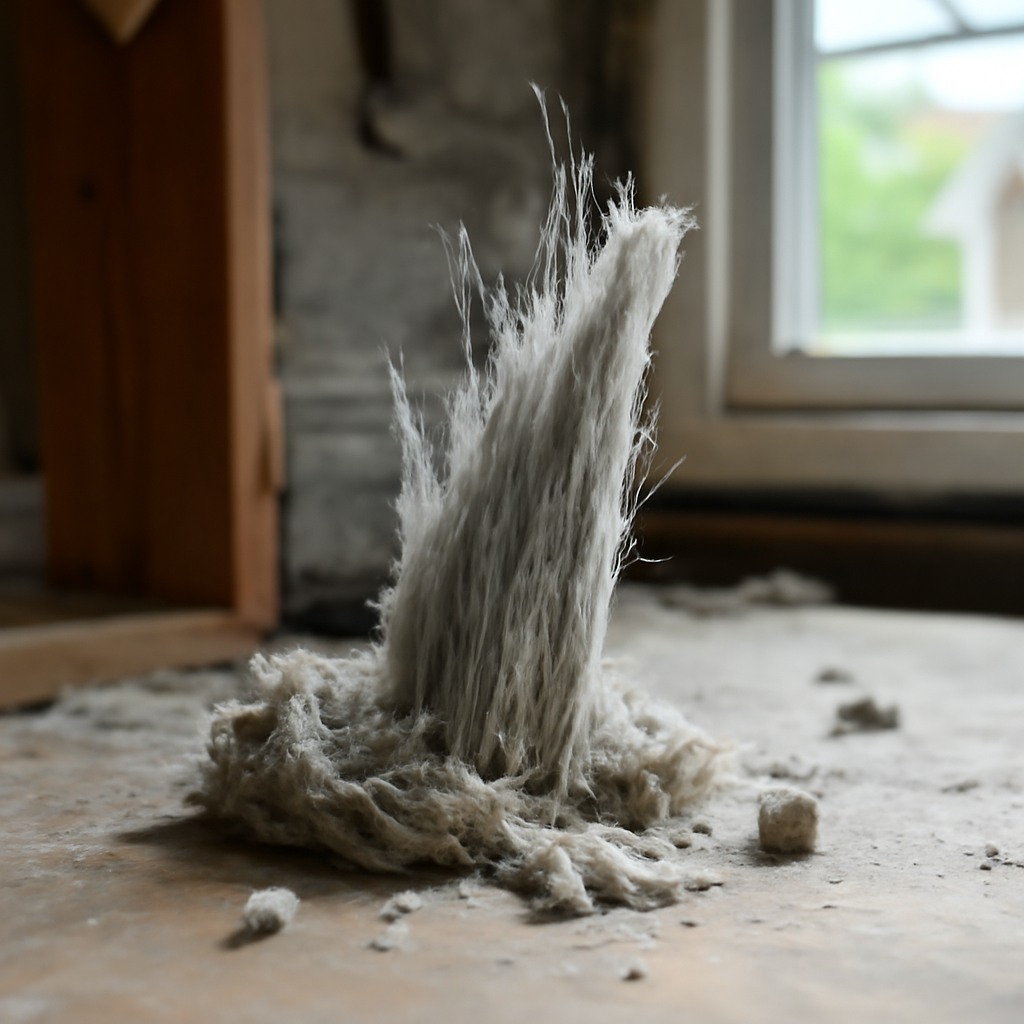
Of the several mineral forms that fall under the asbestos label, some carry a greater health concern than others, and amosite asbestos sits near the top of that list. Known commonly as brown asbestos, it was prized for heat resistance and used heavily in insulation and fireproofing through much of the twentieth century. Understanding what amosite is, where it turns up in older homes, and why it is considered especially hazardous helps homeowners make safer decisions. This guide summarizes EPA, OSHA, and CDC guidance current as of 2026 and is for general education only; it is not a diagnosis, and a certified asbestos professional should make decisions about testing, handling, or removal in your specific home.
Part of our Asbestos in the Home guide — start there for the full picture →
Is this mold, asbestos, or water damage? Get a free instant screen
Upload a clear photo of the suspect area. You'll get an instant AI screening opinion and what to do next. This is screening guidance, not a professional determination.
Screening guidance only. AI can be wrong. Confirm asbestos, mold type, or lead with lab testing or a licensed professional before acting.
What Amosite Asbestos Is
Amosite asbestos is one of the two main amphibole forms of asbestos used commercially, the other being crocidolite. Its name comes from “Asbestos Mines of South Africa,” the region where much of it was extracted. Chemically it is a grunerite mineral with straight, needle-like fibers, in contrast to the curly fibers of chrysotile, the more common serpentine form. Its color in raw form ranges from grey-brown to brown, which gives it the everyday name brown asbestos.
The amphibole structure matters for health. The straight, brittle, durable fibers of amosite resist breaking down in the body and lodge in lung tissue more persistently than chrysotile fibers, which is part of why health agencies regard amphibole asbestos as more potent in causing disease. All asbestos types are recognized human carcinogens, but the amphiboles, amosite and crocidolite, are associated with elevated risk relative to chrysotile. Our overview of what asbestos is and the closely related crocidolite asbestos guide place amosite within the broader family of asbestos minerals.
Where Amosite Was Used
Amosite saw wide industrial and building use because of its strength and thermal performance. In homes and buildings constructed roughly between the 1920s and the 1980s, it commonly appeared in:
- Thermal insulation: Pipe lagging, boiler insulation, and the insulating board around heating equipment.
- Insulating board (AIB): Asbestos insulating board used for fire protection, ceiling tiles, partition walls, and panels around heating units.
- Cement products: Some cement sheets and pipes incorporated amosite alongside chrysotile.
- Spray-applied coatings: Fireproofing and acoustic sprays on structural steel and ceilings.
- Gaskets and thermal seals: In heating systems and industrial equipment.
Insulating board is one of the more concerning uses because it is moderately friable, meaning it can release fibers when cut, drilled, or damaged. In older Front Range homes with original boilers or steam heating, amosite-containing insulation may still wrap pipes or surround equipment, sometimes hidden behind later finishes. The asbestos and lead hub covers the range of materials a pre-1980s home may contain.
Why Amosite Is Considered Especially Hazardous
Health authorities classify all asbestos as carcinogenic to humans, linking it to asbestosis, lung cancer, and mesothelioma, a cancer of the lining of the lungs and abdomen. The hazard of any asbestos comes from inhaling airborne fibers, which can lodge in lung tissue and trigger disease decades later. What sets amphiboles like amosite apart is fiber durability and shape.
The straight, rigid fibers of amosite penetrate and persist in lung tissue, and the body clears them less effectively than it clears the curlier chrysotile fibers. Research summarized by health agencies associates amphibole exposure with a higher relative risk of mesothelioma in particular. Because there is no established safe level of asbestos exposure and the diseases develop long after exposure, the durability of amosite fibers makes any release a meaningful concern. None of this means a homeowner should panic over intact material; it means amosite-containing material warrants particular care and professional handling when disturbance is possible. Anyone concerned about a past exposure should consult a physician rather than attempt to self-assess risk.
Amosite Compared to Other Asbestos Types
Asbestos is not a single mineral but a group of six regulated fibrous silicates, divided into two families. The serpentine family contains only chrysotile, the white asbestos that made up the large majority of asbestos used in construction. The amphibole family contains amosite, crocidolite, and three less commercially significant types: tremolite, actinolite, and anthophyllite. Amosite was the second most widely used type after chrysotile, far more common in buildings than crocidolite.
The practical difference between chrysotile and the amphiboles comes down to fiber shape and persistence. Chrysotile fibers are curly and somewhat flexible, and the body clears a portion of them over time. Amphibole fibers, including amosite, are straight, stiff, and biopersistent, meaning they remain in lung tissue far longer. That persistence is central to why health agencies regard amphibole exposure as carrying greater relative risk for mesothelioma, even though all six types are classified as human carcinogens and none has a known safe exposure level.
For a homeowner, this distinction is informative rather than reassuring about any one material. A building product can contain a blend of types, and chrysotile is itself a recognized carcinogen, so the presence of “only” chrysotile is not a green light to disturb material. What the comparison does explain is why a laboratory report identifying amosite or crocidolite may prompt particularly careful handling recommendations from an abatement professional. The response to confirmed asbestos of any type follows the same protective logic: avoid disturbance, manage in place when stable, and use licensed professionals for removal.
Identifying Suspected Amosite
Color and texture offer only weak clues. While amosite is often brownish in raw form, by the time it is bound into insulation, board, or cement, color is not a reliable indicator, and many asbestos types look similar once installed. The brown name can mislead homeowners into thinking they can spot it by eye. They cannot.
Definitive identification requires laboratory analysis. An accredited lab examines a properly collected sample under polarized light microscopy or, for finer work, transmission electron microscopy, which can distinguish amosite from chrysotile, crocidolite, and non-asbestos fibers. A certified inspector collects the sample safely, wetting the material and using methods that avoid releasing fibers. For a sense of how labs analyze these materials, our piece on asbestos under the microscope explains the process, and how to identify asbestos covers the practical steps. The key takeaway is that visual guessing, whether by color or by age of the home, is never a substitute for testing.
Sampling itself is regulated work that should not be improvised. Breaking off a piece of suspect insulation with bare hands can release exactly the fibers the test is meant to assess, so a certified inspector wets the area, takes a small representative sample with minimal disturbance, seals it for transport, and patches the spot. Several samples from different materials may be needed, since a single home can contain multiple asbestos-bearing products of different types. The laboratory report then specifies which type or types are present and the approximate percentage, information an abatement contractor uses to plan the safest handling approach for that particular material.
How to Handle Amosite Safely
The handling principles for amosite mirror those for asbestos generally, with extra caution given its potency and the friable nature of common amosite materials like insulating board. If the material is intact and undisturbed, the safest path is usually to leave it in place and monitor its condition, or to have it encapsulated or enclosed by a professional. Disturbance is the trigger for release, so avoiding unnecessary disturbance is the first line of defense.
Do not cut, drill, sand, scrape, or break suspected amosite material. Do not attempt to remove pipe insulation or insulating board yourself. Avoid disturbing damaged material and keep the area undisturbed until it can be assessed. Because insulating board and pipe lagging can be friable, even modest contact can release fibers, so the threshold for professional involvement is lower than with hard, bound non friable products. If testing confirms amosite and removal is necessary, a licensed abatement contractor performs the work under containment, with wetting, negative-pressure enclosures where required, respiratory protection, and regulated disposal. Homeowners and other occupants should stay out of the work area during abatement.
After professional removal, clearance testing confirms the space is safe to reoccupy. The abatement contractor or an independent inspector takes air samples within the cleaned area and compares the fiber count against accepted clearance levels before the containment comes down. This step matters because the goal of abatement is not only to remove the material but to leave the air clean, and skipping verification leaves a homeowner without proof the work succeeded. For friable amosite materials especially, where fiber release during removal is more likely, clearance testing is an essential closing step rather than an optional extra.
Managing Amosite in an Older Home
Many owners of older homes discover amosite-containing materials not during a crisis but during planning, when a heating-system upgrade, a basement finish, or an energy retrofit puts crews near old insulation. The decision then is whether to manage the material in place or remove it. Health and building-science guidance generally favors leaving intact, undisturbed asbestos alone, because removal itself creates the very fiber release that poses the risk. Encapsulation, sealing the surface, and enclosure, building a barrier around it, are recognized ways to manage material that is stable but in the path of other work.
Removal becomes the right choice when the material is already deteriorating, when it cannot be reliably protected from disturbance, or when the planned work makes contact unavoidable. A common scenario in Front Range homes is replacing an aging boiler whose pipes are wrapped in suspect lagging; the heating contractor cannot do the work until the insulation is professionally abated. Coordinating the abatement before the mechanical work, rather than discovering the problem mid-project, keeps both the household and the trades safe and avoids costly delays. The choice between management and removal should be made with a certified professional who can weigh the material’s condition, its location, and the planned work against the cost and disruption of each path.
When to Call a Professional
Call a certified asbestos professional before disturbing any suspect insulation, board, or coating in a home built before the late 1980s, particularly around older boilers, pipes, and heating systems where amosite was common. An accredited inspector can sample and identify the material, and a licensed abatement contractor can remove or manage confirmed amosite under the required safeguards. Colorado regulates asbestos work through state health authorities, with notification and licensing requirements for projects above set thresholds. A home inspector can flag suspect materials during a purchase and recommend testing. Given amosite’s place among the more hazardous asbestos types, treating any suspect material as if it contains it until proven otherwise is the prudent default. This is especially relevant when planning to replace or upgrade an older heating system, since the crews doing that mechanical work are not always trained to recognize or handle asbestos insulation. Coordinating an asbestos assessment before the heating contractor arrives lets the abatement, if any is needed, happen first and clears the way for the upgrade. It also keeps the project compliant with state notification and licensing rules, which can apply to homeowner projects above certain thresholds. Building that sequence into the plan from the start, rather than reacting when a worker uncovers suspect lagging mid-job, protects everyone involved and avoids the delays and added cost of an emergency stop-work. The same logic applies to a home purchase: a buyer evaluating an older property with original heating equipment is well served by having an inspector flag suspect insulation early, so testing and any needed abatement can be factored into the offer and the closing timeline rather than becoming a costly surprise after move-in. Treating amosite-bearing materials as a known, manageable feature of older homes, identified and handled methodically, keeps both health and finances under control.
References
- Learn About Asbestos — U.S. Environmental Protection Agency
- About Asbestos and Health Effects — Centers for Disease Control and Prevention
- Asbestos Standards — Occupational Safety and Health Administration
Frequently asked questions
What is amosite asbestos?
Amosite is one of the amphibole forms of asbestos, commonly called brown asbestos, with straight needle-like fibers. Its name derives from the Asbestos Mines of South Africa. It was used heavily in thermal insulation, insulating board, and fireproofing through much of the twentieth century.
Is amosite more dangerous than other asbestos?
Health agencies treat all asbestos as carcinogenic, but the amphibole types, amosite and crocidolite, are associated with higher relative risk because their straight, durable fibers persist in lung tissue and resist the body's clearance. Any asbestos exposure carries risk, so intact material should be left undisturbed and disturbance handled by professionals.
How can I tell if a material contains amosite?
You cannot identify it reliably by color or appearance, because installed materials look similar and the brownish raw color is not visible once bound. Definitive identification requires an accredited laboratory analyzing a properly collected sample under microscopy. A certified inspector should collect the sample.
Where is amosite found in older homes?
It commonly appears in pipe and boiler insulation, asbestos insulating board used for fire protection and panels, some cement products, and spray-applied fireproofing or acoustic coatings. Homes built between roughly the 1920s and 1980s, including older Front Range houses with original heating systems, may still contain it.
If your older Front Range home has original pipe or boiler insulation you are unsure about, a vetted local inspector can arrange safe sampling before any work; you can get in touch through our contact page.