Crocidolite Asbestos: What Homeowners Need to Know
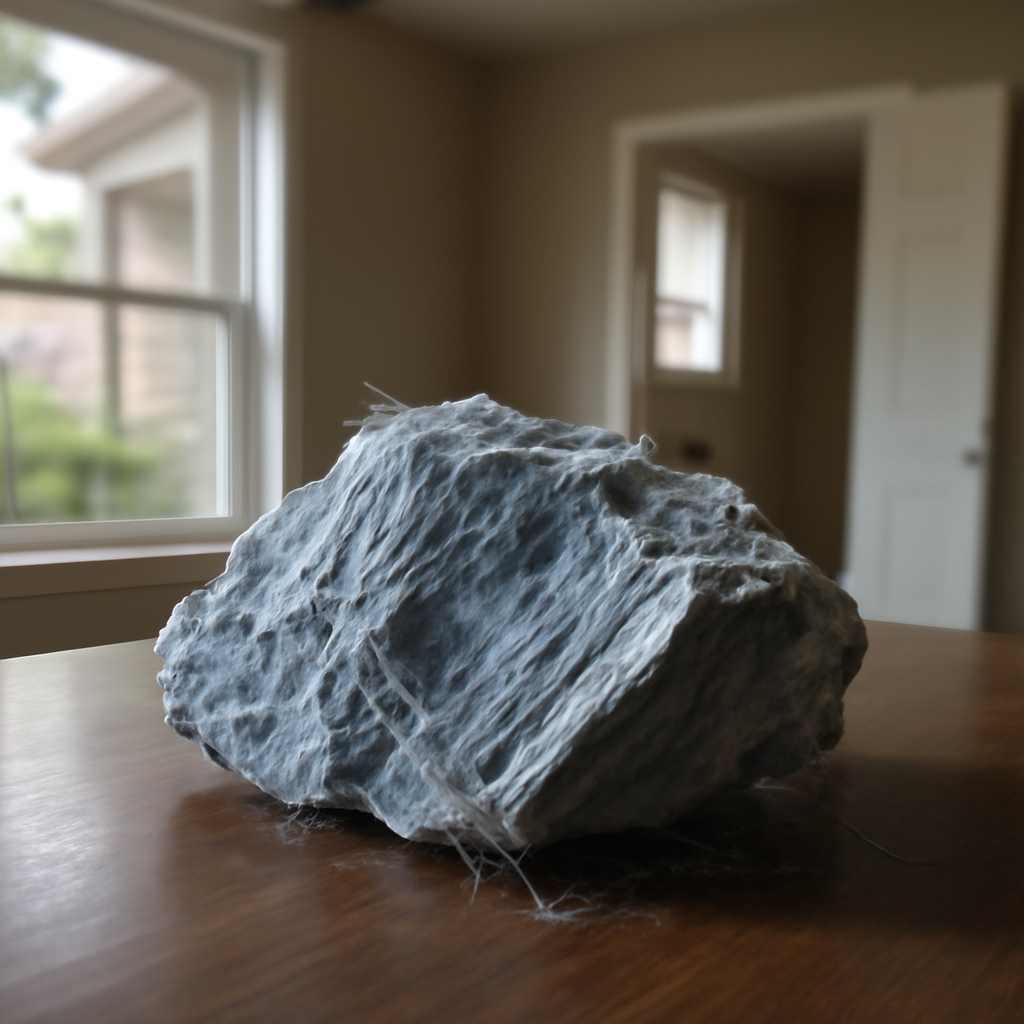
Among the six recognized asbestos minerals, crocidolite asbestos has the most fearsome reputation. Often called blue asbestos, it is the fiber most strongly associated with mesothelioma and lung cancer. While it was less common in U.S. building products than white chrysotile, homeowners researching asbestos hazards deserve a clear picture of why this particular variety is treated as the most dangerous. This guide summarizes EPA, CDC, and asbestos research guidance current as of 2026 and is general education only, not medical advice. For testing or removal, hire a certified asbestos professional.
Is this mold, asbestos, or water damage? Get a free instant screen
Upload a clear photo of the suspect area. You'll get an instant AI screening opinion and what to do next. This is screening guidance, not a professional determination.
Screening guidance only. AI can be wrong. Confirm asbestos, mold type, or lead with lab testing or a licensed professional before acting.
What is crocidolite asbestos?
Crocidolite is a type of asbestos belonging to the amphibole mineral family. Asbestos minerals fall into two groups: serpentine, which includes only chrysotile, and amphibole, which includes crocidolite, amosite, tremolite, actinolite, and anthophyllite. Crocidolite has a distinctive bluish color, which is why it is commonly called blue asbestos.
Chemically, crocidolite is a sodium iron silicate. Its fibers are straight, sharp, and extremely fine, far thinner than a human hair. Those physical traits matter enormously for health, because thin, straight, durable fibers penetrate deep into lung tissue and resist the body’s attempts to clear them. Crocidolite is also notably resistant to acid and heat, which made it valuable industrially even as it proved exceptionally harmful biologically.
Why is crocidolite considered the most dangerous asbestos?
Research consistently identifies crocidolite as the asbestos type with the highest potency for causing mesothelioma, the rare cancer of the lining around the lungs and abdomen. Several characteristics combine to drive this risk.
First, fiber shape and size. Crocidolite fibers are thin and needle-like, allowing them to travel deep into the lungs and even migrate to the pleural lining where mesothelioma develops. Second, biopersistence. Because the fibers are chemically durable, the body cannot dissolve or expel them efficiently, so they remain lodged in tissue for years, prolonging the inflammatory irritation linked to cancer. Third, historical evidence. Communities and workforces with heavy crocidolite exposure, such as the mining town of Wittenoom in Australia, suffered some of the highest mesothelioma rates ever recorded.
By contrast, chrysotile, the curly white asbestos used in most U.S. products, has curlier fibers that the body clears somewhat more readily. Chrysotile is still a recognized carcinogen with no safe exposure level, but per fiber, crocidolite is regarded as more hazardous.
Where was crocidolite asbestos used?
Crocidolite was used less widely than chrysotile in American homes, but it appeared in specific products that exploited its acid and heat resistance. Common applications historically included:
- Spray-on fireproofing and insulation, particularly in some commercial and industrial settings
- Cement products, including certain pipes and panels where chemical resistance was valued
- Insulation for chemical processing and high-acid environments
- Some gaskets, seals, and specialized industrial components
- Certain older cigarette filters and reinforced plastics in limited cases
In residential settings, chrysotile dominated products like popcorn ceilings, floor tiles, and joint compound. A homeowner is statistically more likely to encounter chrysotile than crocidolite, but blue asbestos cannot be ruled out without laboratory analysis, because the type cannot be identified by sight. For the full landscape of where these materials hide, see our pre-1978 housing hazard guide for asbestos and lead.
How does crocidolite compare to the other amphibole asbestos types?
Crocidolite is one of five amphibole asbestos minerals, and they share the straight, durable fiber shape that makes amphiboles more biopersistent than serpentine chrysotile. Amosite, known as brown asbestos, was the second most commonly used amphibole and appeared in insulation and ceiling tiles; it is also considered highly hazardous. Tremolite, actinolite, and anthophyllite were rarely used commercially on their own but show up as contaminants in other minerals, most notably tremolite in some vermiculite insulation.
Within this group, crocidolite is generally regarded as the most carcinogenic, with amosite close behind. The ranking reflects fiber dimensions and durability rather than chemistry alone. What unites all amphiboles is that the body struggles to clear them, so they accumulate over time. For homeowners, the takeaway is that any amphibole finding warrants careful professional handling, and the precise type matters less than the fact that asbestos is present and should not be disturbed.
Can you identify crocidolite by its color?
The blue tint that gives crocidolite its nickname can sometimes be visible in raw mineral form, but you cannot reliably identify asbestos type by color once it is mixed into a building product. By the time crocidolite is bound in cement, insulation, or coatings, its color is masked, and weathering and aging further change appearance.
The only dependable way to determine whether a material contains asbestos, and which type, is laboratory analysis under polarized light or electron microscopy. A certified inspector collects a sample, and an accredited lab identifies the specific fiber. Attempting to judge by color is unreliable and risks disturbing the material. Our broader guide on how to identify asbestos explains why visual identification falls short.
What should homeowners do if they suspect crocidolite?
The handling rules for crocidolite are the same as for any asbestos, with extra caution given its higher potency. If you suspect a material may contain asbestos of any type, do not disturb it. Avoid cutting, sanding, drilling, sweeping, or vacuuming the area. Standard household vacuums spread fibers rather than capture them.
Arrange for a certified inspector to sample the material and an accredited lab to analyze it. If asbestos is confirmed, options include professional abatement by a licensed contractor or encapsulation to seal the material in place. Because amphibole fibers are so biopersistent, professional handling is especially important; this is not a do-it-yourself situation. Colorado regulates asbestos work, and disposal must follow specific rules.
The lab analysis itself determines not only whether asbestos is present but which type. If results identify crocidolite or another amphibole, an inspector may recommend a more conservative approach given the higher potency, though the core handling rules of containment, wetting, and licensed disposal apply to all asbestos. The point is not to panic over the word crocidolite but to ensure the material is managed by professionals who follow proper procedures. A confirmed amphibole result is a clear signal to keep the do-it-yourself tools in the garage and bring in licensed help.
What are the health concerns with crocidolite exposure?
Crocidolite exposure is linked to the same diseases as other asbestos types, but with elevated risk for mesothelioma in particular. These include lung cancer, mesothelioma, asbestosis, and pleural changes such as plaques and thickening. As with all asbestos, disease has a long latency, often 20 to 50 years for mesothelioma, so effects of past exposure may not surface for decades.
There is no medical test that measures past exposure, and a single household encounter does not warrant emergency testing. People with a significant exposure history should share it with a physician, who may recommend monitoring. Symptoms such as persistent cough, shortness of breath, or chest pain have many causes and require a doctor’s evaluation, not self-diagnosis. No website can diagnose disease.
Historical context helps explain crocidolite’s reputation without overstating a typical homeowner’s risk. The communities and workforces that suffered the highest crocidolite-related disease rates were exposed to enormous fiber concentrations over years, often in mining and heavy industry. A homeowner who finds an intact crocidolite-containing product in good condition faces a very different situation, provided the material is left undisturbed or professionally managed. The history is a reason for respect and caution, not a reason to assume any encounter with the material guarantees harm. As with all asbestos, reducing exposure and avoiding disturbance are the practical protective steps.
Why was crocidolite used despite its dangers?
It is reasonable to wonder why such a hazardous material was ever used. The answer is that crocidolite’s physical properties were genuinely valuable, and for much of the 20th century the health risks were either unknown or downplayed. Crocidolite resists acids, withstands high heat, and is strong and durable. Those traits made it attractive for applications where chemical and thermal resistance mattered, such as industrial insulation, certain cement products, and acid-handling equipment.
Awareness of asbestos hazards grew through the mid-20th century, and regulation followed, eventually restricting many uses. By the time the dangers were widely accepted, crocidolite and other asbestos products were already installed in countless buildings. That legacy is why homeowners today still encounter asbestos materials in older structures, long after new use was curtailed. The history is a reminder that a material’s usefulness does not guarantee its safety, and that today’s caution reflects lessons learned at significant human cost.
How does crocidolite get into older buildings?
In residential and light-commercial settings, crocidolite was far less common than chrysotile, but it could appear in specific products. The most likely places to encounter amphibole asbestos, including crocidolite, are older cement products, certain spray-applied fireproofing or insulation, and specialized industrial materials that occasionally found their way into mixed-use buildings. Vermiculite insulation can also be a concern, though that is typically associated with tremolite contamination rather than crocidolite specifically.
Because the type cannot be identified visually, a homeowner who finds any suspect asbestos material should treat it as potentially hazardous and have it analyzed. The lab result reveals both the presence and the type. If crocidolite or another amphibole turns up, it confirms that professional handling is warranted, but the practical steps of avoiding disturbance and arranging licensed removal or encapsulation are the same as for any asbestos. The takeaway for homeowners is consistency: respect all asbestos, test to confirm, and let professionals manage what is found.
When to call a professional
Call a certified asbestos inspector before renovating or demolishing any part of an older home, and sooner if you find damaged or crumbling materials that might contain asbestos. Given crocidolite’s higher hazard, never attempt to remove suspect amphibole materials yourself. Use a licensed abatement contractor who follows containment, air monitoring, and disposal requirements.
For health questions, consult your physician and bring a clear account of any exposure history. Pairing a qualified inspector for the building with a doctor for your health is the responsible way to handle a crocidolite concern.
How does encapsulation work for amphibole asbestos?
When a crocidolite-containing material is in good condition and does not need to be removed, encapsulation is often the preferred approach. Encapsulation means applying a sealant that bonds the material together or coats it, so fibers cannot become airborne. For non-friable materials in particular, a durable encapsulant can lock the asbestos in place and let the material remain safely.
Encapsulation has advantages over removal: it disturbs the material far less, generates no removal debris, and is usually less expensive. The trade-off is that the asbestos remains in the building and must be managed over time, with periodic checks to ensure the encapsulant stays intact. If the material is damaged, friable, or in a location prone to disturbance, removal may be the better long-term choice. A certified professional weighs the material’s condition, location, and the building’s future use to recommend whether encapsulation or removal makes more sense, and that judgment should drive the decision rather than a blanket preference. Our overview of friable asbestos explains why condition matters so much to this choice.
One practical caution applies specifically to amphibole materials like crocidolite: because the fibers are so durable and biopersistent, any disturbance carries a higher stakes consequence than with some other materials. That argues for an even more conservative posture, favoring undisturbed management and professional handling. If encapsulation is chosen, schedule periodic inspections to confirm the seal remains intact, and avoid any activity that could abrade or puncture the encapsulated surface. The goal is to keep the fibers permanently bound, whether by leaving sound material alone, encapsulating it, or removing it under controlled conditions. In every case, the decision belongs with a qualified professional who has confirmed the material’s identity and assessed its condition firsthand.
References
- Asbestos types and regulation — U.S. EPA
- Asbestos fibers and health effects — CDC / NIOSH
- Crocidolite (blue asbestos) profile — Asbestos.com
- Asbestos health research — NIEHS
Front Range homeowners who suspect hazardous asbestos in an older home can connect with a vetted certified inspector through our contact page before any work begins.