Lead Paint History: What Homeowners Need to Know
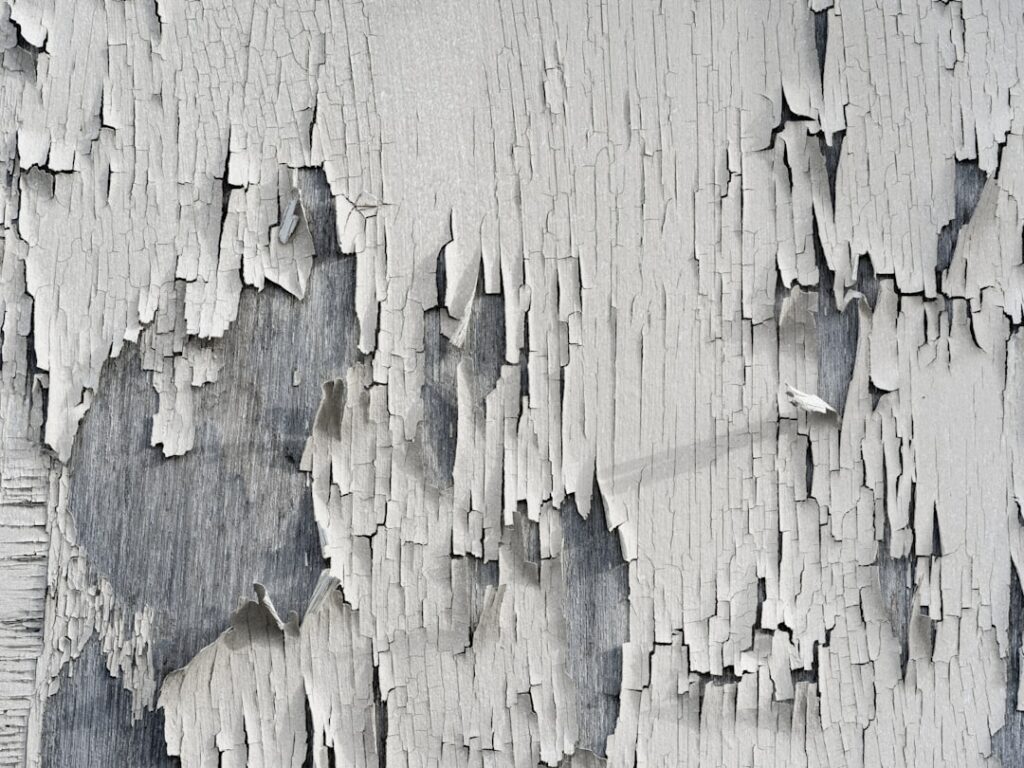
Lead paint history stretches roughly 2,500 years, from ancient Greek and Roman cosmetic and decorative use through the industrial revolution, the early 1900s manufacturing boom, mid-century mass adoption, the public-health awakening of the 1970s, and the 1978 U.S. consumer ban. Understanding the full timeline helps homeowners frame the risk in their own homes. A property built in 1965 sits at the absolute peak of lead-paint penetration; a property built in 1985 should be lead-free. This guide summarizes EPA, CDC, and HUD historical sources current as of 2026 and is not a substitute for laboratory paint testing or medical advice. Anyone living with chipping paint in a pre-1978 home should consult a certified lead inspector and a physician for any health concerns.
Is this mold, asbestos, or water damage? Get a free instant screen
Upload a clear photo of the suspect area. You'll get an instant AI screening opinion and what to do next. This is screening guidance, not a professional determination.
Screening guidance only. AI can be wrong. Confirm asbestos, mold type, or lead with lab testing or a licensed professional before acting.
The 2,500-year story in one paragraph
Lead-based pigments were prized for their opacity, durability, and color stability across most of recorded Western history. Ancient civilizations used them as cosmetics and decorative paint. The industrial revolution turned those pigments into mass-produced architectural coatings. By the early 1900s, white lead carbonate paint was the dominant residential interior and exterior finish in the United States. Lead use peaked in the 1920s, declined slowly under industry self-regulation, surged again in postwar housing, came under scientific scrutiny in the 1960s, and faced public and regulatory pushback after the National Lead Poisoning Prevention Act of 1971. The Consumer Product Safety Commission finalized the federal residential ban in 1978.
Ancient origins: Greece, Rome, and Egypt
White lead, chemically basic lead carbonate, has been documented in cosmetic and decorative use since roughly 400 BCE. The Greek physician Hippocrates described occupational lead poisoning in metal workers. Roman writers including Vitruvius warned about the hazard of lead water pipes and lead cookware. Romans nonetheless used lead pigments in wall frescoes and used lead acetate to sweeten wine. Egyptian cosmetics from the same era contained lead sulfide and lead chloride compounds. Lead poisoning was a documented hazard for thousands of years before scientists understood the underlying biology.
The Greco-Roman period also produced the first known production methods for white lead. The “Dutch process,” refined over centuries, exposed metallic lead strips to vinegar fumes in clay pots packed with manure. The resulting white powder was scraped off and ground into oil to make paint. The process changed little until industrialization.
The industrial revolution and early mass production
The nineteenth century turned a craft pigment into an industrial commodity. The first U.S. white lead factory opened in Philadelphia in 1804. By 1870, dozens of plants in Pennsylvania, Missouri, and Ohio were producing white lead in volume. Railroad expansion made nationwide distribution possible. The growing middle class wanted painted homes, and white lead became the default base for architectural paint. The pigment was easy to tint with other minerals, dried to a hard durable film, resisted mildew, and held color decades longer than alternatives.
The first peer-reviewed health concerns appeared in the late 1800s. European physicians documented “painters’ colic,” a constellation of abdominal pain, anemia, and neurological symptoms among house painters. The U.S. Public Health Service published similar findings in the early 1900s. The connection between occupational exposure and disease was established, but residential exposure to dried paint was not yet on the public health radar.
The 1920s peak and the League of Nations push
U.S. lead paint use peaked in the 1920s. Industry consumption data shows residential white-lead paint volumes that would not be matched again. European countries began regulating during this same decade. France banned interior lead paint in 1909, the earliest national restriction. Several other European nations followed in the 1920s. The League of Nations International Labour Organization passed a 1921 convention recommending the ban of lead paint for interior use.
The United States did not ratify the 1921 ILO convention. The Lead Industries Association, the trade group for U.S. lead producers, actively opposed regulation. Industry-funded research downplayed the residential risk and argued that painters’ colic was an occupational hazard, not a hazard to homeowners. The story of that lobbying campaign is told in detail in the industry-defense narrative on lead in paint. The result was that the U.S. continued to produce and apply residential lead paint at scale for another fifty years.
The 1950s postwar housing surge
Postwar suburban expansion gave lead paint a second adoption wave. Levittown, the prototype mass-produced suburb, opened in 1947. Roughly four million single-family homes were built in the U.S. between 1945 and 1955, and the majority were painted with lead-based products on doors, trim, windows, and exterior siding. Although the percentage of lead in paint was lower than in the 1920s peak, the absolute volume of housing painted was enormous. Homes from this era are the largest single share of the U.S. lead-paint housing stock today.
The 1950s also saw the first widespread use of chalking lead-based exterior paint formulations. These were marketed as self-cleaning because the surface layer shed contaminated dust during rain. That property was a feature in the 1950s and a hazard signal today, because chalking paint distributes lead into surrounding soil.
Scientific awakening in the 1960s and early 1970s
The 1960s produced the first U.S. studies that connected residential lead paint to childhood lead poisoning. Baltimore pediatrician Dr. Julian Chisolm and colleagues at Johns Hopkins documented dozens of severely poisoned children in lead-painted row houses. New York City and Chicago published similar surveillance data. The CDC issued its first lead poisoning prevention guidance in 1971, setting a blood lead “level of concern” at 60 micrograms per deciliter. That threshold has since dropped many times; the current CDC reference value is 3.5 micrograms per deciliter.
Public outrage built quickly once the data was public. The Lead-Based Paint Poisoning Prevention Act of 1971 created the first federal screening programs. The Department of Housing and Urban Development began removing lead paint from federally funded housing. The Environmental Protection Agency began phasing lead out of gasoline in 1973, the first major federal lead-elimination program.
The 1978 CPSC ban
The Consumer Product Safety Commission issued the final residential lead paint ban in 1977, effective in early 1978. The rule prohibited the manufacture or sale of paint containing more than 0.06 percent lead by weight for residential use, toys, and furniture. The threshold was later reduced to 0.009 percent in 2009. The 1978 date is the dividing line every home inspector and real estate professional learns. Homes built before 1978 are presumed to contain some lead paint somewhere; homes built after 1978 are presumed not to.
The 1978 ban applied only to residential consumer paint. Industrial coatings, marine coatings, and certain commercial applications retained lead pigments for years afterward. Toys and other consumer products containing lead paint continued to appear in U.S. imports for decades, culminating in the high-profile toy recalls of 2007.
Post-1978 enforcement, disclosure, and remediation
The Title X Residential Lead-Based Paint Hazard Reduction Act of 1992 created the federal disclosure framework that still governs real estate transactions today. Sellers and landlords of pre-1978 housing must provide buyers and tenants with the EPA pamphlet “Protect Your Family From Lead in Your Home” along with a written lead disclosure form. The 2008 EPA Renovation, Repair and Painting Rule requires contractors who disturb lead paint in pre-1978 housing to be certified and to follow lead-safe work practices. Both regulations remain in force in 2026.
Remediation rather than removal is now the dominant strategy. The EPA framework distinguishes between intact lead paint, which is generally not a hazard, and damaged or chalking lead paint, which is. The recommended response is encapsulation, enclosure, or component replacement rather than aggressive stripping. The CDC frames the goal as reducing childhood blood lead levels, not as eliminating every speck of lead from the housing stock. For homeowners managing this in practice, the broader asbestos and lead pre-1978 housing hazard guide walks through testing, disclosure, and remediation choices.
What the history means for a homeowner today
Three numbers anchor the practical takeaway. First, a property built before 1978 statistically has some lead paint somewhere; the CDC estimates roughly 24 million U.S. homes still contain lead paint hazards. Second, a property built before 1960 is statistically much more likely to have lead paint, and the lead concentration is statistically higher. Third, a property built before 1940 should be assumed to have lead paint until tested. Front Range neighborhoods like Capitol Hill in Denver, the Old North End in Colorado Springs, and downtown Boulder fall into the third category. Homes in Highlands Ranch, Castle Rock subdivisions built after 1990, and most of the Tech Center fall outside the lead-paint era entirely.
How to test for lead paint in a pre-1978 home
The two primary testing methods are X-ray fluorescence and laboratory paint-chip analysis. XRF is non-destructive and gives an instant reading; it requires a certified inspector and an EPA-listed instrument. Lab analysis requires removing a small paint sample, sealing it, and shipping it to an accredited lab; results return in five to ten business days. Consumer rapid-test swabs are useful for screening but are not approved by EPA as a clearance method. The leadinfo.com resource maintained by industry-and-public-health stakeholders catalogs current testing options.
Lead paint history in the Colorado housing stock
Colorado’s housing history mirrors the national pattern but with two regional wrinkles. First, much of the historic Front Range housing stock was built between 1880 and 1930, when white lead concentration in paint was at its highest. Second, postwar Front Range growth lagged the East Coast by roughly a decade; the suburban building boom in Lakewood, Aurora, and Westminster ran from the mid-1950s through the 1970s. That means Colorado homes from this second wave were built during the period when industry knew about the lead hazard but had not yet been regulated out of it. Capitol Hill, the Highlands, Park Hill, and the Old North End of Colorado Springs concentrate the highest-lead inventory.
Where lead paint history goes from here
The modern era is about remediation, disclosure, and slow attrition of the pre-1978 housing stock through renovation and replacement. Federal regulatory pressure has plateaued; the EPA, CDC, and HUD framework that took shape in the 1990s remains the active policy. Research focus has shifted from paint to lead in drinking water, soil, and imported consumer products. Childhood blood lead levels have dropped dramatically over fifty years, but disparities by neighborhood and household income persist. The history is therefore not closed; it is being rewritten more slowly than it was created.
The cost of cleanup compared to the cost of prevention
Economists have repeatedly estimated that the cost of removing lead paint from U.S. housing exceeds the cost that would have been imposed by an earlier ban. The Environmental Defense Fund and similar organizations have pegged total cleanup costs in the tens of billions of dollars. The healthcare cost of childhood lead exposure is harder to estimate, but the CDC and academic researchers calculate lifetime productivity losses per affected child in the hundreds of thousands of dollars. The cumulative cost of the U.S. policy delay between the 1921 ILO convention and the 1978 ban is therefore a meaningful chapter in the history itself, not just an academic footnote.
Final notes for buyers and sellers
Lead paint history is not a museum topic for anyone who owns a pre-1978 home. The federal disclosure requirement applies at every transaction. The renovation, repair, and painting rule applies every time a contractor disturbs paint. Children under six and pregnant women are the most vulnerable groups, which is why HUD and the CDC focus their programming there. The most useful step a buyer can take is to commission a pre-purchase lead paint risk assessment when the home was built before 1978, particularly if the paint is chipping, the woodwork has been repeatedly repainted, or the home has young children moving in.
References
- EPA Protect Your Family From Sources of Lead — U.S. Environmental Protection Agency
- CDC Lead Paint Sources — Centers for Disease Control and Prevention
- HUD Lead-Based Paint Regulations — U.S. Department of Housing and Urban Development
- NIEHS Lead Health Effects — National Institute of Environmental Health Sciences
Lead paint test kits
Instant swab kits flag lead on painted surfaces in minutes — useful before a renovation in any pre-1978 home.
| Product | Why | Buy |
|---|---|---|
 3M LeadCheck Swabs 3M LeadCheck Swabs | EPA-recognized instant swabs. | Amazon — $205.00 |
 Lead Test Kit (lab-based) Lead Test Kit (lab-based) | Mail-in for a documented result. | Amazon — $19.99 |