Why Is My Sump Pump Running Constantly? Causes and Fixes

A sump pump that runs constantly is usually reacting to one of five things: a genuinely high volume of groundwater from a high water table or heavy rain, a float switch that is stuck in the on position, a failed or missing check valve letting pumped water fall back into the pit, a pit or pump that is too small for the inflow, or discharge water that drains back toward the foundation and recirculates. The first is normal behavior during wet periods; the other four are problems that wear out the pump and can leave the basement unprotected. This guide shows how to tell which you have, ranks the causes with safe checks, and explains when to call a plumber, waterproofing contractor or inspector.
Part of our Crawl Space & Attic Guide guide — start there for the full picture →
Start with one simple observation: is water actually coming into the pit? Lift the cover, if it is safe to do so, and watch for a few cycles. If water is flowing in from the drain tile pipes and the pump is moving it out, the pump is working hard because there is real water to remove. If the pit is nearly empty and the pump runs anyway, or the water level barely changes, something mechanical is wrong. Always unplug the pump before reaching into the pit. The guidance below reflects general practice as of 2026; your pump’s manual and local code take priority.
How a Sump System Is Supposed to Work
A sump system collects groundwater from a perimeter drain, sometimes called drain tile, laid around the footing or beneath the basement slab. That water flows into a pit, or sump basin, below floor level. When the water rises to a set height, a float switch turns the pump on. The pump pushes water up a discharge pipe, through a one-way check valve, and out of the house to a spot where it can drain away. When the level drops, the float turns the pump off.
A healthy system cycles on and off. How often depends on soil, rainfall and the water table; during spring melt or a wet week, cycling every few minutes can be normal. Running without stopping, short-cycling on and off every few seconds, or running when there has been no rain are the patterns to investigate. Our guide to the sump basin explains pit size, covers and liners in more detail.
The ASHI Standard of Practice lists “sewage ejectors, sump pumps, and related piping” among the plumbing components a home inspector inspects, so sump systems are routinely checked during a home inspection where they are accessible.
Quick Diagnosis Table
| What you see | Likely cause | First check |
|---|---|---|
| Water pouring in from drain pipes; pump keeps up but never stops | High water table or heavy inflow | Confirm discharge is far from the house; watch the weather |
| Pump runs with the pit low or empty | Stuck float switch or failed switch | Unplug, inspect the float for snags |
| Water rushes back into the pit when the pump stops | Failed or missing check valve | Listen and watch at shutoff |
| Pump hums but water level does not drop | Clogged intake, airlock, frozen or blocked discharge, failing pump | Check discharge outlet and impeller screen |
| Very short on-off cycles every few seconds | Pit too small, float set too low, or check valve failure | Measure the pit; note cycle length |
| Pump runs mostly after it rains, and outlet is near the house | Discharge water recirculating into the drain tile | Trace where discharge water goes |
Best Sump Pumps: our top 3 picks
| Product | Best for | Key features | Price | Buy |
|---|---|---|---|---|
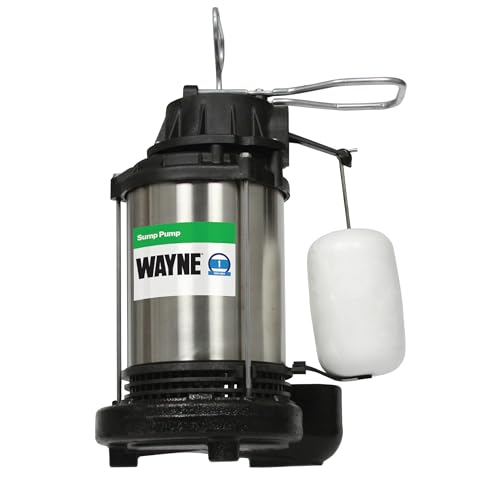
| Wayne CDU800 | Most basements |
| $197.99as of Oct 20, 2026 5:55 pm GMT+0000 | Buy now →Check current price |
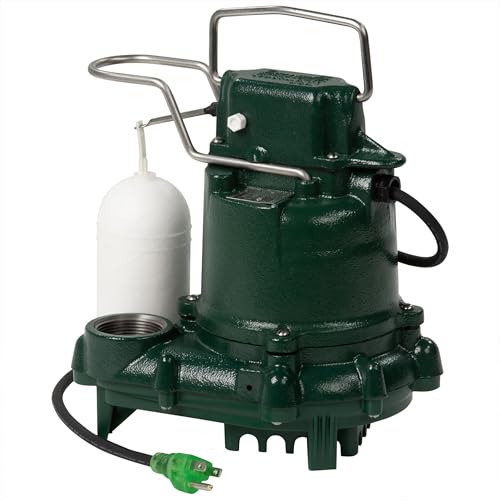
| Zoeller M53 Mighty-mate | Proven 1/3 HP cast iron pump |
| $213.08as of Oct 20, 2026 5:55 pm GMT+0000 | Buy now →Check current price |
| Wayne CDU1000 | Heavy inflow and high water tables |
| $254.99as of Oct 20, 2026 7:27 pm GMT+0000 | Buy now →Check current price |

Prices are Amazon’s listed prices as of the time shown and change often; check Amazon for today’s price. As an Amazon Associate we earn from qualifying purchases.
Cause 1: High Water Table or Heavy Inflow
If water is visibly flowing into the pit and the pump is lowering it, the pump is doing its job. Spring snowmelt, long rainy stretches, irrigation and nearby construction can all raise groundwater levels around a foundation. Some lots sit on a naturally high water table, and homes built in low areas or near drainage channels may see near-constant pumping during wet seasons.
What to check: Note whether constant running tracks with weather. Check whether gutters, downspouts and grading send roof water toward the foundation, which adds to the load. Look at the pump’s age; a pump running for weeks at a time wears out faster.
Safe DIY step:
- Extend downspouts so they discharge well away from the foundation.
- Make sure soil slopes away from the house.
- Reduce or redirect lawn irrigation near the foundation.
- Install a water alarm in the pit or near it so you know if the pump falls behind.
When to call a pro: If the pump cannot keep up, if it runs continuously for days, or if it is old. A plumber or waterproofing contractor can evaluate whether a higher-capacity pump, a second pump, a larger pit or improved exterior drainage makes sense. A battery backup or secondary pump is worth considering for any home where the pump runs heavily, since a power outage during a storm is when it is needed most. When you are ready to compare equipment, our roundup of the best sump pumps has our picks.
Cause 2: A Stuck or Failed Float Switch
The float switch is the most common mechanical reason a pump runs with little or no water in the pit. Tethered floats can catch on the pit wall, the discharge pipe or the power cord. Vertical floats can bind on their rod from debris or mineral buildup. A pump that has shifted in the pit can pin the float in the raised position. The switch itself can also fail electrically and stay closed.
What to check: Unplug the pump before touching anything in the pit. Look at whether the float is resting in the up position with no water lifting it, whether it is touching the wall or another object, and whether debris, gravel or sludge is in the pit.
Safe DIY step: With the pump unplugged, free a snagged float and center the pump in the pit so the float moves freely. Clean debris and sludge from the bottom of the pit. Plug the pump back in and pour a bucket of water into the pit to test that it starts and stops correctly. Our sump pump float switch guide explains the types and how to test them.
When to call a pro: If the float moves freely but the pump still runs constantly, the switch has likely failed. Replacing an integrated switch often means replacing the pump; on pumps with a piggyback switch, the switch can sometimes be replaced alone.
Cause 3: A Failed or Missing Check Valve
The check valve on the discharge pipe lets water flow out but not back. When it fails, or if the system was installed without one, the column of water in the pipe falls back into the pit each time the pump shuts off. The pit refills, the float rises, and the pump restarts, sometimes within seconds. You may hear a loud thunk or rush of water at shutoff, and the pump may seem to run all the time even though very little new water is entering the pit.
What to check: Watch the pit right after the pump shuts off. If the water level jumps back up quickly as water pours out of the discharge pipe, the check valve is not holding. Look for the valve itself, usually a short section of pipe with a flapper inside, often with an arrow on the body showing flow direction. A valve installed backward will block flow entirely, so the direction matters.
Safe DIY step: Check valves are inexpensive and many homeowners can replace one with basic tools, but water in the pipe will spill when it is removed, so unplug the pump first and have a bucket and towels ready. Our guide to the sump pump check valve walks through orientation, placement and replacement.
When to call a pro: If the discharge pipe is glued without unions, the valve is in an awkward spot, or you are not comfortable cutting and fitting PVC.
Cause 4: An Undersized Pit or Pump, or a Poor Float Setting
A small pit holds only a little water between the on and off levels, so the pump cycles very frequently. A pump with too little capacity for the inflow, or one that has lost capacity with age, may run nonstop just to keep up. A float set with a very short distance between on and off levels produces the same rapid cycling.
What to check: Measure the pit’s diameter and depth, and time a few cycles. Note the pump’s horsepower and rated flow at the vertical lift it has to push, which is listed on the label or in the manual. A pump that ran fine for years and now struggles may be wearing out, or its intake screen may be clogged.
Safe DIY step: With the pump unplugged, clean the intake screen and remove sludge. Some tethered floats allow the tether length to be adjusted to lengthen the cycle, following the manual’s limits so the pump never runs dry.
When to call a pro: A plumber or waterproofing contractor can size a pit and pump to the actual inflow, install a larger basin, or add a second pump. If the question is whether to replace an older unit, our guide comparing a pedestal vs submersible sump pump covers the trade-offs, and typical replacement pricing runs from a few hundred dollars for a like-for-like swap to well over $1,000 when a basin, backup system or new discharge line is involved.
Cause 5: Discharge Water Recirculating
If the discharge pipe empties right next to the foundation, onto ground that slopes back toward the house, or into a buried line that is cracked or disconnected, pumped water can soak right back into the soil and the drain tile. The pump then moves the same water over and over. This is especially common when the discharge outlet is a short pipe ending at the foundation wall, or when a buried extension has separated underground.
What to check: Follow the discharge pipe outside and see where it ends. Watch where water goes during a pump cycle. Look for soggy soil or erosion near the outlet.
Safe DIY step: Extend the discharge so water exits well away from the foundation, onto ground that drains away from the house and does not flow onto a neighbor’s property or a sidewalk where it can freeze. Never route sump discharge into the sanitary sewer unless your local utility specifically allows it; many prohibit it. Our sump pump discharge line guide covers routing, freeze protection and common code rules.
When to call a pro: For buried discharge lines that may be broken, for routing that requires crossing the yard, or for lots with poor drainage where a regrading or drainage plan is needed.
Other Causes to Rule Out
- Frozen or blocked discharge. In winter, ice can close a discharge outlet. The pump runs but water cannot leave. Look for ice at the outlet and consider a freeze-protection fitting that lets water escape if the line freezes.
- Airlock. Some pumps can trap air in the housing and run without moving water. Many pumps have a small weep hole above the pump for this reason; it should be clear.
- Plumbing leaks. A leaking water line, a water softener discharge, or a washing machine drain that ties into the pit can feed it constantly. If the inflow is clean and steady regardless of weather, look for a plumbing source.
- Worn pump. An aging pump with a worn impeller moves less water, so it runs longer per cycle.
Why a Constantly Running Pump Matters
A pump that runs nonstop is closer to failure. Motors overheat, switches wear out and bearings fail, and failure usually comes during the heaviest water. If the pump stops while groundwater is high, the basement can flood within hours. The EPA’s guide to mold and moisture advises drying water-damaged areas and items within 24 to 48 hours to prevent mold growth, so a failed pump can quickly become a mold problem, not just a water cleanup. FEMA also notes that flooding can affect properties outside high-risk flood zones and recommends talking with an insurance agent about flood coverage, which is worth doing if you depend on a sump pump.
A sump pit also connects the basement to the soil beneath the house. The EPA’s radon-resistant construction guidance calls for sealing openings in the foundation floor and walls to keep radon and other soil gases out. On the Front Range, where elevated radon is common, a sealed, gasketed sump cover is part of good practice, and it is often part of a radon mitigation system.
Front Range Factors
- Spring snowmelt and storms. April through June often brings heavy wet snow followed by rapid melt and afternoon thunderstorms, which can keep pumps busy for weeks.
- Expansive clay soils. Clay soils along much of the Front Range hold water against foundations and drain slowly, so perimeter drains and pumps carry more load near the house.
- Irrigation. Heavy lawn watering in summer can raise soil moisture near foundations even in a dry climate. A pump that runs only during the irrigation season is a strong clue.
- Freezing discharge lines. Cold snaps can freeze exposed or shallow discharge pipes, so freeze protection is worth planning.
- Radon. Many Front Range homes test above the EPA action level, so keep the sump lid sealed and coordinate any sump work with an existing mitigation system.
Prevention and Maintenance
- Test the pump every few months by pouring water into the pit until it starts and stops.
- Clean the pit and intake screen at least once a year.
- Confirm the check valve holds and is installed in the right direction.
- Keep discharge exits well away from the foundation and clear of ice and debris.
- Maintain gutters, downspouts and grading.
- Install a high-water alarm and consider a battery backup or secondary pump.
- Plan for replacement as the pump ages, rather than waiting for it to fail in a storm.
When to Call a Pro or Book an Inspection
Call a plumber or waterproofing contractor if the pump runs with no water coming in, cannot keep up, is short-cycling every few seconds, or is old and running constantly. Call immediately if water is rising in the basement. If you are buying a home with a sump pump, ask your inspector to note pump age, check valve, discharge routing and cover condition, and ask the sellers how often it runs. Our crawl space and foundation hub covers related moisture topics, and you can contact our team to arrange a Front Range inspection.
References
- ASHI Standard of Practice for Home Inspection — American Society of Home Inspectors
- A Brief Guide to Mold, Moisture and Your Home — U.S. Environmental Protection Agency
- Radon-Resistant Construction Basics and Techniques — U.S. Environmental Protection Agency
- Know Your Risk: Homeowners — Federal Emergency Management Agency
Frequently asked questions
Is it normal for a sump pump to run constantly?
During heavy rain, snowmelt or a high water table, frequent or near-constant cycling can be normal if water is actually flowing into the pit. Running with little or no water in the pit, or nonstop for days, points to a problem.
Why does my sump pump run when there is no water in the pit?
The most common cause is a float switch stuck in the on position, often caught on the pit wall or the pump itself. A failed switch can also stay on. Unplug the pump, free the float and test it with a bucket of water.
Can a bad check valve make a sump pump run constantly?
Yes. A failed check valve lets water in the discharge pipe fall back into the pit when the pump stops, which refills the pit and restarts the pump. Replacing the valve usually ends the rapid cycling.
How long can a sump pump run continuously?
Pumps are not designed to run nonstop for long periods, and constant running shortens their life. If yours runs continuously for more than a day or two, have the system evaluated and consider a backup pump.
Should a sump pump pit be covered?
Yes. A sealed cover keeps debris out, reduces humidity and helps keep radon and other soil gases from entering the basement, which matters on the Front Range where elevated radon is common.
Worried about a sump pump or basement moisture in a home you own or are buying? Get in touch with our team to arrange a Front Range inspection.