Sump Pump Discharge Lines: Freezing, Hoses and Drainage
A sump pump is only as good as the pipe that carries water away from it. The pump can run perfectly and still fail to protect a basement or crawl space if the discharge line is cracked, frozen, disconnected or dumping water right back against the foundation, where it soaks into the soil and returns to the sump pit. Many homes start with a rigid PVC line through the rim joist, then add a flexible sump pump hose or a corrugated extension outside to move water farther from the house. Each part of that path has its own failure points, and in Colorado the biggest one shows up in January, when a line that drains poorly freezes solid. This guide explains how discharge lines are built, the role of the check valve, how to reduce freezing risk, where discharged water should and should not go, what local rules may say about sewer connections, and what typical repairs and upgrades cost.
Part of our Crawl Space & Attic Guide guide — start there for the full picture →
How a Sump Pump Discharge Line Works
When groundwater or drain-tile water fills the sump pit, a float switch turns the pump on. The pump pushes water up a vertical pipe, through a check valve, across the basement or crawl space ceiling or wall, and out through the rim joist or foundation wall to the exterior. From there, the water should flow to a place where it can drain away from the house without causing problems for the home, the neighbors or the municipal system.
A typical discharge line has several parts:
- The riser: the vertical pipe from the pump outlet, usually 1-1/4 or 1-1/2 inch PVC or ABS depending on the pump.
- The check valve: a one-way valve that keeps water in the pipe from falling back into the pit when the pump shuts off.
- The horizontal run and exit: pipe and fittings that carry water to and through the exterior wall, ideally sloped so water drains out of the exterior portion between cycles.
- The exterior discharge: a pipe, flexible hose, buried line or splash block that moves water away from the foundation.
Our sump pump installation guide covers the pit, pump and basic setup. This guide focuses on the line that carries the water out.
Rigid Pipe vs Flexible Sump Pump Hose
Discharge lines can be built from rigid pipe, flexible hose or a combination. Each has a place.
Rigid PVC or ABS pipe
Rigid plastic pipe with glued or properly fitted joints is the most common interior discharge line. It holds its shape, does not kink, supports a check valve well and can be sloped precisely. It is also easy to inspect for leaks at joints. Its weaknesses are that glued joints can crack if the line is unsupported or bumped, and long straight runs can transmit pump vibration and noise to the framing. A union or rubber coupling near the pump makes it easier to pull the pump for service without cutting pipe.
Flexible sump pump hose
A flexible sump pump hose is a collapsible vinyl or reinforced hose, often sold in 1-1/4 or 1-1/2 inch diameters with a hose adapter for the pump outlet. Some installers use a short section near the pump to absorb vibration. More often, homeowners use a lay-flat or corrugated hose outside to carry water away from the foundation, especially during heavy spring runoff.
Flexible hose has real limits:
- It can kink, sag or be crushed by a lawn mower, a car tire or snow load, which restricts flow and makes the pump work harder.
- Low spots hold water, which is a freezing risk in winter.
- Hose clamps loosen over time, and a hose that pops off inside the house can flood the basement the pump is meant to protect.
- Lay-flat hose degrades in sun and can split.
A reasonable approach for many homes is rigid pipe indoors and through the wall, with a flexible or corrugated extension outside that can be repositioned or removed seasonally. Some manufacturers specify that the discharge pipe size should not be reduced below the pump outlet size, so check the pump manual before stepping down to a smaller hose.
Buried discharge lines
Some homes route the discharge into a buried pipe that carries water to the yard, a dry well, a pop-up emitter or a curb outlet where permitted. Buried lines are tidy and out of the way, but they must be sloped to drain, protected against freezing, and accessible for cleaning. A buried line that clogs with roots, silt or ice can send water backing up to the house.
Best Sump Pumps: our top 3 picks
| Product | Best for | Key features | Price | Buy |
|---|---|---|---|---|
| Wayne CDU800 | Most basements |
| $179.99as of Nov 19, 2026 1:30 am GMT+0000 | Buy now →Check current price |
| Zoeller M53 Mighty-mate | Proven 1/3 HP cast iron pump |
| $202.41as of Nov 18, 2026 8:17 pm GMT+0000 | Buy now →Check current price |
| Wayne CDU1000 | Heavy inflow and high water tables |
| $254.00as of Nov 19, 2026 1:30 am GMT+0000 | Buy now →Check current price |

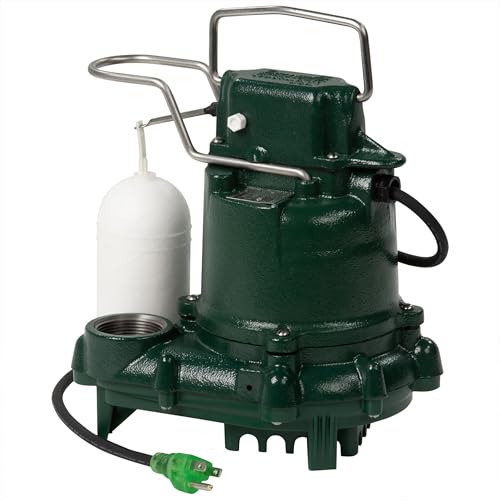
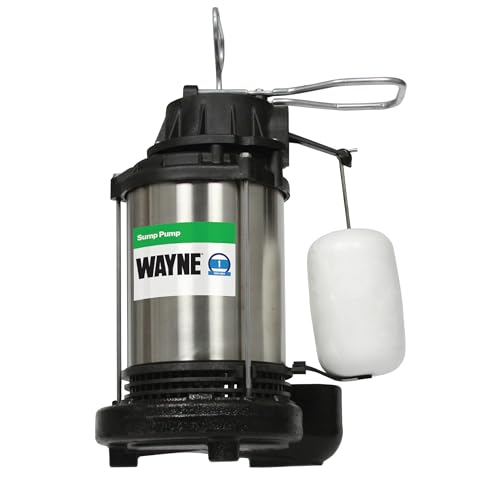
Prices are Amazon’s listed prices as of the time shown and change often; check Amazon for today’s price. As an Amazon Associate we earn from qualifying purchases.
Check Valves and Why They Matter
Without a check valve, the water in the vertical riser falls back into the pit each time the pump shuts off. The pump then has to move that same water again, which adds cycles, wear and energy use, and on short pits can cause rapid on-off cycling. A check valve installed in the riser above the pump prevents that.
Check valves are a frequent source of trouble in their own right. A valve installed upside down, or with the flow arrow pointing the wrong way, can block discharge entirely. A stuck flapper can hold the line closed or leave it open. Many check valves also make a loud thump when they close, which some homeowners mistake for a pump problem. Our sump pump check valve guide covers placement, the weep hole that some installers drill to prevent air lock, and quiet-closing designs.
A check valve also affects freezing. Because it holds water in the vertical pipe, the interior portion of the line stays full. That is normally fine indoors, but it means the exterior portion of the line needs to drain on its own, by slope, after each cycle.
Frozen Discharge Lines in Colorado Winters
Front Range winters swing between mild sunny days and hard freezes, and the ground and exposed pipe outside the house can freeze even when daytime temperatures are comfortable. A frozen discharge line is one of the more common winter sump problems: the pump runs, cannot push water past the ice, and either overheats, trips its thermal protection or leaves the pit to overflow.
Why lines freeze
- Water sitting in low spots of an exterior hose or pipe between cycles.
- Lines that run uphill or level after leaving the house, so water cannot drain out.
- Small or crushed hoses that drain slowly and hold water.
- Snow and ice buildup that blocks the outlet, especially on the shady north side of a house.
- Buried lines that are too shallow or run through areas where snow is cleared and frost penetrates deeper.
Freeze-relief fittings
Freeze-relief or “ice guard” fittings are commonly installed on the discharge line outside the house, near the wall. The fitting has an opening that normally stays dry because water flows past it. If the line beyond the fitting freezes or clogs, water escapes through the opening instead of backing up into the house, so the pump can keep emptying the pit. The tradeoff is that the water comes out close to the foundation, so these fittings are a safety valve rather than a solution, and the frozen extension still needs to be cleared or rerouted. Manufacturer instructions typically call for installing them outdoors where the discharged water will not run back toward the foundation.
Other ways to reduce freezing risk
- Slope the exterior portion of the line continuously downhill so it drains completely after each cycle.
- Use a larger-diameter exterior line, which drains faster and is less likely to freeze solid.
- Remove or shorten flexible hose extensions during deep cold snaps if drainage allows, and reconnect them in spring, taking care that water still flows away from the house.
- Keep the outlet clear of snow and ice.
- Bury lines below the local frost depth where practical; local building departments can advise on typical depths.
Never use open flames to thaw a discharge line. Warm water or a heat gun used carefully on accessible sections is safer, and frozen lines that are buried or inaccessible may need a plumber. Our frozen pipes guide covers safe thawing methods for supply lines, and many of the same principles apply.
Where the Water Should Go
Discharged water needs to go far enough from the house that it does not soak back into the soil around the foundation and return to the pit. Many installers and manufacturers suggest discharging several feet or more from the foundation, onto ground that slopes away, though the right distance depends on soil, grading and local rules. EPA’s mold and moisture guidance recommends making sure the ground slopes away from the building foundation so water does not enter or collect around it, and keeping gutters clean and repaired.
Points to keep in mind:
- Avoid discharging onto neighboring property, sidewalks or driveways, where it can create ice hazards in winter or disputes year-round.
- Avoid discharging next to a window well, into a crawl space vent area, or onto expansive clay soils right by the foundation, which are common in parts of the Front Range and can swell when wet.
- Coordinate with downspouts. Roof water and sump water both need to move away from the house. Our downspout extension guide covers extensions, splash blocks and buried options.
Sewer connections are often prohibited
Connecting a sump pump to a floor drain, laundry standpipe or sanitary sewer cleanout may seem convenient, but many municipalities and sanitation districts prohibit it. Sanitary sewers are designed mainly for wastewater, not large volumes of groundwater and stormwater. EPA explains that sanitary sewers collect domestic, commercial and industrial wastewater and limited amounts of stormwater and infiltrated groundwater, and lists sewer defects that allow stormwater and groundwater to overload the system among the possible causes of sanitary sewer overflows, which can back up into homes and threaten public health. Rules vary by city and district, and some require disconnection of existing sump connections at the time of sale or after inspection. Check with the local sanitation or utility district before routing a discharge anywhere other than the yard.
Storm sewer or curb connections are allowed in some communities and prohibited in others, sometimes with permit requirements. Discharge onto public streets can create icing problems in winter, so many cities regulate it. The local public works department is the source for current rules.
Keeping the System Reliable
The discharge line is part of a system, and several related components keep it working.
- The pump itself. Submersible pumps sit in the pit and are generally quieter and better suited to finished basements than pedestal pumps. Our submersible sump pump guide compares them.
- High-water alarms. A frozen or blocked discharge line often shows up first as a rising water level in the pit. A sump pump alarm sounds or sends a phone notification before water overflows.
- Backup power. Storms that bring heavy rain often bring power outages, and a pump without power cannot use even a perfect discharge line. Our sump pump battery backup guide covers options.
- Routine checks. Before winter and before spring runoff, pour water into the pit to cycle the pump, watch for leaks at joints and the check valve, and walk outside to confirm water is coming out where it should.
Warning signs of a discharge problem
- The pump runs but the water level in the pit barely drops.
- The pump cycles on again within seconds of shutting off, which can point to a failed check valve or water returning from the yard.
- Water drips or sprays from joints, the check valve or a hose clamp during a cycle.
- Water pools or ice builds up right beside the foundation where the line exits.
- The exterior hose is flattened, split, disconnected or buried under snow.
- Damp walls, efflorescence or musty odors near the sump area after storms.
Any of these deserves attention before the next heavy storm or spring runoff, when the pump has the most work to do.
If the basement does take on water, EPA advises that wet or damp materials dried within 24 to 48 hours will, in most cases, not grow mold. FEMA notes that most homeowners insurance does not cover flood damage and that flood insurance is a separate policy, typically with a 30-day waiting period before an NFIP policy takes effect. Coverage for sump backups and groundwater seepage is complicated and varies by policy and endorsement, so homeowners should ask their agent what applies.
What Discharge Line Repairs and Upgrades Cost
Costs vary with access, finished spaces, line length and local rules. As rough 2026 guidance, not quotes:
- Flexible sump pump hose or lay-flat extension: commonly in a low two-figure range for typical lengths.
- Replacement check valve: often in a similar range for the part, with installation adding a modest labor charge.
- Freeze-relief fitting: usually inexpensive as a part.
- Re-plumbing an interior discharge line: frequently a few hundred dollars, depending on length and access.
- Buried discharge line to the yard or a pop-up emitter: commonly several hundred to a few thousand dollars depending on length, depth, landscaping and permits.
- Disconnecting an illegal sewer connection and rerouting outside: varies widely with distance and the need for new wall penetrations.
What a home inspector checks
The ASHI Standard of Practice lists sewage ejectors, sump pumps and related piping among the plumbing components an inspector shall inspect. In practice, inspectors look for a working pump where one is installed, a check valve, secure and leak-free piping, and a discharge that exits the house and does not empty next to the foundation or into a sewer opening. Seasonal hoses removed for winter or buried lines may be partly hidden. Our crawl space section covers moisture and drainage in below-grade areas, and the main crawl space and insulation guide ties those topics together.
More Questions About Sump Pump Discharge Lines
What size pipe should a sump pump discharge line use?
Most residential sump pump discharge lines use 1-1/2 inch pipe, matching common pump outlets, though some pumps use 1-1/4 inch outlets with an adapter. Larger pipe, such as 2 inches, can reduce friction for long runs or high-capacity pumps.
Reducing the pipe below the pump’s outlet size restricts flow and makes the pump work harder. The pump manufacturer’s recommendations and the total length and height of the run should determine the right pipe size.
How deep should a buried sump pump discharge line be?
A buried sump pump discharge line is commonly placed below the frost line or sloped so it drains completely after each cycle. In cold climates, burying below frost depth is often impractical, so many installers instead slope the pipe so water does not sit in it.
A freeze-protection fitting near the house lets water escape if the buried section freezes. Local frost depth and soil conditions vary, so local plumbing guidance and the pump manufacturer’s instructions are the best references.
Can a sump pump discharge into a dry well?
Yes, a sump pump can discharge into a dry well in many areas, which lets water soak into the ground away from the house. The dry well must be sized for the expected volume and located far enough from the foundation, property lines and septic systems.
Dry wells work poorly in clay soils or areas with high groundwater, where water cannot drain quickly. Local regulations may require permits or limit dry well use, so checking with the local building department is a good first step.
Can a sump pump discharge line connect to a downspout drain?
Connecting a sump pump discharge to an underground downspout drain is sometimes allowed, but it can overload the drain during heavy rain, when both systems carry water at once. If the drain is clogged or poorly sloped, water can back up toward the foundation.
Separate discharge routes are usually more reliable. Where a shared line is used, it should be sized for the combined flow and discharge well away from the house. Local rules may restrict these connections.
References
- A Brief Guide to Mold, Moisture and Your Home — U.S. Environmental Protection Agency
- Sanitary Sewer Overflows (SSOs) — U.S. Environmental Protection Agency
- Flood Insurance — Federal Emergency Management Agency
- ASHI Standard of Practice for Home Inspection — American Society of Home Inspectors
Frequently asked questions
Can I use a flexible hose for sump pump discharge?
Yes, especially for the exterior extension, but flexible hose can kink, sag, be crushed and hold water that freezes. Many installers use rigid pipe indoors and through the wall, with a hose or corrugated extension outside sloped to drain.
How do I keep my sump pump discharge line from freezing?
Slope the exterior line so it drains completely, use a larger diameter, keep the outlet clear of snow and consider a freeze-relief fitting near the wall. Buried lines should be below the local frost depth where practical.
How far from the house should a sump pump discharge?
Far enough that water does not flow back toward the foundation, often several feet or more onto ground that slopes away. The right distance depends on soil, grading and local rules.
Can a sump pump drain into the sewer?
Many municipalities and sanitation districts prohibit connecting sump pumps to the sanitary sewer because groundwater can overload the system. Check with the local utility or sanitation district before routing discharge anywhere but the yard.
How much does it cost to fix a sump pump discharge line?
A replacement hose or check valve is often in a low two-figure range for parts. Re-plumbing an interior line commonly runs a few hundred dollars, and buried lines can cost more. These are rough 2026 ranges.
Can a sump pump discharge onto a sidewalk or street?
Many municipalities restrict sump pump discharge onto sidewalks, streets or neighboring properties, especially in winter when water freezes into slip hazards. Local rules vary, so checking before routing a discharge line toward public areas avoids fines and liability.
Does a sump pump discharge line need to slope?
A sump pump discharge line should slope away from the house once it leaves the building, so water drains out after each pump cycle. Pipes that hold water can freeze in winter and block discharge, causing the pit to overflow.
Can a sump pump discharge pipe go through a basement window?
Routing a sump pump discharge pipe through a basement window is sometimes done as a temporary fix, but it is generally not ideal. A permanent penetration through the rim joist or foundation wall, properly sealed, is more secure and avoids air and water leaks.
Looking at a home with a sump pit and a hose snaking across the yard? Reach our team to connect with a Front Range inspector who follows the discharge from the pit to where the water really ends up.