Downspout Extensions: Options, Distances and Drainage

A roof sheds a surprising amount of water during a storm, and the gutters collect most of it into a few downspouts. Where that water lands decides whether it soaks harmlessly into the lawn or saturates the soil right next to the foundation. A downspout extension is one of the least expensive drainage upgrades a homeowner can make, yet a missing or crushed extension is among the most common items in Front Range inspection reports. This guide explains why discharge distance matters, especially on Colorado’s expansive clay soils, compares the main types of extensions and underground drain lines, covers grading and winter freezing, outlines the state’s rain barrel rules in general terms, and gives rough cost ranges. Cost figures are general 2026 estimates, and rain barrel rules can change, so confirm current details with local and state sources.
Part of our Structure & Exterior guide — start there for the full picture →
Why a Downspout Extension Matters for Your Foundation
A downspout that ends at the base of a wall dumps concentrated roof runoff into a small patch of soil beside the foundation. That water can soak down along the wall, load the backfill against the basement, and find its way through cracks, window wells and the joint where the wall meets the floor. A downspout extension simply carries the water farther out, where it can spread and soak in or run away across graded soil.
How far is far enough? Recommendations vary, but many builders, inspectors and waterproofing contractors suggest discharging roof water at least 4 to 6 feet from the foundation, and some advise 10 feet or more where soils are expansive, the lot is flat, or the basement has a history of moisture. Local codes, the slope of the yard, and where the water goes next all affect the right distance. The goal is that discharged water keeps moving away from the house rather than pooling and flowing back.
Colorado’s Expansive Soils Raise the Stakes
Much of the Front Range sits on clay-rich soils and bedrock that swell when wet and shrink as they dry. Repeated wetting from a downspout next to the foundation can cause localized heave or settlement, leading to cracked slabs, sticking doors, sloping floors and cracked foundation walls. Not every crack comes from drainage, and not every home sits on highly expansive soil, but keeping roof water away from the foundation is one of the most common recommendations in soils reports and builder warranty guides across the region. Our guide to foundation settlement explains warning signs and when a structural engineer should take a look.
Water management also connects to indoor air quality. The EPA’s moisture guidance recommends cleaning and repairing gutters regularly and making sure the ground slopes away from the foundation so water does not enter or collect around it. Persistent dampness in a basement can support mold growth and damage finishes.
Types of Downspout Extensions Compared
There is no single best option. The right extension depends on traffic around the downspout, how far water must travel, appearance, and how much maintenance you are willing to do.
Rigid Aluminum or Vinyl Extensions
The simplest choice is a straight section of matching downspout material attached to the elbow at the bottom of the downspout. Rigid extensions move water efficiently and look tidy. They are inexpensive and easy to install with a few sheet-metal screws. The drawback is that they lie on the ground where lawn mowers, foot traffic and snow shovels can crush or knock them loose.
Flexible and Accordion Extensions
Corrugated plastic extensions can bend around shrubs, walkways and corners and stretch to different lengths. They are cheap and easy to reposition. However, the ridges trap leaves and grit, the plastic can become brittle in sunlight and cold, and they are prone to being crushed or blown out of position.
Roll-Out Extensions
These are flat sleeves, often plastic or vinyl, that unroll when water flows through them and roll back up when dry. They keep the area tidy between storms but tend to wear out, can freeze in place, and may not carry heavy flow from a large roof section.
Flip-Up or Hinged Extensions
Hinged extensions attach to the downspout elbow and can be swung up out of the way for mowing, walking or snow removal, then lowered before rain. They solve the crushing problem for downspouts near paths and driveways, but they only work if someone remembers to put them down again. A raised extension during a storm is the same as no extension at all.
Buried Drain Lines With Pop-Up Emitters
For a clean look and a longer discharge distance, the downspout can connect to a buried pipe that runs underground to a pop-up emitter in the lawn, a dry well, or daylight on a slope. Solid smooth-wall PVC is generally preferred over corrugated pipe because it is easier to clean and less likely to collect debris. The pipe needs consistent slope, a debris filter or cleanout at the downspout, and an outlet that stays clear. Clogged underground lines can back up and send water out at the joint beside the foundation, which defeats the purpose, so these systems need periodic checking. Some homeowners compare a buried line with a gravel-filled trench system; our article on how a French drain works explains the difference.
Splash Blocks
Concrete or plastic splash blocks sit under the downspout and spread water away from the wall. They prevent soil erosion and are better than nothing, but most splash blocks are only about 2 feet long, so they typically do not move water as far as an extension does. They work best combined with good grading.
Rain Chains
Rain chains replace a downspout with a series of cups or links that guide water to the ground. They are decorative and quieter than many people expect, but they splash more, carry less water in heavy storms, and still need a basin, gravel bed or drain at the bottom to move water away. In freezing weather, ice can build up on the chain.
Installing a Basic Above-Ground Extension
Fitting a rigid extension is usually a short DIY job. Measure the outlet of the downspout elbow, buy an extension of the same profile and size (common residential sizes are 2×3 and 3×4 inches), and slide the extension over the outside of the elbow so water cannot leak back at the joint. Secure it with a couple of short sheet-metal screws if it is likely to be bumped. Check that the extension slopes gently away from the house along its whole length, then add a splash block or rock pad at the outlet to prevent erosion. On a second-story downspout, never work from a ladder in wet or icy conditions; most extension work happens at ground level anyway.
Best Downspout Extensions: our top 3 picks
| Product | Best for | Key features | Price | Buy |
|---|---|---|---|---|
| plusgutter 11.5 ft Flexible | Clears 10 ft in one piece |
| $25.99as of Oct 28, 2026 7:31 pm GMT+0000 | Buy now →Check current price |
| plusgutter 16.5 ft Flexible | Longest run on the shelf |
| $33.29as of Oct 28, 2026 7:31 pm GMT+0000 | Buy now →Check current price |
| NAACOO Catch Basin Kit | Low-profile route under mulch |
| $26.99as of Oct 28, 2026 7:31 pm GMT+0000 | Buy now →Check current price |


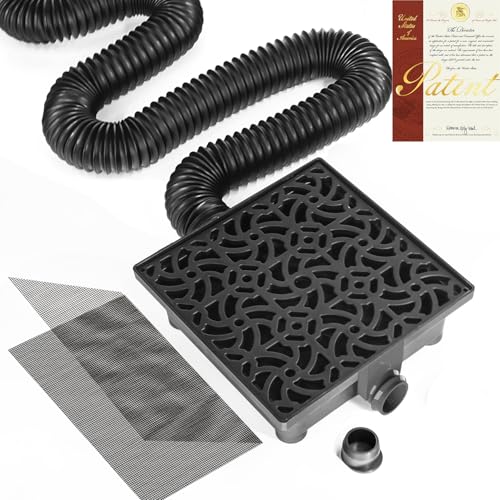
Prices are Amazon’s listed prices as of the time shown and change often; check Amazon for today’s price. As an Amazon Associate we earn from qualifying purchases.
Signs Your Downspouts Are Causing Problems
Drainage trouble often shows up well before a basement floods. Walking the outside of the house during or just after a heavy rain is the easiest way to spot it, but several clues remain visible on dry days too:
- Erosion or bare soil directly below a downspout, often with exposed rocks or a small gully.
- Stained or efflorescent foundation walls, with white mineral deposits on exposed concrete near a downspout.
- Settled or cracked flatwork, such as patios, stoops and sidewalks tilting toward the house near a discharge point.
- Damp basement corners, musty odors or water marks on the inside of the wall that line up with a downspout outside.
- Mulch or rock washed out of planting beds after storms.
- Overflowing gutters during heavy rain, which can mean the downspout or its extension is clogged.
Matching an interior symptom to the downspout directly outside it is often revealing. A damp corner in the basement directly beneath a short or missing extension is one of the most common patterns home inspectors describe.
Choosing the Right Extension for Each Downspout
Most houses do not need the same solution at every corner. A practical approach is to evaluate each downspout on its own:
- Open lawn with good slope: a rigid extension of several feet, or a rigid extension plus a splash block, is usually enough.
- Beside a walkway or driveway: a hinged extension or a short buried line that passes under the path keeps the walkway clear and dry.
- Behind dense landscaping: a flexible extension can snake between plants, though it needs more frequent checking.
- Flat lot or expansive soil: a buried line to a distant emitter or daylight outlet can move water farther than any surface option.
- Near a window well or deck: redirect the discharge so it never empties into or beside these features.
Before digging, call 811 to have buried utility lines marked, as required in Colorado and most other states. Also look at roof area: a downspout serving a large roof plane carries much more water than one serving a small porch roof, so the busiest downspouts deserve the most durable, highest-capacity setup.
Grading Basics: Where the Water Goes Next
An extension only helps if the ground beyond it carries water away. When the soil around a house has settled or was never graded properly, water released several feet out can still flow back toward the foundation. A few basics apply to most homes:
- Slope away from the house. Many builders aim for the soil to fall several inches over the first 10 feet from the foundation, and residential codes include provisions on lot grading. Check your local code for the specific requirement.
- Watch for backfill settlement. Soil placed against a foundation during construction often settles over the first few years, creating a low trough where water collects.
- Keep landscaping from trapping water. Edging, raised beds and heavy mulch against the wall can hold water at the foundation. Avoid planting thirsty shrubs right beside the house on expansive soils.
- Mind neighbors and walkways. Discharged water should not be directed onto a neighbor’s property or across sidewalks where it may freeze.
The EPA’s Soak Up the Rain program describes redirecting downspouts to lawns or gardens where water can soak in, and notes that disconnection may not suit every location, so homeowners should consider local regulations and where the water will go to avoid property damage or unsafe conditions. That caution matters near foundations, steep slopes and shared property lines.
Winter Freezing and Downspout Extensions
Front Range winters bring repeated freeze-thaw cycles. Snow melts on a sunny roof during the day, runs through the gutters, and refreezes in shaded downspouts and extensions overnight. Ice can block an extension entirely, so meltwater backs up and spills at the foundation, or ice can split plastic fittings.
- Prefer smooth, sloped extensions. Smooth interiors with steady slope drain more completely and hold less water to freeze.
- Clear snow from the discharge area. A snowbank at the end of an extension acts as a dam.
- Check buried lines before winter. Shallow underground pipes can freeze; outlets need to stay open and should not sit in low spots that collect ice.
- Address roof ice. Large icicles and ice in gutters can point to heat loss into the attic. The guide to why ice dams form explains causes and prevention.
- Avoid discharge onto paths. Water released across a sidewalk or driveway can freeze into a slip hazard.
Hinged extensions should be lowered after shoveling. Flexible plastic can crack in deep cold, so inspect it in spring.
Rain Barrels in Colorado
Many homeowners consider connecting a downspout to a rain barrel. Colorado has historically restricted rainwater collection because of its water-rights system, but state law changed in 2016 to allow limited residential collection. As commonly summarized, households in single-family homes and small multifamily buildings may use up to two rain barrels with a combined capacity of 110 gallons, collect rooftop runoff only, and use the water outdoors on the same property, such as for gardens and lawns, but not for drinking or indoor household use. These rules can change and may come with additional conditions, so check current guidance from Colorado state water authorities or your local water provider before installing a barrel.
The EPA notes that rain barrels capture roof water for later use, such as on gardens, and that runoff from roofs can pick up bacteria and chemicals from roof materials, which is worth considering before watering edible plants. A barrel also needs an overflow outlet. When it fills during a storm, excess water must still be directed away from the foundation with an extension or diverter. Drain and disconnect barrels before freezing weather to prevent cracking.
Maintenance, Inspection and When to Call a Pro
Extensions are simple, but small failures add up. A seasonal routine helps:
- Clean gutters in spring and fall so debris does not wash into downspouts. Gutter guards can reduce clogging; our comparison of gutter guard types covers the trade-offs.
- Confirm every downspout has an extension in place and that connections are tight.
- Flush buried lines with a garden hose and check that pop-up emitters open and close freely.
- Walk the property during a heavy rain to see where water actually goes.
- Look inside the basement after storms for damp spots on walls or floors.
If water still enters the basement after extensions and grading are corrected, the next step is a broader look at drainage. Our overview of basement waterproofing methods covers exterior and interior options. Window wells are another common entry point when downspouts drain beside them; the companion article on window well drainage and covers walks through fixes.
For buyers, roof drainage is a standard inspection topic. The ASHI Standard of Practice directs inspectors to inspect roof drainage systems as well as grading and surface drainage likely to adversely affect the building. A report may note missing extensions, negative grading or signs of past water entry. For help choosing an inspector, see our home inspector hiring guide.
Hedged Costs
- Rigid or flexible extensions: often about $10 to $40 each for parts.
- Hinged or roll-out extensions: roughly $15 to $60 each.
- Buried drain line with emitter: commonly a few hundred dollars to over $1,000 per downspout installed, depending on length, soil and obstacles.
- Regrading around the foundation: ranges widely, from a few hundred dollars for minor soil work to several thousand for larger lots.
- Rain barrel: often about $50 to $200, plus a diverter kit.
References
- Soak Up the Rain: Disconnect / Redirect Downspouts — U.S. Environmental Protection Agency
- Soak Up the Rain: Rain Barrels — U.S. Environmental Protection Agency
- A Brief Guide to Mold, Moisture and Your Home — U.S. Environmental Protection Agency
- ASHI Standard of Practice for Home Inspections — American Society of Home Inspectors
Frequently asked questions
How far should a downspout extension go from the house?
Many contractors and inspectors suggest discharging roof water at least 4 to 6 feet from the foundation, and 10 feet or more on expansive soils or flat lots. The ground beyond the outlet should keep sloping away from the house.
Are buried downspout drains better than above-ground extensions?
Buried lines look cleaner and can carry water farther, but they need proper slope, a debris filter and periodic flushing. A clogged buried line can back up at the foundation, so above-ground extensions are easier to monitor.
Do downspout extensions freeze in winter?
They can, especially in shaded spots during freeze-thaw cycles. Smooth, well-sloped extensions drain more completely, and clearing snow from the outlet helps. Check buried lines and emitters before winter.
Is it legal to use a rain barrel in Colorado?
Colorado allows limited residential rain barrel use, commonly summarized as up to two barrels holding 110 gallons combined, for outdoor use on the same property. Rules can change, so confirm current requirements with state or local water authorities.
Will downspout extensions stop basement leaks?
They often help when roof water is the source, but they cannot fix negative grading, failed foundation drains or cracks on their own. If leaks continue after extending downspouts, a broader drainage evaluation is the next step.
Seeing cracks, damp corners or poor drainage around a Front Range home you plan to buy? Let us know through our contact page and we can connect you with a qualified local inspector who can assess grading, roof drainage and signs of foundation movement.