Gabion Walls: Drainage, Foundations and Where They Work
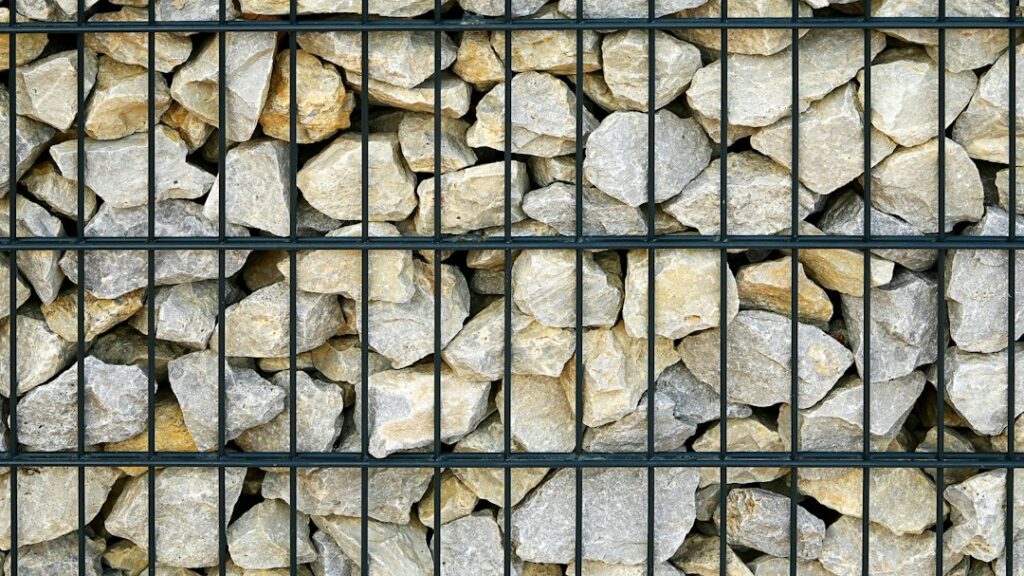
Gabions are wire baskets filled with rock. Stack them, tie them together and set them on a prepared base, and you have a gabion wall: a heavy, flexible, free-draining structure that has been used for riverbanks, highway cuts and erosion control for a very long time and is now popular in residential landscapes for its rugged, modern look. Gabions are well suited to some jobs and poorly suited to others. Their open structure lets water pass through, which avoids much of the pressure that wrecks solid walls, but they still need a sound foundation, proper design for the soil they hold back and wire that will last. This guide explains how gabion walls work, where they make sense, when a retaining gabion needs an engineer, how wire corrosion limits their life, why utility locates matter before digging, how they fit into erosion control and drainage, and what they typically cost. Local rules on retaining walls vary, so check with the building department before building.
Part of our Structure & Exterior guide — start there for the full picture →
What a Gabion Wall Is
A gabion is a rectangular cage, usually made of welded wire mesh panels or woven double-twisted hexagonal wire mesh, divided into cells by internal diaphragms. The cages are set in place empty, laced or clipped to their neighbors, and filled with hard, durable stone, typically larger than the mesh openings so it cannot fall out. Internal bracing wires keep the faces from bulging as the stone is placed. The lid is closed and tied, and the next course goes on top.
The result is a gravity structure. Its stability comes mainly from its own weight and width rather than from mortar, reinforcing steel or a bond to the ground. Gabion units commonly come in standard lengths, widths and heights, and walls are built by stacking courses, often stepped back toward the retained soil so each course sits slightly behind the one below.
Gabions versus related products
- Gabion baskets: the classic box form used for walls, steps and channel lining.
- Reno mattresses: thin, wide gabions laid flat to line ditches, channels and banks against scour.
- Gabion fences and seat walls: narrow decorative units that hold back little or no soil. These are landscape features rather than retaining walls.
- Rock-filled cages with a facing: some products use a finished stone face over a cheaper core fill to control appearance and cost.
Why Drainage Is the Big Advantage
Most retaining wall failures trace back to water. When soil behind a solid wall gets saturated and water cannot escape, hydrostatic pressure builds up and adds to the soil load. Concrete and block walls depend on weep holes, gravel backfill and drain pipe to relieve that pressure, and when those systems clog, the wall can lean, crack or fail. Our guide to retaining wall repair covers those failure patterns.
A gabion wall is porous through its entire face. Water that reaches the back of the wall can pass through the voids between stones, so the wall itself does not trap water the way a solid wall can. That does not mean drainage can be ignored. Fine soil can wash into the stone and clog it, so many designs place a geotextile filter fabric between the retained soil and the baskets. Water exiting the face also needs somewhere to go, or it will erode the ground at the wall’s base or run toward the house.
Gabions also tolerate some ground movement. Because the baskets are flexible, a gabion wall can deform somewhat with settlement without the sudden cracking a rigid wall might show. That flexibility is one reason gabions are used on stream banks and slopes where the ground is expected to shift. It is not a license to build on poor soil, but it does give some margin.
How water management fits the bigger picture
A gabion wall should be part of a site drainage plan, not a substitute for one. Gutters, downspout extensions, grading that slopes away from the foundation, and features such as a French drain or drainage swale all affect how much water reaches the wall and where it goes after it passes through. Our yard drainage guide covers how these pieces work together.
Height Limits, Foundations and Engineering
A low decorative gabion edging a garden bed and a gabion holding back a steep slope under a driveway are entirely different structures, even if they look alike from the street. The difference is the load.
Retaining walls resist lateral earth pressure, which increases with wall height and with anything that adds weight above the wall, such as a driveway, a parking pad, a building, a slope continuing uphill or a pool. Saturated or expansive soils add further pressure. Gabion walls that retain significant soil are typically designed by a licensed engineer using the soil properties, the wall height, the slope above and below, and any loads at the top. The design sets base width, batter (the backward lean), the number of courses, the fill stone and whether reinforcement or anchors are needed.
Many jurisdictions require a permit and engineered plans for retaining walls above a certain height or for any wall supporting a surcharge, such as a driveway or structure. The exact thresholds vary from place to place, so homeowners should check with their local building department before building, rather than relying on a general rule of thumb.
The foundation matters as much as the baskets
- Firm, level base. The bottom course usually sits on compacted ground or a compacted granular pad. Soft or organic soil under the wall leads to settlement and tilting.
- Embedment. Burying the bottom course partly below grade helps resist sliding and protects the toe from scour.
- Batter and setback. Stepping each course back into the slope improves stability for retaining applications.
- Tight packing. Stones placed carefully by hand on the visible face, with well-graded fill behind, reduce voids, settlement and bulging.
- Separation fabric. A geotextile behind and sometimes under the wall helps keep fines out of the stone.
Choosing the fill stone
Fill stone should be hard, durable and resistant to freeze-thaw breakdown, which matters in a climate with as many freeze-thaw cycles as the Front Range. Soft or flaky rock can crumble over winters, settle and leave voids. Stone sizes are usually chosen so the smallest pieces are larger than the mesh openings, with a mix of sizes that packs tightly. Rounded river rock looks attractive but tends to settle and shift more than angular quarried stone, which interlocks. Recycled concrete is sometimes used as core fill for cost reasons, though its durability and appearance vary. Local quarries and landscape suppliers can say which of their products are suitable for gabions.
Colorado soil considerations
Parts of the Front Range have expansive clay soils that swell when wet and shrink when dry, as well as slopes with variable fill. Expansive soils can exert significant pressure on retaining structures and can shift footings. Gabion flexibility can help in some of these conditions, but a site with known expansive soil or a history of slope movement is a strong reason to involve a geotechnical engineer before building any retaining wall.
Wire Corrosion and Service Life
A gabion wall is only as durable as its wire. Once the wire corrodes through, the baskets can open, the stone spills out and the wall loses its shape. Wire durability depends on the coating and the exposure.
- Galvanized wire has a zinc coating that protects the steel for a period depending on the coating weight and conditions.
- Zinc-aluminum alloy coatings are often marketed as longer-lasting than plain galvanizing.
- PVC or polymer-coated wire adds a plastic sheath over the metallic coating and is often specified in wet, salty or corrosive conditions. The coating can be damaged by abrasion, ultraviolet exposure or rough handling during filling.
- Stainless steel mesh is available for high-end or demanding uses and costs more.
Exposure that speeds corrosion includes constant wetting, water running through the wall, de-icing salt splash near driveways and roads, contact with certain soils, and abrasion from moving water and debris along channels. Manufacturers publish coating specifications and expected performance, and those, rather than a generic number, should guide expectations for a particular wall.
Signs a gabion wall is in trouble
- Rust-stained, broken or thinning wires, especially at the base and on the lid.
- Bulging faces or baskets that have bellied outward.
- A wall leaning out from its original batter, or courses that have slid.
- Stone loss or voids where fill has settled or escaped.
- Erosion, undermining or ponding at the toe.
- Soil washing through the face, indicating missing or failed filter fabric.
Maintenance over the years
Gabions need little routine care, but a walk-around once or twice a year is worthwhile. Look for broken lacing wires or clips, corroded wire at the base, bulging faces, and gaps where stone has settled. Clear woody vegetation that takes root in the stone, since growing roots can pry baskets apart and hold moisture against the wire. Keep downspouts and surface runoff from discharging directly onto the top of the wall or eroding its toe. Small repairs, such as re-tying a loose panel or topping up settled stone, are far cheaper than rebuilding a course after a basket has opened.
Call 811 Before Digging the Base
Building a gabion wall usually involves excavating a level trench or pad, sometimes along a property line, a driveway or a slope where utility lines run. Gas, electric, water, sewer, cable and fiber lines can all be shallower than expected. Contacting the 811 call-before-you-dig service before excavating lets the utilities mark their public lines. Private lines, such as a feed to a detached garage, outdoor lighting, irrigation or a gas line to a grill, are often not marked by the utility locate and may need a private locator. Our call before you dig guide explains the process in Colorado.
Heavy stone also matters near buried lines and structures. A loaded gabion wall is very heavy, and placing it over shallow utilities or close to a foundation wall without considering the added load can cause problems later.
Gabions for Erosion and Stormwater Control
Gabions have long been used along channels, ditches and slopes to resist erosion, because the heavy stone resists being carried away while water passes through the voids. On residential lots, they can armor the outlet of a drainage swale, stabilize a creek bank, line a steep ditch or terrace a slope.
The broader stormwater context matters too. EPA notes that in urban and suburban areas, much of the land is covered by buildings, pavement and compacted landscapes that do not allow rain and snowmelt to soak in, which greatly increases the volume and velocity of runoff. EPA describes green infrastructure and low impact development as approaches that manage stormwater as close to its source as possible using soils, vegetation and infiltration, and says green infrastructure can mitigate flood risk by slowing and reducing stormwater runoff. A gabion structure that slows water and lets it filter through stone can be one element of that kind of approach, alongside plantings and infiltration features.
Construction itself is a stormwater issue. EPA explains that stormwater flowing over loose soil on a construction site can carry sediment and debris to storm sewers and waterways, and that larger projects disturbing an acre or more need permit coverage. Most backyard walls are far smaller, but the same idea applies on a small scale: protect bare soil during construction and avoid sending sediment into streets, storm drains or a neighbor’s yard. Work in or near a stream, wetland or floodplain may require additional permits.
Gabions Compared With Other Walls
- Segmental block walls. Interlocking concrete blocks with gravel backfill and, for taller walls, geogrid reinforcement. They offer a finished look and wide product choice. Our retaining wall block guide covers them.
- Poured concrete walls. Strong and compact, but rigid, and dependent on functioning drainage behind the wall.
- Timber walls. Lower upfront cost but subject to rot and insect damage over time.
- Boulder walls. Large stacked stones, similar in gravity function to gabions, but needing heavy equipment and suitable rock.
Gabions stand out where drainage is a concern, where heavy stone is locally available, where some ground movement is expected, or where an industrial or natural stone look is desired. They tend to be wider than block walls of similar height, which can be a drawback on tight lots.
Costs and Hiring
Costs vary with wall height and length, basket type, wire coating, stone source, access for equipment and whether engineering is required. As a rough 2026 guide only:
- Decorative, low gabion walls built by a landscaper: often priced per square foot of wall face, with stone and labor making up most of the cost.
- Engineered retaining gabions: more, once design, permits, excavation, base preparation, filter fabric and inspection are included.
- DIY baskets: the cages themselves are relatively inexpensive, but stone is heavy and costly to deliver, and filling by hand is slow, physical work.
- Coatings: PVC-coated, alloy-coated or stainless wire raises the material cost.
When hiring, ask whether the contractor has built retaining gabions before, who designed the wall, whether a permit is needed, what wire coating and stone will be used, and how drainage at the toe will be handled. Written quotes should specify the base preparation and whether filter fabric is included.
What a home inspector looks at
The ASHI Standard of Practice directs home inspectors to inspect vegetation, grading, surface drainage and retaining walls that are likely to adversely affect the building, and lists erosion control and earth stabilization measures and geological and soil conditions among items inspectors are not required to inspect. In practice, an inspector will often note a leaning, bulging or corroded retaining wall near the house or driveway and recommend evaluation by a qualified contractor or engineer. Our structure and exterior inspections section explains what is covered, and the main guide to hiring a home inspector helps buyers choose an inspector.
More Questions About Gabion Walls
Can a gabion wall be built DIY?
Homeowners can build low gabion walls themselves, such as garden borders, raised beds and decorative walls under about two or three feet. The work involves assembling wire baskets, preparing a level, compacted base and filling the baskets carefully by hand.
Taller walls, walls that retain soil on slopes, and walls near structures, driveways or property lines are better left to contractors and engineers. Stone is heavy, and a poorly built retaining wall can bulge, lean or fail, damaging nearby property.
Do gabion walls need a permit?
Many jurisdictions require a permit for retaining walls above a certain height, often around four feet measured from the bottom of the footing, and gabion retaining walls usually fall under the same rules. Walls supporting a driveway, building or slope may need engineering regardless of height.
Freestanding decorative gabion walls and fences may be treated differently. Requirements vary by city, county and HOA, so checking with the local building department before construction avoids costly corrections later.
Do gabion walls block noise and provide privacy?
Gabion walls can provide privacy and some noise reduction, thanks to their mass and thickness. A dense, well-filled gabion wall tall enough to block the line of sight to the noise source works best.
Gaps between stones let some sound pass, so walls filled with smaller, tightly packed stone or with a sound-absorbing core may perform better. Gabion screens are often used along property lines, patios and driveways where a solid, rustic barrier is preferred over a fence.
Can plants grow on gabion walls?
Plants can grow on and around gabion walls, and some designs include soil pockets or planters integrated into the baskets. Climbing vines, trailing groundcovers and drought-tolerant plants can soften the look of the stone.
Large woody plants are risky because roots can push stones apart and stress the wire. Soil and plant debris trapped inside baskets can also hold moisture against the wire, which may speed corrosion. Planning plantings carefully helps keep the wall attractive without shortening its life.
Do gabion walls attract snakes or rodents?
Gabion walls can shelter snakes, rodents and insects, because gaps between stones create protected spaces. The risk depends on the region, the stone size and nearby food sources.
Using tightly packed, angular stone with fewer voids reduces hiding places, and keeping vegetation trimmed around the base removes cover. Smaller mesh openings or fine mesh liners can also discourage larger animals. In areas with venomous snakes, homeowners may want to avoid gabions near play areas and doorways.
References
- Nonpoint Source: Urban Areas — U.S. Environmental Protection Agency
- Mitigate Flooding — U.S. Environmental Protection Agency
- Stormwater Discharges from Construction Activities — U.S. Environmental Protection Agency
- ASHI Standard of Practice for Home Inspections — American Society of Home Inspectors
Frequently asked questions
How tall can a gabion wall be without an engineer?
It depends on the soil, the slope and any loads above the wall, and local rules set their own permit and engineering thresholds. Low decorative gabions are often simple, but retaining walls holding back significant soil or supporting a driveway generally need engineered design.
Do gabion walls need drainage?
The stone lets water pass through, which avoids much of the pressure that damages solid walls. Filter fabric to keep soil out of the stone and a plan for water leaving the face are still important.
How long does a gabion wall last?
It depends mainly on the wire coating and the exposure. Galvanized, alloy-coated, PVC-coated and stainless wire perform differently, and constant wetting, salt and abrasion shorten wire life.
Do I need to call 811 before building a gabion wall?
Yes, if the project involves digging. 811 arranges marking of public utility lines; private lines such as garage feeds or irrigation may need a private locator.
How much does a gabion wall cost?
Costs are often quoted per square foot of wall face and depend on height, stone, wire coating and access. Engineered retaining gabions cost more once design and permits are added. These are general 2026 ranges.
Can a gabion wall be used as a fence or seat wall?
Gabion walls are often used as freestanding fences, patio borders and seat walls. Seat walls typically sit around 18 inches high with a cap of stone, wood or concrete for comfort. Freestanding walls still need a level, compacted base to stay straight.
How long does it take to build a gabion wall?
Building a small gabion garden wall can take a weekend for a homeowner, while longer retaining walls may take a professional crew several days or more. Site preparation, base compaction and hand-placing stone usually take more time than assembling the baskets.
Do gabion retaining walls need a fabric liner?
Gabion retaining walls commonly use a geotextile filter fabric between the baskets and the retained soil. The fabric lets water drain through while keeping fine soil from washing into the stone. Engineered designs specify the fabric type and placement.
Buying a house with a stone or gabion retaining wall near the driveway or foundation? Let us know and we will help you find a Front Range inspector who looks at grading, drainage and retaining walls around the home.