Range Hood Installation: Ducting, CFM and Makeup Air
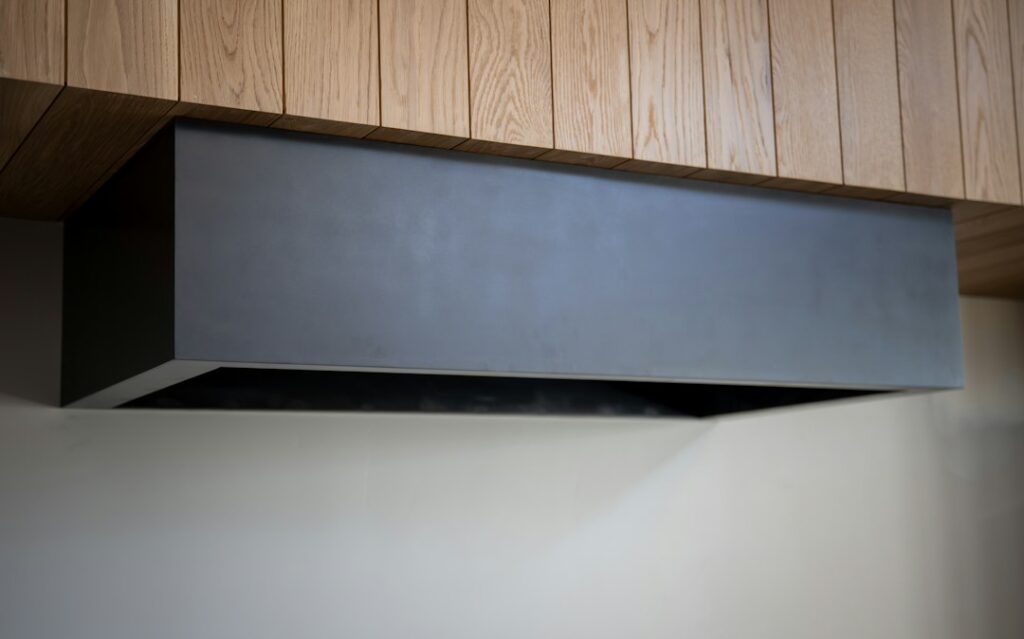
A range hood is easy to treat as a design choice, picked for its finish and shape. Its real job is ventilation: capturing smoke, grease, odors, heat and moisture from cooking before they spread through the house, and, over a gas range, helping remove combustion byproducts. Whether you plan to install range hood ventilation in a new kitchen or replace a noisy hood that barely works, the decisions that matter most are mostly hidden: whether the hood is ducted outdoors, how much air it moves, how the duct is routed and terminated, and whether the house can supply replacement air for a powerful fan. This guide walks through those choices, the indoor air reasons behind them, electrical and permit considerations, what inspectors look for, and typical costs. Costs are general ranges, not quotes, and code details vary by jurisdiction.
Part of our Home Ventilation guide — start there for the full picture →
Ducted vs Recirculating Range Hoods
Range hoods come in two basic types, and the difference affects performance far more than style.
Ducted (vented) hoods
A ducted hood pulls air through grease filters and pushes it through a duct to the outdoors. It removes smoke, odors, heat, moisture and combustion gases from the house entirely. For gas cooking, frequent high-heat cooking or kitchens in tight homes, a ducted hood is generally the more effective option.
Recirculating (ductless) hoods
A recirculating hood pulls air through a grease filter and usually a charcoal or carbon filter, then blows it back into the kitchen. It can trap some grease and reduce some odors, but it does not remove heat, moisture or gases such as nitrogen dioxide and carbon monoxide from the home. Carbon filters also need periodic replacement to keep working.
Recirculating hoods make sense when ducting outdoors is impractical, such as some condos, interior islands without a reasonable duct route, or apartments where exterior penetrations are restricted. Many homeowners treat them as a fallback rather than a first choice.
Over-the-range microwaves
Microwave-hood combinations save space, but their fans are often modest and the intake sits farther from the cooktop and at the front edge only. Many can be set up to duct outdoors or recirculate. If an over-the-range microwave is installed as recirculating, it provides limited ventilation for a gas range.
How to Size a Range Hood: CFM, Width and Capture
Hood airflow is rated in cubic feet per minute, or CFM. More CFM is not automatically better; capture, width and mounting height matter just as much.
Common CFM rules of thumb
- Electric cooktops. A frequently cited guideline is roughly 10 CFM per inch of cooktop width for a wall-mounted hood, so about 300 CFM for a 30-inch range. Island hoods, which have no wall to help contain the plume, are often sized higher.
- Gas ranges. A common rule of thumb for gas is about 1 CFM for every 100 BTU per hour of total burner output. A range with burners totaling 60,000 BTU per hour would point toward roughly 600 CFM under that approach.
- Practical range. Many residential kitchens are well served by hoods in roughly the 250 to 600 CFM range. Professional-style ranges and heavy high-heat cooking often push buyers toward larger hoods.
These are general guidelines from manufacturers and trade practice, not code minimums. The appliance manufacturer’s installation instructions should be checked as well.
Width and mounting height
A hood should be at least as wide as the cooking surface, and many installers suggest a few inches wider on each side for better capture. Mounting height is typically specified by the manufacturer, often somewhere around 24 to 36 inches above the cooking surface. A hood mounted too high captures less of the rising plume; one mounted too low gets in the way and can be a fire concern. Always follow the hood and range manufacturers’ clearance requirements.
Capture efficiency
A deep hood with a generous canopy captures smoke and steam better than a slim hood of the same CFM. Using the back burners when possible also improves capture. A hood that is rated for high airflow but mounted too high, too narrow or with a restrictive duct may perform worse than a smaller, well-installed one.
Best Range Hood: our top 3 picks
| Product | Best for | Key features | Price | Buy |
|---|---|---|---|---|
| Cosmo COS-63175S | Wall chimney for most kitchens |
| $250.99as of Nov 18, 2026 1:56 pm GMT+0000 | Buy now →Check current price |
| IKTCH IKP02-30 | High-output wall chimney |
| $419.00as of Nov 18, 2026 1:56 pm GMT+0000 | Buy now →Check current price |
| VIKIO HOME VK-RP10-30 | Dual-intake wall chimney |
| $212.49as of Nov 19, 2026 8:10 am GMT+0000 | Buy now →Check current price |


Prices are Amazon’s listed prices as of the time shown and change often; check Amazon for today’s price. As an Amazon Associate we earn from qualifying purchases.
Duct Size, Route and Exterior Termination
The duct is where many range hood installations go wrong. A powerful fan connected to an undersized, long or kinked duct loses much of its capacity and becomes louder.
- Duct size. Use the diameter or rectangular size the hood manufacturer specifies. Smaller hoods often use 6-inch round or 3.25-by-10-inch rectangular duct, while higher-CFM hoods commonly call for 8-inch or 10-inch round duct. Reducing the duct size is a common cause of poor performance.
- Duct material. Kitchen exhaust ducts are typically smooth-wall metal, such as galvanized steel, and should not be flexible foil or plastic. Grease can build up inside ducts, so a smooth, sealed metal duct is easier to keep safe.
- Route. Keep the run as short and straight as practical, with as few elbows as possible. Each elbow and transition adds resistance.
- Sealing. Seal joints with foil tape or mastic rated for the purpose, and fasten them securely.
- Termination. The duct must end outdoors through a roof cap or wall cap with a backdraft damper. It should never end in the attic, a soffit cavity, a wall cavity or a crawl space, where grease and moisture can accumulate.
- Insulation in cold spaces. Where a duct passes through an unconditioned attic, insulation helps limit condensation and cold air leaking back when the hood is off.
Exterior caps should be chosen to match the duct size and airflow. A wall cap with a small, restrictive opening can throttle a high-CFM hood. On the Front Range, wind and snow are worth considering when choosing a cap location, since gusty conditions can push dampers open or drift snow against low wall caps.
Makeup Air for High-CFM Range Hoods
Every cubic foot of air a hood blows out must be replaced by air coming in from somewhere. In older, leaky homes, that air usually seeps in through gaps around windows, doors and other openings. In newer or tightly air-sealed homes, a powerful hood can struggle to pull air and may depressurize the house.
That depressurization matters for more than performance. When a house is under negative pressure, it can pull air backward through other openings, including the vents and flues of naturally drafting gas or wood-burning appliances such as some water heaters, furnaces and fireplaces. That can draw combustion gases back into the living space instead of sending them up the flue.
Because of this, recent editions of the model residential codes published by the International Code Council, which many U.S. jurisdictions adopt with local amendments, have included makeup air provisions for kitchen exhaust systems above a certain airflow. In versions widely used in recent years, the trigger has commonly been around 400 CFM, with requirements for makeup air to be supplied, often through a motorized damper that opens when the hood runs. Local adoption, the specific edition and amendments vary, so the local building department is the authority on what applies to a particular project.
Makeup air approaches include:
- Passive makeup air through a dedicated duct and motorized damper interlocked with the hood.
- Conditioned makeup air delivered through the HVAC system or a dedicated heater, which can help avoid cold drafts in winter.
- Choosing a smaller hood below the local threshold, if it still meets cooking needs.
Homeowners who have had air sealing work done or live in a newer home can learn a lot about how tight the house is from a blower door test, which measures air leakage directly. The guide to the blower door test explains how it works and how results are reported. A combustion appliance zone test, often done alongside energy audits, can show whether running exhaust fans causes appliances to backdraft.
Gas Cooking, Indoor Air and Carbon Monoxide
Gas ranges add a combustion side to kitchen ventilation. The U.S. Environmental Protection Agency lists unvented combustion appliances such as gas stoves among the primary indoor sources of nitrogen dioxide. EPA says that in homes with gas stoves, kerosene heaters or unvented gas space heaters, indoor nitrogen dioxide levels often exceed outdoor levels. It describes nitrogen dioxide as acting mainly as an irritant of the eyes, nose, throat and respiratory tract, and notes that low-level exposure may increase bronchial reactivity in some people with asthma and raise the risk of respiratory infections, especially in young children.
Among EPA’s steps to reduce exposure are keeping gas appliances properly adjusted and installing and using an exhaust fan vented to the outdoors over gas stoves. EPA identifies venting nitrogen dioxide sources outdoors and making sure combustion appliances are correctly installed, used and maintained as the most effective measures, and notes these are the same steps used to reduce exposure to carbon monoxide.
Practical habits that help:
- Turn the hood on before you start cooking and let it run for a while after you finish.
- Use the back burners where practical, since hoods usually capture them better.
- Clean or replace grease filters on the schedule the manufacturer recommends.
- Have a qualified technician check burners that produce yellow, lazy or sooty flames.
CO alarms
A range hood is not a substitute for carbon monoxide alarms. The U.S. Consumer Product Safety Commission recommends installing battery-operated CO alarms or alarms with battery backup on every level of the home and outside sleeping areas, and notes that interconnected alarms are best because when one sounds, they all sound. The guide on where to put a carbon monoxide detector covers placement in more detail, and the CO and gas detector category lists alarm options. Homeowners who want to track kitchen air over time can also look at the air quality monitor category.
If a kitchen remodel includes switching from electric to gas or moving the range, gas piping work is a separate trade; the guide to gas line installation cost covers what that typically involves.
Typical Range Hood Installation Steps
Every hood comes with its own installation manual, and that manual should govern the details. The general sequence for a ducted hood usually looks like this:
- Plan the route first. Before buying, confirm where the duct can exit: straight up through cabinets and the roof, or back through the exterior wall. Check for joists, studs, plumbing and wiring in the path, and confirm the hood’s required duct size fits.
- Shut off power. Turn off the circuit at the panel before removing an old hood or running new wiring, and verify it is dead.
- Remove the old hood. Disconnect wiring, unfasten the hood from the cabinet or wall, and inspect the existing duct for grease buildup, damage, undersizing or a missing exterior connection.
- Cut and frame openings. Cut the wall or roof opening for the duct, keeping clear of framing members where possible, and add blocking for wall or chimney hoods that need solid mounting.
- Install the duct and cap. Run smooth metal duct to the exterior, seal and fasten joints, install the cap with its damper, and flash or seal the exterior penetration so it will not leak.
- Mount and wire the hood. Hang the hood at the manufacturer’s specified height, connect it to the duct with a sealed transition, and make the electrical connection.
- Test it. Run every speed, check the lights, confirm the exterior damper opens and closes freely, and listen for rattles that suggest loose duct sections.
In homes with naturally drafting gas appliances, it is worth running the new hood on high with doors and windows closed and having a technician check that water heater and furnace vents still draft properly.
Electrical, Permits and Inspection
Most range hoods are hardwired to a nearby circuit or plugged into a dedicated receptacle inside the cabinet above, depending on the model and local rules. Large hoods with powerful blowers, heat lamps or integrated lighting may have specific circuit requirements listed in the installation manual. Makeup air dampers and heaters add electrical work as well.
Many jurisdictions require permits for new exterior duct penetrations, new circuits and makeup air systems, and some require inspection of the duct before walls and ceilings are closed. A simple like-for-like hood swap may not require a permit, but local rules decide that.
The American Society of Home Inspectors Standard of Practice lists kitchen, bathroom, laundry and similar exhaust systems among the ventilation items an inspector inspects, and it calls for operating installed ranges and surface cooking appliances using normal controls. During an inspection, common range hood findings include:
- Hoods that do not operate or have failed lights or switches.
- Ducts that terminate in the attic, a cabinet or a soffit cavity rather than outdoors, where visible.
- Flexible foil or plastic duct used for kitchen exhaust.
- Missing or stuck exterior dampers and caps.
- Grease-saturated filters or grease buildup around the hood.
- Recirculating microwave hoods installed over gas ranges.
The guide to hiring a home inspector explains what a standard inspection includes, and the specialty inspections page covers added services such as energy or combustion safety assessments.
How Much Range Hood Installation Costs
Costs depend on the hood type, duct route, wall and roof construction, makeup air needs and local labor rates. As a rough guide:
- Hood purchase. Basic under-cabinet hoods can cost roughly $100 to $400. Chimney-style wall hoods and island hoods commonly run several hundred to a few thousand dollars, and custom or high-CFM professional hoods can cost more.
- Replacement with existing duct. Swapping a hood into an existing, properly sized duct and wiring is often in the low hundreds of dollars for labor.
- New ducted installation. Running a new duct through a wall or roof, with a new exterior cap, commonly adds several hundred to over a thousand dollars depending on distance, framing and roofing.
- Electrical work. A new circuit or receptacle may add a few hundred dollars or more.
- Makeup air system. A passive damper system may cost roughly several hundred to over a thousand dollars installed, while conditioned makeup air systems can cost more.
- Drywall and finish repair. Patching, painting and cabinet modifications are often separate costs.
DIY or professional
Replacing an under-cabinet hood on an existing duct and circuit is within reach for many experienced DIYers. Cutting through exterior walls or roofs, flashing a roof cap, adding circuits, installing makeup air or working around gas appliances are typically better left to qualified contractors, and may require permits and inspection.
More Questions About Range Hood Installation
How long does it take to install a range hood?
A range hood replacement using existing ductwork and wiring typically takes about 2 to 4 hours. A new ducted installation that requires cutting through an exterior wall or roof, running new duct and adding electrical work can take a full day or more.
Island hoods and large chimney-style hoods often take longer because of ceiling support, heavier mounting and longer duct runs. Drywall repair, painting, permits and inspection can extend the timeline beyond the day of installation.
Can a range hood be installed on an interior wall?
Yes, a range hood can be installed on an interior wall, but venting it outdoors is more complex. The duct usually runs up through the ceiling and attic to the roof, or across a soffit or joist bay to an exterior wall.
Where outdoor venting is impractical, a recirculating hood can be used, though it filters grease and odors rather than removing heat, moisture and combustion pollutants. A contractor should check joist direction, attic access and fire-rated assemblies before planning the route.
Do you need an electrician to install a range hood?
An electrician is not always needed to install a range hood if an existing circuit and connection are already in place and the work is a direct replacement. A new circuit, new receptacle, or relocated wiring is usually best done by a licensed electrician.
Some jurisdictions require permits for new electrical work in kitchens. Range hoods may be hardwired or plug into an outlet in the cabinet above, depending on the model, and the installation instructions specify the required circuit.
How high should a range hood be installed above the cooktop?
A range hood is commonly installed about 24 to 30 inches above an electric cooktop and about 24 to 36 inches above a gas cooktop, but the manufacturer’s installation instructions should always be followed.
Too low can create a fire risk and make the hood awkward for taller cooks; too high reduces capture of smoke and steam. Island hoods often need a lower mounting height or stronger airflow because cross-drafts in open kitchens pull smoke away from the hood.
References
- Nitrogen Dioxide’s Impact on Indoor Air Quality — U.S. Environmental Protection Agency
- Carbon Monoxide Information Center — U.S. Consumer Product Safety Commission
- ASHI Standard of Practice for Home Inspections — American Society of Home Inspectors
Frequently asked questions
Is a ducted or recirculating range hood better?
A ducted hood that vents outdoors is generally more effective because it removes smoke, heat, moisture and combustion gases from the house. Recirculating hoods filter some grease and odors but return the air to the kitchen, so they are usually a fallback when ducting outdoors is not practical.
How many CFM do I need for a range hood?
Common rules of thumb are about 10 CFM per inch of cooktop width for electric ranges and about 1 CFM per 100 BTU per hour of total burner output for gas ranges. Hood width, mounting height and duct size also affect how well the hood captures smoke.
Do I need makeup air for a range hood?
Many jurisdictions that adopt recent model residential codes require makeup air for kitchen exhaust above a set airflow, commonly around 400 CFM. Requirements vary by local code edition and amendments, so check with your building department before buying a large hood.
Can a range hood vent into the attic?
No. A kitchen exhaust duct should end outdoors through a roof or wall cap with a backdraft damper. Venting into an attic or cavity can deposit grease and moisture inside the house structure.
Does a range hood remove carbon monoxide?
A ducted hood vented outdoors helps remove combustion byproducts, and EPA recommends exhaust fans vented outdoors over gas stoves. It is not a substitute for working CO alarms, which CPSC recommends on every level of the home and outside sleeping areas.
Can a range hood be installed under a microwave?
No, a range hood is not usually installed under a microwave. An over-the-range microwave with a built-in vent takes the place of a hood, while a separate hood usually requires removing the microwave to fit correctly and meet clearance rules.
Can a range hood be installed on a vaulted ceiling?
Yes, a range hood can be installed under a vaulted or sloped ceiling, usually with a chimney extension or an angled ceiling adapter made for that hood model. Taller ceilings may need longer chimney sections and extra structural blocking for safe mounting.
Is installing a range hood a DIY project?
Installing a range hood can be a DIY project when replacing a similar hood using existing duct and wiring. New duct penetrations, roof work, electrical changes or heavy island hoods are usually better handled by a contractor.
Buying a home with a gas range, a powerful hood or a tight, recently sealed envelope? Get in touch with us and we can help connect you with a Front Range inspector who can look at the ventilation and combustion safety questions.