Range Hood Installation Cost: Ducted, Ductless and Upgrades
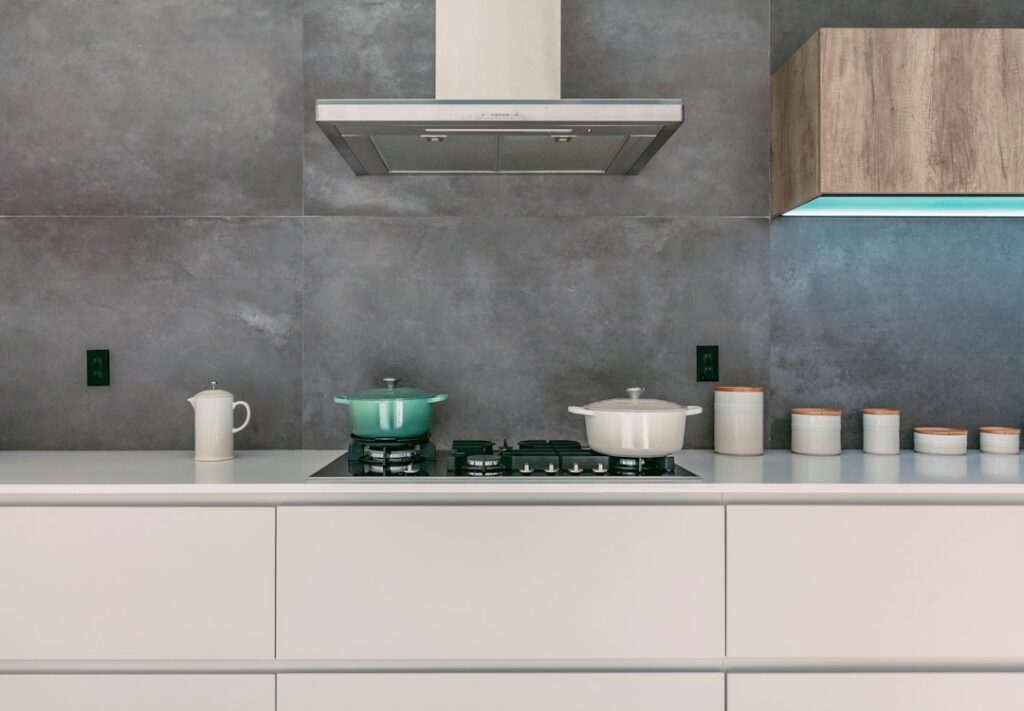
Range hood installation cost swings widely because “installing a range hood” can mean anything from swapping an under-cabinet hood on an existing duct to cutting a new path through a roof for a large island hood with makeup air. A like-for-like replacement is typically a few hundred dollars in labor, while a new ducted installation through a wall or roof commonly costs well over a thousand once ductwork, electrical work, patching and finishing are included. The hood itself can cost less than the labor or several times more, depending on style and capacity. This guide gives typical national ranges by job type, explains the cost drivers, covers the replace-versus-upgrade decision, shows how to read a quote and what inspectors look for, and flags the Front Range conditions that matter for kitchen ventilation. It reflects general guidance as of 2026; local code and the manufacturer’s installation instructions take priority for any specific project.
Part of our Home Ventilation guide — start there for the full picture →
Typical Range Hood Installation Costs by Job Type
The table below shows typical national ranges for labor and basic materials, not including the hood itself unless noted. Use it as a reasonableness check against a local quote.
| Job type | What it usually involves | Typical national range, 2026 (get local quotes) |
|---|---|---|
| Like-for-like replacement, existing duct and wiring | Remove old hood, mount new one, connect duct and power | Roughly $150 to $500 labor |
| Ductless (recirculating) hood or microwave-hood swap | Mount, connect power, no exterior vent | Roughly $150 to $450 labor |
| Converting recirculating to ducted, short wall run | New duct through an exterior wall, wall cap, patching | Roughly $500 to $1,300 |
| New ducted install through ceiling and roof | Duct through attic or soffit to a roof cap, flashing, drywall repair | Roughly $800 to $2,000+ |
| Island or large chimney-style hood | Ceiling structure, heavier mounting, longer duct | Roughly $1,000 to $3,000+ labor |
| Makeup air system for a high-airflow hood | Dampered outdoor-air inlet, controls, possibly tempering | Roughly $1,000 to $3,500+ |
| New circuit or outlet for the hood | Licensed electrician, permit where required | Roughly $150 to $600 |
Hood prices start low for basic under-cabinet models and climb steeply for professional-style, island and designer hoods. For the hands-on side of mounting, duct connection and clearances, see our parent guide to range hood installation.
What Drives the Price
Ducted versus ductless
The single biggest driver is whether the hood vents outdoors. A ductless hood filters grease and passes air through a charcoal filter before returning it to the kitchen. It is quick and inexpensive to install because there is no exterior penetration, but it does not remove moisture, heat or combustion gases from the house. A ducted hood carries cooking air outside, which is what the EPA has in mind when it recommends installing and using an exhaust fan vented to the outdoors over gas stoves. Our guide to ductless range hoods covers where recirculating units make sense and where they fall short.
Duct route and length
A range on an exterior wall can often vent straight out the back with a short duct and a wall cap. A range on an interior wall or an island needs a longer path through cabinets, a soffit, a ceiling joist bay or the attic. Every foot of duct and every elbow adds labor and reduces the hood’s real-world airflow. Joists running the wrong direction, plumbing or wiring in the path, or a second floor above the kitchen can turn a simple job into a significant one. Duct sizing and routing are explained in our guide to range hood ducting.
Exterior termination
Wall caps are usually simpler than roof caps. A roof termination requires cutting the roof deck, installing a cap and flashing it correctly, which is roofing work. Terminating into an attic, a soffit cavity or a crawl space is not acceptable practice; the duct should end at a dedicated exterior cap with a damper.
Hood size and type
Under-cabinet hoods are the most straightforward. Wall-mounted chimney hoods need solid backing and careful leveling. Island hoods hang from the ceiling and often need added blocking between joists, plus a longer duct run. Very large or heavy hoods can need two installers.
Electrical work
Many hoods are hardwired or plug into a dedicated outlet inside the cabinet. If no outlet or junction box exists at the right spot, an electrician needs to extend a circuit. High-end hoods with remote blowers or heat lamps may have additional electrical requirements.
Makeup air
Powerful hoods pull large volumes of air out of the house. In a reasonably tight home, that air has to come from somewhere, and if it is not provided deliberately it can be pulled back down chimneys and water heater or furnace vents. Many jurisdictions require a makeup air provision for hoods above a certain exhaust rate, commonly around 400 cubic feet per minute under model codes. Check with the city or county building department for the local threshold. Makeup air systems can cost as much as, or more than, the hood installation itself.
Finishing work
Patching drywall, matching texture, repainting, modifying or replacing an upper cabinet and fixing a backsplash are often excluded from an installer’s price. Ask who handles them and what they cost.
Best Range Hood: our top 3 picks
| Product | Best for | Key features | Price | Buy |
|---|---|---|---|---|
| Cosmo COS-63175S | Wall chimney for most kitchens |
| $250.99as of Nov 14, 2026 11:00 pm GMT+0000 | Buy now →Check current price |
| IKTCH IKP02-30 | High-output wall chimney |
| $419.00as of Nov 14, 2026 11:00 pm GMT+0000 | Buy now →Check current price |
| VIKIO HOME VK-RP10-30 | Dual-intake wall chimney |
| $249.99as of Nov 15, 2026 2:32 pm GMT+0000 | Buy now →Check current price |


Prices are Amazon’s listed prices as of the time shown and change often; check Amazon for today’s price. As an Amazon Associate we earn from qualifying purchases.
Sizing a Range Hood: Rules of Thumb
Hood capacity is rated in cubic feet per minute (CFM). Bigger is not automatically better, because high-airflow hoods are louder, cost more to install and can trigger makeup air requirements. Common rules of thumb, and they are only rules of thumb, include:
- Width. The hood should be at least as wide as the cooktop, and a few inches wider on each side is often recommended, especially for island hoods.
- Electric ranges. About 100 CFM per linear foot of range width for a wall-mounted hood is a common guideline.
- Gas ranges. A common guideline is about 100 CFM per 10,000 BTU of total burner output, which usually produces a higher number than the width method.
- Island hoods. Because there is no wall to help contain the plume, island hoods are often sized higher than wall hoods for the same range.
A worked example:
- A 30-inch electric range is 2.5 feet wide.
- At roughly 100 CFM per linear foot, that suggests about 250 CFM.
- A 30-inch gas range with four burners totaling 40,000 BTU, at about 100 CFM per 10,000 BTU, suggests about 400 CFM.
- If the chosen hood exceeds the local makeup air threshold, budget for makeup air or choose a hood just under it, and compare options with the installer.
Long duct runs, several elbows and undersized duct all reduce delivered airflow, so a hood’s rated CFM is a best case. A 400 CFM hood on a long, kinked run may move far less air in practice.
Why Venting Outdoors Matters
A range hood is the main tool for removing cooking moisture, odors, grease and combustion byproducts from a kitchen. The EPA notes that gas stoves are among the indoor sources of carbon monoxide and nitrogen dioxide. Its carbon monoxide guidance reports that levels near properly adjusted gas stoves are often 5 to 15 parts per million, while those near poorly adjusted stoves may be 30 ppm or higher. Its nitrogen dioxide guidance lists installing and using an exhaust fan vented to the outdoors over gas stoves among the steps to reduce exposure, alongside keeping gas appliances properly adjusted.
The EPA’s broader indoor air guidance explains that local bathroom or kitchen fans that exhaust outdoors remove contaminants directly from the room and also increase the outdoor air ventilation rate, and it calls out cooking as one of the short-term activities when ventilation is especially useful. Its mold and moisture guide likewise recommends using exhaust fans or opening windows when cooking or running the dishwasher.
A ductless hood still has a role in condos, rentals and kitchens with no practical duct path, and a recirculating hood with clean filters is better than nothing for grease. Keeping those filters clean matters for both types; our guide to range hood filters covers mesh, baffle and charcoal filter care. Homeowners who want the simplest install can compare models in our ductless range hood picks, keeping the ventilation trade-off in mind.
Repair, Replace or Upgrade?
Common range hood problems include a failed fan motor, a broken switch or control board, burned-out lights, a stuck backdraft damper and a hood that is simply too weak for the cooktop.
- Lights and switches. Bulbs and some switch assemblies are inexpensive repairs if parts are available for the model.
- Motors. Replacement motors exist for many hoods, but on older or budget models a motor plus labor can approach the cost of a new hood. As a rule of thumb, if the repair costs more than about half the price of a comparable new hood, replacement usually makes more sense.
- Weak performance. Before buying a bigger hood, check the filters, the damper and the duct. A grease-clogged filter, a stuck damper or a crushed duct can make a good hood look weak.
- Recirculating hood over a gas range. This is the classic upgrade case. Converting to a ducted hood vented outdoors addresses moisture and combustion byproducts, not just grease and odor.
- New range or cooktop. Upgrading to a larger or higher-output gas range is a good moment to reassess hood width, capacity and makeup air.
How to Read a Range Hood Installation Quote
A clear quote lets a homeowner compare bids line by line. Look for:
- The hood model, width and rated CFM, and whether the hood price is included.
- Duct size and material. Smooth metal duct is generally expected for range hoods; the installation instructions specify the minimum size.
- The duct route, number of elbows and the exterior termination: wall cap or roof cap, with damper and flashing.
- Electrical scope: existing outlet or circuit reused, or a new one added by a licensed electrician.
- Makeup air: whether it is required for this hood and, if so, what is proposed.
- Permits, including who pulls them and whether fees are included.
- Cabinet modification, drywall patching, texture and paint, either included or excluded.
- Removal and disposal of the old hood or microwave.
- Labor warranty.
Red flags
- Plans to vent into the attic, a soffit cavity, or a wall or ceiling space without a dedicated exterior cap.
- Plastic or thin foil flex duct proposed for a range hood.
- A high-CFM hood with no mention of makeup air where the local jurisdiction requires it.
- No permit for new duct penetrations or new circuits where the building department requires one.
- Pressure to buy a much larger hood than the cooktop needs.
- A lump-sum price for a complex job with no breakdown.
Questions to ask
- What airflow will this hood actually deliver with this duct length and these elbows?
- Where exactly will the duct exit, and how will the penetration be sealed and flashed?
- Does this hood trigger a makeup air requirement here?
- Will the installation affect any gas appliance venting or combustion air in the house?
For anything beyond a direct swap, getting two or three written quotes is reasonable.
DIY or Hire a Pro?
A like-for-like swap of an under-cabinet hood, using the existing duct, damper and electrical connection, is within reach for many handy homeowners. The usual steps are shutting off the circuit at the panel, removing the old hood, transferring or matching the duct connection, mounting the new hood to the cabinet and reconnecting power exactly as the instructions describe. A second person helps hold the hood in place. The same goes for many over-the-range microwave swaps, which rely on a wall plate and cabinet bolts and are heavier than they look.
The job changes once it involves cutting through an exterior wall or roof, running new duct through joists or an attic, adding a circuit, hanging an island hood from the ceiling or adding makeup air. Those tasks involve structural framing, weatherproofing, electrical code and sometimes gas appliance safety, and mistakes show up later as roof leaks, rattling ducts, grease-soaked insulation or backdrafting water heaters. For those projects, a contractor who regularly installs kitchen ventilation, plus a licensed electrician where wiring is involved, is the safer route.
Budgeting for the costs people forget
Quotes often look reasonable until the extras arrive. Common add-ons that catch homeowners off guard include replacing a shortened upper cabinet after a chimney hood goes in, repairing tile backsplash cut during installation, repainting a patched ceiling, upgrading the duct size to match a new hood’s outlet, a dedicated circuit for a high-end hood and roofing work for a new roof cap. Asking each bidder to state explicitly what is excluded is the easiest way to avoid surprises.
Front Range Factors
- Tight homes and atmospheric appliances. Many Front Range homes have older gas water heaters or furnaces that vent by natural draft. A powerful hood in a tight house can depressurize it enough to cause backdrafting from those appliances. This is one reason makeup air rules exist, and why a combustion safety check is worth asking about when installing a high-CFM hood.
- Cold winters. Makeup air in January is cold air. Some systems temper incoming air, which adds cost; others introduce it near the range so it is exhausted quickly. The right approach depends on the house and local requirements.
- Altitude and gas ranges. Gas cooking appliances at elevation are typically set up for altitude per the manufacturer’s instructions. Poorly adjusted burners produce more combustion byproducts, which a hood helps carry away but does not fix.
- Wind, hail and snow. Exterior caps should have working dampers that close against wind. Metal caps tend to hold up better to hail than plastic ones, and roof caps should not sit where drifting snow buries them.
- Permits. Requirements vary from city to city and county to county. Check with the local building department before cutting new penetrations or adding makeup air.
More guidance on selecting contractors for mechanical and ventilation work is in our heating, cooling and ventilation hub.
What a Home Inspector Checks
The ASHI Standard of Practice directs inspectors to inspect kitchen, bathroom, laundry and similar exhaust systems, and to inspect installed ranges and cooking appliances by using normal operating controls. In practice, an inspector typically:
- Turns on the hood fan and light and confirms they operate.
- Notes whether the hood appears ducted or recirculating, where that can be determined.
- Looks for grease buildup, missing filters, loose mounting and damaged wiring.
- Checks, where visible, whether the duct terminates outdoors rather than into a cabinet, soffit or attic.
- Notes gas ranges without venting to the outdoors where that is relevant to the report.
Concerns are typically referred to a licensed electrician, HVAC contractor or appliance installer. Buyers can use those findings in repair negotiations.
Want a clearer picture of a kitchen’s ventilation and appliances before closing on a home? Contact our team to schedule a Front Range home inspection.
More Questions About Range Hood Installation Cost
Is it cheaper to vent a range hood through a wall or the roof?
Venting a range hood through an exterior wall is usually cheaper than venting through the roof, often by several hundred dollars, because the duct run is shorter and no roof flashing or roofer is needed.
A short wall run for a hood already on an exterior wall is commonly one of the least expensive ducted installs. Roof venting costs more due to attic work, longer duct, a roof cap and flashing, and it may add drywall repair. Steep or tile roofs push the price higher still.
How much does it cost to replace an over-the-range microwave with a hood?
Replacing an over-the-range microwave with a range hood typically costs roughly $200 to $800 in labor, according to industry estimates, when the existing vent and power can be reused. Hood prices vary widely on top of that.
Costs rise if the cabinet above must be modified, the duct needs resizing, or the microwave was recirculating and the new hood will be ducted outdoors. A dedicated microwave circuit may also need to be changed to suit the hood, and wall patching is common once the bracket is removed.
Does a range hood installation need a permit, and what does it cost?
A range hood installation often needs a permit when it involves new ductwork through walls or roofs, new electrical circuits, or makeup air, while a like-for-like swap often does not. Permit fees vary by jurisdiction, commonly from about $50 to a few hundred dollars.
Contractors usually pull the permit and include the fee in the quote. Skipping a required permit can complicate a later sale or insurance claim, so asking the local building department or contractor before work starts is worthwhile.
Why do range hood installation quotes vary so much?
Range hood installation quotes vary mainly because of the duct route, the hood type, and how much electrical, carpentry and finishing work each contractor includes. One quote may assume reusing existing duct, while another includes a new exterior cap or roof penetration.
Differences in makeup air requirements, drywall and paint repair, permit handling and warranty coverage also affect price. Comparing quotes line by line, and asking whether disposal, patching and permits are included, makes it easier to spot real differences.
References
- Nitrogen Dioxide’s Impact on Indoor Air Quality — U.S. Environmental Protection Agency
- Carbon Monoxide’s Impact on Indoor Air Quality — U.S. Environmental Protection Agency
- Improving Indoor Air Quality — U.S. Environmental Protection Agency
- A Brief Guide to Mold, Moisture and Your Home — U.S. Environmental Protection Agency
- ASHI Standard of Practice for Home Inspection — American Society of Home Inspectors
Frequently asked questions
How much does range hood installation cost?
Typical national labor ranges are roughly $150 to $500 to replace a hood on existing duct and wiring, and roughly $800 to $2,000 or more for a new ducted installation through a roof. Island hoods and makeup air add more. Local quotes are the only reliable figure.
Is a ducted or ductless range hood better?
A ducted hood that vents outdoors removes moisture, heat and combustion byproducts, while a ductless hood only filters grease and odor before returning air to the kitchen. Ductless is cheaper to install and suits kitchens with no practical duct path.
Does a range hood need makeup air?
High-airflow hoods often do. Many jurisdictions require makeup air above a set exhaust rate, commonly around 400 CFM under model codes, so check with the local building department before choosing a hood.
Can a range hood vent into the attic?
No. A range hood duct should end at a dedicated exterior wall or roof cap with a damper. Venting into an attic or soffit deposits grease and moisture where they can cause damage.
Do home inspectors check range hoods?
Yes. The ASHI Standard of Practice includes kitchen exhaust systems and installed ranges, so inspectors typically operate the hood and look for missing filters, grease buildup and improper termination where visible.
How much does it cost to remove an old range hood?
Removing an old range hood typically costs a modest amount when done as part of a new installation, often included in the labor price. As a standalone job, removal and capping wires or ducts may cost roughly $100 to $300, plus patching.
Do island range hoods cost more to install?
Yes, island range hoods usually cost more to install because they need ceiling support, longer duct runs and more careful finishing. Labor for an island hood often runs in the low thousands of dollars before the cost of the hood itself.
Does a home warranty cover range hood replacement?
Some home warranty plans cover range hoods or built-in vent fans, but many limit coverage to repairs, exclude ductwork, or cap the payout. Reading the contract's appliance list and exclusions shows whether a range hood replacement is likely to be covered.