Whole House Fan Installation Cost: Typical 2026 Price Guide

A typical whole house fan installation cost runs from roughly $700 to $1,600 for a traditional ceiling-mounted fan and roughly $1,500 to $3,500 for a modern insulated, damper-equipped model, with larger homes, new wiring and added attic venting pushing some projects higher. Unlike an attic fan, which only exhausts hot air from the attic, a whole house fan pulls cooler outdoor air in through open windows, sweeps it through the living space and pushes the warm indoor air out through the attic. On the Colorado Front Range, where summer evenings are often dry and cool, that can make a whole house fan an efficient way to cool a home overnight. It also carries a safety requirement that attic fans do not share as directly: a large exhaust fan can pull combustion gases back down a water heater or furnace flue if windows are not open. This guide covers typical prices, sizing, venting, safety, quote review and what a home inspector looks for. It summarizes general guidance as of 2026; manufacturer installation instructions and your local building department take priority for any specific project.
Part of our Home Ventilation guide — start there for the full picture →
Typical Whole House Fan Costs at a Glance
The table below shows typical national ranges, not quotes, and is not drawn from any single source. Use it to judge whether a written estimate is reasonable, then compare local bids.
| Job (typical national range, 2026 — get local quotes) | Typical installed cost | Main cost drivers |
|---|---|---|
| Traditional ceiling-mounted fan with shutters | $700–$1,600 | Fan size, ceiling framing, wiring distance |
| Modern insulated fan with sealed damper (ducted or remote-mounted motor) | $1,500–$3,500 | Airflow rating, quietness features, number of units |
| Two-fan or large-home installation | $2,500–$5,000+ | Total airflow needed, multiple ceiling openings |
| Replace an existing whole house fan | $600–$2,000 | Whether the ceiling opening can be reused |
| Added attic exhaust venting | $300–$1,500+ | Vent type and count, roof work, existing vent area |
| New dedicated electrical circuit | $150–$600+ | Distance to panel, panel capacity, finished walls |
| Ceiling framing modifications (cutting a joist, adding headers) | $200–$800 | Joist direction, truss roof restrictions |
| Insulated winter cover for an older fan | $50–$300 | Off-the-shelf versus custom-built cover |
As with most ventilation work, labor, electrical work and venting tend to drive the total more than the fan itself. Ask for those items to be itemized.
How a Whole House Fan Works
A whole house fan is installed in the ceiling of a central hallway or open area on the top floor, directly below the attic. When it runs with windows open, it creates a strong flow of air through the house: outdoor air enters through the windows, crosses the rooms and exits through the fan into the attic, where it leaves through the attic vents. Our guide to the whole house fan covers the equipment in more detail; this page focuses on what installation costs and what has to be right for it to work safely.
Whole house fan versus attic fan
| Feature | Whole house fan | Attic fan |
|---|---|---|
| Location | Ceiling between living space and attic | Roof or gable wall |
| Air it moves | Outdoor air through the whole living space | Attic air only |
| When it runs | Evening and night, when outdoor air is cooler than indoor air | Hot afternoons, usually thermostat-controlled |
| Windows | Must be open while running | Not involved |
| Main purpose | Cool people and the house structure | Lower attic temperature |
| Typical installed cost | Higher | Lower |
Our separate guide to the attic fan explains that product. Quotes sometimes mix the terms, so confirm which one is being proposed.
Where it fits as a cooling strategy
The EPA notes that most home heating and cooling systems do not mechanically bring fresh air into the house, and that opening windows and doors, or operating window or attic fans when the weather permits, increases the outdoor ventilation rate. A whole house fan does this on a large scale. It does not cool air below the outdoor temperature, so it works best when evenings are noticeably cooler than the house, and it is less useful during hot, smoky or polluted nights.
Best Whole House Fans: our top 3 picks
| Product | Best for | Key features | Price | Buy |
|---|---|---|---|---|
| QuietCool ES-4700 RF | Most average-size homes |
| $1,349.00as of Nov 13, 2026 2:11 pm GMT+0000 | Buy now →Check current price |
| QuietCool ES-7000 RF | Large homes up to about 3440 sq ft |
| $1,799.00as of Nov 13, 2026 2:11 pm GMT+0000 | Buy now →Check current price |
| QuietCool CL-2250 RF | Small homes and upper floors |
| $849.00as of Nov 13, 2026 2:11 pm GMT+0000 | Buy now →Check current price |


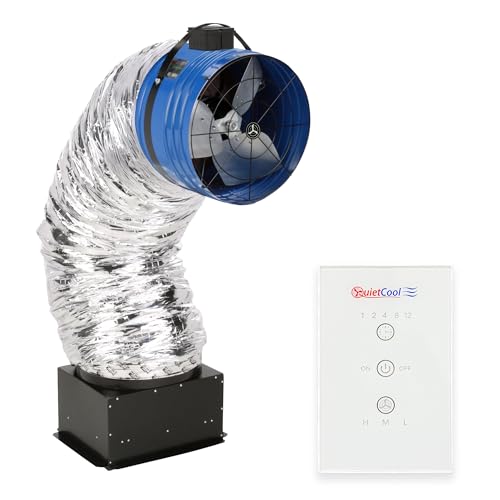
Prices are Amazon’s listed prices as of the time shown and change often; check Amazon for today’s price. As an Amazon Associate we earn from qualifying purchases.
Sizing a Whole House Fan: A Rule-of-Thumb Method
Manufacturers and installers size whole house fans by airflow, in cubic feet per minute (CFM). The method below is a common rule of thumb, not an engineering calculation; follow the manufacturer’s sizing guidance for any specific product.
- Find the conditioned floor area you want the fan to serve, in square feet.
- Multiply by the average ceiling height to get the house volume in cubic feet.
- Choose a target number of air changes per hour. Many installers use a range of roughly 15 to 30 air changes per hour, with the higher end for hotter climates and the lower end where evenings cool off reliably.
- Calculate CFM: volume multiplied by air changes per hour, divided by 60 minutes.
- Check attic venting. A large fan needs a lot of attic exhaust area. Manufacturers typically specify a minimum net free vent area per unit of airflow, and that requirement often means adding vents.
Worked example
A 1,800-square-foot Front Range ranch with 8-foot ceilings has a volume of about 14,400 cubic feet. Using a target of 20 air changes per hour, the airflow is 14,400 multiplied by 20, divided by 60, or about 4,800 CFM. Because Front Range evenings often cool quickly, a homeowner might accept a slightly lower target, while a two-story home with warm upstairs bedrooms might aim higher or use two fans. The installer would then compare the fan’s required vent area with the attic’s existing soffit, gable and roof vents and add exhaust vents if they fall short.
Bigger is not always better. An oversized fan can be loud and can create strong suction that makes window opening and combustion safety more critical. Many modern fans offer multiple speeds, which helps.
What Drives the Price
Fan type
Traditional whole house fans mount a large fan with gravity or motorized shutters directly in the ceiling. They are effective and relatively inexpensive but can be noisy and leak heat in winter. Modern units commonly use insulated, sealed dampers and quieter motors, sometimes mounted on flexible duct in the attic away from the ceiling grille. They cost more upfront but are quieter and seal better in cold months.
Ceiling framing and roof structure
The ceiling opening must fit between or across joists. When a larger fan requires cutting a joist, a carpenter must add headers to carry the load. Engineered roof trusses generally should not be cut without the truss designer’s approval, which can limit fan size or location.
Attic venting
All the air the fan moves has to leave the attic. If the attic only has enough venting for ordinary passive ventilation, the fan will pressurize the attic and may push attic air and dust back into the house through ceiling gaps. Adding gable, roof or ridge exhaust vents is a common and legitimate line item. Our guide to attic ventilation explains how vent area is evaluated.
Electrical work
Whole house fans need power and a wall control or timer. A new circuit, long runs through finished space or panel upgrades add cost. Check with your city or county building department about permits for new circuits and ceiling openings.
Air sealing and insulation
Cutting a large opening in the attic floor disturbs insulation and air sealing. The fan housing and the surrounding ceiling must be sealed and the insulation restored. ENERGY STAR’s attic air sealing guidance lists drafty rooms, dust in rooms below the attic and dry winter indoor air among the common symptoms of attic air leaks, all of which a poorly sealed fan opening can worsen.
Safety: Backdrafting and Combustion Appliances
This is the most important part of any whole house fan installation. A whole house fan is a powerful exhaust fan. If it runs with too few windows open, it lowers the air pressure inside the house. Air then rushes in through whatever openings exist, which can include the flues of a gas water heater, gas furnace or fireplace. That reverses the normal flow of combustion gases and can pull exhaust, including carbon monoxide, into the living space.
The EPA lists back-drafting from furnaces, gas water heaters, wood stoves and fireplaces among the sources of indoor carbon monoxide, and describes CO as an odorless, colorless and toxic gas. The U.S. Consumer Product Safety Commission recommends battery-operated or battery-backup CO alarms on every level of the home and outside sleeping areas.
Practical safeguards that installers and inspectors commonly recommend:
- Always open enough windows before running the fan; manufacturers specify how much open window area is needed.
- Consider a control that is easy to understand, and a timer, so the fan is not left running after windows close.
- Ask the installer to perform a combustion appliance draft test with the fan running, especially in homes with natural-draft gas water heaters or furnaces.
- Never run the fan while a fireplace or wood stove is in use.
- Install and maintain CO alarms.
Some homes have a sealed-combustion furnace and water heater, which reduces backdraft risk. Older Front Range homes often have at least one natural-draft gas appliance, so this check matters.
Front Range Factors
- Dry, cool evenings. The Front Range’s low humidity and large day-to-night temperature swings suit whole house fans well. On many summer nights the outdoor air drops comfortably below indoor temperature, so a fan can flush heat from the house and its framing for a fraction of the operating cost of central air conditioning.
- Pairing with other cooling. Many Front Range homeowners use a whole house fan alongside central air, a ductless system or an evaporative cooler. Our guide to the evaporative cooler explains another option suited to dry air, and our guide to ductless mini-split installation cost covers a mechanical alternative for homes that need cooling on hot nights.
- Wildfire smoke. When outdoor air quality is poor, a whole house fan should stay off. The EPA cautions that ventilation should be carefully evaluated where there may be outdoor sources of pollutants, such as smoke, nearby.
- Cold winters. An uninsulated shutter in the ceiling can leak warm, moist air into the attic for months. Insulated dampers or a well-sealed winter cover help prevent heat loss and attic frost.
- Radon. Running a whole house fan with windows open brings in outdoor air, and it is not a radon mitigation method. Strong depressurization with windows mostly closed could, in theory, draw more soil gas into the lower level. Keep windows open as directed and rely on testing and, where needed, a dedicated mitigation system for radon.
- Permits. Requirements vary by jurisdiction; check with your city or county building department.
Operating Costs and Everyday Use
Installation is the larger expense; running a whole house fan is usually inexpensive compared with central air conditioning, because a fan motor draws far less power than a compressor. Actual operating cost depends on the motor, the speed used, hours of operation and local electric rates, so treat any savings claim in a sales pitch as an estimate rather than a promise.
A typical summer routine along the Front Range looks like this:
- Keep windows closed and blinds drawn during the hot part of the day so the house holds the overnight coolness.
- In the evening, once the outdoor temperature drops below the indoor temperature, open windows in the rooms you want cooled, then turn the fan on.
- Run the fan on high for a short period to flush warm air, then drop to a lower, quieter speed for the night, using a timer if the control has one.
- In the morning, before outdoor air warms, turn the fan off and close the windows.
Opening windows mainly in bedrooms and lower floors pulls cool air where it is most wanted. Opening only one small window, by contrast, starves the fan and increases suction, which is exactly the condition that raises backdraft risk. Expect some added dust on screens and sills, and clean or replace window screens periodically. Families with seasonal allergies may find the fan less comfortable during high-pollen weeks, and on those nights running it briefly or not at all is reasonable.
Is a Whole House Fan Worth It? Repair, Replace or Upgrade
A few rules of thumb help frame the decision:
- New installation: Most worthwhile in homes with a usable attic, adequate or upgradable attic venting, cool evenings and occupants willing to open windows. Less useful in homes with no attic, truss limitations or frequent nighttime heat.
- Old fan with failed motor or belt: A motor or belt repair may be inexpensive, but older uninsulated fans lose heat in winter. If the repair approaches half the cost of a modern insulated fan, replacement is often the better value.
- Old fan that is no longer used: Removing it and sealing and insulating the ceiling opening may be the right call, particularly if it leaks air.
How to Read a Whole House Fan Quote
Line items that should be there
- Fan model, airflow rating, number of speeds and damper type
- Ceiling cutting and any framing changes
- Electrical work, control type and timer
- Attic venting assessment and any added exhaust vents
- Air sealing and insulation restoration around the fan
- Combustion appliance draft check, if gas appliances are present
- Permit costs if required, and warranty terms
Questions to ask
- How did you size the fan, and what air-change target did you use?
- How much attic exhaust area does the fan need, and how much do we have?
- How many windows need to be open, and how far?
- Will you test our gas appliances for backdrafting with the fan running?
- Does the roof structure use trusses, and how does that affect placement?
Red flags
- No discussion of attic venting or window opening requirements
- No mention of combustion safety in a home with gas appliances
- An oversized fan without an explanation of why the extra airflow is needed
- Claims that the fan replaces air conditioning in all conditions
- Bundled packages that do not itemize what is included
Get two or three written quotes. Our roundup of the best whole house fans compares current models, which can help when discussing options with an installer.
How a Home Inspection Flags Whole House Fan Issues
The ASHI Standard of Practice calls for inspectors to inspect ventilation of attics and foundation areas, as well as kitchen, bathroom, laundry and similar exhaust systems. Its heating section lists heat-recovery and similar whole-house mechanical ventilation systems among items inspectors are not required to inspect, and says inspectors are not required to determine the adequacy of combustion air. During an inspection, an inspector typically notes the presence of a whole house fan and may observe:
- Shutters that stick, rattle or do not close fully
- Gaps around the ceiling opening and missing insulation above it
- Inadequate-looking attic exhaust venting for the size of the fan
- Cut joists or trusses without visible reinforcement
- Improper or exposed wiring
- Natural-draft gas appliances in the home, which raise backdraft concerns
Inspectors do not calculate fan sizing or perform depressurization testing as part of a standard inspection. Concerns are typically referred to an HVAC contractor, electrician or energy auditor. If you are buying a Front Range home with a whole house fan, contact our team to schedule an inspection.
More Questions About Whole House Fan Installation
How long does whole house fan installation take?
A straightforward whole house fan installation typically takes about four to eight hours for an experienced installer, often finished in a single day. Jobs take longer when ceiling joists must be cut and headered, when new attic vents must be added, or when a new dedicated electrical circuit must be run from the panel. Ducted or remote-mounted models may require extra time to route ducting. Permitted installations also need a final inspection, which may happen a few days after the work is completed.
Do you need a permit to install a whole house fan?
Many jurisdictions require an electrical permit, and sometimes a building permit, to install a whole house fan, especially when joists are cut or a new circuit is added. Requirements vary by city and county, so the installer or homeowner should check with the local building department before work begins. Permitted work is inspected for wiring, framing and attic venting, which protects resale value. Unpermitted installations can create problems during a future home sale if an inspector flags them.
Can a homeowner install a whole house fan DIY?
A handy homeowner can install some whole house fans, especially smaller models designed to fit between standard ceiling joists, but it is a demanding job. The work involves cutting a ceiling opening, working in a hot attic, possibly adding attic vents, and wiring a switch or new circuit. Mistakes in framing or wiring create safety risks. Many homeowners hire an electrician for the wiring even when they do the carpentry. Checking local permit rules first avoids problems with inspections and resale.
Does a whole house fan add value to a home?
A whole house fan can modestly add appeal to a home in dry, cool-night climates where buyers understand the energy savings, but it rarely adds value dollar for dollar at resale. Its main return comes from lower cooling bills while the owner lives there. Quiet, insulated, professionally installed units with permits are viewed more favorably by buyers and inspectors. In humid regions, where the fan is less useful, buyers may see it as a feature they will seldom use.
References
- Improving Indoor Air Quality — U.S. Environmental Protection Agency
- Carbon Monoxide’s Impact on Indoor Air Quality — U.S. Environmental Protection Agency
- Carbon Monoxide Information Center — U.S. Consumer Product Safety Commission
- Attic Air Sealing Project — ENERGY STAR
- ASHI Standard of Practice for Home Inspection — American Society of Home Inspectors
Frequently asked questions
How much does it typically cost to install a whole house fan?
Typical national ranges in 2026 are roughly $700 to $1,600 for a traditional ceiling-mounted fan and $1,500 to $3,500 for a modern insulated model. Large homes, new wiring, framing changes and added attic venting can raise the total, so compare local written quotes.
What is the difference between a whole house fan and an attic fan?
A whole house fan sits in the ceiling and pulls outdoor air through open windows and the living space into the attic, usually in the evening. An attic fan only exhausts hot air from the attic and does not ventilate the living space.
Do whole house fans work well in Colorado?
Along the Front Range they often do, because summer air is dry and evenings tend to cool quickly. They are less useful on hot nights or during wildfire smoke, when the fan should stay off.
Can a whole house fan cause backdrafting?
Yes, if it runs without enough open windows. The house can depressurize and pull combustion gases down the flue of a gas water heater, furnace or fireplace. Open windows as the manufacturer directs, ask for a draft test and keep CO alarms working.
How do you size a whole house fan?
A common rule of thumb multiplies floor area by ceiling height, then by a target of roughly 15 to 30 air changes per hour, and divides by 60 to get CFM. A 1,800-square-foot home with 8-foot ceilings at 20 air changes per hour works out to about 4,800 CFM.
Is a whole house fan cheaper than central air?
Yes, a whole house fan is usually much cheaper to buy and install than central air, often costing a small fraction of a new AC system. It also uses far less electricity. It cannot cool or dehumidify on hot, humid nights, so it complements air conditioning rather than replacing it everywhere.
Are there rebates for whole house fans?
Some electric utilities offer rebates for whole house fans, especially in dry Western states where they reduce summer peak demand. Availability changes often, so homeowners should check the utility's website before buying. Federal home-improvement tax credits for energy upgrades ended for work completed after December 31, 2025.
Does a whole house fan need extra attic venting?
Usually yes. A whole house fan needs enough attic ventilation to exhaust the air it pushes out, commonly about 1 square foot of net free vent area for every 750 CFM of capacity, though manufacturers vary. Too little venting adds noise and can push air into living spaces.
Buying a Front Range home with a whole house fan or gas appliances you want checked? Get in touch with our team to arrange an inspection.