Whole House Fan: How It Works, Costs and When It Makes Sense

On a typical summer evening along Colorado’s Front Range, the outdoor temperature can drop sharply after sunset while the upstairs bedrooms stay stubbornly warm from the day’s heat. A whole house fan is built for exactly that gap. It pulls cool outdoor air in through open windows, sweeps it through the living space and pushes the warm air out through the attic, often flushing the house in minutes. For many homes in dry climates with cool nights, it can reduce how often the air conditioner runs, or replace it on milder days. This guide explains how a whole house fan works, how it differs from an attic fan, how to size one, what the attic needs for venting, typical costs, and the safety rules that matter most. Costs are general 2026 estimates and vary by home and installer.
Part of our Home Ventilation guide — start there for the full picture →
What a Whole House Fan Does
A whole house fan is a large exhaust fan mounted in the ceiling between the living space and the attic, usually in a central hallway on the top floor. When it runs, it draws air up from the house into the attic. That air has to be replaced, so outdoor air is pulled in through whatever windows are open. The warm air pushed into the attic then exits through the attic’s roof, gable or soffit vents.
The result is a strong, whole-home breeze. The fan replaces the warm indoor air with cooler outdoor air, and it also flushes the hot air out of the attic, which reduces the heat radiating down through upstairs ceilings overnight. Many homeowners run the fan in the evening and early morning, then close windows and shut the fan off as the day warms up, trapping the cooler air inside.
It is not air conditioning. A whole house fan can only bring the indoor temperature down toward the outdoor temperature. It does not dehumidify, and it does nothing useful when the outside air is hotter than the inside air.
Whole House Fan vs Attic Fan
These two products are often confused, but they do different jobs.
- A whole house fan moves air from the living space into the attic and outdoors. It cools the occupied rooms by replacing their air with outdoor air, and it requires open windows to work.
- An attic fan (also called a powered attic ventilator) is mounted on the roof or a gable wall and moves air only within the attic, pulling outdoor air in through attic vents and exhausting it. It does not ventilate the living space at all.
Attic fans aim to lower attic temperatures. Their value is debated, because a powered attic fan can depressurize the attic and pull conditioned air up from the house through ceiling leaks, sometimes increasing cooling costs rather than reducing them. A well-sealed, well-insulated attic ceiling with balanced passive ventilation is often the more reliable approach. Our attic ventilation guide explains how passive intake and exhaust vents work and when powered ventilation causes problems.
A whole house fan, by contrast, deliberately moves house air into the attic, but only while windows are open to supply replacement air. Used that way, it ventilates both the house and the attic at the same time.
Best Whole House Fans: our top 3 picks
| Product | Best for | Key features | Price | Buy |
|---|---|---|---|---|
| QuietCool ES-4700 RF | Most average-size homes |
| $1,349.00as of Oct 30, 2026 6:13 am GMT+0000 | Buy now →Check current price |
| QuietCool ES-7000 RF | Large homes up to about 3440 sq ft |
| $1,799.00as of Oct 30, 2026 6:13 am GMT+0000 | Buy now →Check current price |
| QuietCool CL-2250 RF | Small homes and upper floors |
| $849.00as of Oct 30, 2026 6:13 am GMT+0000 | Buy now →Check current price |


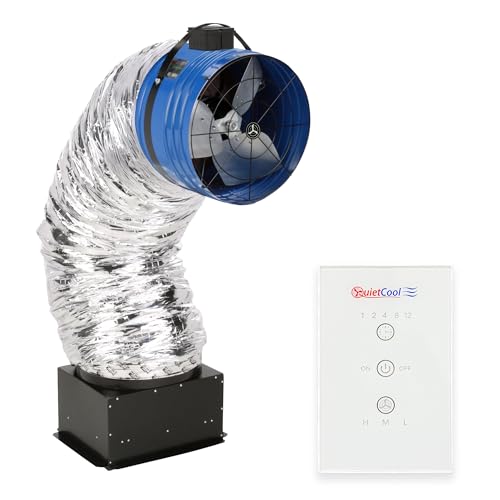
Prices are Amazon’s listed prices as of the time shown and change often; check Amazon for today’s price. As an Amazon Associate we earn from qualifying purchases.
Why Colorado’s Climate Suits Whole House Fans
Whole house fans work best where summer days are warm, nights are cool and humidity is low. Much of the Front Range fits that description well. High elevation and dry air tend to produce large swings between daytime highs and nighttime lows, so even after a hot afternoon, outdoor air in the evening is often comfortably cooler than indoor air.
Low humidity matters too. In humid regions, pulling in night air can raise indoor moisture levels and leave the house feeling clammy. In Colorado’s typically dry summers that is less of a concern, which is one reason whole house fans and evaporative coolers have long been common in the region.
There are limits:
- Hot nights: during heat waves when evenings stay warm, a whole house fan provides less benefit.
- Pollen and dust: outdoor air brings outdoor allergens. People with severe seasonal allergies may find the trade-off unappealing.
- Wildfire smoke: on smoky days, bringing in outdoor air works against indoor air quality (more on that below).
- Noise and security: windows need to be open, which may raise noise or security concerns in some neighborhoods.
Sizing a Whole House Fan
Whole house fans are rated by airflow in cubic feet per minute (CFM). A commonly cited rule of thumb is roughly 2 to 3 CFM per square foot of conditioned living area, so a 2,000 square foot home might be matched with a fan in the range of about 4,000 to 6,000 CFM. Some manufacturers size by air changes per hour instead, or account for ceiling height and climate. Use the manufacturer’s sizing guidance for the specific model.
A few considerations:
- Bigger is not always better. An oversized fan can be noisy, and it needs proportionally more attic vent area and open window area to work properly.
- Multiple smaller fans can work well in larger homes or homes with separated wings, letting occupants cool only the areas in use.
- Variable-speed models allow a high setting for a quick flush in the evening and a quieter low setting overnight.
Attic Venting Requirements
All the air a whole house fan pushes into the attic has to leave through the attic vents. If the attic does not have enough net free vent area, which is the actual open area of the vents after screens and louvers are accounted for, the attic becomes pressurized. That reduces fan performance and can force hot, dusty attic air back down into the house through ceiling gaps, light fixtures or the fan housing itself.
Manufacturers publish the net free vent area each model requires, commonly expressed as a certain number of square feet of venting per given CFM. A rule of thumb sometimes used is about one square foot of net free area per roughly 750 CFM, but requirements vary by product, so follow the installation instructions. Many existing attics are vented only for passive ventilation and need additional gable, soffit or roof vents before a large whole house fan is installed. Building codes published by the International Code Council set minimum attic ventilation for moisture control, but whole house fans generally need more vent area than those minimums.
Insulation can also interfere. Deep loose-fill insulation should not block soffit vents, and baffles at the eaves help keep the intake path open. Our attic insulation guide covers baffles, depth targets and common mistakes, and the insulation R-value guide explains how much insulation a Front Range attic typically needs.
Noise, Ducted Models and Winter Dampers
Noise
Older whole house fans, often a large belt-driven or direct-drive blade mounted right above a ceiling louver, can be loud and rattly. That noise is the main reason many homeowners stopped using them. Newer designs address it in a few ways.
Ducted and remote-mounted models
Many modern units mount the motor and fan in the attic, away from the ceiling, connected to the ceiling grille by a flexible insulated duct. Separating the motor from the ceiling and using rubber isolation mounts can make them much quieter than older fans. These units also tend to have smaller ceiling grilles and are easier to install in an existing attic, though they typically cost more.
Insulated dampers for winter
A whole house fan is effectively a large hole in the ceiling between the heated house and a cold attic. Older models with simple louvers can leak substantial warm air in winter, wasting energy and sending moist indoor air into the attic, where it can condense on the roof deck or contribute to conditions that feed ice dams. Many current models include insulated, gasketed dampers that close automatically when the fan is off. For older fans, insulated covers can be placed over the opening from the attic side or the ceiling side for the heating season. Sealing that opening fits within the broader air-sealing priorities that ENERGY STAR highlights for attics.
Whole House Fan Cost
Prices vary widely by fan type, capacity and how much attic work is needed. As a general guide:
| Item | Typical range (estimate) |
|---|---|
| Basic direct-mount fan, unit only | Often a few hundred dollars |
| Ducted, quiet-style fan, unit only | Often around $1,000 to $2,000+ |
| Professional installation, simple attic | Often several hundred to $1,500+ |
| Added attic vents, if needed | Varies widely with number and type |
| New dedicated electrical circuit, if needed | Varies; requires a licensed electrician |
Total installed costs for many homes commonly land somewhere between roughly $1,000 and $3,000, with large ducted systems, multiple fans, framing changes or added venting pushing totals higher. Operating costs are typically far lower than running central air conditioning, though actual savings depend on the house, the fan and how often it replaces air conditioning. Ask installers to confirm vent-area calculations and electrical requirements in writing.
Safety Rules for Whole House Fans
Never run it with windows closed
A whole house fan moves a large volume of air. If the windows are closed, the fan cannot pull in outdoor air through them, and it will try to pull replacement air from wherever it can: chimneys, flues, exhaust vents and gaps in the building. Always open enough windows before switching the fan on, and close the fan before closing the windows. Many installers recommend opening windows in several rooms rather than one, and some fans offer interlocks or timers.
Combustion appliances and backdrafting
That depressurization is the reason whole house fans need care in homes with fuel-burning appliances. Gas or oil furnaces, water heaters and boilers with natural-draft venting, as well as fireplaces and wood stoves, rely on the house not being strongly depressurized so that exhaust can rise up the flue. If the house is under strong negative pressure, combustion gases can be pulled back into the living space, a condition called backdrafting. EPA lists back-drafting from furnaces, gas water heaters, wood stoves and fireplaces among the sources of indoor carbon monoxide.
Practical precautions include:
- Open plenty of windows before running the fan, especially near combustion appliances.
- Avoid running the fan while a fireplace or wood stove is burning or still smoldering.
- Install working carbon monoxide alarms on every level of the home and outside sleeping areas, as CPSC recommends.
- Ask the installer or an energy auditor about combustion appliance zone testing, which checks whether appliances draft properly under worst-case depressurization. A home energy audit may include this testing.
Wildfire smoke days
Colorado summers increasingly bring periods of wildfire smoke. A whole house fan pulls large amounts of outdoor air, and with it fine smoke particles, directly into the home. EPA notes that outdoor air, including fine particles from wildfire smoke, enters homes through open windows and doors, and its guidance focuses on reducing that intake and filtering indoor air. On smoky days, leave the fan off, close windows and rely on filtration and air conditioning if available.
Electrical and installation safety
Large fans should be installed on an appropriately sized circuit following the manufacturer’s instructions and local electrical code. Some models require a dedicated circuit. Fan housings should not be buried in insulation unless rated for it, and attic access around the fan should allow for service.
How to Use a Whole House Fan Effectively
Getting good results from a whole house fan depends as much on routine as on the equipment. A typical summer pattern on the Front Range looks something like this:
- Wait for the crossover. Start the fan once the outdoor temperature drops below the indoor temperature, usually in the early evening. Running it while outdoor air is still hotter only brings heat inside.
- Open windows strategically. Opening windows in the rooms you want to cool directs airflow through those rooms. Opening windows on the shaded or cooler side of the house can help. Make sure the combined open window area is generous enough that the fan is not straining.
- Flush, then slow down. Run the fan on high for a quick flush, then switch to a lower speed if the model allows, or use a timer to shut it off during the night.
- Close up in the morning. Before the outdoor air warms, turn the fan off, then close windows and blinds on sun-facing walls to hold the cooler air inside as long as possible.
- Coordinate with air conditioning. Do not run the fan and the air conditioner at the same time. The fan will simply exhaust conditioned air into the attic.
Questions to ask an installer
- What CFM do you recommend for this house, and how did you calculate it?
- How much net free vent area does the attic have now, and how much does this fan require?
- Will the fan need a dedicated circuit or other electrical work?
- Does the model include an insulated, gasketed damper for winter?
- Which combustion appliances are in the house, and will you check that they draft properly with the fan running?
- How will insulation around the opening be handled so it stays clear of the housing and vents?
An installer who can answer those questions clearly is more likely to deliver a quiet, effective and safe system.
Is a Whole House Fan Worth It?
For a Front Range home with cool summer nights, a well-vented attic and occupants willing to open and close windows on a schedule, a whole house fan can be a low-operating-cost way to cool down quickly in the evening and reduce air conditioner run time. It makes less sense in homes with limited attic venting that cannot easily be expanded, households with severe allergies, or homes where combustion appliance safety cannot be confirmed. Pairing a fan with good attic insulation and air sealing, and an insulated damper for winter, gives the best overall result. Our insulation and energy hub covers the rest of the building envelope.
References
- Carbon Monoxide’s Impact on Indoor Air Quality — U.S. Environmental Protection Agency
- Carbon Monoxide Information Center — U.S. Consumer Product Safety Commission
- Wildfires and Indoor Air Quality — U.S. Environmental Protection Agency
- International Codes (I-Codes) — International Code Council
- Seal and Insulate with ENERGY STAR — ENERGY STAR
Frequently asked questions
What is the difference between a whole house fan and an attic fan?
A whole house fan sits in the ceiling and pulls air from the living space into the attic, drawing cool outdoor air in through open windows. An attic fan only moves air through the attic itself and does not ventilate the living space. They solve different problems.
How big a whole house fan do I need?
A common rule of thumb is roughly 2 to 3 CFM per square foot of living area, so about 4,000 to 6,000 CFM for a 2,000 square foot home. Follow the manufacturer's sizing guidance and confirm the attic has enough net free vent area for the fan's airflow.
Is it safe to run a whole house fan with the windows closed?
No. With windows closed, the fan can depressurize the house and pull air down chimneys and flues, which can cause combustion appliances to backdraft carbon monoxide into the home. Always open windows first and keep carbon monoxide alarms working.
How much does a whole house fan cost?
Installed costs commonly fall around $1,000 to $3,000 for many homes, depending on fan type and attic work. Quiet ducted models cost more than basic direct-mount fans, and added attic vents or a new electrical circuit increase the total.
Should I run a whole house fan during wildfire smoke?
No. A whole house fan brings large volumes of outdoor air, including smoke particles, indoors. On smoky days, keep it off, close windows and use filtration.
Thinking about adding a whole house fan but unsure whether your attic venting, insulation or gas appliances are ready for it? Reach out through our contact page and we can connect you with a Front Range inspector who can check the attic and combustion appliances first.