Mold Resistant Drywall: Where It Helps and Where It Doesn’t

Walk down the drywall aisle at any home center and the colored boards stand out: green, purple, blue-gray, sometimes a yellow or tan glass-mat face instead of paper. They are sold as moisture resistant, mold resistant or both, and they cost more than the standard white-faced board. Mold resistant drywall is a genuinely useful product in bathrooms, basements and laundry rooms, but it is often misunderstood. It slows mold growth on the panel itself. It does not stop water, fix a leak or turn a damp basement into a dry one. This guide explains what makes the board different, how manufacturers describe its mold rating, where it belongs, where it does not belong, what it typically costs and what a home inspector looks at. It summarizes EPA and CDC moisture and mold guidance current as of 2026; consult a qualified professional for remediation decisions.
Part of our Structure & Exterior guide — start there for the full picture →
Is this mold, asbestos, or water damage? Get a free instant screen
Upload a clear photo of the suspect area. You'll get an instant AI screening opinion and what to do next. This is screening guidance, not a professional determination.
Screening guidance only. AI can be wrong. Confirm asbestos, mold type, or lead with lab testing or a licensed professional before acting.
What Mold Resistant Drywall Is
Standard drywall is a gypsum core sandwiched between paper facers. The paper is the weak point. It is organic, it wicks moisture and, once damp, it is a ready food source for mold. The CDC notes that mold can grow on paper, cardboard, wood and drywall, as well as in dust, paints and insulation, wherever moisture is present.
Mold resistant drywall changes one or both parts of that sandwich. There are two broad families:
- Treated paper-faced board. The paper facer and often the gypsum core are treated to resist moisture absorption and mold growth. These are the familiar green or purple boards. They finish like regular drywall with tape and joint compound.
- Paperless, glass-mat board. The paper is replaced with a fiberglass mat on the face and back, removing most of the organic material mold would feed on. These panels have a slightly textured surface and usually need a skim coat or careful finishing for a smooth wall.
Some products also add a moisture-resistant core, higher density for impact resistance or fire-rated Type X gypsum. A single panel may be marketed for several of those properties at once, so it pays to read the product data sheet rather than relying on face color alone. Colors are a manufacturer convention, not a universal code.
How Mold Resistance Is Rated
Manufacturers commonly report mold resistance using an ASTM laboratory test in which panel samples are placed in a warm, humid chamber and exposed to mold spores for several weeks. Growth on the surface is then scored, typically on a scale where a 10 means no growth was observed and lower numbers mean more growth. Many treated paper-faced boards advertise a score in the upper single digits, and many paperless boards advertise a 10.
That score is useful for comparing products, but its limits are easy to overlook:
- It is a controlled laboratory test, not a guarantee of performance in a wall with a leaking supply line behind it.
- It measures surface growth on the panel. It does not address mold in dust, on framing, in insulation or on the paper of adjacent standard board.
- A high score does not mean the board is waterproof. Gypsum cores can still soften, crumble and lose strength when soaked.
Read the data sheet for the specific product, including the test standard cited, the reported score and the manufacturer’s stated limitations on use. Those limitations matter more than the marketing headline.
Resistant Is Not Mold-Proof: Moisture Control Comes First
The EPA’s guidance on mold in homes states the central principle plainly: the key to mold control is moisture control. EPA advises fixing the water problem, cleaning up mold promptly and drying water-damaged areas and items within 24 to 48 hours to prevent mold growth. It also recommends keeping indoor humidity below 60 percent, ideally between 30 and 50 percent, and acting quickly when condensation appears on windows, walls or pipes.
Mold resistant drywall fits into that framework as a margin of safety, not a substitute for it. If a bathroom has no working exhaust fan, the ceiling will stay damp after every shower regardless of the board behind the paint. If a basement wall leaks after spring storms, a treated board installed against the foundation will eventually get wet, and when it does, mold can grow on dust, adhesives, framing and anything else nearby.
EPA also points out that absorbent or porous materials may have to be thrown away if they become moldy, because mold can grow into crevices and be difficult or impossible to remove completely. Drywall is porous. A mold resistant panel that has been soaked and colonized is usually cut out and replaced, not scrubbed.
Moisture controls that matter more than board choice
- A ducted bathroom exhaust fan vented outdoors and actually used during and after showers.
- Gutters, downspout extensions and grading that move water away from the foundation.
- Prompt repair of plumbing leaks, including slow drips at supply lines, valves and drains.
- Dehumidification in basements that run humid in summer.
- Insulation on cold-water pipes and attention to condensation-prone surfaces.
EPA’s moisture control guidance for building design, construction and maintenance covers these topics in depth for site drainage, foundations, walls, roofs, plumbing and HVAC. It is aimed at building professionals but useful for anyone planning a basement finish or bathroom remodel.
Where Mold Resistant Drywall Makes Sense
Used in the right places, the board adds inexpensive insurance. Common applications include:
- Bathroom walls and ceilings outside the wet zone. Behind the vanity, around the toilet and on the ceiling, where humidity spikes but the surface is not directly sprayed.
- Finished basements. Particularly on walls built in front of foundation walls, with a gap and the appropriate insulation and vapor control for the assembly. Many Front Range basements stay dry most of the year but see humidity swings in summer or after heavy spring rain.
- Laundry rooms and mudrooms. Washers leak, wet boots and coats add moisture and these rooms are often in basements.
- Utility and mechanical rooms. Near water heaters, softeners and sump pits, where small leaks may go unnoticed.
- Kitchens behind sinks and dishwashers. Some builders and remodelers use it here as a modest upgrade.
Some remodelers simply use mold resistant board throughout a basement finish because the price difference on a modest project is small compared with the cost of tearing out wet drywall later. That is a reasonable choice, provided it is paired with real moisture control.
Where It Does Not Belong: Shower and Tub Wet Zones
This is the most common misuse. Paper-faced mold resistant drywall, including the green and purple boards, is generally not intended as a tile backer in showers and tub surrounds where water hits the wall directly. Manufacturers typically restrict these boards to areas outside direct water exposure, and building codes commonly specify cement-based or other water-resistant backers for wet tile areas. Check the product literature and local code requirements for the specific situation.
In a shower or tub wet zone, the usual approaches are:
- Cement board or fiber-cement backer with an appropriate waterproofing or vapor-control approach for the assembly.
- Foam or other purpose-made tile backer boards with sealed seams and fastener penetrations.
- Glass-mat gypsum tile backers specifically labeled by the manufacturer for that use, which are different products from paperless interior drywall.
- Surface-applied waterproofing membranes, either sheet or liquid-applied, installed according to the manufacturer’s instructions over an approved substrate.
Prefabricated surrounds and panel systems are another route. Our guides to shower wall panels and tub surround options compare those systems and the substrates they require.
Older homes sometimes have tile set directly on green board inside a shower. It may look fine for years, then fail quietly behind the tile as grout cracks let water reach the paper and core. Loose tiles, soft spots when pressed, cracked grout lines and staining at the bottom course are the typical warning signs.
Installation and Finishing Details
Mold resistant board hangs much like standard drywall, but a few details improve the result:
- Keep it off wet floors. Leaving a small gap at the bottom edge in basements and bathrooms reduces wicking from minor floor water.
- Use compatible compound. Some contractors prefer setting-type or mold-resistant joint compounds in damp rooms. Our guide to drywall mud explains the differences between compound types.
- Prime and paint promptly. A quality primer and a paint suited to humid rooms help protect the surface.
- Handle paperless board with care. Glass-mat facers can irritate skin, so gloves, long sleeves and a dust mask are common practice when cutting.
- Do not trap moisture. In basements, the wall assembly as a whole needs to manage vapor and liquid water. Plastic sheeting placed in the wrong location can hold moisture against the board.
For patching an existing wall after a leak, the drywall repair guide covers cutting out damaged sections and blending new board into old.
Replacing Moldy Drywall
When existing drywall has visible mold, replacing it with mold resistant board is sensible, but the order of operations matters. Find and fix the water source first. Remove the damaged material, dry the cavity and framing thoroughly and confirm nothing is still wet before closing it up.
EPA suggests that most people can handle a moldy area smaller than about 10 square feet themselves, following its cleanup guidance, and that larger areas or significant water damage call for its professional remediation guidance or a qualified contractor. EPA also advises against painting or caulking moldy surfaces: clean up the mold and dry the surfaces first, because paint applied over mold is likely to peel.
Primers marketed as mold-killing or mold-resistant can help on cleaned, sound surfaces, but they are not a fix for active growth. See our articles on mold-killing primer and black mold in bathrooms for what those products can and cannot do.
Mold Resistant, Moisture Resistant and Waterproof Are Different Claims
Product labels use these terms loosely, and the differences matter when choosing a board for a particular wall.
- Moisture resistant usually means the panel absorbs less water than standard board when exposed to humidity or occasional splashing. It says nothing on its own about mold.
- Mold resistant means the panel has been formulated or faced to slow mold growth and typically carries a reported score from a laboratory mold test.
- Waterproof is a claim gypsum drywall generally does not make. Waterproofing in a shower comes from the membrane or system, not from the board behind the tile.
Many products combine moisture and mold resistance, which is why the same green or purple board is often described both ways. The useful question for any location is simple: will this surface get wet occasionally, or will it be wetted routinely? Occasional humidity and splashes are what mold resistant drywall is built for. Routine direct water calls for a different assembly.
Front Range Considerations
Colorado’s dry climate leads some homeowners to assume mold is a coastal problem. Indoor conditions tell a different story. Bathrooms still hit high humidity during showers, basements can stay cool and damp in summer, and leaks do not care about the outdoor dew point. Spring snowmelt and heavy storms can push water against foundations across Douglas, Jefferson and El Paso counties, and slow plumbing leaks behind walls are common in homes of every age.
The dry air does help in one respect: properly ventilated rooms tend to dry out faster after a wetting event than they would in a humid climate. That makes fast response to leaks even more effective. It also means that a bathroom or basement that stays damp in Colorado is usually pointing at a specific source, such as a failed exhaust fan, a plumbing leak or poor drainage, that deserves investigation.
Questions to Ask Before a Remodel
- Which board is specified for each area, and what does the manufacturer allow for that location?
- What substrate and waterproofing method will be used in the shower or tub wet zone?
- How is the bathroom exhaust fan ducted, and where does it terminate?
- For basements, how will the wall assembly handle moisture from the foundation?
- Will a permit be pulled, and will the work be inspected before the walls are closed?
Clear answers to those questions usually say more about how a wall will perform in ten years than the color of the board does.
Mold Resistant Drywall Cost
Prices vary by thickness, region, retailer and product line. As general 2026 ranges:
- Standard 1/2-inch 4×8 drywall: often in the mid-teens to low $20s per sheet.
- Treated paper-faced mold resistant board: commonly a few dollars to roughly $10 more per sheet than standard.
- Paperless glass-mat interior board: usually priced higher again, sometimes close to double standard board.
- Installed and finished: labor typically dominates, and the board upgrade often adds only a modest percentage to a finished bathroom or basement wall.
Paperless panels can take more finishing labor to achieve a smooth surface, which can narrow or widen the overall price gap depending on the finish level requested. Getting a line-item quote for the board itself helps when comparing contractors.
What a Home Inspector Checks
A home inspector does not usually identify the brand or type of drywall behind paint, and cannot see inside wall cavities without invasive methods. What an inspector does look for are the conditions that make board choice matter: water stains, bubbling or peeling paint, soft or crumbling drywall near tubs and toilets, musty odors in basements, condensation, missing or non-functional bath fans and evidence of past leaks.
Moisture meters, and sometimes thermal imaging when offered, help flag areas that warrant a closer look. The structure and exterior inspection hub explains how inspectors evaluate water intrusion and drainage, and the main home inspector hiring guide covers what is in scope during a standard inspection and when to add specialized testing.
References
- A Brief Guide to Mold, Moisture and Your Home — U.S. Environmental Protection Agency
- Mold Cleanup in Your Home — U.S. Environmental Protection Agency
- Moisture Control Guidance for Building Design, Construction and Maintenance — U.S. Environmental Protection Agency
- Mold — Centers for Disease Control and Prevention
Frequently asked questions
Does mold resistant drywall prevent mold?
It resists mold growth on the panel surface, but it does not prevent mold if the area stays wet. EPA guidance emphasizes that the key to mold control is moisture control, so leaks and humidity still need to be fixed.
Can mold resistant drywall be used in a shower?
Paper-faced green or purple board is generally not intended as a tile backer where water hits the wall directly. Showers usually call for cement board, foam backer or a labeled tile backer with waterproofing; check the product literature and local code.
What is the difference between green board and purple board?
Both are treated paper-faced gypsum boards, and the colors are manufacturer conventions. Product lines differ in moisture, mold and impact resistance, so compare the data sheets rather than relying on color.
Should I use mold resistant drywall in a basement?
It is a reasonable upgrade for basements, especially near foundation walls, laundry areas and mechanical rooms. It works best alongside drainage, dehumidification and a wall assembly designed to manage moisture.
How much more does mold resistant drywall cost?
Treated paper-faced board commonly runs a few dollars to roughly $10 more per sheet than standard board, and paperless board costs more again. On most projects, labor makes up the larger share of the total.
Seeing stains, soft drywall or a musty smell in a bathroom or basement you are about to buy? Reach out through our contact page to be matched with a Front Range inspector who can check for moisture before closing.
Mold removal & cleanup picks
For a small, contained patch (under ~10 sq ft) these EPA-friendly removers handle surface mold. Larger or recurring growth warrants a professional assessment first.
| Product | Why | Buy |
|---|---|---|
 RMR-86 Instant Mold Stain Remover | Fast-acting on stains; ventilate and wear PPE. | Amazon — $29.99 |
 Concrobium Mold Control | No-bleach formula that also helps prevent regrowth. | Amazon — $11.26 |
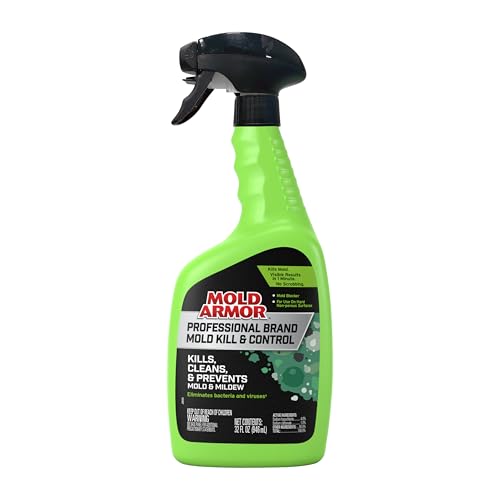 Mold Armor Mold & Mildew Remover | Widely stocked bathroom/surface remover. | Amazon — $22.98 |