Gas Stove Igniter: Clicking, No Spark and Burner Won’t Light
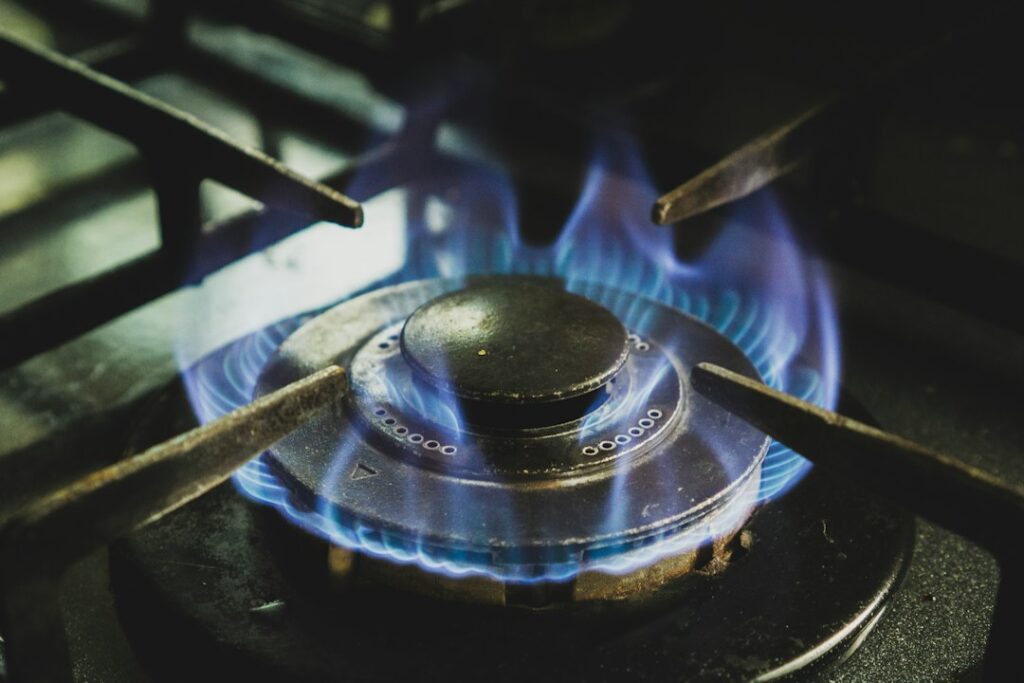
A gas burner that clicks and clicks but never lights, or one that keeps clicking after the flame is already burning, is one of the most common kitchen annoyances. Most of the time the cause is minor: a damp electrode, a burner cap knocked out of position, or spilled food crusted on the igniter. Sometimes it points to a worn spark module, a failing oven igniter or a gas supply problem that deserves a professional. This guide explains how gas stove ignition works, the difference between spark electrodes and glow-bar oven igniters, how to sort out constant clicking from no spark at all, what homeowners can safely clean, and when to stop and call the gas utility or a qualified appliance technician. Anyone who smells gas should skip the troubleshooting entirely, leave the home and call from outside.
Part of our Heating, Cooling & Ventilation guide — start there for the full picture →
How to Fix Gas Stove Igniter Problems: The Short Version
For most cooktop burners, the practical sequence to fix gas stove igniter trouble is short. With the burners off and cool, make sure each burner cap is seated correctly on its base. Look for food, grease or water on the white ceramic igniter and the metal tip next to it. Let a wet burner dry fully before using it again, and clean a dirty one gently with the stove unplugged. If one burner still will not spark, or every burner clicks nonstop, the cause is more likely a burner switch, wiring or the spark module, and that work belongs with an appliance technician.
Ovens are different. Most modern gas ovens use a hot-surface igniter, often called a glow bar, rather than a spark. A weak glow-bar igniter is one of the most common reasons a gas oven takes a long time to heat or will not light, and replacing it involves gas-valve components that are best left to a pro.
Throughout this process, the rule for any smell of gas is simple. Do not operate switches, do not try to relight anything, leave the house and call the gas utility or 911 from outside.
Spark Electrodes vs Glow-Bar Oven Igniters
Cooktop Spark Igniters
Most gas cooktop burners use a spark ignition system. Turning a knob to the light position closes a switch behind the knob. That switch tells a spark module to send a series of high-voltage pulses to a small electrode, usually a ceramic insulator with a metal tip, located beside each burner. The spark jumps from that tip to the burner or burner cap, lighting the gas that is flowing at the same moment. On most ranges, every igniter clicks when any one knob is turned, because they share a module.
Some newer ranges use re-ignition systems that sense whether a flame is present and spark again automatically if the flame goes out. On those models, clicking that continues after the burner is lit can indicate the flame is not being sensed properly.
Oven Hot-Surface Igniters
Many gas ovens and broilers use a hot-surface igniter, a silicon carbide or silicon nitride element that glows bright orange when current passes through it. The igniter is wired in series with the oven gas valve, and the valve only opens once the igniter draws enough current to reach a safe ignition temperature. As the igniter ages, its resistance can change so that it still glows but never draws enough current to open the valve fully. The result can be an oven that heats slowly, will not reach temperature, or never lights.
Standing Pilots on Older Ranges
Older ranges may use standing pilot lights instead of electronic ignition. Those have different failure modes, including pilots that go out or burn with a weak flame. Relighting procedures vary by model, and anyone unsure of the steps on an older range should get the manufacturer’s instructions or call a technician.
Constant Clicking: Common Causes
Clicking that continues after a burner lights, or starts on its own when nothing is turned on, usually has one of a few causes.
Moisture
Water from a boil-over or from cleaning the cooktop can collect around the igniter or seep into the burner switch area. The moisture lets the spark find an unintended path, so the module keeps firing. In many cases the clicking stops once the area dries completely, which can take hours. Removing the burner caps and grates and letting air circulate, with the stove unplugged, helps. Using a hair dryer on a low setting or simply waiting overnight are common approaches. Pouring or spraying more water around the igniter generally makes the problem worse.
Spills and Grease
Food and grease baked onto the igniter or the burner base can interfere with the spark path. Clicking may continue because the spark is going somewhere other than the intended gap, or because the burner never lights cleanly.
A Faulty Burner Switch
Each knob has a switch that triggers the spark module. If a switch sticks closed because of wear, grease or moisture, the module keeps firing even with the knob turned off. A switch that clicks only when one particular knob is in a certain position is a common clue. Replacing burner switches involves removing the control panel and working on wiring, which is a technician job on most ranges.
Damaged Wiring
Igniter wires that are pinched, chafed or melted can short to the cooktop frame, causing clicking or weak sparks. This is another situation for a qualified appliance technician.
No Spark at All: Common Causes
If turning the knob produces no clicking and no spark at any burner, check first that the range is plugged in and that its circuit breaker or GFCI device has not tripped. Clocks and lights on the range offer a quick clue. If those work but nothing sparks, the spark module or a shared wiring connection may be at fault.
If only one burner fails to spark while others click, look for:
- A cracked ceramic insulator. A crack in the white porcelain around the electrode can let the spark leak to ground before it reaches the burner. Cracks can be hard to see without close inspection.
- A dirty or corroded tip. Grease and food residue can insulate the tip so no spark jumps.
- A misplaced burner cap or head. If the cap is not seated, the spark gap changes and the gas does not flow where the spark is.
- A failed switch or connection for that burner.
Power Outages
Because spark igniters depend on household electricity, cooktop burners will not spark during a power outage. Some manufacturers describe a procedure for lighting surface burners with a match in that situation, while others advise against it, and many gas ovens with glow-bar igniters cannot be lit at all without power. The owner’s manual for the specific range is the only reliable guide. If there is any doubt, waiting for power to return is the safer choice, and an oven should never be used to heat a home.
If a burner sparks normally but does not light, the issue is the gas or the flame path rather than the igniter. Clogged burner ports, a misaligned cap, a closed supply valve or a gas supply problem can all produce a spark with no flame.
Burner Caps and Burner Heads: The Most Overlooked Fix
Many sealed-burner cooktops use a removable cap that sits on a burner head. The cap shapes the flame and positions the gas outlet close to the igniter. If the cap is slightly off-center, upside down or swapped with a cap from a different-size burner, the burner may click but light poorly, light on only one side, or produce an uneven flame.
After cleaning, many homeowners put caps back by feel. Checking that each cap sits flat and centered on its head, with no wobble, solves a large share of ignition complaints. Manufacturer manuals usually show the correct orientation, and some caps have notches or pins that must line up.
A healthy burner flame is typically blue and steady, with little or no yellow tipping. A large, yellow, lazy or noisy flame can mean dirty ports, poor air mixing or an adjustment problem and deserves attention from a technician because poor combustion can increase pollutant emissions.
Cleaning an Igniter Safely
Cleaning is the main repair homeowners can handle on a cooktop igniter. A cautious approach looks like this:
- Turn all burners off and let the cooktop cool completely.
- Disconnect electrical power to the range by unplugging it, if accessible, or switching off its circuit breaker. This prevents shocks from the spark system and stops accidental sparking.
- Do not open gas lines. Cleaning does not require disconnecting gas, and loosening gas fittings can create a leak.
- Remove grates and burner caps. Wash caps and grates following the manufacturer’s instructions and let them dry fully.
- Clean the igniter gently. Many manufacturers suggest a soft, dry toothbrush or a cotton swab lightly dampened with rubbing alcohol. Avoid soaking the area, scraping with metal tools, or using abrasive pads that can crack the ceramic.
- Clear burner ports with a non-metal pick or a straightened paper clip only if the manual allows it, taking care not to enlarge the openings.
- Dry everything thoroughly, reassemble the caps in the correct positions, restore power and test one burner at a time.
If the igniter is cracked, loose or still fails after cleaning, a replacement part is usually needed. Replacement involves disconnecting wiring under the cooktop, and on many ranges it is a job for an appliance technician.
When the Problem Is the Gas Supply
A spark with no flame, or burners that light weakly across the whole cooktop, can point to a gas supply problem rather than an igniter fault. Possible causes include a partially closed shutoff valve behind the range, a kinked or damaged appliance connector, a regulator problem, or an interruption in utility service. If other gas appliances in the home are also acting up, the supply is even more likely to be involved.
These are not homeowner repairs. The gas line leak detection guide explains how professionals test gas piping and connectors, and the gas leak smell guide covers what to do if the odorant used in natural gas is noticeable. The steps are the same in every case: no flames, no switches, no phone use near the leak, get everyone out, and call the gas utility or 911 from a safe distance.
A range that has just been moved, reinstalled or swapped is a common place for supply issues to appear. The gas stove installation guide covers connectors, shutoff valves, anti-tip brackets and why installation should be done by a qualified installer.
Carbon Monoxide, Nitrogen Dioxide and Kitchen Ventilation
Any gas burner produces combustion byproducts. The EPA lists gas stoves among indoor sources of carbon monoxide, along with incomplete combustion in gas ranges. EPA also identifies unvented combustion appliances such as gas stoves as a primary indoor source of nitrogen dioxide, and notes that in homes with gas stoves indoor nitrogen dioxide levels often exceed outdoor levels. EPA’s steps to reduce exposure include keeping gas appliances properly adjusted and installing and using an exhaust fan vented to the outdoors over gas stoves.
That makes a burner that lights poorly more than an annoyance. Repeated failed ignitions release unburned gas, and a burner with a poor flame may not burn cleanly. A properly ducted hood is one of the most practical ventilation upgrades for a gas kitchen, and the range hood installation guide explains ducted versus recirculating hoods and what to look for in an installation.
The CDC describes carbon monoxide as an odorless, colorless gas and lists headache, dizziness, weakness, upset stomach, vomiting, chest pain and confusion as common symptoms. It recommends battery-operated or battery-backup CO detectors near every sleeping area. The carbon monoxide detector guide compares alarm types and placement. A CO alarm that sounds is an emergency: leave the home and call 911 or the fire department from outside.
What a Home Inspector Typically Checks
Under the ASHI Standard of Practice, a home inspector inspects installed ovens, ranges and surface cooking appliances by using normal operating controls to activate their primary function. The standard specifically excludes appliance thermostats, including their calibration, along with timers, clocks, self-cleaning cycles and other specialized features. In practice, an inspector will usually turn on each burner and the oven to see whether they light, and may note burners that click without lighting, slow oven ignition, a missing anti-tip bracket or a missing range hood.
The same standard has inspectors inspect fuel storage and fuel distribution systems and describe the location of the main fuel shutoff valve. Findings related to the gas supply generally lead to a recommendation for evaluation by a licensed gas fitter, plumber or the utility. The home inspector hiring guide explains how to compare inspectors and what a standard inspection includes, and the heating and cooling hub collects related topics on gas appliances, venting and combustion safety.
Costs: What Igniter Repairs Usually Involve
Costs depend on the range brand and model, part availability and local labor rates, so the factors below are more useful than any single estimate.
- Drying and cleaning costs nothing beyond time and simple supplies.
- Cooktop spark electrodes are generally among the less expensive range parts, though labor to reach the wiring can exceed the part cost.
- Burner switches and spark modules cost more and involve more disassembly.
- Oven glow-bar igniters are a common repair. Part prices vary considerably by model.
- Service call fees apply to most technician visits, and some technicians credit the fee toward the repair.
- Gas supply repairs such as replacing a connector or shutoff valve, or repairing gas piping, are priced separately and should be done by a qualified professional.
On an older range with several failing parts, comparing the repair quote against replacement is reasonable, especially if the range lacks features such as re-ignition or if parts are hard to find.
References
- Carbon Monoxide’s Impact on Indoor Air Quality — U.S. Environmental Protection Agency
- Nitrogen Dioxide’s Impact on Indoor Air Quality — U.S. Environmental Protection Agency
- Carbon Monoxide Poisoning Basics — Centers for Disease Control and Prevention
- ASHI Standard of Practice for Home Inspections — American Society of Home Inspectors
Frequently asked questions
Why does my gas stove keep clicking after the burner lights?
The most common causes are moisture around the igniter or burner switch, food or grease on the igniter, a misaligned burner cap, or a burner switch that is stuck. Letting the area dry completely with the range unplugged often stops the clicking; if it does not, a technician can check the switch and wiring.
Why is my gas burner clicking but not lighting?
A spark without a flame usually points to a burner cap that is not seated, clogged burner ports, or a gas supply issue. If you smell gas at any point, stop, leave the home and call the gas utility or 911 from outside.
Can a homeowner clean a gas stove igniter?
Usually, yes. Turn the burners off, let the cooktop cool, disconnect power, then gently clean the igniter with a soft dry brush or a swab lightly dampened with rubbing alcohol. Avoid soaking it or scraping the ceramic, and never disconnect gas lines.
Why does my gas oven take so long to light?
Many gas ovens use a glow-bar igniter that must draw enough current to open the gas valve. As it weakens, it may glow but take a long time to open the valve, or never open it. Replacement is a common repair best handled by a technician.
Is a gas stove that will not light a carbon monoxide risk?
Repeated failed ignitions release unburned gas, and burners with poor flames may not burn cleanly. Use a vented range hood, keep a working CO alarm, and have poorly burning burners checked by a professional.
Buying a home with a gas range, furnace or water heater? Get in touch and we can help you connect with a Front Range inspector who tests the appliances and flags gas or venting concerns for follow-up.