Oven Igniters: Gas Ovens That Won’t Heat and Bake Igniters
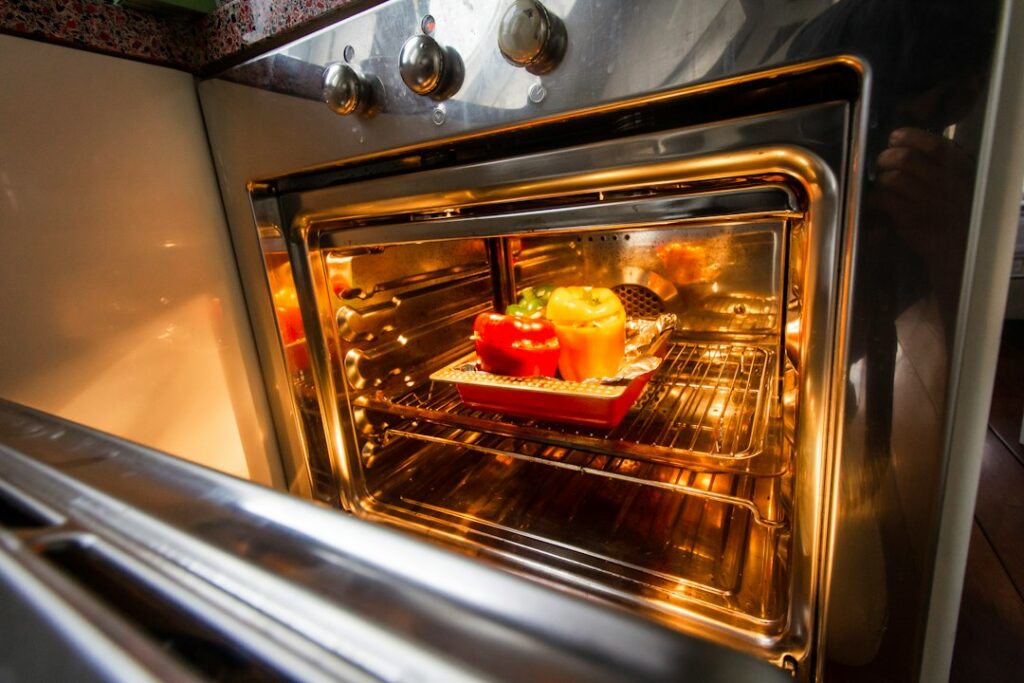
A gas oven that will not heat is one of the most common kitchen service calls, and in many cases the culprit is a small part most owners never see. The oven igniter sits beside the bake burner under the oven floor, and often a second one sits at the broil burner up top. On most modern gas ranges it is a hot-surface igniter that glows bright orange, and it does two jobs at once: it heats the gas to its ignition point and, on the most common design, it acts as the signal that tells the oven safety valve it is safe to release gas. When it weakens, the oven may preheat slowly, light with a startling “whoomp” or never heat at all. This guide covers how the parts work together, the symptoms, safety steps when gas is involved, replacement and typical costs, and what a home inspector does and does not check on a range.
Part of our Heating, Cooling & Ventilation guide — start there for the full picture →
What an Oven Igniter Does and Why It Fails
Most gas ranges built in roughly the last few decades use a glow-bar or hot-surface igniter for the oven rather than a standing pilot light. The igniter is a ceramic-coated element, typically silicon carbide or silicon nitride, mounted next to the burner tube. When the oven calls for heat, the control sends household voltage through the igniter, which heats until it glows.
On the common “glow bar” system, the igniter is wired in series with the oven safety valve. The valve contains a bimetal strip or heater coil that only opens the gas port once enough current is flowing through the circuit. That is the key detail: the igniter has to be hot enough, and pass enough amperage, for the valve to open. Manufacturers publish a minimum amperage for their igniters, and it varies by brand and design, so the exact figure belongs to the appliance’s service documentation rather than a general rule.
This design means an igniter can fail in two ways:
- Open circuit. The element cracks or burns through, nothing glows, and no gas flows. The oven stays cold and there is no gas smell.
- Weak igniter. The element ages, its resistance rises, and it draws less current over time. It still glows, sometimes brightly, but may not pass enough amperage to open the safety valve reliably. The result can be an igniter that glows for a minute or more before the gas lights, or one that glows indefinitely while the oven never heats. Repair technicians often describe this as the most frequent oven igniter fault, though how common it is on any particular model is hard to pin down.
Glowing does not prove the part is good. A technician confirms a weak igniter by measuring current draw with an ammeter, comparing it to the specification printed on the part or in the service manual.
Spark versus hot-surface systems
Some ranges, especially newer and higher-end models, use spark ignition with a flame sensor in the oven instead of a glow bar. Those systems behave more like a cooktop: an electrode clicks, a flame lights, and a sensor confirms the flame. The cooktop burners on almost every gas range use spark igniters, which are covered in our gas stove igniter guide. If the burners click but the oven never heats, the problem is usually in the separate oven circuit. A home’s furnace may use a similar hot-surface part, and our furnace igniter guide explains how those fail and why they are fragile to handle.
Symptoms of a Failing Oven Igniter
Igniter trouble rarely shows up all at once. It tends to creep in over weeks or months, and the early signs are easy to blame on a recipe or an oven thermometer.
Slow preheat
A gas oven cycles its burner on and off to hold temperature. If the igniter takes longer to reach the current needed to open the valve, every cycle starts late. The oven reaches its set point more slowly and temperature may drift lower than the dial says during a long bake.
No heat at all
If the igniter is open or too weak to open the valve, the oven stays cold. On a range with electronic controls, the display may still show the oven as “on” or preheating, because the control has no way to see that the burner never lit. Some models will eventually display an error code.
Delayed ignition and the “whoomp”
A delayed ignition happens when gas starts flowing before the igniter is hot enough to light it promptly, or when gas accumulates around the burner and then lights all at once. The result is a soft boom or puff, sometimes with a brief flash at the vents. A single minor puff after the oven sat unused may not mean much, but a repeated or loud whoomp should be treated as a fault. It stresses the burner and oven panels, and it means unburned gas was in the oven cavity, if briefly.
Gas smell
A faint whiff of gas for a second or two as the burner lights can be normal on some ranges. A persistent smell, a smell when the oven is off, or a smell that grows while the igniter glows and nothing lights is not normal. See the safety section below before doing anything else.
Broiler works, bake does not (or the reverse)
Ranges with separate bake and broil burners usually have two igniters. One failing while the other keeps working is a strong clue that the igniter, rather than the gas supply or main control, is the problem.
Safety First: Gas Smells, Carbon Monoxide and Power
Igniter work involves both household voltage and a gas supply, so the order of steps matters.
If you smell gas
A strong or persistent gas smell is an emergency, not a repair project. Do not operate light switches, appliances or anything that could spark. Leave the home, take everyone with you, and call the gas utility or 911 from outside. Front Range utilities such as Xcel Energy and Black Hills Energy take gas-odor calls around the clock. Our guide on what to do about a gas leak smell walks through the steps in more detail.
Gas connectors deserve a mention here. The U.S. Consumer Product Safety Commission has warned that some older, uncoated brass flexible connectors used on gas ranges, ovens and dryers can fail at soldered fittings. CPSC said it had received 200 reports of these connectors failing, associated with 35 deaths and 59 injuries, and recommended that any uncoated brass connector be replaced with a new stainless steel or coated connector. The agency also warned against moving an appliance to check the connector yourself, since moving it could cause a weakened connector to fail. If an oven is pulled out to replace an igniter in an older home, the connector is worth a professional look at the same time.
Carbon monoxide
Gas ranges are a combustion appliance. The U.S. Environmental Protection Agency lists gas stoves and incomplete combustion in gas ranges among household sources of carbon monoxide. EPA notes that average levels in homes without gas stoves vary from 0.5 to 5 ppm, while levels near properly adjusted gas stoves are often 5 to 15 ppm and those near poorly adjusted stoves may be 30 ppm or higher. EPA recommends keeping gas appliances properly adjusted and installing and using an exhaust fan vented to outdoors over gas stoves.
CPSC recommends battery-operated CO alarms or CO alarms with battery backup on every level of the home and outside sleeping areas, and it describes CO poisoning symptoms as headache, dizziness, weakness, nausea, vomiting, sleepiness and confusion. Colorado law requires CO alarms in many residential settings, and our carbon monoxide detector installation guide covers placement. A burner that lights late, burns with a yellow or lazy flame, or leaves soot is a reason to have the range serviced.
Before touching the igniter
- Unplug the range or switch off its circuit at the breaker. Most gas ranges plug into a standard 120-volt receptacle behind the unit.
- Close the appliance gas shutoff valve, usually a quarter-turn valve on the supply line behind the range or in an adjacent cabinet or basement.
- Let the oven cool completely. An igniter runs well above the temperatures that cause burns, and the burner and baffles stay hot for some time.
How Oven Igniter Replacement Works
Replacing an oven igniter is a common appliance repair. Many owners hire it out, while some handy owners do it themselves with the right part number and a careful approach. The general sequence on a typical freestanding gas range looks like this:
- Disconnect power and close the gas valve, as above.
- Remove the oven racks and the oven floor panel or burner cover. Some floors lift out; others are held by screws at the rear.
- Locate the igniter, usually mounted with two screws on a bracket beside the burner tube. The broil igniter is at the top of the oven cavity.
- Disconnect the igniter wiring. Many igniters connect through a ceramic wire nut or a plug behind the oven’s rear panel or below the oven floor, which may require pulling the range forward.
- Install the new igniter with the same orientation and spacing from the burner ports as the old one, reconnect it with the correct connector, restore gas and power, and test.
A few practical points matter more than they seem:
- Match the part. Igniters for glow-bar systems are matched to the safety valve. A universal igniter that does not draw the right current may glow without lighting the burner. Use the part number from the range’s model and serial label, usually inside the storage drawer, on the frame behind the oven door or on the back panel.
- Do not touch the element. Hot-surface igniters are brittle, and oils from skin can create hot spots that shorten their life.
- Check the burner while it is exposed. A burner with clogged ports, misaligned air shutter or debris near the igniter can cause delayed ignition even with a new part.
- Watch the first few cycles. The burner should light smoothly within the time the manufacturer describes, with a steady, mostly blue flame.
If the range has to be pulled away from the wall, it should go back with the anti-tip bracket re-engaged. CPSC recall notices for ranges have described tip-over hazards when a heavy object is placed on an open oven door and the anti-tip bracket is not secured to the wall or floor. Our anti-tip bracket guide shows how to confirm the bracket is engaged.
When the igniter is not the problem
A new igniter that glows normally but still does not light the burner points elsewhere. Common suspects include:
- Oven safety valve. If the igniter tests within its amperage specification and the valve still will not open, the valve itself may be faulty.
- Control board or thermostat. On electronic ranges, a relay on the control board powers the igniter circuit. A failed relay or temperature sensor can mimic igniter failure.
- Gas supply issues. A closed or partly closed shutoff, a pressure regulator problem, or a propane range that was never converted properly from natural gas can all affect ignition.
- Wiring and connectors. Heat-damaged wires and burned connectors near the oven floor can interrupt current.
Diagnosing these usually requires a meter and the range’s wiring diagram, which is why many cases end with an appliance technician rather than a parts swap.
Installation, Conversions and Related Appliances
Ignition problems show up more often on ranges that were recently installed, moved or converted. A range that came from a natural gas home and was installed on propane, which is common in mountain and rural parts of Colorado, needs the correct orifices and regulator setting for both the cooktop and the oven. Incorrect conversion can produce lifting flames, sooting or delayed ignition. Our gas stove installation guide covers connectors, shutoffs, ventilation and the permit questions that come with new gas work.
Altitude is a Front Range wrinkle: some manufacturers specify adjustments above a certain elevation, so an installer should confirm any high-altitude instructions in the manual were followed.
Electric ovens use a bake element instead of an igniter, and microwave ovens use a magnetron, so their failures are different. If the issue is a microwave that runs but does not warm food, our microwave not heating guide covers that separately.
Oven Igniter Replacement Costs
Costs depend on the brand, part availability and local labor rates. The figures below are rough 2026 ranges, not quotes:
- The part alone: commonly in the tens of dollars for many mainstream brands, with genuine manufacturer parts and premium ranges costing more.
- Professional replacement: often somewhere in the low-to-mid hundreds of dollars including the service call, labor and part on a typical freestanding range.
- Additional diagnosis: a safety valve, control board or wiring repair on top of the igniter can push the bill higher, sometimes enough to weigh against replacing an older range.
- Pro ranges and wall ovens: built-in wall ovens and commercial-style ranges usually cost more because of access, part price and labor time.
Many appliance companies charge a diagnostic or trip fee that is credited toward the repair if the job proceeds. Ask whether the quote includes the part, whether it is a manufacturer part and what warranty applies.
What a Home Inspector Checks on a Gas Range
Under the American Society of Home Inspectors Standard of Practice, inspectors inspect installed ovens, ranges, surface cooking appliances and microwave ovens by using normal operating controls to activate the primary function. In practice, that often means turning on a cooktop burner and the oven bake function to confirm they light and produce heat.
The same standard says inspectors are not required to inspect appliance thermostats, including their calibration, the adequacy of heating elements, self-cleaning cycles, timers and other specialized features, or to operate every control and feature of an inspected appliance. An inspection may therefore show that the oven lights, but it will not confirm how long preheat takes or whether the igniter is near the end of its life. A slow-to-light oven or a delayed-ignition puff during the inspection is typically written up with a recommendation for a qualified appliance technician.
Inspectors may also note a missing anti-tip bracket, an old uncoated brass connector they can see, a missing gas shutoff, and the presence or absence of CO alarms. The gas range is just one of many combustion appliances in the home, and the furnace, water heater and fireplace usually get more scrutiny. Our heating and cooling inspection section covers that side of the house, and the broader guide to hiring a home inspector explains how to choose an inspector and what to expect from the report.
More Questions About Oven Igniters
How long does an oven igniter last?
A hot-surface oven igniter commonly lasts several years, often around three to five years or more, depending on how often the oven is used. Igniters weaken gradually, so slow preheating usually appears before total failure.
Heavy use, frequent self-cleaning cycles and physical shock can shorten an igniter’s life. Because the igniter draws current through the gas safety valve, a weak igniter may still glow but not open the valve. Replacing it at the first sign of slow ignition avoids delayed lighting.
How do you test an oven igniter?
An oven igniter is often checked by watching whether it glows and how long the oven takes to light, then measuring current draw with an ammeter if needed. A glowing igniter that does not light the burner within a minute or two is often too weak.
Technicians compare the igniter’s amperage with the gas valve’s requirement listed by the manufacturer. A continuity test with a multimeter can show if the igniter is broken. Testing involves live electricity and gas components, so many homeowners leave it to a qualified appliance technician.
Can a bad oven igniter cause carbon monoxide?
A bad oven igniter does not directly produce carbon monoxide, but delayed ignition and poor burning can increase incomplete combustion. A weak igniter that lets gas build up before lighting can also cause a loud whoomp.
Any gas appliance can produce carbon monoxide if the burner is dirty or poorly adjusted. Working CO alarms near sleeping areas and on each level are recommended in homes with gas appliances. If anyone feels headache, dizziness or nausea while the oven runs, leave the home and call emergency services.
Why does my gas oven smell like gas when preheating?
A faint gas smell for a few seconds when a gas oven lights can be normal, but a strong or lasting gas smell is not. A weak igniter that delays ignition is a common cause of a noticeable smell at startup.
If the smell persists, turn the oven off, avoid using switches or open flames, ventilate if safe and call the gas utility from outside. A gas leak at the valve or connector needs professional repair. Replacing a weak igniter often eliminates the startup odor.
References
- Carbon Monoxide’s Impact on Indoor Air Quality — U.S. Environmental Protection Agency
- Carbon Monoxide Information Center — U.S. Consumer Product Safety Commission
- CPSC Warns About Dangerous Flexible Gas Connectors Used on Home Appliances — U.S. Consumer Product Safety Commission
- GE Appliances Recalls to Repair Free-Standing and Slide-In Ranges Due to Tip-Over Hazard — U.S. Consumer Product Safety Commission
- ASHI Standard of Practice for Home Inspections — American Society of Home Inspectors
Frequently asked questions
Why does my oven igniter glow but the oven won't heat?
On many gas ranges the igniter must draw enough current to open the oven safety valve. An aging igniter can glow brightly yet draw too little current, so the valve may never open. A technician can confirm this by measuring amperage against the part specification.
Is it safe to replace an oven igniter myself?
Some owners do it after unplugging the range and closing the gas shutoff, using the exact part for their model. Anyone uncomfortable with gas connections or wiring should hire an appliance technician. If you smell gas at any point, leave the home and call the utility.
Is a loud whoomp when the oven lights dangerous?
Repeated or loud delayed ignition means gas built up before it lit and should be serviced. Common causes include a weak igniter, dirty burner ports or incorrect gas pressure. Stop using the oven until it is checked.
How much does it cost to replace an oven igniter?
As a rough 2026 range, the part often costs tens of dollars, and professional replacement commonly lands in the low-to-mid hundreds including the service call. Valve, board or wiring problems add to that.
Will a home inspector test my oven igniter?
Inspectors following the ASHI Standard of Practice operate the oven with normal controls to confirm it works, but they are not required to test thermostat calibration or every feature. Questions about a range in a home you are buying? Reach out through our contact page.
Can a gas oven be lit manually if the igniter fails?
Most modern gas ovens with hot-surface igniters cannot be safely lit manually, because the safety valve only opens when the igniter draws enough current. Trying to light a modern oven with a match is unsafe. Replacing the igniter is the proper fix.
Does a gas oven igniter need electricity?
Yes, most gas oven igniters need electricity to heat and open the gas safety valve, so many gas ovens will not work during a power outage. Some cooktop burners can be lit with a match, but the oven typically cannot.
Is the broil igniter the same as the bake igniter?
Some gas ovens use separate igniters for the bake and broil burners, while others use one. When the broiler works but bake does not, the bake igniter is a common suspect. The model's parts diagram shows which igniter serves which burner.
Buying a home with a gas range, furnace and water heater? Contact us to connect with a Front Range inspector who operates gas appliances and flags combustion and CO concerns in plain language.