Dishwasher Not Cleaning: Filters, Spray Arms and Water Temp
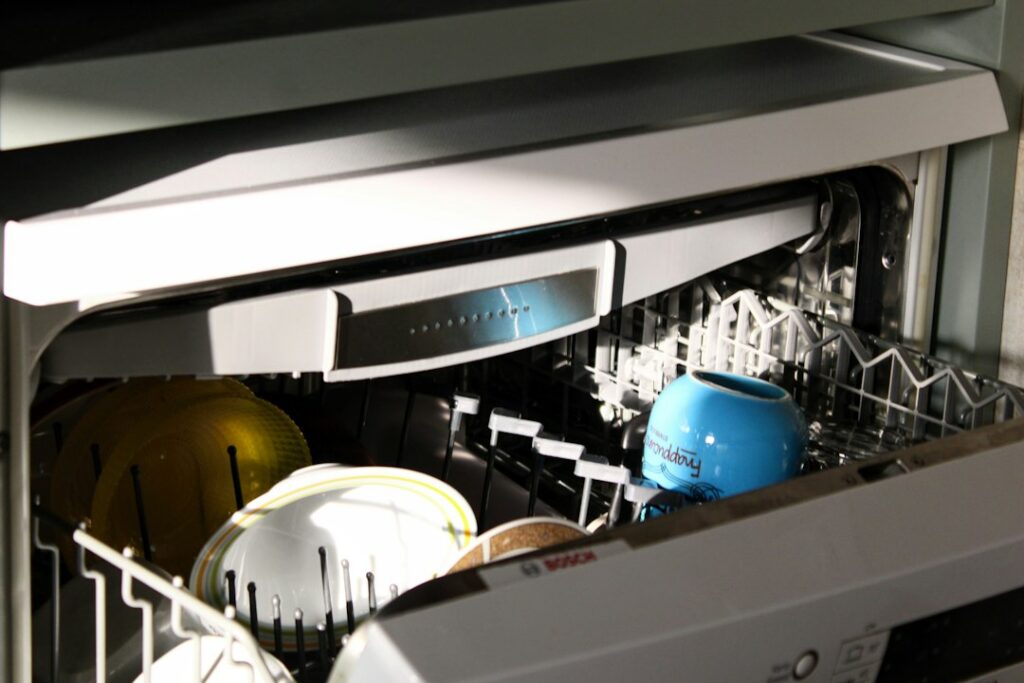
Pulling a rack of plates out of the dishwasher only to find dried food, gritty residue or a cloudy film is frustrating, especially when the machine seems to run normally. A dishwasher not cleaning is rarely a mystery, though. Most cases come down to a handful of causes that homeowners can check without tools: a clogged filter, spray arms with blocked holes, water that is not hot enough when it enters the tub, the wrong detergent for the local water, a drain problem that leaves dirty water behind, or simply the way the racks are loaded. A few causes, such as a failed wash pump, heater or inlet valve, need a technician. This guide walks through each cause in the order that makes sense to check, explains how water heater settings and hard water affect results along the Front Range, and outlines hedged repair costs and when replacement makes more sense.
Part of our Plumbing & Water guide — start there for the full picture →
Why Dishes Come Out Dirty: The Quick Answer
A dishwasher cleans with four things working together: enough water, hot enough water, the right chemistry from the detergent, and mechanical force from water sprayed through the arms. When any one of those slips, results suffer. In practice, the most common culprits are:
- A clogged filter that recirculates dirty water and starves the pump.
- Blocked or stuck spray arms that cannot reach every part of the racks.
- Cold or lukewarm incoming water, so detergent never activates properly.
- Hard water and detergent issues that leave film, spots or a gritty coating.
- Drain problems that leave standing water and redeposit food on dishes.
- Loading habits that block the spray or the detergent dispenser.
Before any hands-on check, turn the dishwasher off and, if possible, switch off the circuit breaker that serves it. Dishwashers combine water and electricity, and some have sharp components near the filter and chopper area.
Start With the Filter
Most dishwashers built in the last decade or so use a manual filter rather than a self-cleaning grinder. The manual design is quieter and more efficient, but it means the filter needs regular cleaning. When it clogs with food particles, grease, labels or bits of glass, the wash pump pulls dirty water back over the dishes and the spray loses pressure.
The filter usually sits in the floor of the tub beneath the lower spray arm. Typical steps:
- Remove the lower rack.
- Twist the cylindrical filter counterclockwise (on most models) and lift it out, then lift out any flat mesh screen beneath it.
- Rinse both under warm running water and scrub gently with a soft brush. Avoid wire brushes, which can tear the mesh.
- Wipe out the sump area and remove any debris, using caution around any sharp edges.
- Reinstall the filter fully, making sure it locks into place. A loose filter lets debris reach the pump.
Manufacturers commonly suggest cleaning the filter every few weeks to every month, more often for households that load heavily soiled dishes without scraping. A foul smell from the tub is often the first sign that the filter is overdue.
Spray Arms: Holes, Spin and Clearance
Spray arms push water through small jets to scrub the dishes. If the jets clog with food, seeds, scale or plastic fragments, the arm sprays unevenly, or the arm may stop spinning entirely because the jets that drive its rotation are blocked.
- Check rotation. With the dishwasher off, spin each arm by hand. It should turn freely and not hit any tall items, utensils or the bottom of the rack above.
- Clean the jets. Most arms unscrew or unclip. Rinse them, then clear each jet with a toothpick or a straightened paper clip. Shake out any debris trapped inside.
- Look at the upper arm and supply tube. Many models have a middle or upper arm fed by a tube on the back wall. If that tube is disconnected or cracked, the upper rack will be poorly cleaned while the lower rack looks fine.
Scale buildup in the jets is common in hard-water areas, which leads into one of the biggest factors for Front Range homes.
Water Temperature: Run the Hot Tap First
Dishwasher detergents work best with hot water. Most residential dishwashers take water from the home’s hot supply, and many also have an internal heater that boosts temperature during the wash. If the water entering the tub starts out cold, the first portion of the wash is less effective and grease may not dissolve.
A simple and effective habit is to run the kitchen sink’s hot tap until the water turns hot before starting the dishwasher. This purges the cooled water sitting in the supply line, which can be a significant volume in homes where the kitchen is far from the water heater. Many households see better results from this step alone.
Water heater settings matter too, but they involve a safety trade-off. The U.S. Consumer Product Safety Commission (CPSC) urges users to lower water heaters to 120 degrees Fahrenheit to help prevent tap water scald injuries, noting that the majority of injuries and deaths from tap water scalds involve the elderly and children under five. The CPSC also suggests consumers consider lowering the thermostat to the lowest setting that will satisfy hot water needs for clothes washers and dishwashers. In other words, cranking the water heater up to improve dishwashing creates a scald risk throughout the house. A better approach is to keep the water heater at a safe setting, run the tap first and select the dishwasher’s high-temperature, sanitize or heavy cycle when needed, so the appliance’s own heater does the extra work.
If the hot water seems weaker than it used to be throughout the house, the problem may be the water heater itself rather than the dishwasher. Sediment, a failing element or thermostat, or an aging tank can reduce available hot water. Our guide on water heater elements covers electric units, and the water heater thermostat guide explains how settings and controls work.
Internal Heater Problems
If dishes come out cold and wet at the end of a cycle, and the water inside the tub never feels hot partway through a wash, the dishwasher’s heating element or its thermostat or sensor may have failed. Some models show an error code. Diagnosing these parts involves electrical testing inside the appliance and is a job for an appliance technician.
Detergent, Rinse Aid and Hard Water
Much of the Front Range has moderately hard to hard water, depending on the utility and source, and hardness minerals are one of the most common reasons glasses come out cloudy or spotted. Hard water reduces detergent effectiveness and leaves a white film of calcium and magnesium deposits on glassware, the tub and the spray arms.
Telling Film From Etching
A useful test: soak a cloudy glass in white vinegar for a few minutes. If the cloudiness wipes away, it was mineral film from hard water. If it does not, the glass may be etched, which is permanent surface damage that can happen with soft water combined with too much detergent and very hot water. The fixes point in opposite directions, so it helps to know which is which.
Practical Steps
- Use fresh detergent. Powders and gels can clump or lose effectiveness when stored in humid spots, such as under the sink.
- Match the dose to the water. Harder water usually needs more detergent; softer water needs less. Follow the detergent maker’s guidance.
- Use rinse aid. Rinse aid helps water sheet off dishes and reduces spotting, particularly in hard-water areas, and helps drying on models without a heated dry.
- Run an occasional cleaning cycle. Dishwasher cleaner products or a cup of white vinegar on the top rack during a hot empty cycle can remove mineral buildup in the tub and jets, but check the owner’s manual first since some manufacturers caution against certain cleaners.
- Set the hardness setting. Some dishwashers have a water hardness setting or a built-in softener with a salt reservoir. Setting it correctly can make a noticeable difference.
Spots and film on fixtures elsewhere in the home point to the same water. Our guide to hard water stains explains cleanup, and the water softener guide covers whole-house treatment, sizing and maintenance for homes where hardness is causing problems beyond the kitchen.
Drain Problems That Leave Dirty Water Behind
A dishwasher that cannot drain completely leaves dirty water in the sump, which is then pumped back over dishes in the next fill. Signs include standing water in the bottom after a cycle, grit left on the top surfaces of cups and bowls, and a sour or swampy smell.
Common drain-side causes include a clogged filter (again), a kinked or clogged drain hose, a blocked air gap at the sink, a garbage disposal that has a clog or has not been run before the dishwasher, or a failing drain pump. Running the disposal briefly before starting the dishwasher clears the shared drain path. Our guide on a dishwasher not draining walks through those checks step by step, and if water is showing up on the floor rather than staying in the tub, see the guide to a dishwasher leaking.
New Disposal? Check the Knockout Plug
A classic installation mistake is worth its own mention. New garbage disposals come with a plastic knockout plug in the dishwasher inlet. If the disposal was recently installed or replaced and the plug was never removed, the dishwasher cannot drain into it at all. The result can look like a cleaning problem at first, with dirty water pooling in the tub. Removing the knockout requires disconnecting the drain hose and knocking the plug free from inside the disposal, then retrieving it; it should be done with the disposal’s power off at the breaker or unplugged. The garbage disposal installation guide explains the step, and the dishwasher installation guide covers drain loops, air gaps and supply connections for new units.
Loading Mistakes That Block the Spray
Loading has more effect on cleaning than most people expect. Common problems:
- Blocking the detergent door. A tall pan or cutting board in front of the dispenser keeps the door from opening, so the detergent never gets released into the wash.
- Nesting. Bowls and spoons that nest together shield each other from the spray.
- Facing the wrong way. Dirty surfaces should face the center and the spray source. Bowls generally go on the top rack angled down.
- Overcrowding. Packing extra items in may save a cycle but often means rewashing several pieces.
- Large items in the wrong place. Sheet pans and platters are usually best along the sides or back, not in the middle where they shadow everything behind them.
Pre-rinsing is generally not needed. ENERGY STAR advises scraping rather than rinsing, explaining that rinsing dishes before loading increases total water and energy use, and that certified dishwashers and current detergents are designed to do the cleaning. Scraping off large food chunks still protects the filter.
Repair Costs, Replacement and Efficient Models
Many cleaning problems cost nothing to fix. When parts or a technician are needed, costs vary widely by brand, model, part availability and local labor rates. Treat these as rough industry estimates for budgeting along the Front Range, not quotes:
- Replacement filter or spray arm: parts often run in the tens of dollars and are commonly a homeowner swap.
- Service call and diagnosis: often roughly $75 to $175, sometimes credited toward repair.
- Inlet valve, heater or sensor replacement: often roughly $150 to $350 installed.
- Wash or drain pump replacement: commonly roughly $200 to $450 installed, depending on model.
- Control board: can approach or exceed the value of an older, entry-level dishwasher.
Repair usually makes sense for a mid-life dishwasher with one failed part. When the unit is older, needs a major component such as a pump or control board, or has rust in the tub or racks, replacement often becomes the better value.
For anyone shopping, ENERGY STAR states that a standard-size certified dishwasher costs about $50 per year to run and can save about 5,800 gallons of water over its lifetime. ENERGY STAR also notes that certified models include features such as soil sensors, improved water filtration, more efficient jets and rack designs, and that an auto-sensing cycle can detect whether wash water is clean or dirty, saving water and helping ensure dishes come out clean.
Dishwashers and the Home Inspection
For buyers, the dishwasher is one of the few appliances that falls inside a standard inspection. The American Society of Home Inspectors (ASHI) Standard of Practice lists dishwashing machines among the installed appliances an inspector operates using normal operating controls to activate the primary function. The same standard says inspectors are not required to operate every control and feature of an inspected appliance or evaluate specialized features. In plain terms, an inspector will typically run the dishwasher and look for leaks or obvious faults, but a single run cannot confirm how well it cleans a full load of dirty dishes.
Inspectors may also note a missing high drain loop or air gap, a loose mounting, corrosion at the supply connection or signs of past leaks in the cabinet floor. For more on what to expect and how to choose an inspector, see our guide to hiring a home inspector and the plumbing and water hub for related kitchen and water topics.
A Quick Checklist Before Calling for Service
- Clean the filter and the sump area.
- Clear and spin the spray arms; confirm nothing blocks them.
- Run the kitchen hot tap until hot before starting.
- Use fresh detergent, add rinse aid and adjust for hard water.
- Run the disposal first and confirm the dishwasher drains completely.
- Reload with dirty surfaces facing the spray and nothing blocking the detergent door.
- Run a hot cleaning cycle to remove mineral buildup.
If dishes are still dirty after all of that, or the tub never gets hot, water does not fill properly, or error codes appear, a technician can test the pump, heater, valve and controls.
References
- Avoiding Tap Water Scalds (Publication 5098) — U.S. Consumer Product Safety Commission
- Dishwashers — ENERGY STAR
- ASHI Standard of Practice for Home Inspections — American Society of Home Inspectors
Frequently asked questions
Why is my dishwasher not cleaning the dishes?
The most common causes are a clogged filter, blocked or stuck spray arms, water that is not hot when it enters the tub, hard water or old detergent, and a drain problem that leaves dirty water behind. Loading that blocks the spray or detergent door also plays a large role.
How often should a dishwasher filter be cleaned?
Many manufacturers suggest every few weeks to monthly, and more often for households that load heavily soiled dishes without scraping. A foul smell or gritty residue is a sign the filter is overdue.
Should I turn up my water heater to get cleaner dishes?
Generally no. The CPSC urges lowering water heaters to 120 degrees Fahrenheit to reduce scald risk. Running the kitchen hot tap before starting and using the dishwasher's high-temperature or sanitize cycle is a safer way to get hotter wash water.
Why are my glasses cloudy after the dishwasher?
Cloudiness that wipes off after a vinegar soak is usually mineral film from hard water, which rinse aid, correct detergent dosing or a water softener can help. Cloudiness that will not come off may be etching, which is permanent.
Do I need to rinse dishes before loading the dishwasher?
ENERGY STAR advises scraping rather than rinsing, because pre-rinsing increases total water and energy use and certified dishwashers and current detergents are designed to do the cleaning. Scraping large food bits protects the filter.
Want a second set of eyes on the kitchen plumbing, water heater and appliances before closing on a Front Range home? Send us a note through our contact page and we can point you toward an inspector who fits your timeline.