Cellulose Insulation: Blown-In Performance, Settling, Moisture
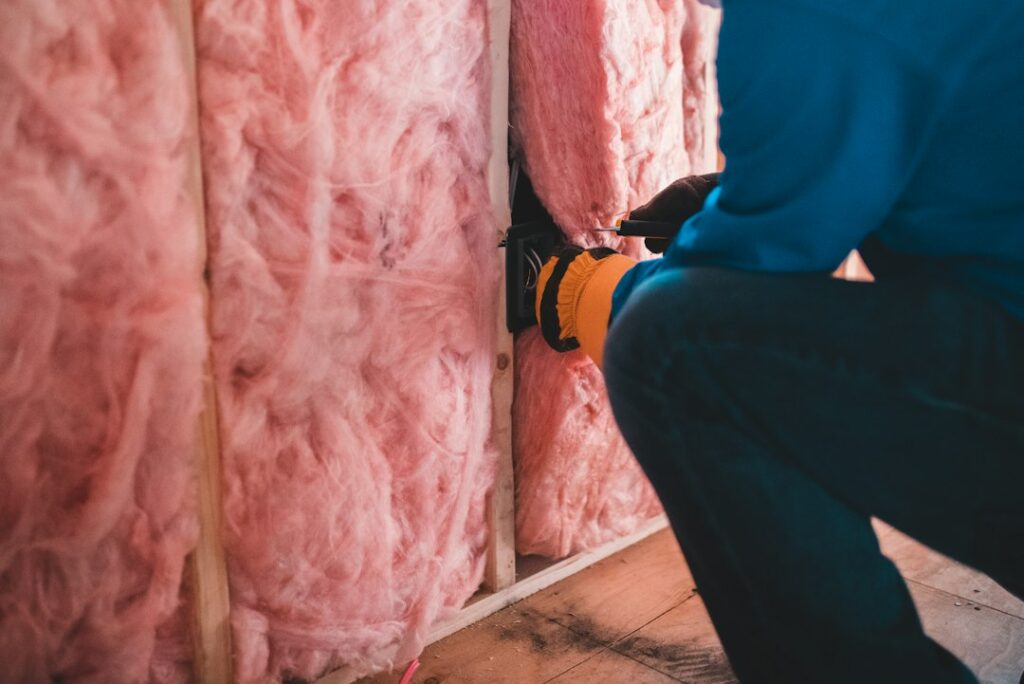
Cellulose insulation is one of the most common materials a home inspector finds when lifting the hatch into a Front Range attic. It shows up as a gray, fluffy, slightly paper-like layer spread across the ceiling joists, and in some homes it has also been packed into closed wall cavities through small holes in the siding or drywall. It performs well when it is installed deep enough, kept dry and paired with good air sealing and attic ventilation. It performs poorly when it gets wet, gets compressed or is blown over open air leaks. This guide explains what the material is, how loose-fill and dense-pack installations differ, what settling means, how cellulose compares with fiberglass, what ENERGY STAR recommends for attic levels in this region and what inspectors look for. It summarizes general guidance as of 2026; product labels and local code requirements take priority for any specific project.
Part of our Crawl Space & Attic Guide guide — start there for the full picture →
What Cellulose Insulation Is Made Of
Cellulose is made mostly from recycled paper, commonly newsprint and other paper fiber, that has been shredded and fiberized into a fluffy material. On its own, paper burns easily and invites insects and mold, so manufacturers treat the fiber with chemical additives. Borate compounds are the most widely used treatment. They are added to slow the spread of flame and to make the material less attractive to insects and rodents. Some products also use other fire-retardant salts.
The result is a material that is installed with a blowing machine rather than unrolled like a blanket. A hopper breaks up compressed bales, and a hose carries the fiber to the attic or wall. Because it is blown, it fills around wires, pipes, truss webs and odd framing far better than cut batts usually do.
A few practical features follow from the way cellulose is made:
- It is dense compared with loose fiberglass. That density helps it resist air movement within the insulation layer, though it is not an air barrier on its own.
- It is dusty during installation. Installers typically wear respirators, and the living space below the attic hatch should be protected.
- It absorbs water. Paper fiber holds moisture, which is the main weakness discussed later.
- The fire-retardant treatment matters. Cellulose still needs proper clearance from heat sources such as non-IC recessed lights, chimneys and flues, as the manufacturer and local code specify.
Loose-Fill Attic Installs Versus Dense-Pack Walls
Cellulose is installed in two very different ways, and an inspector or contractor will often describe them differently.
Loose-fill in open attics
In an unfinished attic, cellulose is blown across the attic floor as loose fill. The installer works from the far ends back toward the hatch, building the layer to a target depth marked on depth rulers stapled to the framing. Loose fill is forgiving in irregular attics and easily covers the tops of the ceiling joists, which reduces heat loss through the wood. Our broader guide to attic insulation explains how loose fill fits alongside other attic options, and the guide to ceiling insulation covers flat and vaulted ceiling assemblies.
Dense-pack in closed walls and cavities
Dense-pack cellulose is blown at higher pressure into a closed cavity, such as an existing exterior wall, through a hole drilled in the siding, sheathing or interior drywall. The fiber is packed tightly enough that it should not slump within the cavity over time. This is one of the more common ways to add insulation to older wood-frame walls without tearing them open. Our guide to exterior wall insulation compares dense-pack with other retrofit approaches. ENERGY STAR’s recommended R-value guidance also points to this method: when exterior siding is removed on an uninsulated wood-frame wall, it suggests drilling holes in the sheathing and blowing insulation into the empty wall cavity before installing the new siding.
Dense-pack quality depends heavily on the installer. Hidden blocking, fire blocks and wiring can leave voids, and an infrared scan after installation is one way some contractors check coverage.
R-Value Per Inch and How Settling Is Handled
R-value measures resistance to heat flow. Cellulose is commonly described as delivering somewhere in the range of roughly R-3 to R-4 per inch, depending on the product, density and installation method. Those figures are approximate, and the bag label is the authoritative source for any specific product. Our guide to insulation R-value explains why two materials with the same nominal R-value can perform differently in a real attic.
Why loose fill settles
Freshly blown loose fill is fluffy, and gravity gradually compresses it. Loose-fill cellulose generally settles more than loose-fill fiberglass in the months after installation. How much it settles varies with the product and how it was blown, so specific percentages from marketing materials should be treated with caution.
Reputable manufacturers account for settling on the product label. The coverage chart on the bag typically lists two thicknesses for each R-value: an initial installed thickness and a minimum settled thickness. The installer is expected to blow to the initial thickness so that the layer still meets the target R-value after it settles. When reviewing an installation, the settled depth is the number that matters.
A few signs suggest settling or uneven installation:
- Depth rulers showing a level well below the installer’s stated target
- Joist tops visible through the insulation in parts of the attic
- Thin coverage along the eaves, where clearance is tight
- Hollows near the hatch from foot traffic or storage
Recommended Attic Levels for the Front Range
Most of the Colorado Front Range urban corridor falls in climate zone 5 under the International Energy Conservation Code map, while higher-elevation foothill and mountain areas can fall in zone 6 or 7. Confirming the zone with the local building department is wise before planning a project.
ENERGY STAR’s recommended R-values page explains that “R-Value is a measure of insulation’s ability to resist heat traveling through it. The higher the R-Value the better the thermal performance of the insulation.” Its table of recommended levels for retrofitting existing wood-framed buildings groups zones 6, 5 and 4C together and lists the following:
| Situation (zones 6, 5 and 4C) | ENERGY STAR recommended level |
|---|---|
| Attic, if the attic is uninsulated | R60 |
| Attic, if it already has 3–4 inches of insulation | R49 |
| Floor | R30 |
| Basement or crawlspace walls (zones 4C and 5–8) | R15 insulative wall sheathing or R19 batt |
ENERGY STAR notes that this guidance “is based on the 2021 International Energy Conservation Code (IECC) Residential Provisions Chapter 4 Table R402.1.3.” Local adoption of code editions varies, so the jurisdiction’s requirements may differ for permitted work.
For cellulose, reaching R49 or R60 means a deep layer, often well over a foot of settled material depending on the product’s per-inch rating. The bag’s coverage chart will translate the target R-value into a settled thickness and a number of bags per 1,000 square feet.
The crawl space and basement wall row matters for homes with crawl spaces as well. Cellulose is generally not a good fit against below-grade concrete or in damp crawl spaces, where moisture exposure is high. Our crawl space insulation pillar and the crawl space hub cover materials that tolerate those conditions better.
Moisture Sensitivity, Roof Leaks and Mold
The biggest practical weakness of cellulose is water. When paper fiber gets wet, it mats down, loses loft and R-value and can stay damp for a long time because the dense layer dries slowly. Wet cellulose can also add weight to drywall ceilings below it. Borate treatment is intended to discourage mold, but it is not a guarantee when the material stays wet.
The EPA’s brief guide to mold and moisture is direct on the underlying principle: “The key to mold control is moisture control.” The guide adds that “It is important to dry water-damaged areas and items within 24-48 hours to prevent mold growth,” and that absorbent or porous materials that become moldy may need to be thrown away. A layer of soaked cellulose is a porous material in exactly that sense.
Common sources of wet attic insulation include:
- Roof leaks. Flashing failures, damaged shingles and leaks around penetrations often show up first as a matted, stained patch of insulation. Our guide to roof leaks explains how to trace them.
- Condensation from air leaks. Warm, moist indoor air escaping through ceiling bypasses can condense on cold roof sheathing in winter and drip back onto the insulation.
- Bath fans vented into the attic. Exhaust that dumps humid air into the attic rather than outdoors is a frequent inspection finding.
- Ice dams. Meltwater backing up under shingles at the eaves can soak the insulation along the exterior walls.
When staining, odor or dark growth appears on insulation, the source of moisture has to be found and corrected before the insulation is replaced. Our guide to black mold on insulation covers what to do next.
Cellulose Versus Fiberglass
Fiberglass is the other common loose-fill and batt material in Front Range homes. Neither is universally better; the right choice depends on the space, budget and moisture risk. Our full guide to fiberglass insulation goes deeper, but the general tradeoffs look like this:
- Density and air movement. Cellulose is denser and is often credited with slowing air movement through the insulation layer better than loose fiberglass. Neither replaces air sealing.
- Settling. Loose-fill cellulose generally settles more, so the installed depth needs to account for it.
- Moisture. Fiberglass fibers do not absorb water the way paper does, although wet fiberglass also loses performance and traps moisture against framing.
- Weight. Deep cellulose is heavier, which matters over older or lightly framed ceilings.
- Dust and handling. Both are irritating during installation and call for protective gear.
In many attics, new loose fill can be added over existing batts, and fiberglass batts can go over loose fill if the new batts are unfaced so they do not trap a vapor retarder in the middle of the layer. Mixing materials is common in older attics.
Vermiculite and Asbestos Confusion
Not every loose, gray-brown attic insulation is cellulose. Vermiculite, a mineral product found in some older homes, looks like small pebbly granules that can range from gray-brown to gold with a slightly shiny, accordion-like texture. Some vermiculite insulation has been associated with asbestos contamination, so it should not be disturbed until it has been evaluated. Cellulose, by contrast, looks like shredded paper and may show tiny flecks of print.
Our guide on how to tell the difference between cellulose and asbestos insulation walks through the visual cues. When there is doubt, a sample analyzed by an accredited laboratory is the only reliable answer, and new cellulose should not be blown over suspect material without that answer.
Air Sealing, Baffles and Ventilation Come First
Blowing insulation over open bypasses is one of the most common shortcuts in attic work, and it locks the problem in. ENERGY STAR’s seal-and-insulate program states that sealing air leaks and adding insulation can “provide up to a 10% savings on your annual energy bills,” and treats sealing as a step that comes alongside or before insulating.
Typical air sealing targets before cellulose goes in include top plates of interior and exterior walls, plumbing and wiring penetrations, dropped soffits, chimney and flue chases (which need fire-rated materials and clearances), recessed light housings and the attic hatch itself.
Keeping the eaves open
ENERGY STAR’s guidance on attic ventilation warns that “The most common mistake homeowners make when installing insulation is to block the flow of air at the eaves,” and advises using rafter vents and soffit vents to maintain airflow. Loose cellulose can easily drift into soffit vents unless baffles are installed first. Our guide to attic baffles explains how they hold the insulation back while keeping an air channel open.
The same ENERGY STAR page explains that a ventilated attic in winter “helps keep it cold, which reduces the potential for ice damming,” and that in summer airflow moves superheated air out, “protecting roof shingles and removing moisture.” Our guide to attic ventilation covers intake and exhaust balance.
What Cellulose Insulation Typically Costs
Costs vary widely with the size of the attic, the target R-value, the amount of air sealing and prep work, whether old insulation must be removed and local labor rates. Blown cellulose in an open attic is often among the more affordable ways to add significant R-value, and dense-pack wall work usually costs more per square foot because of drilling, patching and the slower installation. Removal of wet, moldy or suspect insulation adds cost.
Rather than rely on a single number, it is better to collect at least two or three written quotes that specify:
- The target R-value and the settled depth per the product label
- The number of bags to be installed
- The air sealing scope, item by item
- Baffle installation at each rafter bay that needs one
- Hatch insulation and weatherstripping
- Any removal, disposal or testing of existing material
Our guides to blown-in insulation cost and attic insulation cost discuss the factors that tend to move pricing up or down.
What a Home Inspector Looks For
The ASHI Standard of Practice directs the inspector to inspect “insulation and vapor retarders in unfinished spaces” and “ventilation of attics and foundation areas,” and to describe insulation and vapor retarders in unfinished spaces as well as the “absence of insulation in unfinished spaces at conditioned surfaces.” The same section states that the inspector is “NOT required to disturb insulation.”
Within those limits, an inspector may report on:
- The type of insulation observed and an approximate depth
- Thin, uneven or missing coverage, especially along the eaves
- Insulation blocking soffit vents or missing baffles
- Staining, matting or apparent moisture that suggests a roof leak or condensation
- Insulation in contact with non-IC fixtures, chimneys or flues
- Material that resembles vermiculite and warrants further evaluation
- Exhaust fans terminating in the attic
A home inspection is a visual, non-invasive review. Conditions hidden in walls or under deep insulation may not be visible, and the usual recommendation for concerns is evaluation by a qualified insulation or roofing contractor.
References
- Recommended Home Insulation R-Values — ENERGY STAR
- Seal and Insulate with ENERGY STAR — ENERGY STAR
- About Attic Ventilation — ENERGY STAR
- A Brief Guide to Mold, Moisture and Your Home — U.S. Environmental Protection Agency
- ASHI Standard of Practice for Home Inspection — American Society of Home Inspectors
Frequently asked questions
Is cellulose insulation better than fiberglass?
Neither is better in every case. Cellulose is denser and fills around obstructions well, while fiberglass does not absorb water the way paper fiber does. The choice usually depends on the space, moisture risk, budget and installer experience.
How much does cellulose insulation settle?
Loose-fill cellulose generally settles more than loose fiberglass, and the amount varies by product. The bag label typically lists both an initial and a minimum settled thickness for each R-value, and installers should blow to the initial thickness.
How much attic insulation does ENERGY STAR recommend for the Front Range?
For zones 6, 5 and 4C, ENERGY STAR's retrofit table lists R60 for an uninsulated attic and R49 for an attic that already has 3 to 4 inches of insulation. Most of the Front Range metro is in climate zone 5.
What should happen if cellulose insulation gets wet?
Find and fix the moisture source first, such as a roof leak or condensation. Small areas may dry, but matted, stained or moldy cellulose is usually removed and replaced once the cause is corrected.
Can new cellulose be blown over old insulation?
Often yes, as long as the existing material is dry, air sealing is done first and the old insulation is not suspected vermiculite. Suspect material should be tested before anything is added on top.
Not sure whether the attic insulation in a home you are buying is doing its job? Get in touch with our team to arrange a Front Range inspection.