Asbestos Mastic: Identify, Test, Cover, or Remove It
Pull up old vinyl tile or worn carpet in a mid-century house and there is a good chance of finding a black, tar-like residue stuck to the slab or subfloor. That residue is usually an adhesive called cutback, and it is one of the materials most often tested during flooring projects because older formulations may contain asbestos. Asbestos mastic is not a problem while it sits intact under a floor, but it becomes one quickly when someone tries to sand, grind, or scrape it off to prep for new flooring. This guide explains what the black glue is, why it might contain asbestos, how to confirm it, and how the three main options (cover it, encapsulate it, or remove it) compare. It summarizes EPA, CPSC, and OSHA guidance current as of 2026 and is general information, not a site assessment or legal advice.
Part of our Asbestos in the Home guide — start there for the full picture →
Is this mold, asbestos, or water damage? Get a free instant screen
Upload a clear photo of the suspect area. You'll get an instant AI screening opinion and what to do next. This is screening guidance, not a professional determination.
Screening guidance only. AI can be wrong. Confirm asbestos, mold type, or lead with lab testing or a licensed professional before acting.
What Asbestos Mastic Is
“Mastic” is a broad term for adhesives used to bond flooring, wall panels, and other materials to a surface. In flooring, the best-known type is black cutback adhesive, an asphalt-based glue that was spread with a notched trowel under asphalt and vinyl tile and sometimes under sheet flooring and carpet. The black color comes from the asphalt base, not from asbestos.
Federal guidance treats floor adhesives as a recognized place where asbestos may be found. The CPSC’s guide to asbestos in the home lists adhesives used for installing floor tile alongside resilient floor tiles and vinyl sheet backing as products that might have contained asbestos in the past. The EPA’s overview of where asbestos may be found includes vinyl floor tiles, the backing on vinyl sheet flooring, and adhesives. OSHA also names floor tiles among common asbestos-containing products.
Why some adhesives contained asbestos
Manufacturers added asbestos to many products for its fiber strength and heat resistance, which the EPA identifies as the reasons it was used across building materials. In an adhesive, fibers could add body and durability. Not every black adhesive contains asbestos, and some lighter-colored adhesives did, so the color is a hint about the product family, not a result. Era matters more: flooring and glue installed from roughly the 1920s into the 1980s is commonly treated as suspect until tested, though exact dates vary by product and manufacturer. Our page on black mastic asbestos goes deeper into cutback specifically.
Where it turns up
- Under 9×9 and 12×12 tile. The most common location, often on basement slabs and kitchen subfloors. The tile itself may also contain asbestos; see the guide to asbestos floor tile.
- Under carpet. When carpet was installed over old tile that had been removed, the black glue was often left behind on the slab.
- Under sheet vinyl. Sheet flooring had its own adhesives and, in some products, a backing that may contain asbestos.
- Behind wall panels and around fixtures. Some construction adhesives and sealants from the same era are also on testing lists.
You Cannot Identify It by Eye: Test It
The EPA says that generally you cannot tell whether a material contains asbestos simply by looking at it unless it is labeled, and that when in doubt you should treat it as if it contains asbestos and leave it alone. The CPSC adds that asbestos can be positively identified only with a special type of microscope.
That makes lab analysis the only reliable answer. Points that matter for adhesive:
- Sample the mastic separately from the tile. They are different products and can return different results. The guide to asbestos tile testing covers how to plan layered samples.
- Use an accredited lab. The CPSC directs samples to a laboratory accredited by the National Voluntary Laboratory Accreditation Program (NVLAP).
- Ask about method. Bulk samples are usually analyzed by polarized light microscopy (PLM). Asphalt-based adhesives can be hard to read by PLM, and many labs recommend confirming negative or trace results on mastic with transmission electron microscopy (TEM).
- Let a professional sample if possible. Both the EPA and CPSC say taking samples yourself is not recommended, because incorrect sampling can be more hazardous than leaving the material alone.
If a homeowner does sample, the CPSC’s minimum precautions apply: keep others out of the room, shut down the HVAC, lay plastic, mist the material with water and a little detergent, take a small piece, seal it in a container, clean up with a damp towel, label the sample, and patch the spot. Our overviews of asbestos tests and home test kits for asbestos compare kits with professional sampling.
Best Asbestos Test Kit: our top 3 picks
| Product | Best for | Key features | Price | Buy |
|---|---|---|---|---|
| Seeml Labs Asbestos Inspector in a Box | Verifiable lab accreditation |
| $22.00as of Nov 4, 2026 6:40 pm GMT+0000 | Buy now →Check current price |
| SLGi 1-Pack (5 Day) | Single sample with return postage |
| $35.00as of Nov 4, 2026 5:32 pm GMT+0000 | Buy now →Check current price |
| Asbestos-Sampling.com 2-Sample | Type and percentage in the result |
| $59.95as of Nov 4, 2026 5:32 pm GMT+0000 | Buy now →Check current price |


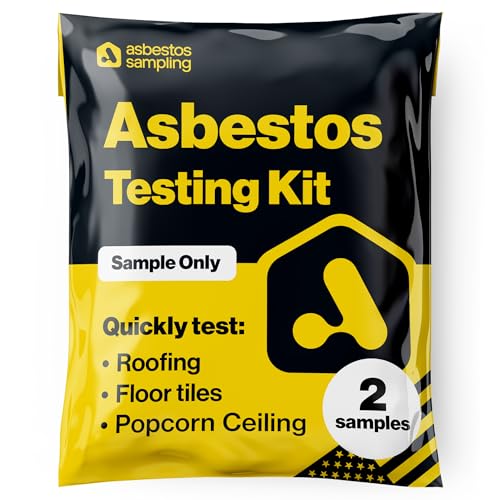
Prices are Amazon’s listed prices as of the time shown and change often; check Amazon for today’s price. As an Amazon Associate we earn from qualifying purchases.
Your Options: Leave, Cover, Encapsulate, or Remove
A positive result does not automatically mean the adhesive has to come out. The CPSC states that the mere presence of asbestos in a home is not hazardous and that the danger comes when materials are damaged or disturbed. The EPA notes that asbestos-containing material in good condition that will not be disturbed will generally not release fibers.
The table compares the main choices. It is a general guide; the right answer depends on the condition of the mastic, the floor going on top, and the rules that apply to the project.
| Option | When it fits | Risk of fiber release | Notes |
|---|---|---|---|
| Leave in place, no new floor | Mastic is already covered by intact tile or flooring and no project is planned | Low while undisturbed | Monitor for damage; keep test results on file |
| Cover (floating floor or underlayment) | Mastic is sound and the new floor can go over it without sanding or leveling | Low if no sanding, grinding, or scraping is done | EPA guidance favors installing new covering over asbestos flooring when possible; check flooring maker’s requirements |
| Encapsulate (sealant or coating) | Mastic is exposed and mostly intact, and a sealed surface or new floor will follow | Low to moderate, depending on surface prep | EPA and CPSC describe sealing as repair; product must be compatible with mastic and the new floor |
| Professional removal | New floor needs a bare substrate, mastic is damaged, or a major remodel will disturb it | Highest during the work; controlled by containment and wet methods | CPSC calls removal usually the most expensive method; must be done by trained professionals; state rules may apply |
| DIY sanding or grinding | Not recommended in any case | High | EPA says not to sand or try to level asbestos flooring or its backing |
Leave it and cover it
For many homeowners, covering is the most practical choice. The EPA’s homeowner do’s and don’ts include this line: when asbestos flooring needs replacing, install new floor covering over it, if possible. Common approaches include a floating laminate or luxury vinyl plank floor over a foam or felt underlayment, a new plywood or cement-board underlayment fastened over a wood subfloor, or carpet over pad. Each keeps the mastic in place and undisturbed. This is what the EPA and CPSC describe as enclosure, placing something over or around asbestos-containing material to prevent fiber release.
The limits are practical. Glue-down floors, tile set in thinset, and products that require a flat, bare substrate may not be compatible with a mastic layer, and some installers will refuse to warranty a floor over old adhesive. Floor height at doorways, appliances, and stairs can also be a constraint. Read the new flooring manufacturer’s installation requirements before choosing this route.
Encapsulate it
The EPA and CPSC describe sealing (encapsulation) as treating the material with a sealant that either binds the fibers together or coats the material so fibers are not released. With any repair, the asbestos stays in place. For mastic, encapsulation usually means applying a compatible coating or primer over exposed adhesive so that it is sealed before a new floor goes on, or so the slab can be used as is. The CPSC notes repair is usually cheaper than removal but can make later removal more difficult and costly. The guide to asbestos encapsulation explains the trade-offs in more detail.
Remove it
Removal is sometimes the only fit: a tile or stone floor that needs a bare slab, a basement where the mastic is badly damaged, or a full remodel. The CPSC says removal is usually the most expensive method and, unless required by regulation, should be the last option considered in most situations, because it poses the greatest risk of fiber release. It also says removal is complex and must be done only by a contractor with special training. Our guides to asbestos flooring removal and how asbestos tile is removed describe what a professional job looks like.
Common Scenarios in Older Front Range Homes
Asbestos mastic tends to show up in a handful of predictable situations. Thinking through the closest match can make the decision easier.
Basement slab under old tile or carpet
Many basements in older Denver, Aurora, Lakewood, and Colorado Springs neighborhoods were finished with tile glued to the slab, and later covered with carpet. When the carpet comes up, black glue lines or full coverage are common. If the plan is a floating floor, covering the sound mastic with an appropriate underlayment is often workable. Basements also bring moisture into the picture: if the slab has a history of dampness, address the water source first, since moisture can loosen tile and adhesive over time and the CPSC lists water damage among the signs that a suspect material is deteriorating.
Kitchen remodel with a new tile floor
Ceramic or porcelain tile set in thinset generally needs a sound, bonded substrate, which is where old adhesive can become a problem. Some installers use an uncoupling membrane or new underlayment over a wood subfloor to avoid disturbing what is underneath, while others insist on removal. This is a case where a written plan from the installer and, if needed, an abatement contractor helps avoid a mid-project surprise.
Selling or buying an older house
A home inspection may note suspect flooring or visible black adhesive in a utility room or basement. That note is not a lab result. Buyers who plan to replace flooring can ask for sampling during the inspection period, and sellers can share any prior lab reports. Intact, covered mastic that nobody plans to disturb is generally a low-priority finding under EPA and CPSC guidance, but it is useful to know about before budgeting a renovation.
Partially removed floors
The riskiest situation is a floor that someone has already started to tear up, with broken tile, scraped patches, and debris. The EPA advises against dusting, sweeping, or vacuuming debris that may contain asbestos and recommends calling an asbestos professional when the material comes from a damaged area or a large area must be cleaned. Stopping work, keeping people and pets out, and getting a sample analyzed is the safest first step.
Why Sanding and Grinding Are Dangerous
Most of the risk with asbestos mastic comes from surface preparation. The CPSC notes that material that has been sawed, scraped, or sanded into a powder is more likely to create a health hazard. The EPA’s list of don’ts for homeowners is direct: do not saw, sand, scrape, or drill holes in asbestos-containing materials; do not sand or try to level asbestos flooring or its backing; never use a power stripper on flooring that may contain asbestos; and do not dust, sweep, or vacuum debris that may contain asbestos.
A floor grinder or sander on cutback adhesive turns a bound material into fine dust and spreads it through the air and onto every surface in the area. An ordinary shop vacuum can make it worse by blowing fine particles through the exhaust. The EPA notes that a regular vacuum cleaner should never be used for asbestos cleanup and that professionals use wet methods and HEPA vacuums.
Solvents and chemical removers are pro territory
Professional removal of mastic often uses wet methods, specialized chemical removers, or controlled mechanical methods inside containment. Solvent-based removers carry their own fume and fire hazards, can soften the adhesive into a slurry that spreads contamination, and leave a residue that may interfere with new flooring. Water-based removers are safer to handle but still loosen asbestos-containing material into a mess that has to be collected and disposed of correctly. Any chemical approach on confirmed asbestos mastic is work for a trained abatement contractor following the applicable rules, not a weekend project.
OSHA’s view of exposure
OSHA states that there is no “safe” level of asbestos exposure for any type of asbestos fiber and that exposures as short as a few days have caused mesothelioma in humans. Its construction standards require employers to monitor exposure, set up regulated areas, use engineering controls, and provide protective equipment. A contractor who will touch confirmed asbestos mastic should be working under those requirements.
Colorado Regulation 8 and Mastic Projects
The EPA notes that federal law does not require people who inspect, repair, or remove asbestos-containing materials in detached single-family homes to be trained and accredited, but that some states and localities do. Colorado regulates asbestos through the Air Quality Control Commission’s Regulation No. 8, Part B, administered by the Colorado Department of Public Health and Environment (CDPHE).
In broad terms, and subject to the current rule text, renovation or demolition that will disturb suspect materials above specified trigger quantities generally requires an inspection by a Colorado-certified asbestos building inspector beforehand, and abatement above those quantities generally requires a registered abatement contractor, notification, and a permit. There are conditions and exemptions for owner-occupied single-family homes, and the details have changed over time. Before removing or disturbing mastic, confirm the current requirements with CDPHE and the local building department; many Front Range permit offices ask for asbestos documentation on remodels.
Two practical points follow. First, a certified inspector’s report on the mastic is useful even when not strictly required, because contractors and permit reviewers rely on it. Second, the EPA advises keeping assessment and abatement independent: the professional who assesses the need for repair or removal should not be connected with the firm that does the work.
What Asbestos Mastic Projects Cost
Costs depend on area, access, condition, the method chosen, and local disposal and permitting requirements. Rough patterns, which should always be confirmed with written quotes:
- Testing. PLM analysis per sample is usually the least expensive step, often tens of dollars per sample; TEM confirmation on mastic costs more. A certified inspector visit with sampling and a report commonly runs a few hundred dollars or more. Sampling several layers in one visit is usually cheaper per sample than repeat trips.
- Covering. Usually the lowest total cost, since the main expense is the new floor and any underlayment that would be installed anyway.
- Encapsulation. Adds the cost of a compatible coating and labor; typically well below removal for the same area.
- Removal. The highest cost, because it involves containment, wet methods or chemical removers, worker protection, waste handling, disposal, and in many cases air clearance testing.
For contractor pricing ranges and what drives them, see the guides to asbestos tile removal cost and asbestos abatement cost. When comparing bids, the EPA recommends a written contract specifying the work plan, cleanup, and the applicable federal, state, and local regulations, plus written assurance at the end that all procedures were followed.
Questions to ask an abatement contractor
- Is the firm and each worker trained and accredited, and can they show proof?
- How will the work area be sealed from the rest of the house, and will the HVAC be shut down?
- Which removal method will be used on the mastic, and how will residue be handled before new flooring?
- How will waste be bagged, labeled, and disposed of?
- Will an independent party perform air monitoring after the job?
A Practical Decision Path
For most homeowners facing black glue on a floor, the decision comes down to a short sequence:
- Stop before disturbing it. No sanding, grinding, scraping, or solvent until results are in.
- Test it. Sample the mastic and any tile separately through an accredited lab, ideally with a professional doing the sampling.
- If negative, keep the report and proceed with normal dust control, confirming that every layer was covered by the tests.
- If positive, ask whether the new floor can go over it. Covering is often the simplest and lowest-risk path.
- If it cannot be covered, compare encapsulation and professional removal, and confirm Colorado requirements before any work.
More guides on asbestos in older homes are collected in the asbestos guides hub and the broader asbestos and lead pillar, including pages on vinyl asbestos tile.
References
- Protect Your Family from Exposures to Asbestos — U.S. Environmental Protection Agency
- Learn About Asbestos — U.S. Environmental Protection Agency
- Asbestos in the Home — U.S. Consumer Product Safety Commission
- Asbestos — Occupational Safety and Health Administration
Frequently asked questions
Does all black mastic contain asbestos?
No. The black color comes from the asphalt base of cutback adhesive, not from asbestos. Many older black adhesives did contain asbestos, but the only way to know is a lab test of the mastic itself.
Can new flooring go over asbestos mastic?
Often, yes. EPA homeowner guidance says that when asbestos flooring needs replacing, new floor covering should be installed over it if possible. A floating floor or new underlayment over sound mastic is a common approach, as long as no sanding or leveling of the old material is done.
Is it safe to grind or sand asbestos mastic off a slab?
No. The EPA advises against sanding, scraping, or leveling asbestos flooring or its backing, and the CPSC notes that material sanded into a powder is more likely to create a health hazard. Removal should be done by trained professionals.
Do Colorado rules apply to mastic removal in a house?
They can. Colorado regulates asbestos under Regulation No. 8, administered by CDPHE, and disturbing suspect material above certain amounts generally calls for a certified inspection and a registered contractor. Confirm current requirements with CDPHE before work.
Is encapsulating mastic cheaper than removing it?
Usually. The CPSC says repair, which includes sealing, is usually cheaper than removal, though it may make later removal more difficult and costly.
Found black glue under old tile or carpet and want a clear next step? Reach out with a photo of the floor, and we can point you toward testing and the option that fits your project.