Asbestos Insulation Testing: 2026 Homeowner Decision Guide
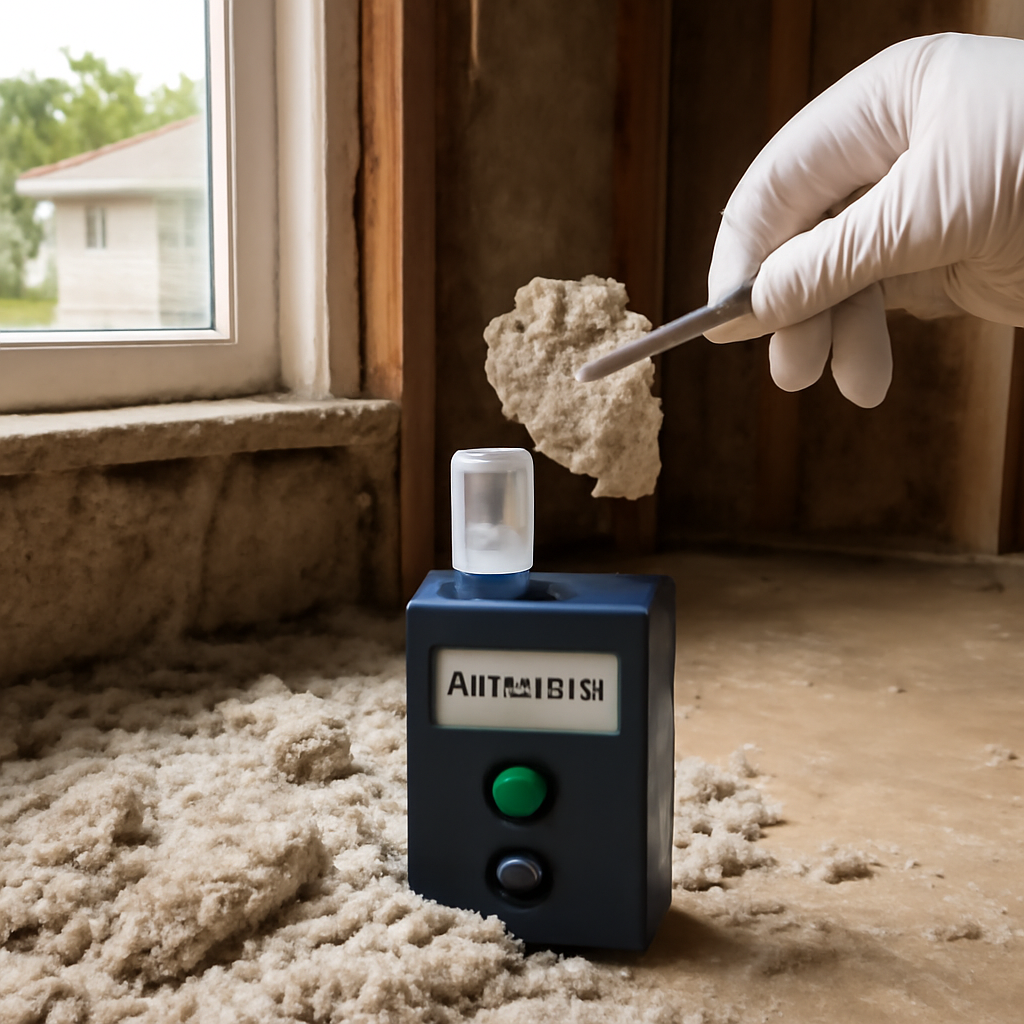
Asbestos insulation testing is the highest-stakes category of residential asbestos sampling because the materials involved — attic vermiculite, pipe lagging, boiler wrap, HVAC duct insulation — are uniformly more friable than tile, drywall, or cement-board products. This guide summarizes EPA and CDC guidance current as of 2026 — consult a licensed abatement professional before disturbing suspected insulation, and a physician for exposure concerns. Sampling intact non-friable material is OK to DIY with precautions; insulation testing is generally a professional job per EPA recommendations, and abatement is always licensed-pro-only per NESHAP. This article walks through the insulation categories, the friability problem, and why this is one area where the DIY shortcut is rarely worth taking.
Part of our Asbestos in the Home guide — start there for the full picture →
Is this mold, asbestos, or water damage? Get a free instant screen
Upload a clear photo of the suspect area. You'll get an instant AI screening opinion and what to do next. This is screening guidance, not a professional determination.
Screening guidance only. AI can be wrong. Confirm asbestos, mold type, or lead with lab testing or a licensed professional before acting.
Why insulation is different from other asbestos categories
The friability matters. Intact vinyl floor tile holds asbestos fibers in a bound, durable matrix. Cement-board siding does the same. Joint compound is bound until sanded. Insulation is the opposite — fibers are loosely bound in a low-density matrix designed to trap air. The same property that makes it good insulation makes it easy to release fibers during any disturbance, including sampling.
EPA classifies materials as friable when they can be crumbled, pulverized, or reduced to powder by hand pressure. Most asbestos-containing insulation meets this definition by design or by age. A 50-year-old pipe wrap has degraded to a near-powder state inside its outer canvas. Vermiculite is friable from the day it was installed. The wet-method sampling protocol that works for tile is insufficient containment for friable insulation.
The four insulation categories to test
1. Attic vermiculite (Zonolite)
Granular, gold-to-silver colored, pebble-sized insulation that flows like aquarium gravel. From the 1940s through 1990, the Libby, Montana mine (W.R. Grace’s Zonolite operation) produced the dominant share of the U.S. vermiculite supply, and the deposit was contaminated with tremolite/actinolite asbestos. EPA presumes Zonolite vermiculite is asbestos-contaminated and strongly recommends professional sampling. The EPA “Protect Your Family from Asbestos-Contaminated Vermiculite Insulation” guidance lays out the protocol. Estimates suggest 35 million U.S. homes contain Zonolite.
2. Pipe lagging
White, canvas-wrapped insulation on heating-system pipes and steam-distribution piping in homes built before 1980. Often visible in basements wrapping incoming water mains, boiler-room piping, and distribution lines to radiators. May contain chrysotile, amosite, or a mix. Deteriorating lagging (water-damaged, broken, or sagging) is highly friable.
3. Boiler and furnace insulation
Thick wrapping around the bodies of older boilers and furnaces, sometimes finished in a stuccoed magnesia exterior. The boiler-side insulation often contains amosite (brown asbestos). The flue and breaching insulation may use crocidolite (blue asbestos) on older industrial-grade boilers.
4. HVAC duct wrap and tape
White wraps and tapes used to insulate metal HVAC ducts in pre-1980 homes. The tape at joint connections may contain asbestos in a paper-and-binder mix. The wrap is usually fiberglass-and-asbestos blend insulation with a paper outer layer.
What makes DIY sampling of insulation a bad idea
Three things go wrong when a homeowner tries to sample friable insulation with a retail kit:
PPE is inadequate
The N-100 or P-100 respirator a homeowner might purchase requires fit-testing to seal properly against the face. An out-of-the-box mask leaks 5-10 percent. For high-friability sampling, that leakage delivers fibers directly to the breathing zone. Professional inspectors use fit-tested respirators and replace cartridges per work-cycle.
Containment is incomplete
Friable sampling requires plastic sheeting on the floor, walls, and any ventilation opening, plus a negative-pressure setup that draws air through HEPA filtration. Retail kits include neither sheeting nor HEPA equipment. The sampler leaves the area with fibers on clothing, hair, and tools.
Disposal of contaminated tools and PPE
Professional waste protocols include sealed disposal of all used PPE and sampling tools as asbestos-contaminated waste. Homeowners typically discard these items in regular trash, which violates EPA NESHAP requirements and spreads fiber contamination through the disposal stream.
For the broader pillar perspective, see asbestos and lead in your home. The companion vermiculite insulation removal guide covers the abatement side.
Professional insulation sampling — what the visit looks like
An AHERA-trained or state-certified asbestos inspector arrives with a sample kit, fit-tested P-100 respirator, full-coverage Tyvek coveralls, and a HEPA vacuum or air-cleaner for area control. The visit takes 1-2 hours depending on the number of suspect areas. Steps:
1. Discuss suspect areas with the homeowner and identify accessible sampling locations.
2. Seal off the sampling area with plastic sheeting and turn off HVAC.
3. Don PPE and enter the contained area.
4. Pre-wet the target with surfactant solution.
5. Use a sample tool (forceps, scalpel, or core sampler) to remove a small sample directly into a sealable bag.
6. Seal, double-bag, label, and place in the chain-of-custody envelope.
7. HEPA-vacuum the work area and clean tools.
8. Dispose of contaminated PPE and sheeting as asbestos waste.
9. Submit sample to NVLAP-accredited lab for PLM analysis.
Results return 2-7 business days later with a written report including sample photos, location map, analytical results, and recommendations.
Costs for professional insulation testing
Single insulation sample with site visit: $200-$500. Multi-sample whole-attic survey for vermiculite: $400-$800. Pipe-lagging survey across a basement system (5-10 samples): $700-$1,500. AHERA clearance air testing after abatement: $800-$1,500. Front Range pricing trends 10-20% below coastal-city averages.
Compare this to DIY: a retail kit costs $40-$60 per sample but cannot safely handle friable insulation. The professional premium is real and justified for this material category.
What the lab result means for insulation
A positive result on insulation triggers more complex decision-making than tile or drywall because insulation is rarely encapsulated in place — it is part of the building system and disturbance is inevitable.
Positive vermiculite
Options: leave undisturbed (do not enter the attic without proper PPE, do not store items there, do not install recessed lighting that disturbs the attic floor) or schedule full attic abatement and replacement. Costs run $2,500-$10,000+ depending on attic size and access.
Positive pipe lagging
Options: encapsulate intact lagging with specialty wrap, or schedule pipe-by-pipe abatement. Encapsulation runs $5-$15 per linear foot; abatement runs $15-$50 per linear foot.
Positive boiler/furnace insulation
Boiler replacement projects must include abatement of asbestos insulation as part of demolition. Plan for $1,500-$5,000 in abatement cost on top of the boiler replacement budget.
Positive HVAC duct wrap
Limited options. Some ducts can be encapsulated; many require system replacement during HVAC upgrade. Costs scale with the duct system size, typically $2,000-$8,000 for residential abatement.
The “leave-it-alone” question
For undisturbed, intact insulation in a sealed cavity, leaving the material in place is often the safest and most cost-effective choice. EPA guidance is consistent: asbestos in good condition that is not disturbed poses minimal risk. Disturbance is what releases fibers. Many homeowners with positive vermiculite results choose to seal the attic access, label it, and never enter — and that is a defensible decision.
The complication appears at sale time. A buyer’s inspector will identify the suspect material. A real-estate disclosure will document it. Either the buyer accepts the condition (with price adjustment) or the seller funds abatement before close. Plan for this conversation if the home is intended for eventual sale.
When to test versus when to presume
For pre-1990 vermiculite, EPA’s position is to treat it as asbestos-contaminated whether tested or not. Testing produces a documented result that some homeowners want for disclosure purposes, but the practical handling does not change much based on the result. Many inspectors will recommend skipping the test and proceeding directly to abatement planning if the attic disturbance is unavoidable.
For pipe lagging, boiler wrap, and HVAC duct wrap, testing is more informative because results vary by manufacturer and installation era. A test costs $200-$500 and either confirms ACM (informing abatement scope) or returns negative (avoiding unnecessary abatement on a $5,000+ project). The expected value favors testing for these materials. See the companion how can you test for asbestos guide and the how do you check for asbestos visual heuristics.
Visual recognition of asbestos insulation
Each insulation category has specific visual signatures, though confirmation always requires lab analysis. Zonolite vermiculite looks like small, hard, gold-to-silver-gray pebbles roughly 3-5 millimeters in size, flowing like loose gravel when disturbed. It often has a faintly metallic sheen and reflects light when raked. The texture is unlike modern cellulose or fiberglass insulation, which are fibrous rather than granular.
Pipe lagging on heating systems typically appears as white or off-white insulation roughly 1-3 inches thick wrapped around the pipe, finished with a layer of canvas, paper, or thin metal foil. Older installations may show metal banding holding the insulation in place. Boiler insulation appears as thicker (3-6 inch) wrapping around the boiler body, often finished with a stuccoed magnesia exterior. HVAC duct wrap shows as white quilted insulation glued or taped to metal duct surfaces, with asbestos-containing tape at joint connections.
Friability terminology and what it means in practice
EPA classifies asbestos-containing material in two regulatory categories: Category I (non-friable) for resilient floor coverings, asphalt roofing, packings and gaskets, and Category II (potentially friable) for cement asbestos and similar bound matrix products. Insulation falls outside both — it is friable by definition. Friable means the material can be crumbled, pulverized, or reduced to powder by hand pressure. Practically, this means every disturbance releases fibers, every demolition requires full NESHAP-compliant containment, and DIY sampling is strongly discouraged.
The friability rating drives abatement cost. Friable abatement uses negative-pressure containment, decontamination chambers, HEPA filtration, and continuous air monitoring. Non-friable abatement (tile, drywall, transite) uses simpler containment because the source material releases fewer fibers during removal. The per-square-foot cost difference is often 3x to 5x.
Pre-abatement attic preparation
Before abatement crews arrive to remove vermiculite or other attic insulation, homeowners can take steps that reduce project cost and complexity. Move any storage out of the attic if access allows safe entry; otherwise the contractor will handle removal as part of the abatement scope at a higher rate. Photograph the attic condition for insurance and disclosure records. Identify and label any electrical or HVAC penetrations through the attic floor; these need to be sealed before abatement to prevent fiber migration to the living space. Have the new insulation product selected and on order so the attic is not left uninsulated for weeks after abatement completes.
More Questions About Asbestos Insulation Testing
How long does asbestos insulation testing take?
Asbestos insulation testing typically takes under an hour of sampling time for a single material and three to seven business days for standard lab results. Rush turnaround of 24 to 48 hours is commonly available for an extra fee.
Vermiculite samples can take longer if the lab runs specialized analysis beyond standard PLM. A full pre-renovation survey covering several insulation types and other materials takes longer on site. Owners should ask the inspector about the expected report date and whether follow-up analysis might be needed.
What lab method is used for asbestos insulation testing?
Asbestos insulation testing most commonly uses polarized light microscopy, or PLM, which identifies asbestos fibers and estimates their percentage in a bulk sample. Labs should be NVLAP accredited for this analysis.
Vermiculite can require additional methods because asbestos is present at low levels that PLM may miss. Transmission electron microscopy, or TEM, offers more sensitivity but costs more. Inspectors choose the method based on the material and project needs. Asking the lab or inspector which method was used helps interpret results.
Do you need to test insulation before adding new insulation?
Testing existing insulation before adding new insulation is recommended in homes built before the 1980s, especially when an attic contains vermiculite or pipes have older lagging. Installers often ask about it before quoting.
Many energy-efficiency programs require installers to stop work if suspect vermiculite is found. Testing upfront avoids project delays and helps decide whether new insulation can be added over the old layer or whether removal is needed first. Avoid blowing new material directly over vermiculite without professional guidance.
Can insulation testing be done without disturbing the material?
Insulation testing requires a small sample, so it always involves minimal disturbance, but trained inspectors limit fiber release by wetting the spot and using hand tools. The sample site is sealed immediately afterward.
For vermiculite, many owners and inspectors choose to treat the material as asbestos-containing without sampling, avoiding disturbance entirely. Visual assessment can document condition and location for planning. If testing is needed for a contractor or sale, a professional collection is safer than a do-it-yourself attempt.
References
- EPA guidance on vermiculite insulation — U.S. Environmental Protection Agency
- NIOSH asbestos worker health — CDC
- OSHA asbestos standards — Occupational Safety and Health Administration
- American Lung Association on asbestos — American Lung Association
Frequently asked questions
Can I test asbestos insulation myself?
EPA strongly recommends professional sampling for insulation materials because they are highly friable. The PPE and containment included in retail kits cannot safely handle friable sampling. Pipe lagging, vermiculite, boiler wrap, and HVAC duct insulation should all be sampled by a licensed inspector.
What does professional asbestos insulation testing cost?
Single sample with site visit: $200-$500. Multi-sample whole-attic vermiculite survey: $400-$800. Pipe-lagging survey across a basement: $700-$1,500. Front Range pricing trends 10-20% below coastal-city averages.
Should I test vermiculite insulation before removal?
EPA treats Zonolite vermiculite as presumed asbestos-contaminated whether tested or not, so the practical handling does not change much based on the result. Testing produces documented disclosure but is often skipped if abatement is already planned. Test if disclosure or budget-comparison documentation is needed.
What if my insulation tests positive but is undisturbed?
EPA guidance allows leaving intact asbestos-containing material undisturbed if it poses no immediate health risk. Seal the area, restrict access, document the condition, and avoid disturbance. Plan for abatement during future renovations or before sale if disclosure conditions require it.
Does asbestos insulation testing include a written report?
Professional asbestos insulation testing usually includes a written report with sample locations, lab results, and the lab's accreditation. Home kits typically provide only the lab certificate. A full report is often needed for contractors and buyers.
Is asbestos insulation testing required before renovation?
Requirements vary by state and locality, but testing before renovation that disturbs insulation in an older home is widely recommended and is sometimes required for permits. Contractors may also require it to protect their workers.
Can asbestos insulation test results be shared with buyers?
Yes, asbestos insulation test results can be shared with buyers, and known asbestos generally must be disclosed where state disclosure forms ask. Providing the report gives buyers accurate information and can reduce surprises later in the transaction.
Front Range homeowners with suspect insulation can connect with a vetted local asbestos inspector here.
Asbestos test kits
Asbestos can only be confirmed by a lab. A mail-in kit gets you a sealed sample container and accredited analysis — never sand or disturb suspect material first.
| Product | Why | Buy |
|---|---|---|
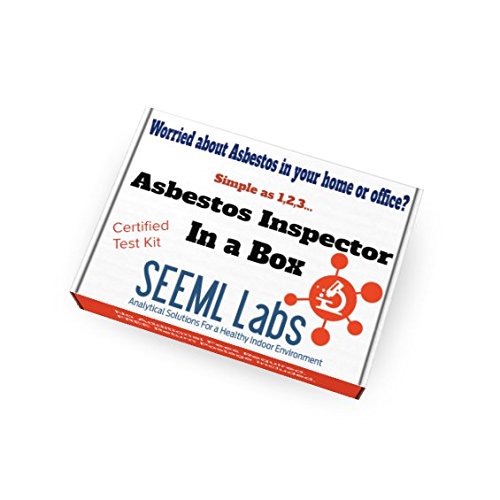 Asbestos Test Kit (mail-in lab) | Includes PPE + sealed mailer. | Amazon — $22.00 |
 Pro-Lab Asbestos Test Kit | Widely available; lab fee separate. | Amazon — $63.99 |