Asbestos in Insulation: What Homeowners Know
Insulation is supposed to make a home safer and more comfortable, so finding out it might contain asbestos is unsettling. Asbestos in insulation was widespread for most of the twentieth century, valued for its heat resistance, and it lingers in millions of older homes today. The reassuring part is that intact, undisturbed insulation is far less dangerous than damaged or disturbed material, and confirming what you have is usually straightforward. This guide explains which insulation products contained asbestos, where to look, and how to handle suspect material safely. It summarizes EPA, CDC, and OSHA guidance current as of 2026 and is general information, not a substitute for laboratory testing.
Part of our Asbestos in the Home guide — start there for the full picture →
Is this mold, asbestos, or water damage? Get a free instant screen
Upload a clear photo of the suspect area. You'll get an instant AI screening opinion and what to do next. This is screening guidance, not a professional determination.
Screening guidance only. AI can be wrong. Confirm asbestos, mold type, or lead with lab testing or a licensed professional before acting.
Where is asbestos found in insulation?
Asbestos turned up in several insulation products. The best-known is vermiculite loose-fill attic insulation, much of it contaminated at the source. Asbestos also appeared in pipe and boiler wrap, block insulation, spray-applied fireproofing on ceilings and structural steel, and some HVAC duct insulation. Even certain wall-cavity fill products contained it.
Homes built before 1980 are the primary concern, and anything from before the late 1970s should be treated cautiously. You cannot confirm asbestos by sight; suspect products simply warrant testing. For a focused look at attic material, see our guide on asbestos attic insulation.
Vermiculite: the headline product
When people think of asbestos in insulation, vermiculite is usually what they picture. These loose, pebble-like granules, gray-brown, gold, or silver, were poured into attics for decades. The dominant U.S. supply came from a Montana mine in asbestos-bearing rock, so the EPA advises assuming vermiculite contains asbestos unless tested.
Because the asbestos is mixed throughout the granules, there is no way to separate safe from unsafe material visually. Our companion piece on vermiculite and asbestos covers the history, and what vermiculite is explains the mineral itself.
Pipe, boiler, and duct insulation
In basements and crawlspaces, asbestos commonly insulated heating pipes, boilers, and ducts. This material may look like a white or gray plaster shell on elbows and joints, a papery layered wrap, or a tape-bound sleeve. It was prized because it withstood high heat without burning.
Damaged pipe insulation is the bigger hazard. When it crumbles or flakes, it becomes friable and releases fibers easily. Intact wrap that is painted or sealed is more stable. If you see deteriorating insulation shedding material onto the floor, keep people and pets away until it is assessed.
Friable versus non-friable: why it matters
The single most important concept with asbestos in insulation is friability. Friable material can be crumbled by hand and releases fibers readily; non-friable material is bound in a matrix and holds fibers in place. Most insulation asbestos, especially loose vermiculite and crumbling pipe wrap, is friable, which is why it gets special attention.
Friability also determines how the material must be handled. Friable asbestos generally requires licensed abatement for removal, while some non-friable products can be managed with more flexibility. Disturbance turns even stable material into a hazard, so the rule is the same: do not disturb suspect insulation.
Where to look in your home
Start with the attic, checking for loose granular fill rather than batts or blown cellulose. Move to the basement and crawlspace, inspecting pipe and boiler insulation for the chalky or papery wrap. Look at older furnace and duct insulation. Check behind knee walls and in mechanical chases where insulation was packed.
Renovation is the riskiest moment because tearing into walls, ceilings, or mechanical systems can disturb hidden asbestos insulation. Identify and test suspect materials before demolition begins. The asbestos and lead hub explains how this fits the broader pre-1978 hazard picture.
Testing to confirm
Only a laboratory can confirm asbestos. A certified professional collects a small representative sample using containment and submits it for analysis, typically by polarized light microscopy. For friable, loose materials like vermiculite, the EPA generally discourages DIY sampling because of the exposure risk involved in disturbing it.
Testing is inexpensive relative to the consequences of guessing wrong. The result tells you whether you can leave the material in place, encapsulate it, or need professional removal. It also documents the home’s condition, which matters for renovations and future sales.
Handling a positive result
A positive test is not an emergency when the material is intact. You typically have three options: manage it in place by keeping it undisturbed, encapsulate or enclose it, or have it removed by a licensed abatement contractor. The right choice depends on the material’s condition and your plans for the space.
Removal is the path when you intend to renovate, finish a basement, or otherwise disturb the insulation. Never attempt friable asbestos removal yourself; improper work spreads fibers throughout the home and creates a far larger problem than the original.
Insurance, disclosure, and resale considerations
Confirmed asbestos insulation has implications beyond health. When selling a home, sellers generally must disclose known hazards, and documented asbestos, whether managed in place or abated, is part of an honest disclosure. Buyers, in turn, may request testing or factor any needed abatement into negotiations, much as they do with radon along the Front Range.
Insurance is another wrinkle. Standard homeowner policies often exclude or limit coverage for asbestos abatement, treating it as a maintenance or pollution issue rather than a sudden covered loss. Homeowners should not assume a positive test triggers an insurance payout for removal; checking the policy details ahead of time avoids surprises. Keeping records of testing, management decisions, and any professional work creates a paper trail that supports both disclosure and any future claim.
For older Front Range homes, where pre-1980 construction is common, treating asbestos as a documented, managed condition rather than a hidden liability is the prudent approach. A clear file of what is present, its condition, and how it has been handled turns a vague concern into a manageable part of owning an older property.
Living safely with asbestos insulation in place
Many homeowners safely coexist with asbestos insulation by managing it. Keep the material sealed off and undisturbed, avoid using affected spaces for storage or traffic, and inspect periodically for new damage. Tell any contractor working near it about the material so they take precautions.
Encapsulation, coating the material to lock fibers in place, is a recognized middle path for some products. It costs less than full removal and is appropriate when the material is in reasonable condition and unlikely to be disturbed. A professional assessment determines which approach fits your home.
Why asbestos was used in insulation at all
Asbestos was not added to insulation by mistake; it was prized for genuine engineering reasons. The mineral resists heat and fire, does not conduct electricity, and is strong, cheap, and abundant. For insulating boilers, pipes, and furnaces that ran hot, it was an ideal material in its era. Manufacturers incorporated it into dozens of products from the early twentieth century through the 1970s.
The downside, the microscopic fibers that lodge in lung tissue, was not widely acted upon until later, when the health consequences became undeniable. By then, asbestos was embedded in millions of buildings. Understanding why it was used explains why it is so widespread in older homes and why it tends to appear specifically around heat sources. That history is also why pre-1980 homes deserve a careful look before any work near pipes, furnaces, or mechanical systems.
How to inspect without disturbing material
A careful visual survey costs nothing and identifies most suspect spots. Start in the attic, looking for loose granular vermiculite rather than batts or blown fluff. Move to the basement and crawlspace, examining pipe, boiler, and duct insulation for chalky white or gray wraps, plaster-like coatings on elbows, or papery layered sleeves. Check around the furnace and any old mechanical equipment.
The cardinal rule is to look, not touch. Do not poke, scrape, or move suspect material to get a closer view, and never vacuum or sweep loose granules. Disturbance is what releases fibers. Photograph suspect material from a distance in good light if you want a record. Keep children and pets away from any area with visibly damaged or crumbling insulation until it has been assessed. This kind of hands-off survey gives you a list of materials to test without creating any exposure.
How renovation exposes hidden asbestos
The most common way homeowners encounter asbestos insulation is during a renovation that was not planned around it. Tearing out a basement ceiling, removing old pipe wrap to update plumbing, demolishing walls, or pulling up old duct insulation can all release fibers from material that had been stable for decades. Workers unaware of the hazard may spread fibers throughout the home in the process.
The safe approach reverses the order: identify and test suspect materials before demolition, then plan the project around the results. If asbestos is confirmed in the work area, a licensed abatement contractor handles it first. Every trade entering the space, plumbers, electricians, HVAC technicians, should be told about suspect material so they take precautions. The companion guide on asbestos attic insulation covers the loose-fill scenario in depth.
Encapsulation as an alternative to removal
Removal is not always necessary or even the best option. Encapsulation, coating asbestos insulation with a sealant that binds the fibers in place, is a recognized method for material in reasonable condition that is unlikely to be disturbed. Enclosure, building a permanent barrier around the material, is another. Both cost less than full abatement and avoid the disturbance that removal inevitably causes.
These approaches suit pipe and boiler wrap that is intact and out of the way. They are less suited to loose, friable vermiculite, which is harder to bind. A professional weighs the material’s condition, its location, and your plans for the space to recommend whether to encapsulate, enclose, manage in place, or remove. The right answer depends on the specific situation rather than a blanket rule.
Choosing a course of action after testing
Once a lab confirms what you have, the decision tree is straightforward. If the material tests negative, you proceed normally. If it tests positive but is intact and out of the way, managing it in place, keeping it undisturbed and inspecting periodically, is often the right call. If it is positive and friable, damaged, or in the path of a planned renovation, removal by a licensed abatement contractor becomes the safe path.
The condition of the material and your plans for the space drive the choice more than the mere presence of asbestos. A homeowner with stable pipe wrap in an unused crawlspace faces a very different decision than one planning to finish a basement where asbestos insulation lines the ceiling. A professional assessment weighs these factors and recommends the proportionate response, neither ignoring a real hazard nor over-spending on unnecessary abatement.
Health risks and exposure context
The reason all this matters is the documented health toll. Inhaled asbestos fibers can contribute to asbestosis, lung cancer, and mesothelioma, often after a long latency of years or decades. The CDC notes no safe level of exposure has been established, and risk increases with the intensity and duration of exposure. Smoking dramatically amplifies the lung-cancer risk for those exposed to asbestos.
The worst outcomes follow repeated or prolonged fiber inhalation, not brief, incidental contact with intact material. This is precisely why the management strategy centers on preventing disturbance. Left undisturbed and handled correctly when work is needed, asbestos insulation poses low day-to-day risk. The danger is concentrated in the moments of disturbance, which is where care and professional handling pay off most.
More Questions About Asbestos in Insulation
What color is asbestos insulation?
Asbestos insulation has no single color, so color cannot confirm it. Pipe lagging is usually white or off-white, vermiculite ranges from gray-brown to silvery gold, and some block and spray-applied products were gray or bluish.
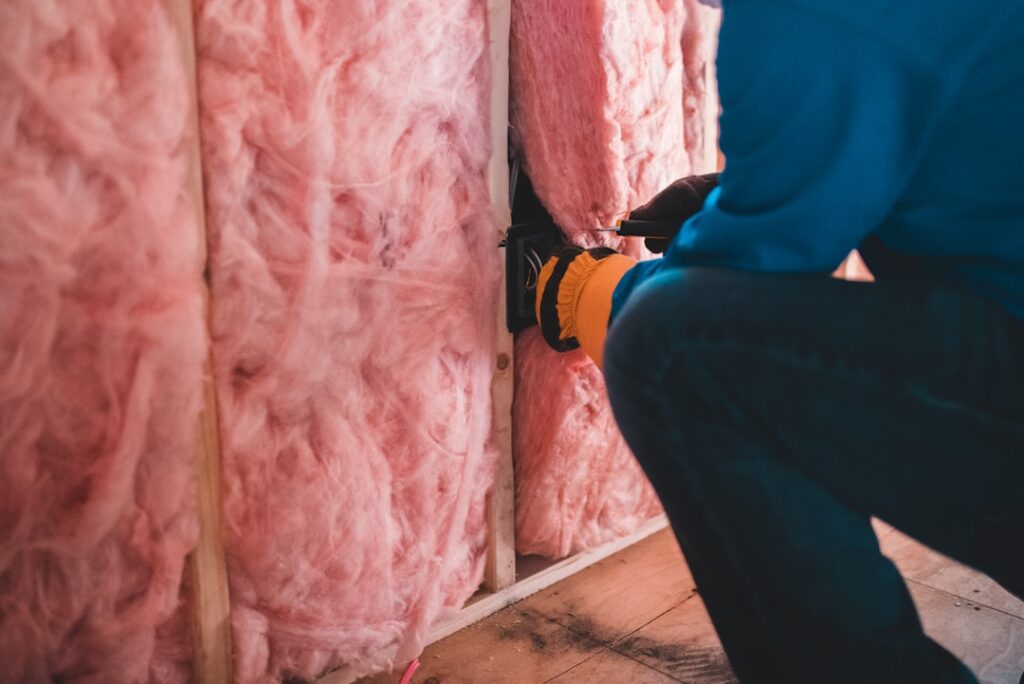
Fiberglass insulation can also be white, pink, or yellow, and older fiberglass sometimes looks dusty or gray. Because many products look alike, any insulation in a home built before the 1980s that is chalky, fibrous, or pebble-like should be treated as suspect. A lab sample is the only reliable way to tell.
Is fiberglass insulation ever mixed with asbestos?
Fiberglass batts themselves generally did not contain asbestos, but asbestos can be present nearby or in contact with them. Older attics sometimes have vermiculite poured beneath or around later fiberglass, and pipes may still carry asbestos lagging.
The paper or foil facing on fiberglass batts is not usually a concern, though some older vapor barriers and adhesives were. If fiberglass in an older home sits over a gray-brown pebbly layer or near crumbly white pipe wrap, have those materials sampled before moving or removing anything.
How long does asbestos insulation stay airborne once disturbed?
Asbestos fibers from disturbed insulation can stay suspended in indoor air for hours and can be stirred back up from settled dust long afterward. The finest fibers settle very slowly, which is why containment and HEPA filtration matter.
This is the reason professional abatement uses negative air pressure, sealed work areas, and clearance air testing before a space is reopened. After an accidental disturbance, leaving the area, closing it off, shutting down the HVAC, and calling a professional to clean is safer than trying to sweep or vacuum.
Does homeowners insurance cover asbestos insulation removal?
Homeowners insurance usually does not cover asbestos insulation removal as routine maintenance or an upgrade. Coverage may apply only when a covered event, such as a fire or burst pipe, damages asbestos material and makes cleanup necessary.
Policy language varies widely, and some policies exclude pollutants, including asbestos, altogether. Owners should review their policy and call their agent before work starts. Lab reports and contractor documentation help if a claim is filed. Planned removals for remodeling are almost always paid out of pocket.
Can you live in a house during asbestos insulation removal?
Living in the house during asbestos insulation removal is often possible when the work area is fully sealed off and has its own entry, but many contractors recommend staying elsewhere for larger jobs. Attic and whole-basement projects can take several days.
The contractor builds containment with plastic sheeting and negative air machines, and the HVAC system is usually shut down while work continues. Families with infants, older adults, or people with respiratory conditions may prefer to leave until clearance testing confirms the area is safe to reoccupy.
References
- Protect Your Family From Exposures to Asbestos — U.S. Environmental Protection Agency
- Asbestos Topic Page — Centers for Disease Control and Prevention
- Asbestos Standards and Hazards — Occupational Safety and Health Administration
Frequently asked questions
What insulation contains asbestos?
Vermiculite loose-fill attic insulation is the most common, along with pipe and boiler wrap, block insulation, spray-applied fireproofing, and some duct insulation. Products in homes built before 1980 are the primary concern.
How do I know if my insulation has asbestos?
You cannot confirm it by sight. Loose granular vermiculite and chalky pipe wrap are suspect, but only laboratory analysis under a microscope can confirm asbestos. Treat suspect material as positive until tested.
Is asbestos insulation dangerous if undisturbed?
Intact, undisturbed insulation releases very few fibers and poses low risk. The hazard rises when material becomes friable or is disturbed by traffic, storage, or renovation.
Can I remove asbestos insulation myself?
No. Friable asbestos insulation should be removed by a licensed abatement contractor. DIY removal spreads fibers throughout the home and creates a larger hazard than leaving it in place.
Is old blown-in insulation asbestos?
Most old blown-in insulation is not asbestos, but loose-fill vermiculite from many older homes may contain it. Gray-brown or silvery pebble-like granules are the main warning sign. White or gray fluffy loose-fill is usually cellulose, fiberglass, or rock wool, though only lab testing confirms it.
Does asbestos insulation smell?
No, asbestos insulation has no distinctive odor, so smell cannot be used to detect it. Musty smells near insulation usually point to moisture or mold instead. Any concern about asbestos content should be resolved with a lab sample rather than by appearance or smell.
Can a home energy audit disturb asbestos insulation?
Yes, a home energy audit can disturb asbestos if auditors walk through vermiculite or move pipe insulation. Many auditors are trained to stop and flag suspect insulation. Owners of older homes should mention any known or suspected vermiculite before the visit so blower door tests and attic checks are adjusted.
Front Range homeowners who suspect asbestos in their insulation can connect with a vetted local professional through our contact page for testing and assessment.
Asbestos test kits
Asbestos can only be confirmed by a lab. A mail-in kit gets you a sealed sample container and accredited analysis — never sand or disturb suspect material first.
| Product | Why | Buy |
|---|---|---|
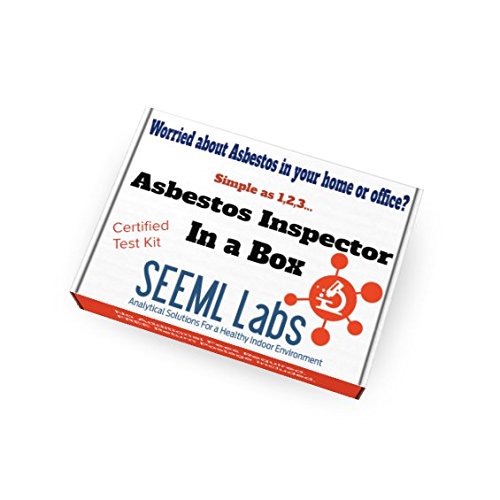 Asbestos Test Kit (mail-in lab) | Includes PPE + sealed mailer. | Amazon — $22.00 |
 Pro-Lab Asbestos Test Kit | Widely available; lab fee separate. | Amazon — $63.99 |