Does Insulation Have Asbestos? What Homeowners Know
Insulation is one of the first things homeowners worry about when an older house comes up for renovation, and for good reason. So, does insulation have asbestos? Some types do, particularly loose-fill vermiculite and the wrap around old pipes and ducts, while many common insulations never contained it at all. Knowing which is which keeps a routine project from becoming an exposure event. This guide walks through the insulation types that may contain asbestos, the ones that do not, how testing works, and how to handle suspect material safely. It reflects EPA, CDC, and OSHA guidance current as of 2026; consult a certified professional for testing decisions and your physician about any symptoms.
Part of our Asbestos in the Home guide — start there for the full picture →
Is this mold, asbestos, or water damage? Get a free instant screen
Upload a clear photo of the suspect area. You'll get an instant AI screening opinion and what to do next. This is screening guidance, not a professional determination.
Screening guidance only. AI can be wrong. Confirm asbestos, mold type, or lead with lab testing or a licensed professional before acting.
Does insulation have asbestos?
Some older insulation does. The main asbestos-related insulations are loose-fill vermiculite, often contaminated at the source, and the friable wrap applied to heating pipes and ducts. Asbestos was valued in insulation because it resists heat and fire and is durable. Insulation manufactured and installed before the mid-1980s is the realistic concern; many modern insulations never contained asbestos.
The key point is that asbestos content depends on the specific material and its era, not on the fact that something is insulation. Fiberglass batts, for example, are not asbestos. Vermiculite attic fill from the contaminated-mine era may be. The rest of this guide separates the suspect materials from the safe ones. The broader subject lives in our asbestos and lead hazard hub.
Insulation types that may contain asbestos
A handful of insulation products carry real asbestos risk in older homes. Loose-fill vermiculite, the pebbly gray-brown attic fill often sold as Zonolite, is the headline concern because much of it came from a mine near Libby, Montana whose ore was contaminated with amphibole asbestos. Our guide to asbestos insulation in the attic covers this in detail.
Pipe and duct insulation is the other major source. Friable wrap on heating pipes, corrugated or preformed pipe insulation, and the wrap on old ducts frequently contained asbestos. Some block and board insulation, certain spray-applied fireproofing, and older HVAC component insulation can also contain it. The shared trait is age: pre-1980s thermal insulation on mechanical systems and loose-fill attic fill.
Insulation types that usually do not
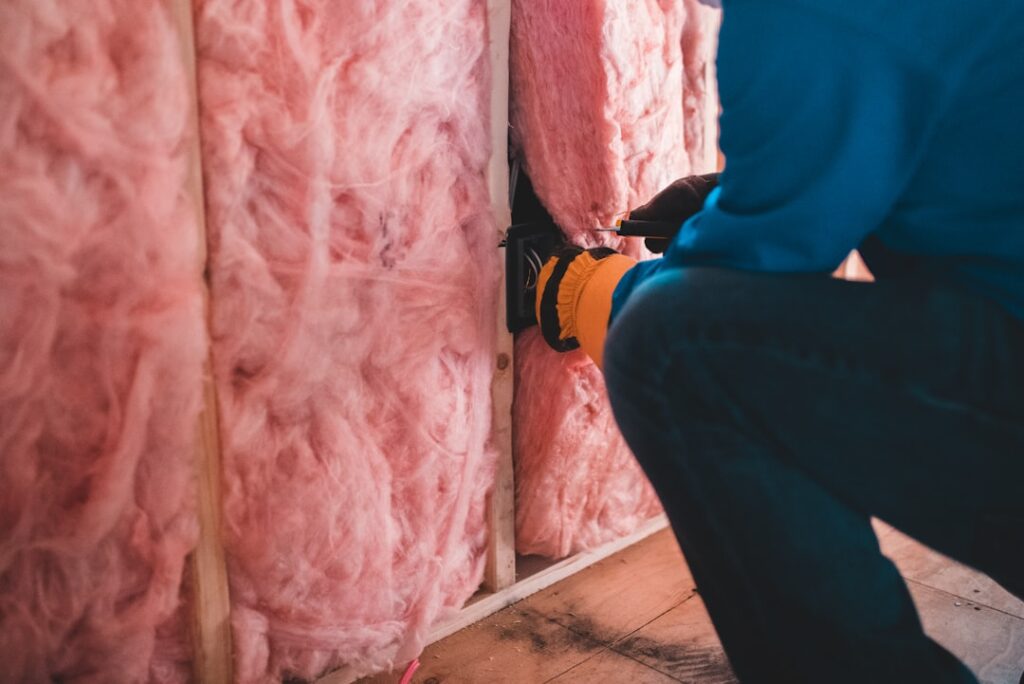
Plenty of common insulation never contained asbestos. Fiberglass batts and blankets, the pink or yellow fluffy rolls, are not asbestos, though they irritate skin and lungs and warrant a dust mask. Modern blown-in cellulose, made from treated recycled paper, is asbestos-free. Mineral wool, spray foam, and rigid foam boards are likewise not asbestos products.
Distinguishing these by appearance helps. Vermiculite is pebbly and pours loosely; fiberglass is fibrous and comes in batts or loose pink fluff; cellulose is gray, dense, and paper-like. The visual difference between vermiculite and fiberglass is usually clear, which is one of the more reliable identification clues available to a homeowner, though it still does not confirm asbestos content in suspect material.
The health concern
Asbestos is hazardous only when fibers become airborne and are inhaled. The EPA and CDC link long-term asbestos exposure to asbestosis, lung cancer, and mesothelioma, generally after repeated or prolonged inhalation rather than a single brief contact. Sealed, undisturbed insulation releases far fewer fibers than material being moved, swept, cut, or renovated around.
Pipe and duct insulation is often highly friable, meaning it crumbles under hand pressure, which makes deteriorated thermal insulation one of the more hazardous conditions. Loose-fill vermiculite becomes a concern when it is stirred during attic work. In both cases, the disturbance is what creates the risk, not the mere presence of the material in good condition.
How to test insulation for asbestos
Laboratory analysis is the only way to confirm asbestos. An accredited asbestos professional collects a sample under controlled, dust-suppressing conditions and submits it for polarized light microscopy at a certified lab. Homeowners are discouraged from sampling friable insulation themselves, since cutting or disturbing it to collect a sample can release fibers.
Test before any project that will disturb suspect insulation, such as an attic upgrade, a furnace replacement, or a basement remodel. Alternatively, treat pre-1980s vermiculite and pipe or duct wrap as asbestos-containing and manage them conservatively. The choice to avoid is disturbing suspect insulation without knowing what it is.
Safe handling and what to do
For intact, undisturbed suspect insulation, the EPA’s general guidance favors leaving it in place. Avoid entering attics unnecessarily, do not store items where they grind loose fill, and keep mechanical spaces clear so nothing abrades pipe or duct wrap. Seal attic access and any gaps where fibers could migrate into living space.
When work is unavoidable or the material is deteriorated, professional options include encapsulation, sealing intact insulation with a protective coating, and removal by a licensed asbestos abatement contractor under containment with proper protection and regulated disposal. Never dry-remove, sweep, or shop-vacuum suspect insulation yourself. For efficiency goals, a professional can advise on approaches that avoid disturbing the existing material.
Renovating older Front Range homes
Across Denver, Jefferson, Adams, and El Paso counties, many homes date to eras when vermiculite and asbestos pipe insulation were standard. Buyers should ask about insulation types during due diligence, and renovators should test suspect material before attic, HVAC, or basement projects. Identifying asbestos insulation early turns a potential hazard into a planned, managed part of the job rather than an emergency.
Telling insulation types apart
For homeowners, distinguishing the suspect insulations from the safe ones is a practical skill. Vermiculite is the standout concern: small, pebbly, gray-brown or silvery flakes with a layered texture that pour and shift loosely. Fiberglass, by contrast, is fibrous and comes in pink or yellow batts and blankets, or as loose pink fluff when blown in. Cellulose is gray, dense, and paper-like, made from treated recycled paper. Mineral wool looks like dense, dark fibrous batts.
The clearest dividing line is between pebbly vermiculite and fibrous everything-else. If attic fill looks like small rocks or flakes rather than fibers, vermiculite is likely, and in a pre-1990 home it should be treated as potentially asbestos-containing. Pipe and duct insulation adds another category: a white or gray chalky coating, corrugated paper wrap, or rigid preformed sections on heating lines in older homes are classic asbestos suspects, distinct from the fluffy cavity insulations.
What modern insulation is made of
Knowing what today’s products contain reassures homeowners that new work carries no asbestos concern. Fiberglass is made from spun glass fibers; it irritates skin and lungs and warrants a dust mask, but it is not asbestos. Cellulose is treated recycled paper, often with borate fire retardants. Mineral wool is spun from molten rock or slag. Spray foam and rigid foam boards are petrochemical products. None of these contain asbestos.
This matters because efficiency upgrades in older homes generally add modern insulation rather than reuse old material. The challenge is doing so without disturbing legacy vermiculite or pipe wrap that may be asbestos-containing. The safe sequence is to assess and, if necessary, address the old material with professionals first, then add modern insulation. That ordering protects the household and prevents a routine upgrade from stirring up a hidden hazard. An insulation contractor who finds suspect material mid-job should stop and bring in an asbestos professional rather than work around it, which is one reason raising the question before any quote is wise.
What professional removal involves
When asbestos insulation must be removed, licensed abatement follows controlled procedures. The work area is sealed under negative air pressure with HEPA filtration, workers wear respirators and protective suits, and the material is wetted and removed carefully, with loose-fill vermiculite typically extracted using HEPA-filtered vacuum equipment. The waste is bagged, labeled, and disposed of at a permitted facility, and the area is cleaned and may undergo clearance testing.
This level of control is why removal is a professional job rather than a weekend project. Homeowners should hire licensed, accredited contractors, verify credentials, and request documentation of disposal. The cost reflects the containment, training, and regulated handling involved. For intact, undisturbed insulation, encapsulation or simply leaving it in place is often the appropriate choice, consistent with EPA guidance favoring leaving good-condition asbestos materials alone. When a project does require disturbance, sequencing the asbestos work ahead of the new insulation or HVAC install keeps the two efforts from interfering with each other.
The health basis for treating suspect insulation carefully
The caution around asbestos insulation rests on documented health evidence. The CDC and its National Institute for Occupational Safety and Health link inhaled asbestos fibers to asbestosis, a scarring of the lungs, along with lung cancer and mesothelioma, a cancer of the lining around the lungs and abdomen. These diseases generally follow repeated or prolonged inhalation rather than a single brief contact, and they can take years or decades to appear. OSHA sets workplace exposure limits for asbestos because cumulative dose over time drives the risk.
For a homeowner, this evidence supports a proportionate response rather than alarm. Sealed, undisturbed insulation in good condition releases few fibers, so coexisting with it carries low risk. The danger concentrates in the activities that put fibers into the air over time, cutting friable pipe wrap, raking loose vermiculite, or dry-removing old material without controls. Keeping suspect insulation stable and undisturbed keeps airborne fiber low, which is exactly what the health data identifies as the protective goal.
Friable versus non-friable insulation
Asbestos materials are classified by how readily they release fibers, and the insulations that carry asbestos risk happen to sit on the friable end of that spectrum, which is what makes them concerning. Friable materials crumble or powder under hand pressure when dry, freeing fibers with little force, while non-friable materials lock fibers in a hard matrix that holds them unless cut or ground. The hazard is always airborne fibers, so friability determines how much caution a material demands.
Loose-fill vermiculite is inherently friable, since the granules pour and shift freely and any asbestos among them is not bound in a binder. Pipe and duct insulation, the corrugated paper and felt wraps on heating lines, becomes friable as the jacket fails and the material ages, crumbling under light pressure. Both are the high-concern insulations precisely because they release fibers so easily. By contrast, asbestos bound into a dense board or cement product holds its fibers more tightly while intact. Recognizing that the suspect insulations are friable explains why EPA guidance favors leaving them undisturbed and why removal is professional work.
Testing suspect insulation and what it costs to handle
Because appearance cannot confirm asbestos, laboratory analysis is the only reliable answer for suspect material. An accredited professional collects the sample, not the homeowner, since cutting or disturbing friable insulation to gather material releases fibers. The professional wets the area to suppress dust and may sample more than one spot, because a single attic or duct run can carry different materials applied at different times. The lab uses polarized light microscopy to identify asbestos, with extra preparation sometimes used for vermiculite, where fibers can sit at low concentrations among the granules.
When abatement is warranted, several factors set the cost. The quantity of material and the accessibility of the space form the baseline, since a cramped crawl space or a packed attic takes longer to clear than open runs. The regulated handling adds expense that ordinary insulation work avoids: containment under negative pressure with HEPA filtration, respirators and disposable suits, HEPA-vacuum extraction for loose fill, transport of regulated waste to a permitted facility, and often air clearance testing. Encapsulation generally costs less than full removal where it suits the material’s condition. Getting multiple bids from accredited contractors helps a homeowner gauge a fair price, and the broader asbestos and lead hazard hub sets these decisions in context.
References
- Protect your family from contaminated vermiculite insulation — U.S. Environmental Protection Agency
- Asbestos exposure and health effects — CDC / NIOSH
- Asbestos standards and safe handling — Occupational Safety and Health Administration
Frequently asked questions
Which types of insulation contain asbestos?
The main ones are loose-fill vermiculite attic fill, often contaminated at the source, and the friable wrap on old heating pipes and ducts. Some block insulation and spray-applied fireproofing can also contain it. Pre-1980s thermal insulation is the realistic concern.
Does fiberglass insulation have asbestos?
No. Fiberglass batts and blankets are not asbestos, though they irritate skin and lungs and warrant a dust mask. Modern cellulose, mineral wool, and foam insulations are also asbestos-free.
How can I tell if my insulation has asbestos?
Vermiculite is pebbly and pours loosely, unlike fibrous fiberglass, which is a helpful visual clue. But appearance does not confirm asbestos content. Have an accredited professional sample suspect material and submit it to a certified lab for analysis.
Is asbestos insulation safe if left alone?
Sealed, undisturbed insulation releases far fewer fibers and poses lower risk. The danger rises when it is cut, swept, or renovated around, especially friable pipe and duct wrap. The EPA generally advises leaving intact material in place.
If an older Front Range home has suspect attic, pipe, or duct insulation, you can reach a vetted local asbestos professional through our contact page for testing before any renovation.