Does Drywall Have Asbestos? What Homeowners Know
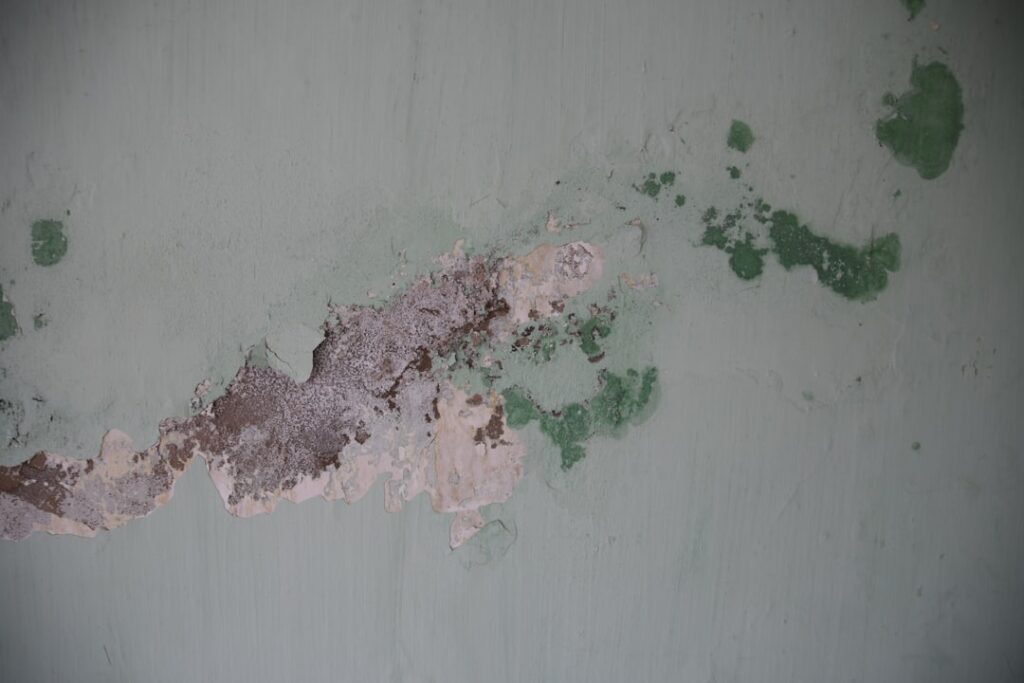
Anyone planning to cut into walls in an older home eventually asks the same question: does drywall have asbestos? The answer depends on the era and, importantly, on the joint compound and texture more than the drywall panels themselves. Asbestos was added to many wall-finishing products through the 1970s, so a pre-1980s wall can release fibers when sanded or demolished. This guide explains where asbestos hid in wall systems, how to recognize the risk, how testing works, and how to handle renovation safely. It reflects EPA, OSHA, and CDC guidance current as of 2026; consult a certified professional for testing decisions and your physician about any symptoms.
Part of our Asbestos in the Home guide — start there for the full picture →
Is this mold, asbestos, or water damage? Get a free instant screen
Upload a clear photo of the suspect area. You'll get an instant AI screening opinion and what to do next. This is screening guidance, not a professional determination.
Screening guidance only. AI can be wrong. Confirm asbestos, mold type, or lead with lab testing or a licensed professional before acting.
Does drywall have asbestos?
Some older drywall systems do, but the asbestos is usually concentrated in the joint compound, texture, and finishing materials rather than the gypsum panels themselves. From roughly the 1940s through the late 1970s, manufacturers added asbestos to joint compound, also called mud or taping compound, and to spray-on textures and skim coats. The asbestos made the compound easier to work, crack-resistant, and fire-resistant.
Some gypsum board from that era also contained asbestos, but the more consistent concern is the compound applied over the seams and screws and the textured finishes on walls and ceilings. Because compound and texture are spread across nearly the entire wall surface, treating an old wall system as a whole, not just the panels, is the safe mindset. The broader context lives in our asbestos and lead hazard guide.
Where the asbestos actually is
Several components of a wall system can carry asbestos. Joint compound over taped seams and corner beads is the prime suspect. Spray-applied or troweled textures, including popcorn ceilings and knockdown wall textures, frequently contained asbestos. Skim coats and patching compounds used for repairs through the 1970s are also candidates. The drywall panels themselves are less consistently a source.
This distribution matters for renovation. Sanding a taped joint, scraping a textured ceiling, or demolishing a wall grinds the compound and texture, which is where the fibers are most concentrated. Knowing the high-risk components helps homeowners and contractors plan the work and the testing.
How to know if your wall is at risk
Age is the strongest indicator. Homes built or remodeled before about 1980 are the realistic concern, since asbestos use in these products tapered off and was largely phased out of consumer compounds by the late 1970s. Textured ceilings and walls from that era, especially popcorn ceilings, are a common flag.
There is no reliable way to identify asbestos in compound or texture by sight, because it looks identical to non-asbestos versions. Visual cues only tell you the wall is old enough to warrant testing. A home built in the 1990s or later is very unlikely to contain asbestos in its drywall system, while a pre-1980 wall should be treated as suspect until tested.
The health concern
Asbestos becomes dangerous when fibers are released into the air and inhaled. Intact, painted drywall and compound bound under paint release essentially no fibers; the wall is safe to live with. The hazard appears during renovation, when sanding, scraping, drilling, cutting, or demolishing the wall pulverizes the compound and texture and sends fibers into the air.
The EPA and CDC link long-term asbestos exposure to asbestosis, lung cancer, and mesothelioma, generally after repeated or prolonged inhalation. A single careful drilling of one anchor hole is very different from sanding an entire textured ceiling. The scale and dustiness of the activity drive the risk, which is why demolition and sanding are the moments that demand caution.
Testing drywall and joint compound
Laboratory analysis is the only way to confirm asbestos. Because the compound and texture are the likely sources, a sample should capture those layers, not just the gypsum core. An accredited asbestos professional collects samples under controlled conditions, often wetting the surface to suppress dust, and submits them for polarized light microscopy at a certified lab.
Homeowners planning more than a trivial repair should test before sanding or demolishing pre-1980 walls. Some choose to treat old textured walls and ceilings as asbestos-containing and manage them conservatively, which avoids the sampling step. Either is reasonable; sanding or demolishing without knowing is the choice to avoid.
Safe renovation steps
If testing confirms asbestos, or you treat the wall as suspect, the work changes. Removal or major disturbance should be performed by a licensed asbestos abatement contractor using containment, wet methods, HEPA filtration, and regulated disposal. For intact walls, the simplest protection is to leave them alone or cover rather than disturb them; painting over a textured ceiling, for instance, encapsulates it.
Small, unavoidable tasks like a single anchor hole can sometimes be done with wet methods and immediate cleanup, but anything involving sanding, scraping texture, or demolition should go to professionals. Never dry-sand suspect compound or texture, and never run a standard shop vacuum, which spreads fibers. Our related guides on asbestos compound cover the finishing materials in more depth.
Buying and renovating older homes
Across the Front Range, many homes still carry original textured ceilings and walls from the asbestos era. Buyers planning renovations should factor a wall-system assessment into their budget, and renovators should test before scraping popcorn ceilings or demolishing partitions. Identifying the risk first turns a potential exposure into a managed, routine part of the project.
Why asbestos was added to joint compound
Understanding why asbestos ended up in wall finishes explains where the risk concentrates. Manufacturers added asbestos fibers to joint compound and texture because the fibers improved workability, made the dried compound crack-resistant, and added fire resistance. A taping compound with asbestos spread smoothly, sanded to a fine finish, and held up over time without cracking at the seams. Those were genuine performance benefits at the time.
The same properties that made the compound useful also mean the asbestos is distributed across nearly every seam and textured surface in an affected wall system. That is why renovation, not daily living, drives the risk. Sanding a seam or scraping a textured ceiling grinds the very layers where the fibers are concentrated. Knowing that the compound and texture, rather than the gypsum panels, are the prime sources helps homeowners and contractors target their testing and plan the work.
Popcorn ceilings and textured walls
Textured finishes deserve special attention because they are both common and high-risk to disturb. Popcorn and acoustic ceiling textures applied through the 1970s frequently contained asbestos, and scraping them releases significant dust if they are not first wetted and handled properly. Knockdown and other wall textures from the same era carry the same concern. Many Front Range homes still have original textured ceilings overhead.
Because these textures cover broad surfaces and are disturbed during very common projects, removing a popcorn ceiling, they are a frequent source of accidental exposure. The safe sequence is to test a textured ceiling or wall before scraping it in any pre-1980 home, or to treat it as asbestos-containing and have it removed by a licensed contractor. Painting over an intact textured ceiling encapsulates it and is far safer than dry-scraping. Our related guides on asbestos compound cover these finishing materials further.
What professional handling involves
When testing confirms asbestos in compound or texture and the material must be disturbed, licensed abatement follows controlled procedures. The work area is sealed under negative air pressure with HEPA filtration. Surfaces are wetted to suppress dust, the texture or compound is removed carefully, and the waste is bagged, labeled, and disposed of at a permitted facility. The area is HEPA-vacuumed and wet-wiped, and clearance testing may confirm it is safe before work continues.
This rigor is why scraping a textured ceiling or demolishing an old wall is not a casual DIY task in a pre-1980 home. Homeowners should hire licensed, accredited contractors, verify credentials, and request documentation of disposal. The cost reflects the containment, training, and regulated handling involved, and it buys protection against an exposure that could otherwise affect the whole household during a routine remodel. Where the goal is purely cosmetic, leaving an intact textured ceiling in place or covering it, rather than scraping it, often sidesteps the disturbance entirely.
The health basis behind the precautions
The reason renovation dust from old walls warrants real care rests on documented evidence. The CDC and its National Institute for Occupational Safety and Health link inhaled asbestos fibers to asbestosis, a scarring of the lungs, along with lung cancer and mesothelioma, a cancer of the lining around the lungs and abdomen. These diseases generally develop after repeated or prolonged exposure rather than a single brief contact, and they can appear years or decades later. OSHA sets workplace exposure limits for asbestos because cumulative dose over time drives the risk.
Applied to a wall system, this evidence explains why the activity matters more than the material’s mere presence. Living in a home with intact, painted asbestos compound exposes occupants to essentially no airborne fibers. Sanding a whole textured ceiling, by contrast, can fill a room with respirable dust for hours, the kind of repeated, concentrated exposure the health data identifies as harmful. That proportionate framing, intact is safe, dust-generating work is not, guides every sensible decision about an older wall. It also explains why the dustiest tasks, sanding and full demolition, draw the strictest precautions, while a single sealed anchor hole barely registers as a concern.
Friable versus non-friable in a wall system
Asbestos materials are classified by how easily they release fibers, and wall finishes can fall on either side depending on their state. Friable materials crumble or powder under hand pressure when dry, freeing fibers readily, while non-friable materials bind fibers in a matrix that holds them unless the material is cut, sanded, or ground. An intact, painted wall keeps its joint compound and texture bound and stable, which is why living with such a wall poses essentially no inhalation risk.
The classification flips the moment renovation begins. Sanding a taped seam, scraping a textured ceiling, or demolishing a wall pulverizes the very layers where the asbestos is concentrated, converting a stable, non-friable surface into clouds of friable dust. This is why the activity, not the mere presence of the material, drives the hazard. A single drilled anchor hole barely disturbs the matrix, while sanding an entire ceiling generates substantial airborne fiber. Understanding this distinction helps homeowners see why intact walls are safe to leave alone and why dust-generating work demands real precautions.
How testing and abatement costs add up
Because the asbestos lives in the compound and texture rather than the gypsum panels, sampling must capture those finishing layers. An accredited professional collects samples that include the joint compound and any texture, often wetting the surface first to suppress dust, and submits them for polarized light microscopy at a certified lab. Sampling several locations gives a fuller picture, since a home may have been finished and patched with different products over the years.
When testing confirms asbestos and the material must be disturbed, the cost reflects controlled abatement rather than ordinary remodeling labor. The square footage of affected ceiling and wall, the accessibility of the space, and the amount of texture to be removed set the scale. Licensed crews seal the area under negative pressure with HEPA filtration, wet the surfaces, remove the material carefully, dispose of it as regulated waste at a permitted facility, and often pay for clearance testing before work continues. Encapsulation, such as painting over an intact textured ceiling, is far cheaper than removal because it avoids the disposal and cleanup steps entirely, which is why it is often the preferred choice when the goal is simply to stabilize a surface rather than take it down. The broader asbestos and lead hazard hub sets these decisions in context.
References
- Learn about asbestos in building materials — U.S. Environmental Protection Agency
- Asbestos exposure and health effects — CDC / NIOSH
- Asbestos standards and safe work practices — Occupational Safety and Health Administration
Frequently asked questions
Does all old drywall contain asbestos?
No. The asbestos in older wall systems was usually in the joint compound, texture, and skim coats rather than the gypsum panels. Homes from roughly the 1940s to late 1970s are the realistic concern; walls from the 1990s or later are very unlikely to contain it.
Is asbestos drywall dangerous if I don't sand it?
Intact, painted drywall and compound release essentially no fibers and are safe to live with. The hazard appears during renovation when sanding, scraping, drilling, or demolishing pulverizes the compound and texture into airborne dust.
How do I test drywall for asbestos?
Have an accredited professional collect samples that include the joint compound and texture layers, not just the gypsum, and submit them to a certified lab for polarized light microscopy. Test before sanding or demolishing pre-1980 walls.
Can I scrape a popcorn ceiling myself?
Not if it predates 1980 and has not been tested, because scraping textured ceilings can release significant fibers. Have it tested first, or treat it as asbestos and hire a licensed abatement contractor to remove it safely.
If you are renovating an older Front Range home with textured ceilings or original walls, you can reach a vetted local asbestos professional through our contact page to test joint compound before any sanding or demolition.
Asbestos test kits
Asbestos can only be confirmed by a lab. A mail-in kit gets you a sealed sample container and accredited analysis — never sand or disturb suspect material first.
| Product | Why | Buy |
|---|---|---|
| Asbestos Test Kit (mail-in lab) | Includes PPE + sealed mailer. | Amazon |
| Pro-Lab Asbestos Test Kit | Widely available; lab fee separate. | Amazon |